
In the 1930s and 1940s, the Yangambi research station was home to one of the world’s leading oil palm breeding programmes. Scientists working at what was then the National Institute for Agronomic Study of the Belgian Congo (INEAC) helped unravel the genetics behind tenera, the high-yielding hybrid produced by crossing the thick-shelled dura with the shell-less pisifera. Their work demonstrated that shell thickness was controlled by a single gene and that crossing dura with pisifera could reliably produce tenera palms.
The implications of this breakthrough were enormous. With a thinner shell and a much larger proportion of oil-bearing pulp, tenera produced considerably more oil than the dura palms previously used in commercial plantations. In the decades that followed, genetic material selected in Congo became an important component of oil palm breeding programmes in Southeast Asia, particularly as the industries in Malaysia and Indonesia expanded rapidly from the 1950s onwards. Today, the two countries together account for more than 80 percent of global palm oil production.
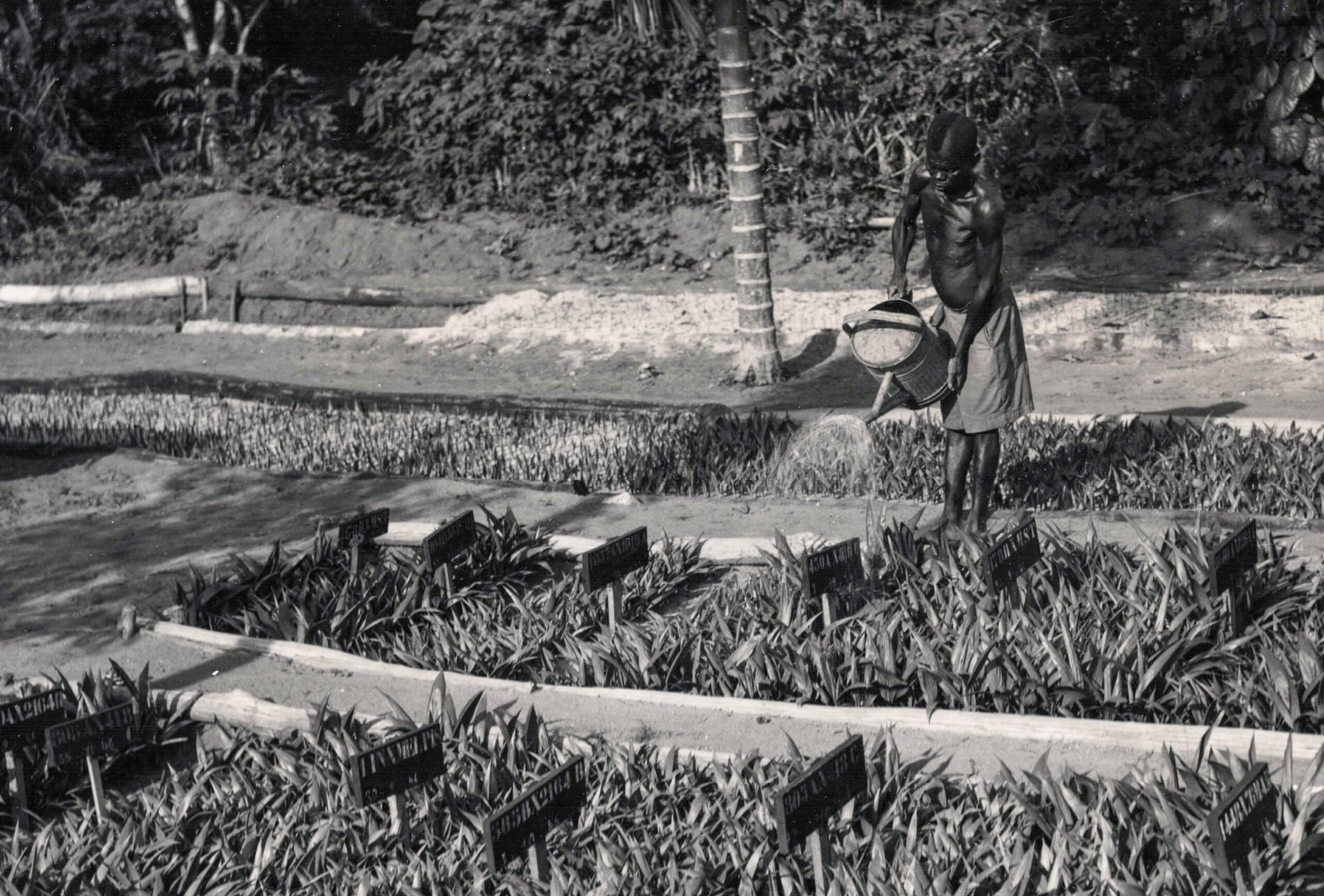
Photo by INERA Library Collection
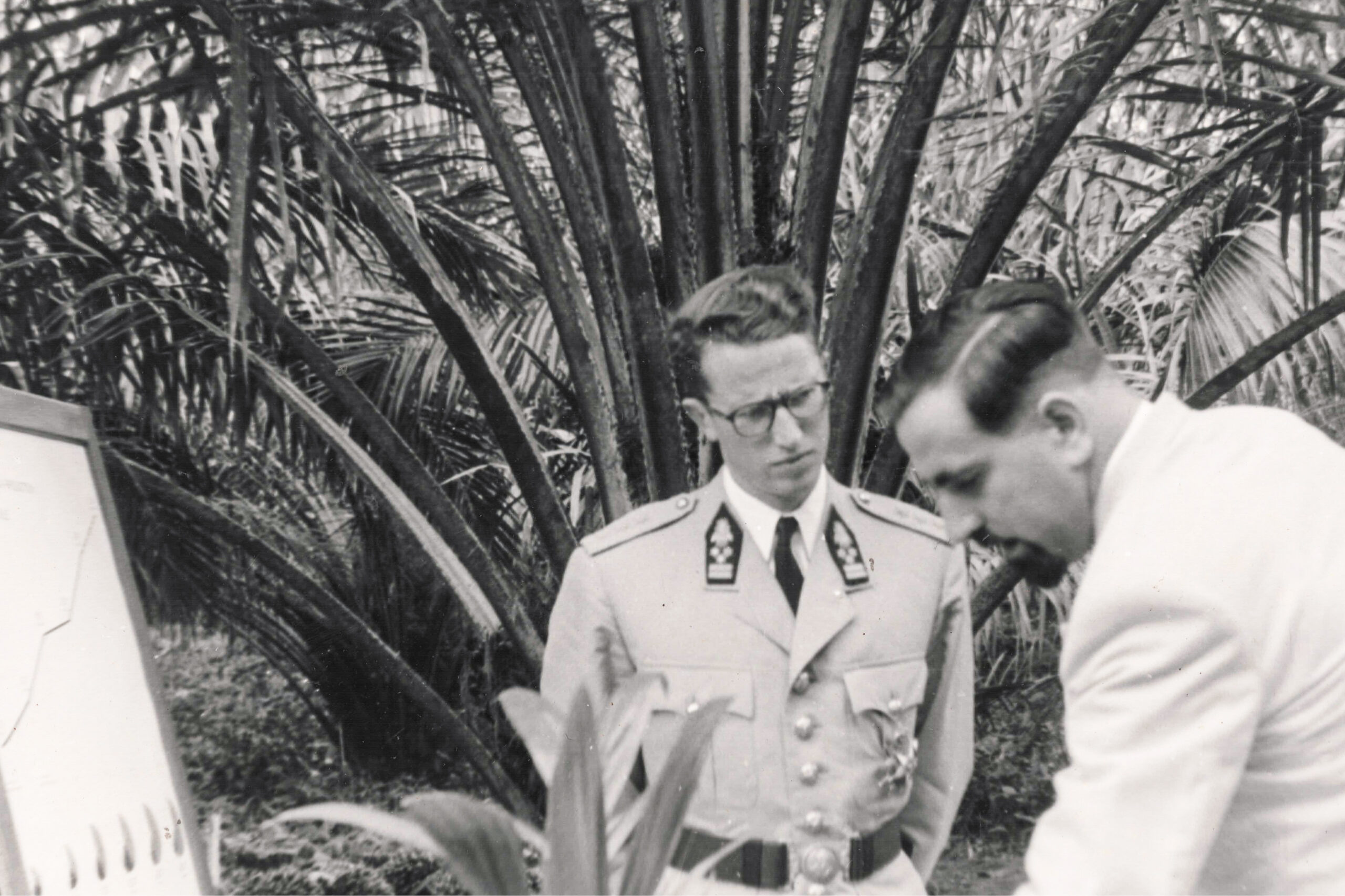
Photo by INERA Library Collection
However, until very recently, little remained in Yangambi itself of its former oil palm research capacity. The station, now operated by the National Institute for Agronomic Study and Research (INERA), the Democratic Republic of Congo’s national agricultural research institute, has endured decades of chronic underinvestment. Vast stretches of old oil palm plantations remain, but their trees, some of them more than 20 metres tall, are well beyond the crop’s economic lifespan of around 25 to 30 years. As for the breeding programme, a lack of adequate resources, equipment and specialized expertise has prevented INERA researchers from properly conducting their work for decades.
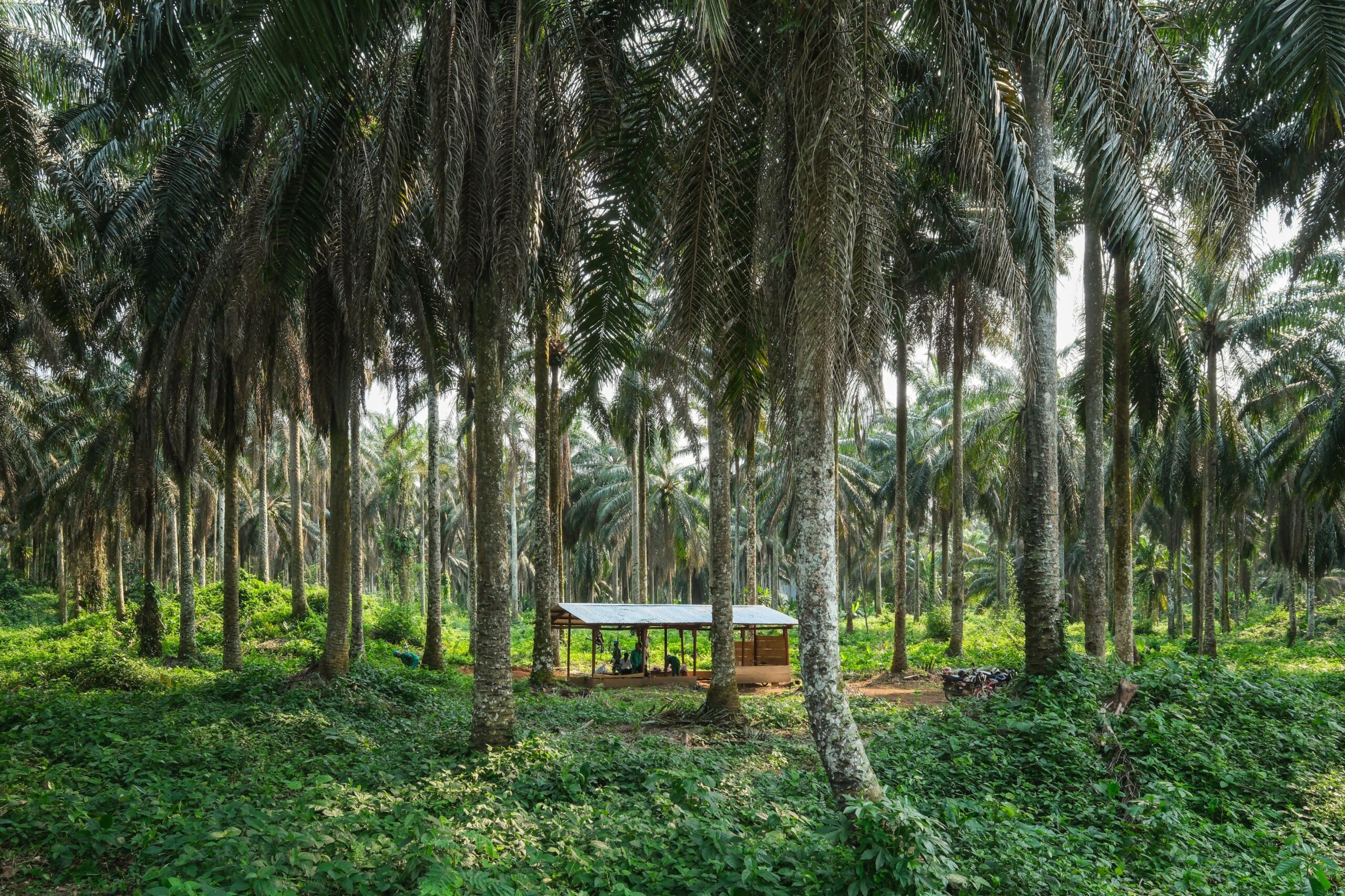
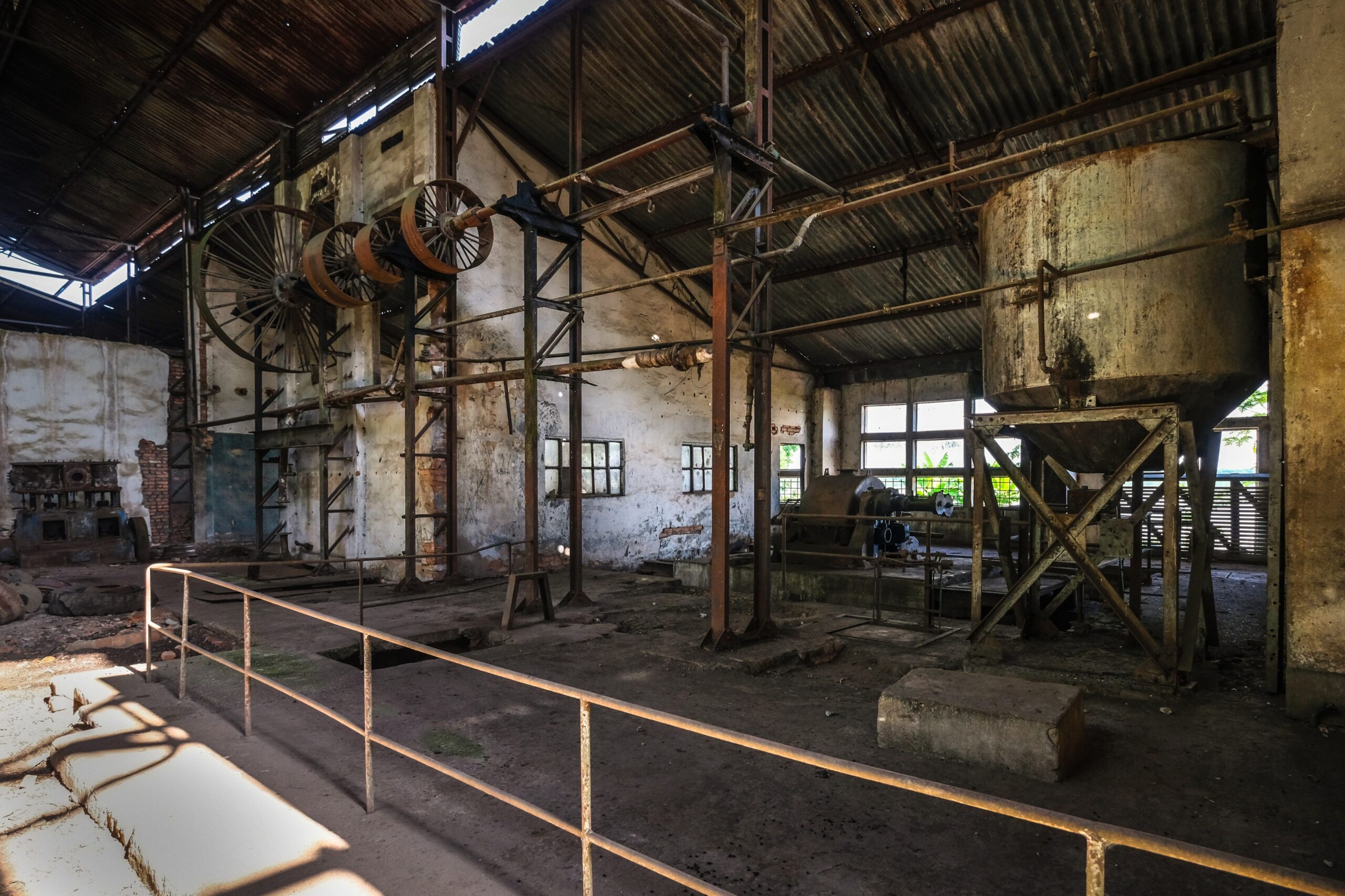
A new initiative is trying to change this, as part of a decade-long, landscape-wide effort to position Yangambi as a regional hub for conservation, science and development, supported over the years by the European Union and, more recently, by the United Kingdom. Bringing together INERA, Landscape Alliance and the Virunga Foundation, the initiative aims to revive local oil palm production and trade while creating sustainable livelihoods for local communities and reducing pressure on the surrounding forests.
Old land, new palms
Oil palm (Elaeis guineensis) is native to West and Central Africa, where it has been cultivated and used for food for thousands of years. In Yangambi and its surroundings, which include the fast-growing provincial capital of Kisangani, unrefined red palm oil is widely used to prepare traditional dishes such as pondu (cassava leaves) and meat stews. Demand is met through a combination of small-scale artisanal production and palm oil brought in from other parts of the country and from abroad.
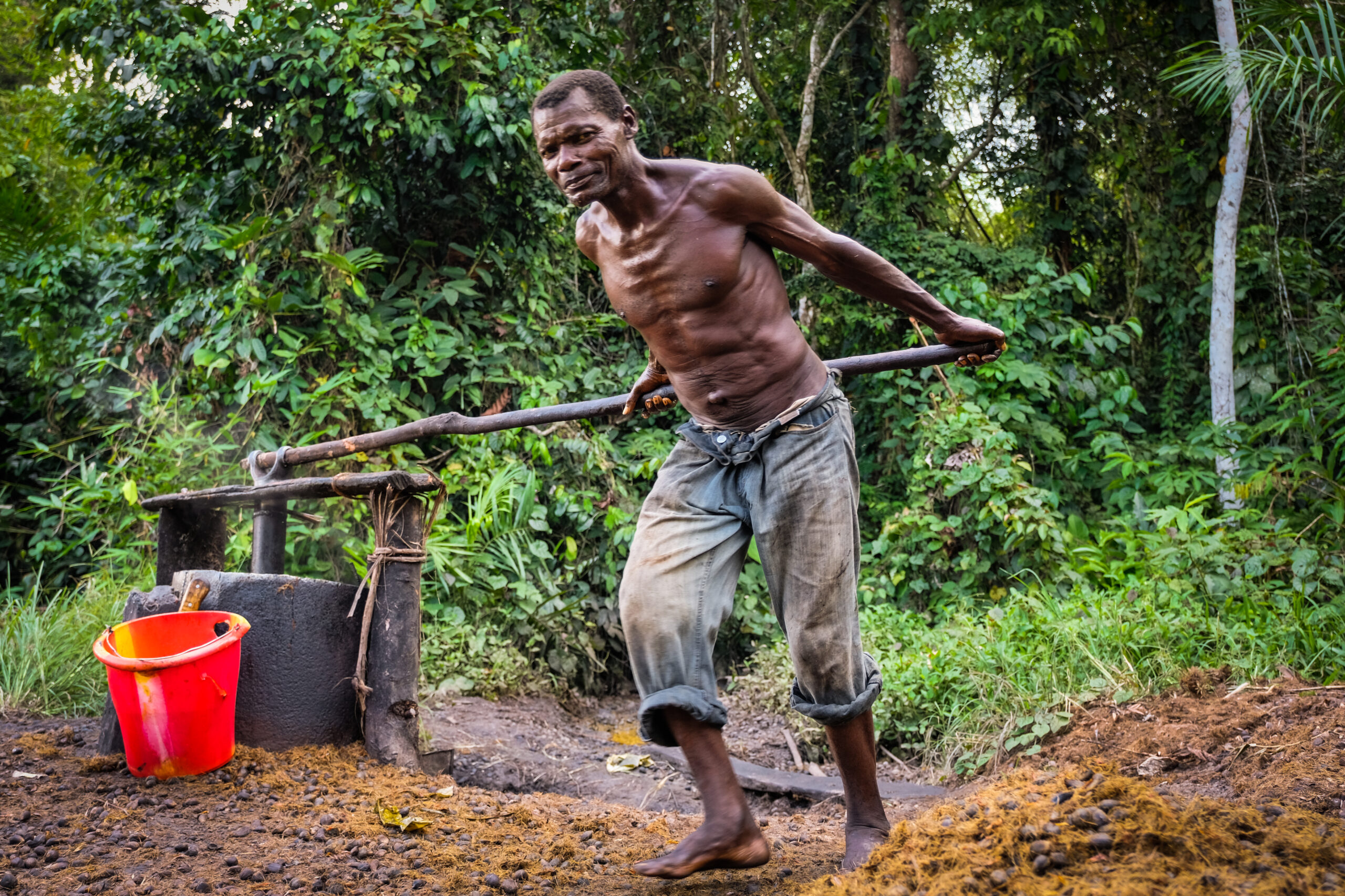
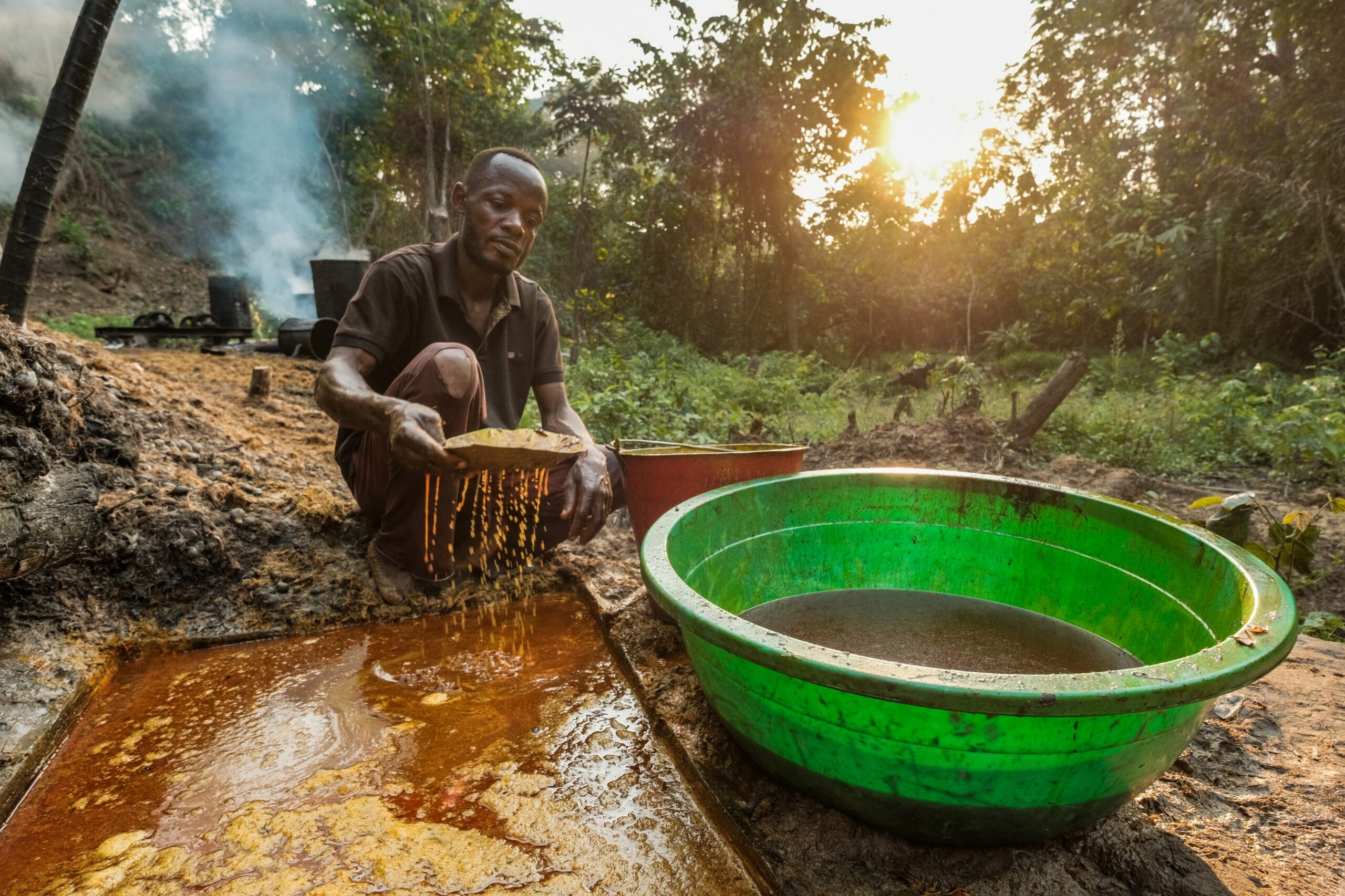
Palm fruits are boiled to soften the pulp. Firewood is used in traditional production. Photo by Axel Fassio / Landscape Alliance
Much of the oil palm grown around Yangambi comes from ageing or poor-quality planting material, while farmers have limited access to improved cultivation and processing techniques. Producing palm oil is therefore labour-intensive, yet yields remain low and the oil is often of poor quality. With few opportunities to produce more from the land they already cultivate, farmers may instead expand into new areas, sometimes by clearing forest.
For Maxwell Kubi, who coordinates agroecology activities for Landscape Alliance in Yangambi, the challenge is to increase production without allowing it to come at the expense of the surrounding forest. “Rather than clearing forest to establish new plantations, we are putting old plantation areas back into production”, he explained. “This requires replacing ageing palms with improved planting material capable of producing more oil from the same area.”
The fruits of oil palm provide two different oils: palm oil from the fleshy pulp and palm kernel oil from the kernel at its centre. Both can be turned into a wide range of products, from cooking oils and processed foods to soaps and cosmetics, creating opportunities for local processing and businesses beyond simply selling the harvested fruit.
The ambition is therefore to build on Yangambi’s existing agricultural footprint as the starting point for a more sustainable local value chain – one that can increase supplies for households and local industries, create income and employment, and reduce the pressure to expand cultivation.
Traditional extraction methods often result in low yields despite the considerable labour involved. Photo by Axel Fassio / Landscape Alliance
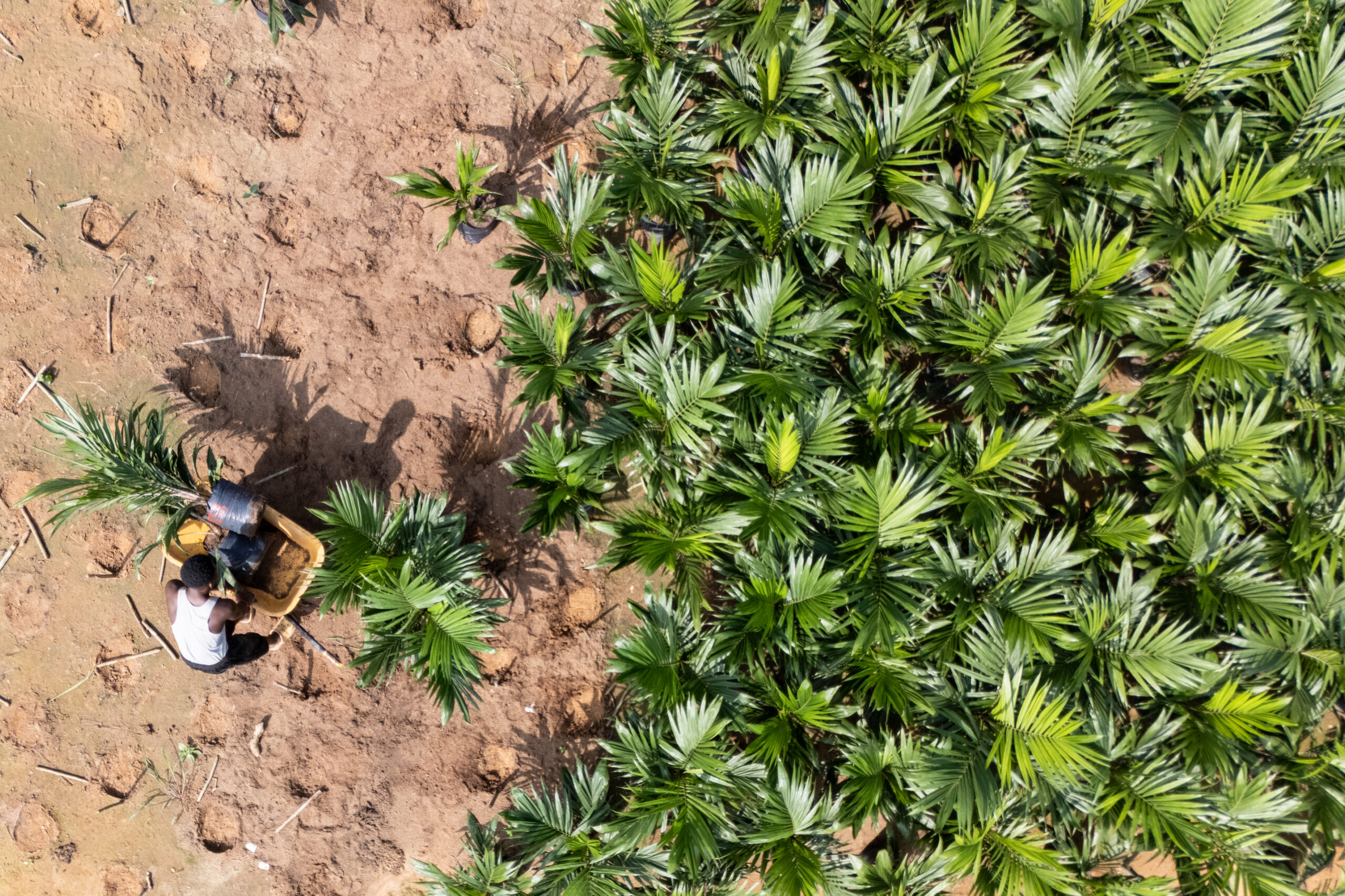
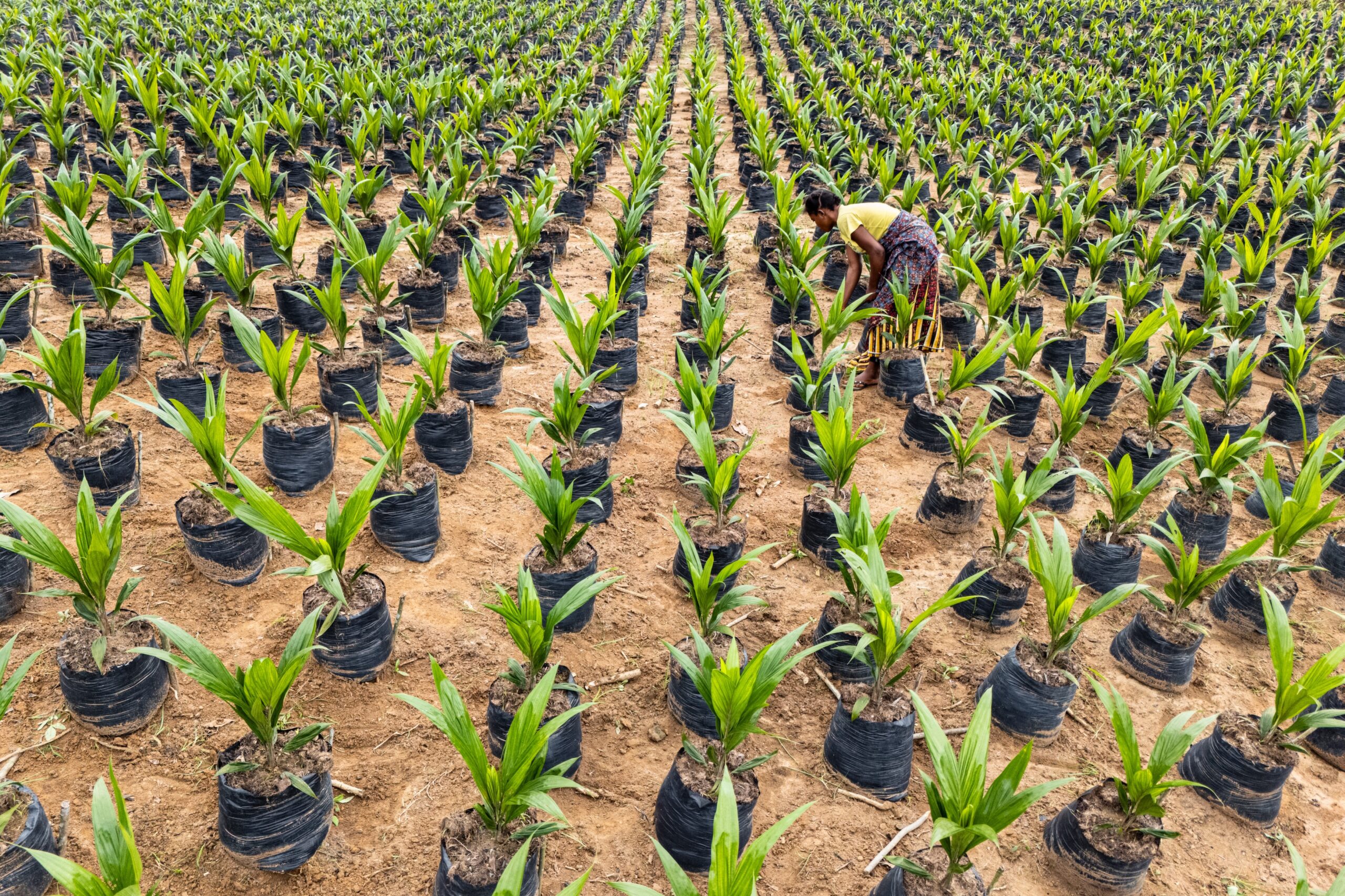
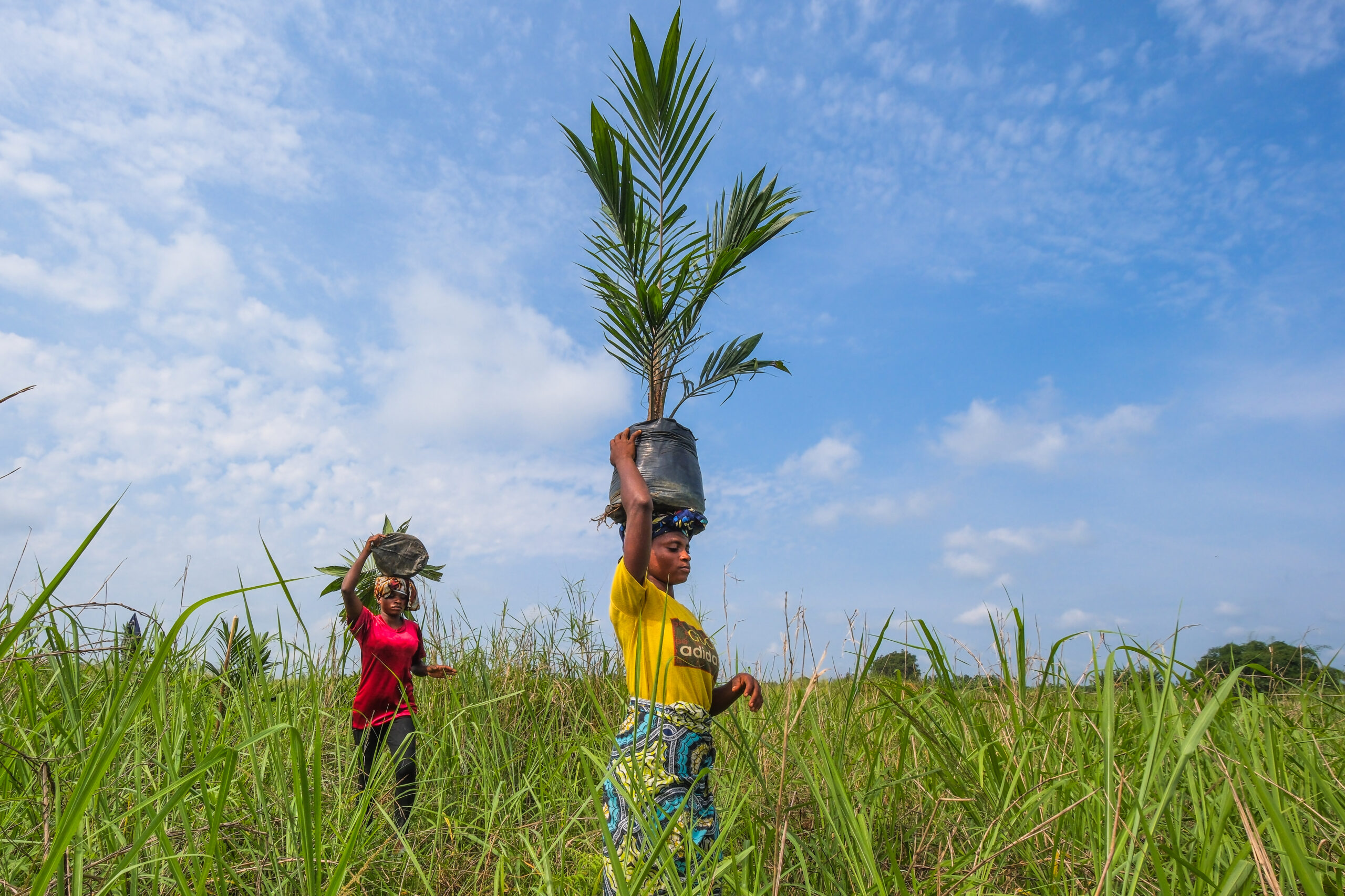
Landscape Alliance is working with INERA to re-establish and manage modern nurseries, while rehabilitating the old plantations. Since 2025, some 200 hectares on INERA’s concession have been replanted with new palms. The potential is considerably larger: INERA alone has more than 1,700 hectares of ageing oil palm plantations that could progressively be brought back into production.
The same approach is intended to extend beyond INERA’s concession. The medium-term aim is to provide improved planting material to smallholders already producing palm oil, allowing them to gradually replace ageing, low-yielding palms. For farmers, the proposition is straightforward: better seeds can mean more fruit and therefore more income from the same area of land.
Rebuilding a lost expertise
The seeds used to begin renewing the plantations were initially imported from Ghana, as INERA’s capacity to produce improved planting material had declined in recent decades. The challenge now is to rebuild that capacity so that the replacement of ageing palms can eventually rely on planting material produced in Yangambi itself.
The starting point is already there. Among Yangambi’s ageing plantations, INERA researchers have identified more than 300 palms selected through its breeding programme that can still be used for seed production. What has been lost is much of the technical capacity needed to turn that genetic material into reliable commercial seeds. Thus, since March 2026, James Asampana, a Ghanaian oil palm seed production specialist, has been training a team of INERA technicians in controlled pollination and quality management.
“Producing good oil palm seed is more complicated than simply collecting fruit from a productive tree,” Asampana explained. “To produce tenera, selected female dura flowers must be pollinated with pollen from selected male pisifera palms. The female inflorescence has to be isolated before it becomes receptive, preventing insects or pollen carried through the air from fertilizing it with pollen from an unknown parent. Only then can the selected pollen be introduced.” INERA and Landscape Alliance’s ultimate objective is to rebuild the needed infrastructure and to reintroduce quality management systems that can guarantee seeds with little or no contamination for maximum results.
For Dieudonné Amolo, an INERA engineer who supervises seed production, rebuilding this expertise and the infrastructure needed to operate in Yangambi means restoring a function at the heart of the institute’s mandate. INERA must not only conserve and improve genetic material, but it must also be able to multiply it reliably so that improved varieties reach farmers. “That’s supposed to be our role,” he said.
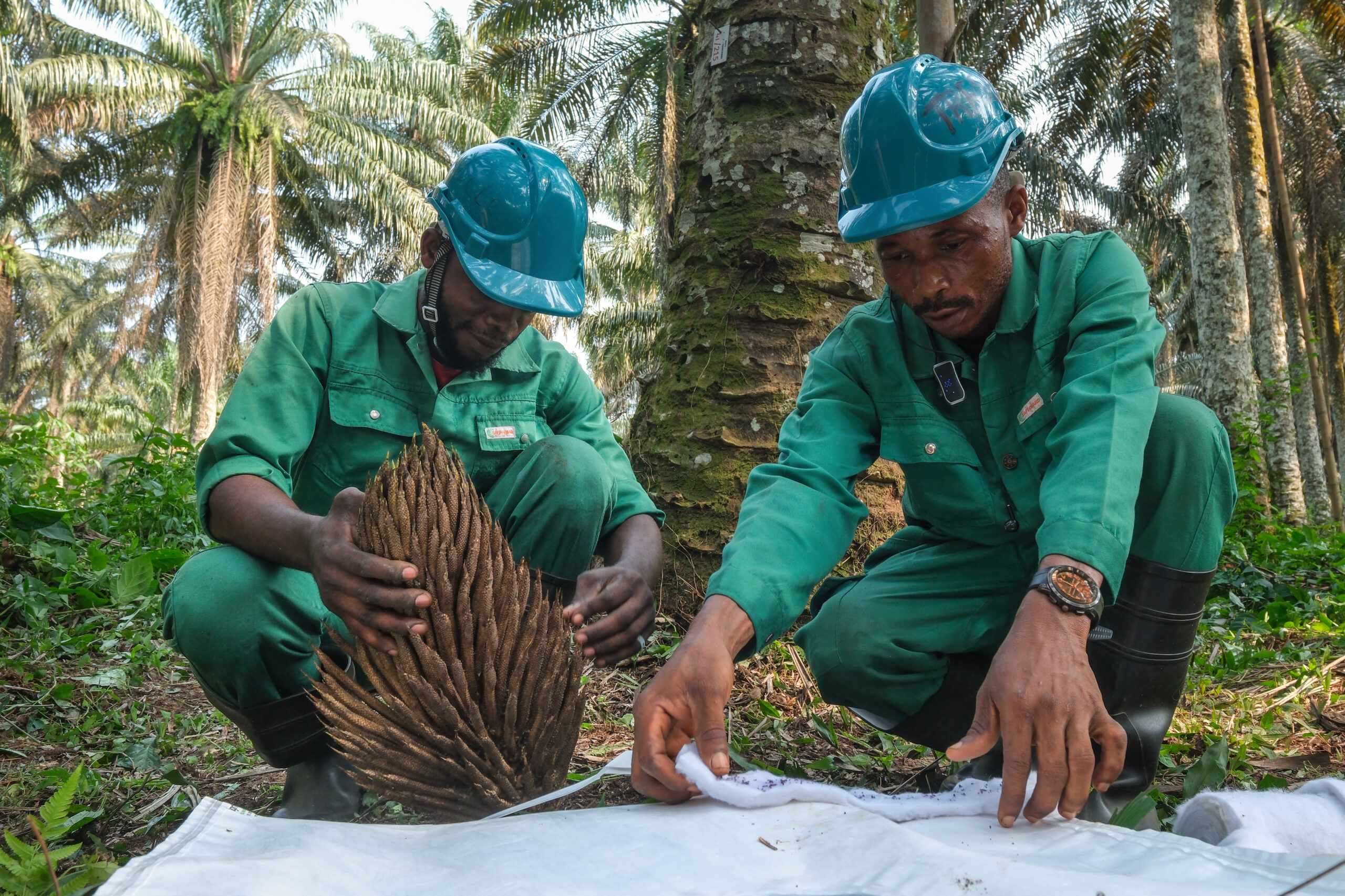
Photo by Axel Fassio / Landscape Alliance
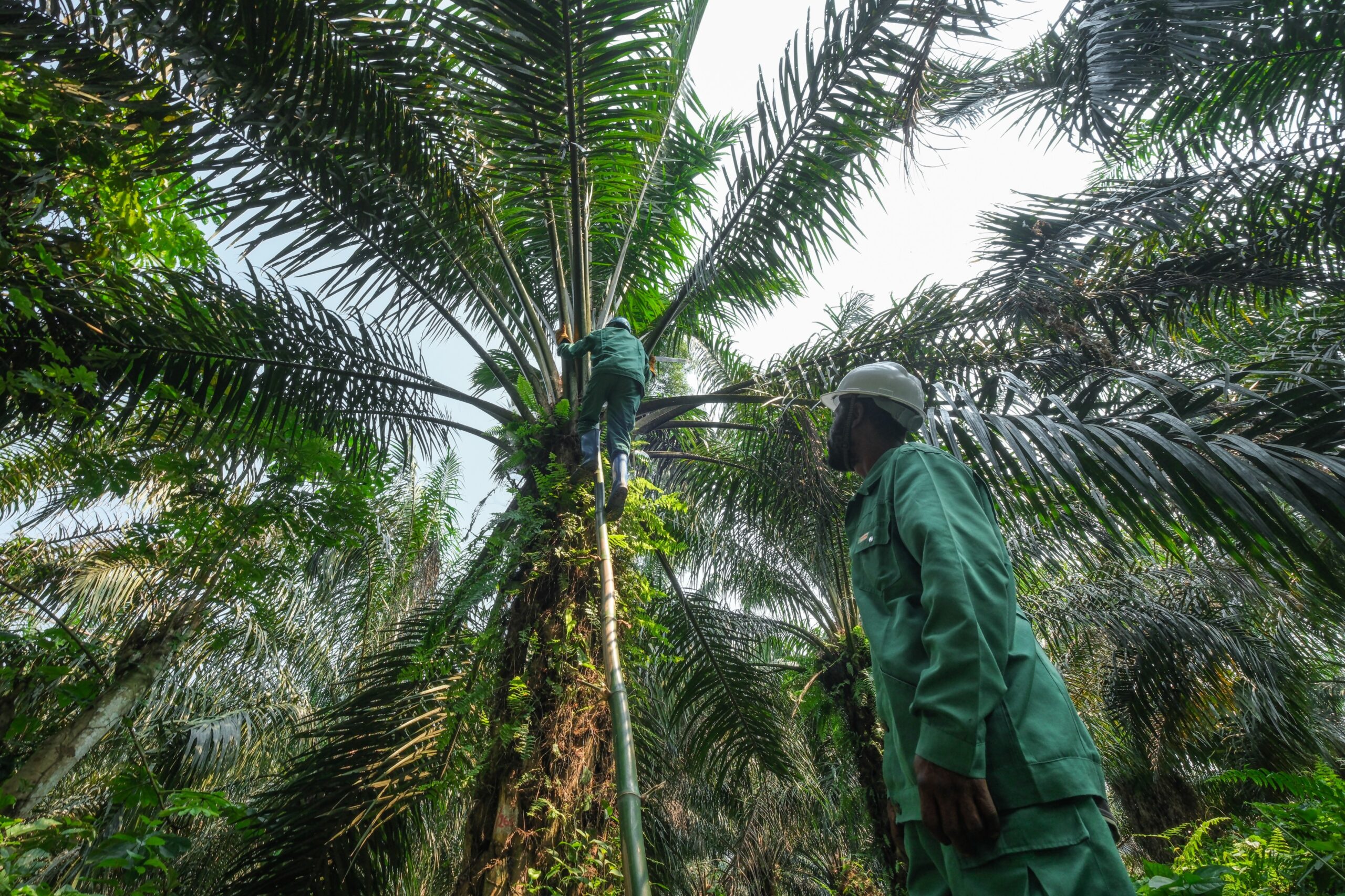
Photo by Axel Fassio / Landscape Alliance
From research to revenue
Renewing plantations and rebuilding technical capacity are only part of the equation. The ultimate ambition is to turn these investments into viable economic activity that generates income for farmers, businesses and INERA itself.
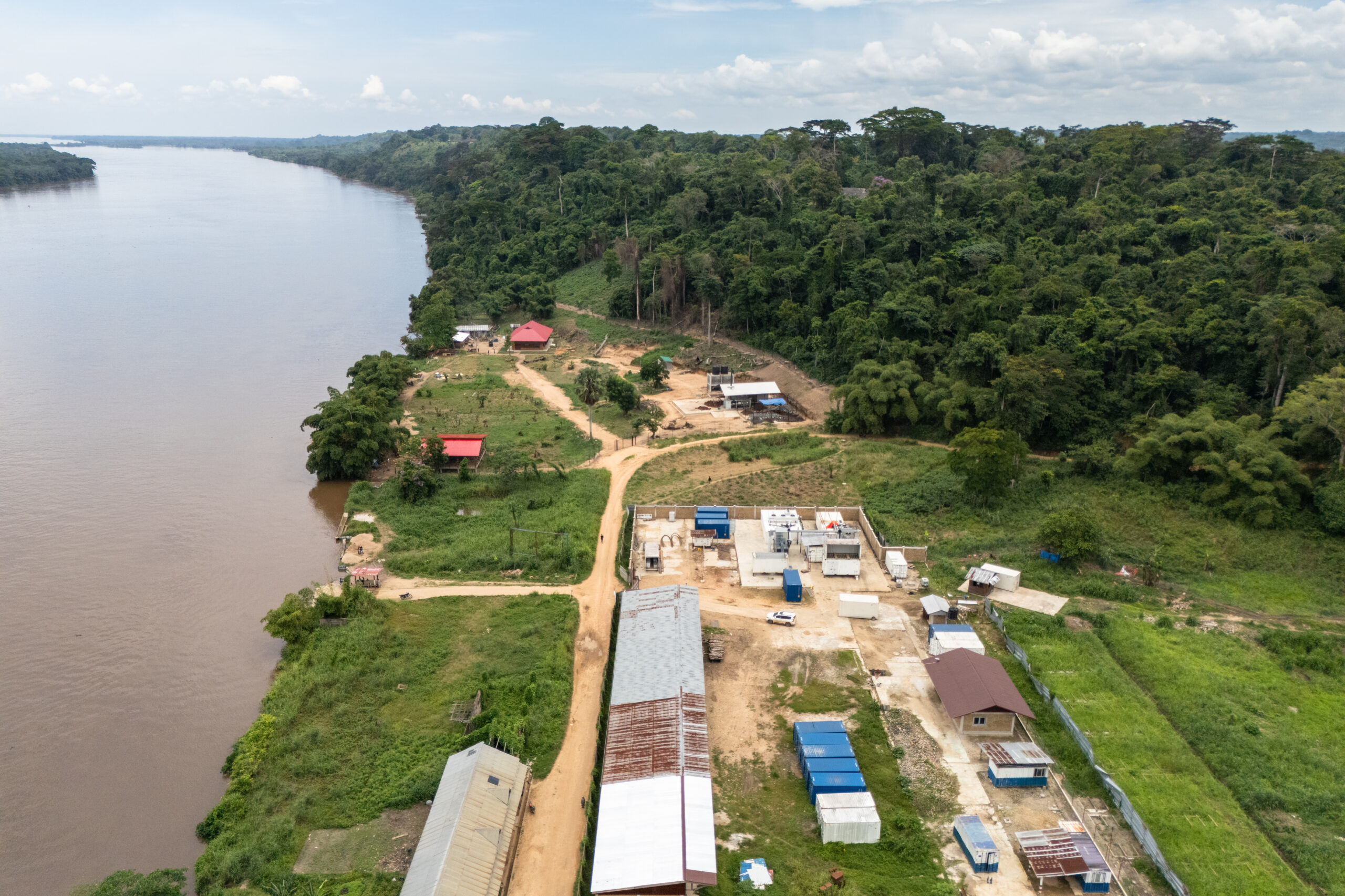
The palm oil value chain is being developed as part of the Kivu-Kinshasa Green Corridor, an initiative of the Congolese government that aims to link conservation with agricultural production, processing, energy and investment across a vast swathe of the country. In Yangambi, the Virunga Foundation has already established a new palm oil mill, creating a market not only for the fruit bunches that INERA’s renewed plantations will eventually produce, but also for those grown by smallholders across the landscape. Access to a mechanized mill offers farmers an alternative capable of processing larger volumes more efficiently, increasing productivity and value. As the new market develops, partners will also seek continued affordability for consumers.
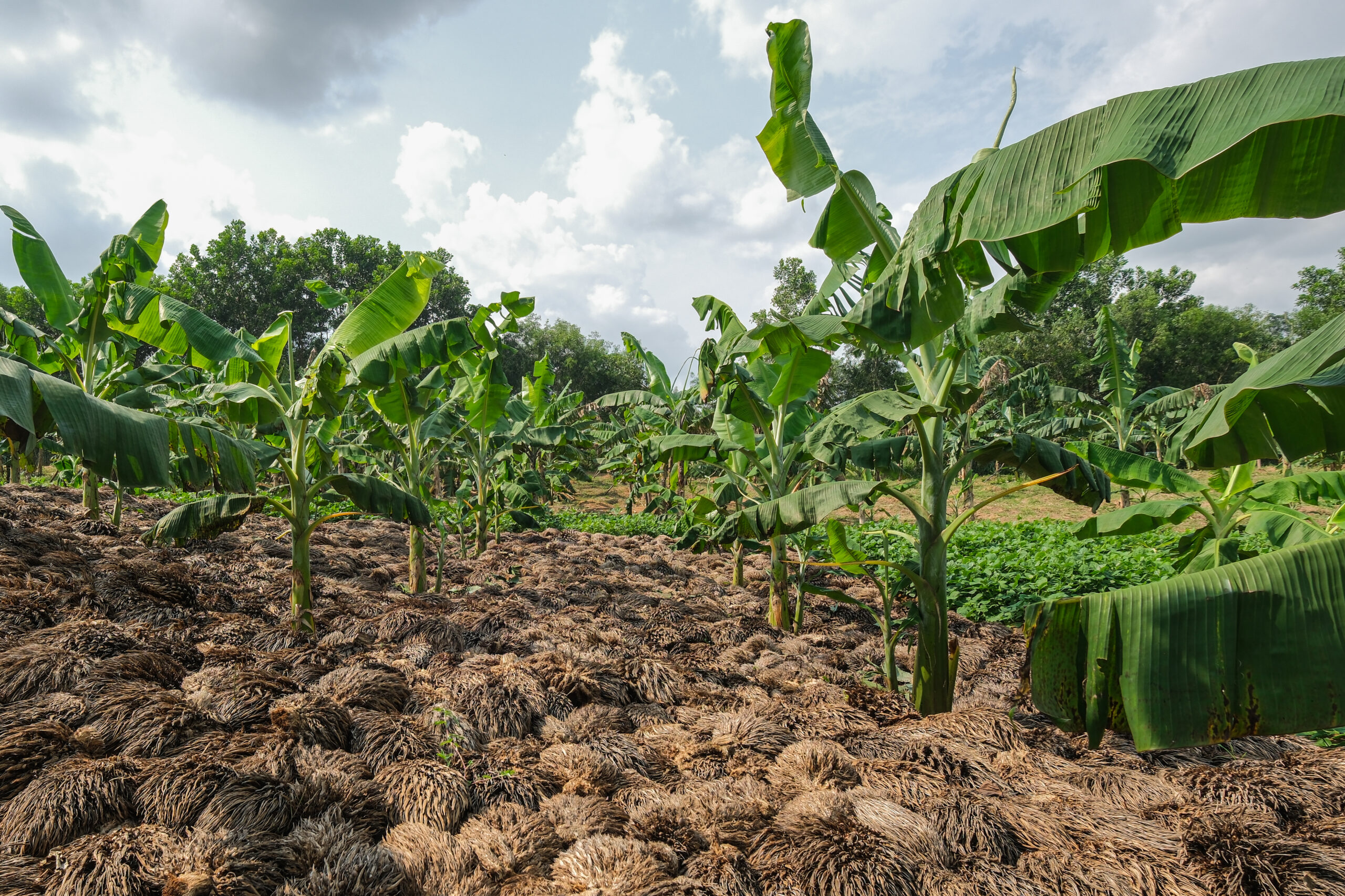
The mill is also creating links with other agricultural activities. Organic residues from palm oil processing are already being used as fertilizer for banana production, returning nutrients to agricultural land and creating another productive use for what would otherwise be waste.
For INERA, however, some of the greatest potential may lie in the seed itself, as the Kivu-Kinshasa Green Corridor is expected to create a much larger market for improved planting material among other public and private growers, including smallholders.
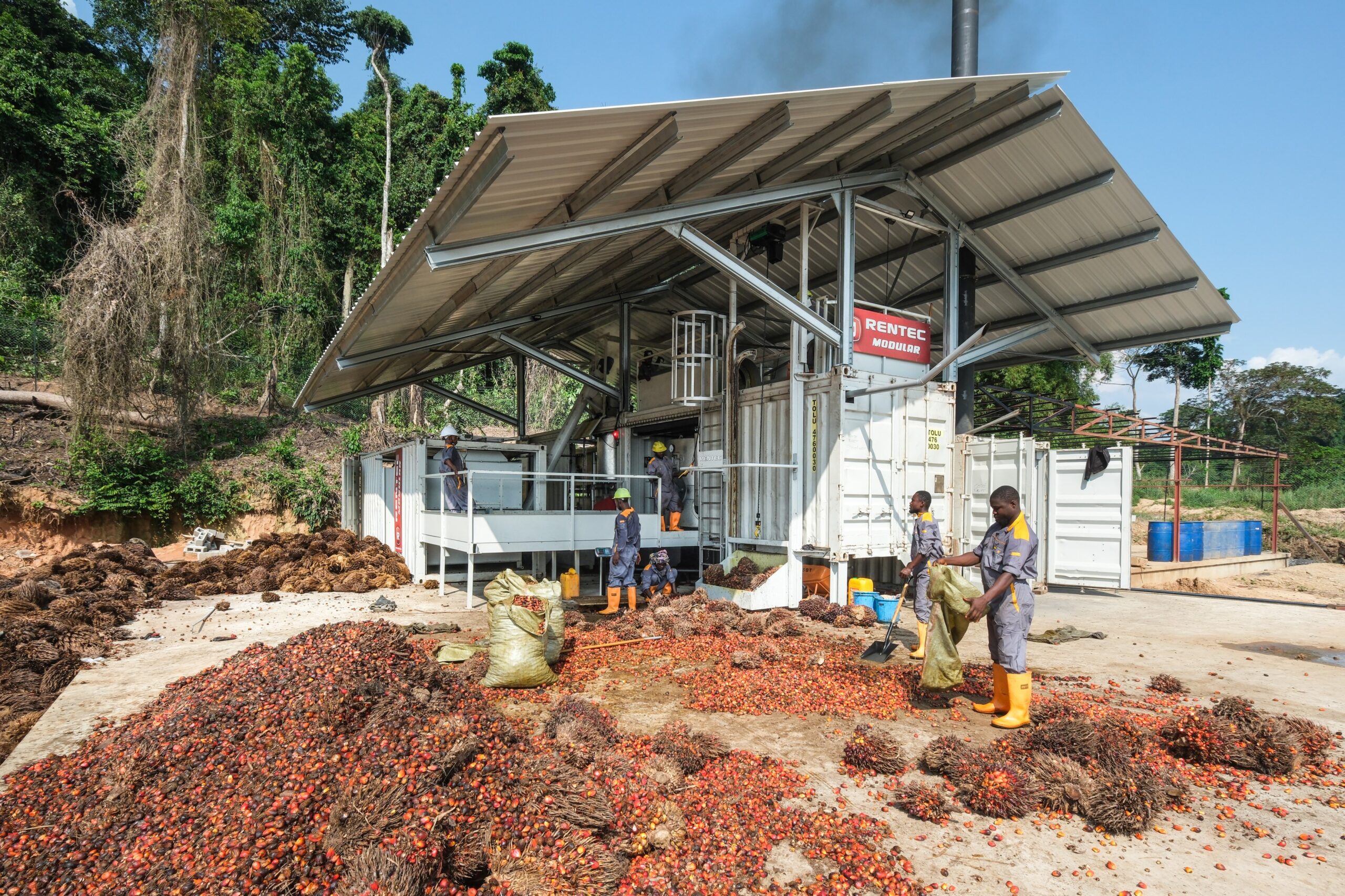
Photo by Axel Fassio / Landscape Alliance
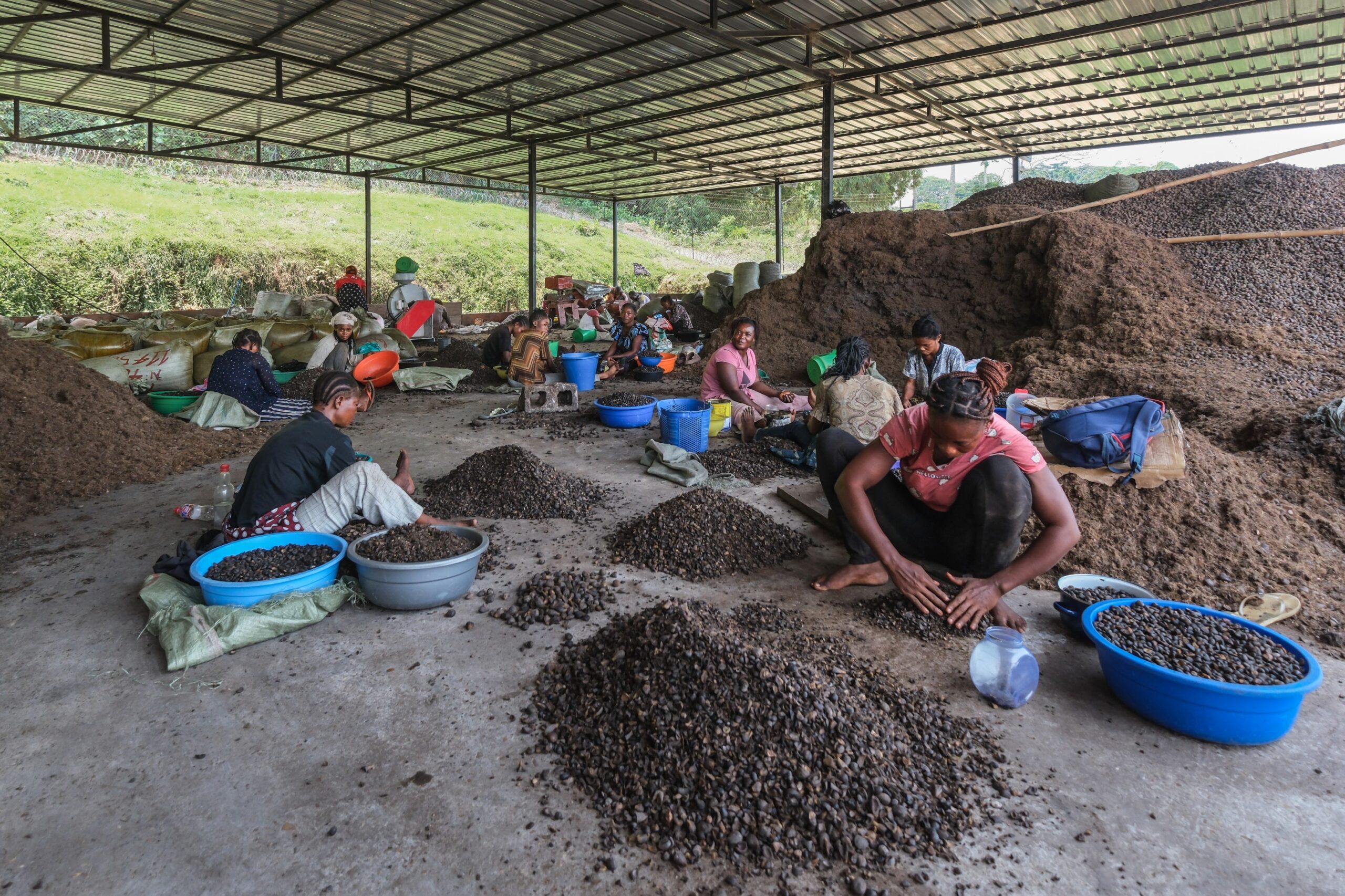
Photo by Axel Fassio / Landscape Alliance
According to Dieu-Merci Assumani, director of INERA’s Yangambi research centre, demand is already far beyond what the institute can supply, and it will grow larger. Comparable imported seeds are very expensive for local farmers, he said. “If we were able to produce these pre-germinated seeds and sell them at competitive prices and quality, the institution could have a recurring income,” he explained. “With that, we can buy tractors, equipment and sequencers to carry out genetic analyses of our material here. And we can go back to functioning normally.”
Realizing that potential will take time, however. New palms spend close to a year in the nursery and three more years in the field before producing their first fruit. Seed production also follows a lengthy cycle: after controlled pollination, it takes around 150 days for the fruit bunch to mature before the seeds can be harvested.
In the meantime, INERA is preparing to manage a much larger operation. Through a public-private partnership with Landscape Alliance, the centre has introduced new administrative and financial procedures and is working to renew its ageing workforce. Assumani says the changes have already strengthened transparency and financial management, helping put in place the systems INERA will need when the revenues from seeds and palm fruit begin to materialise.
While still in its initial phases, Yangambi’s palm oil revival is already creating jobs in nurseries, plantation management, harvesting, transport and processing, while opening new opportunities for farmers and businesses across the landscape. It is also nurturing something harder to quantify: renewed confidence in the landscape’s potential as a place where productive industries can once again take root and thrive.
Nearly a century after Yangambi helped change the course of the global palm oil industry, the crop could now play a part in changing the course of Yangambi itself.