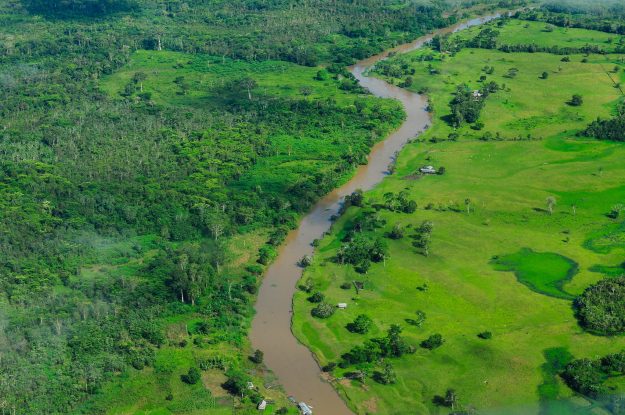




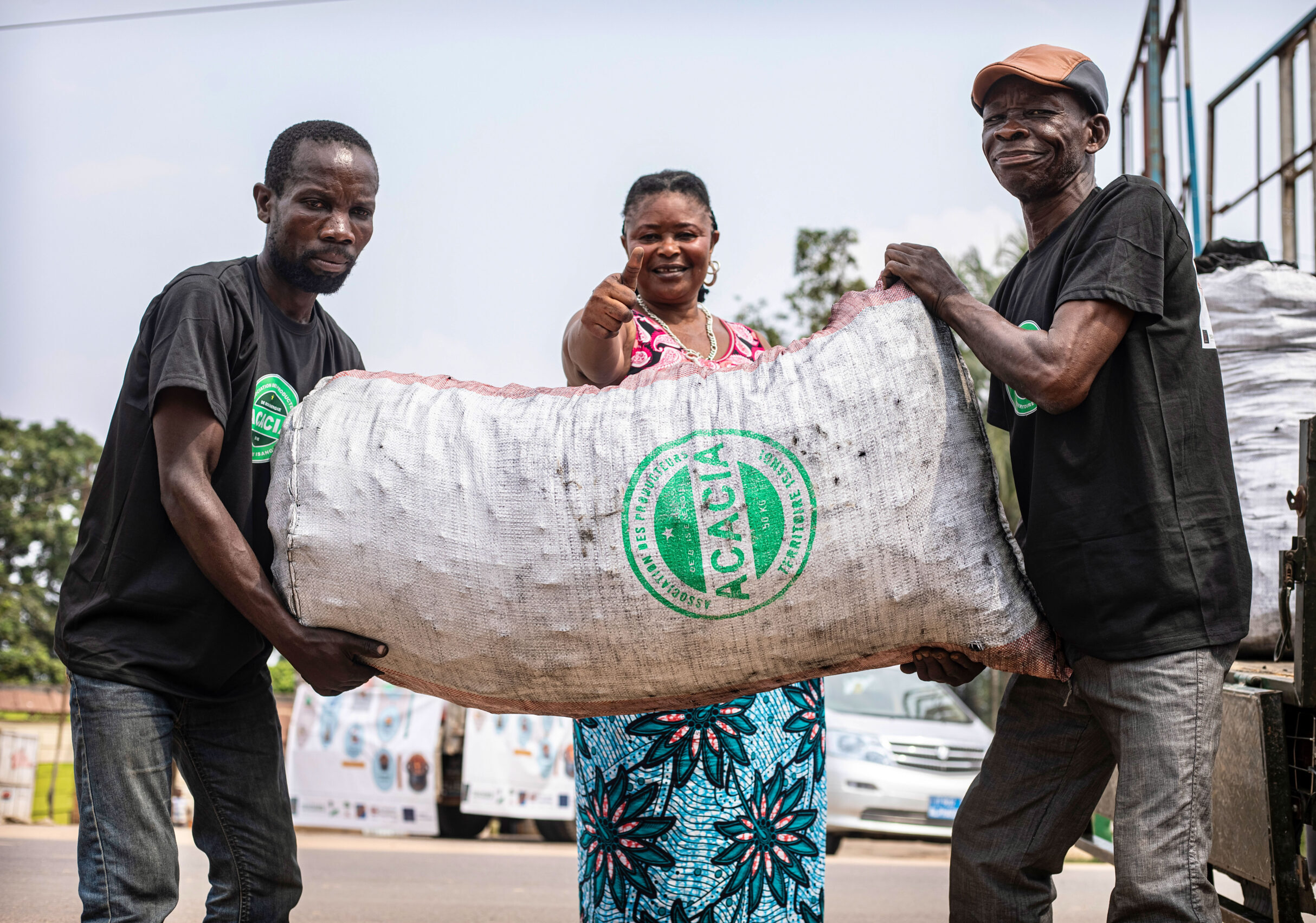
After six years of planting, growing and harvesting acacia trees, farmers in the Yangambi landscape are bringing renewable charcoal to market for the first time.
Produced from 1,000 hectares of sustainably managed acacia plantations in Tshopo Province, Democratic Republic of the Congo (DRC), the charcoal offers an alternative to fuel traditionally sourced from natural forests, helping reduce pressure on the Congo Basin while creating new income opportunities for rural communities.
Unlike traditional charcoal, which is typically made from indigenous trees harvested in natural forests, the new product comes from dedicated agroforestry plantations that are replanted after harvest, creating a renewable source of woodfuel.
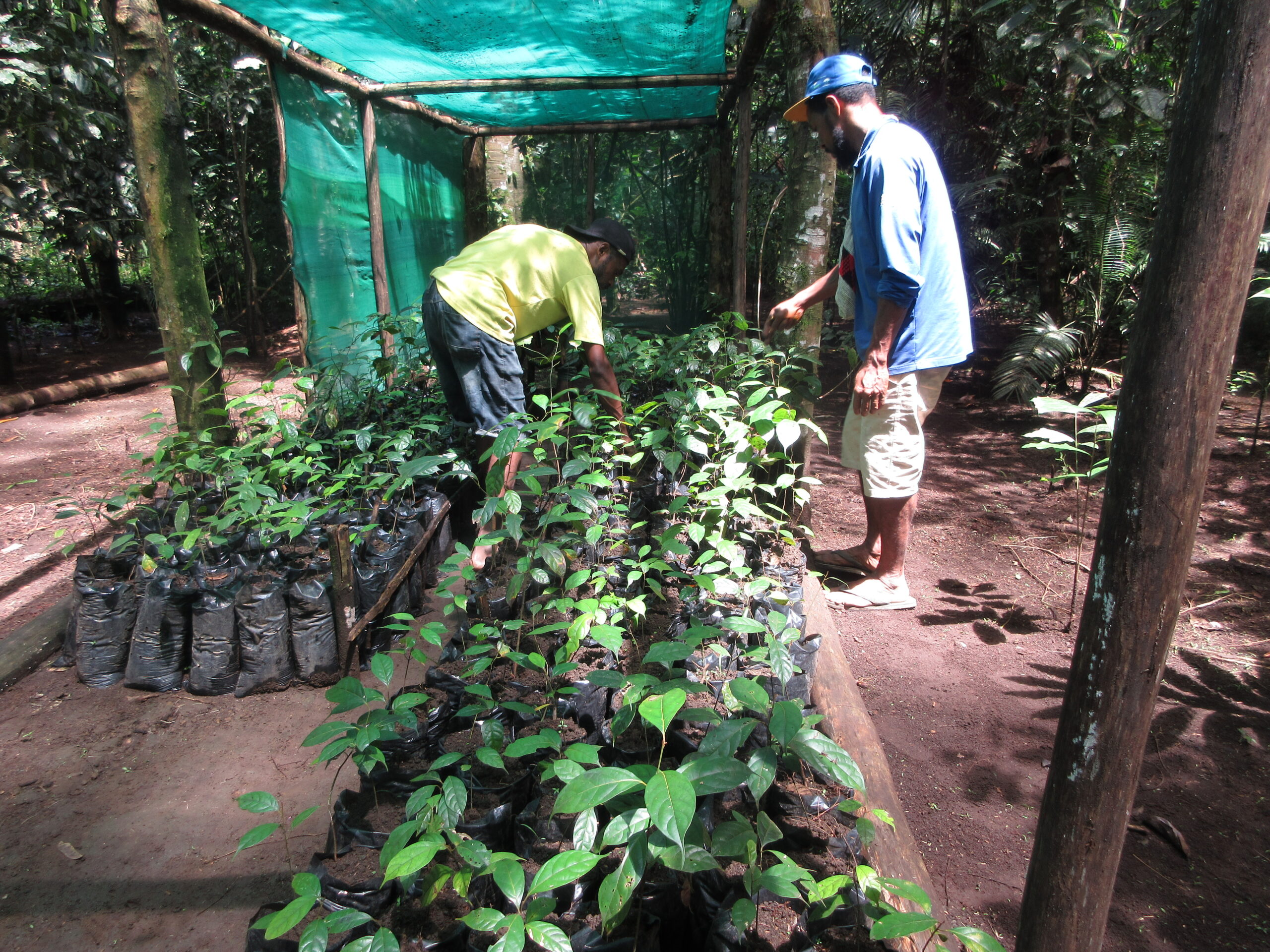
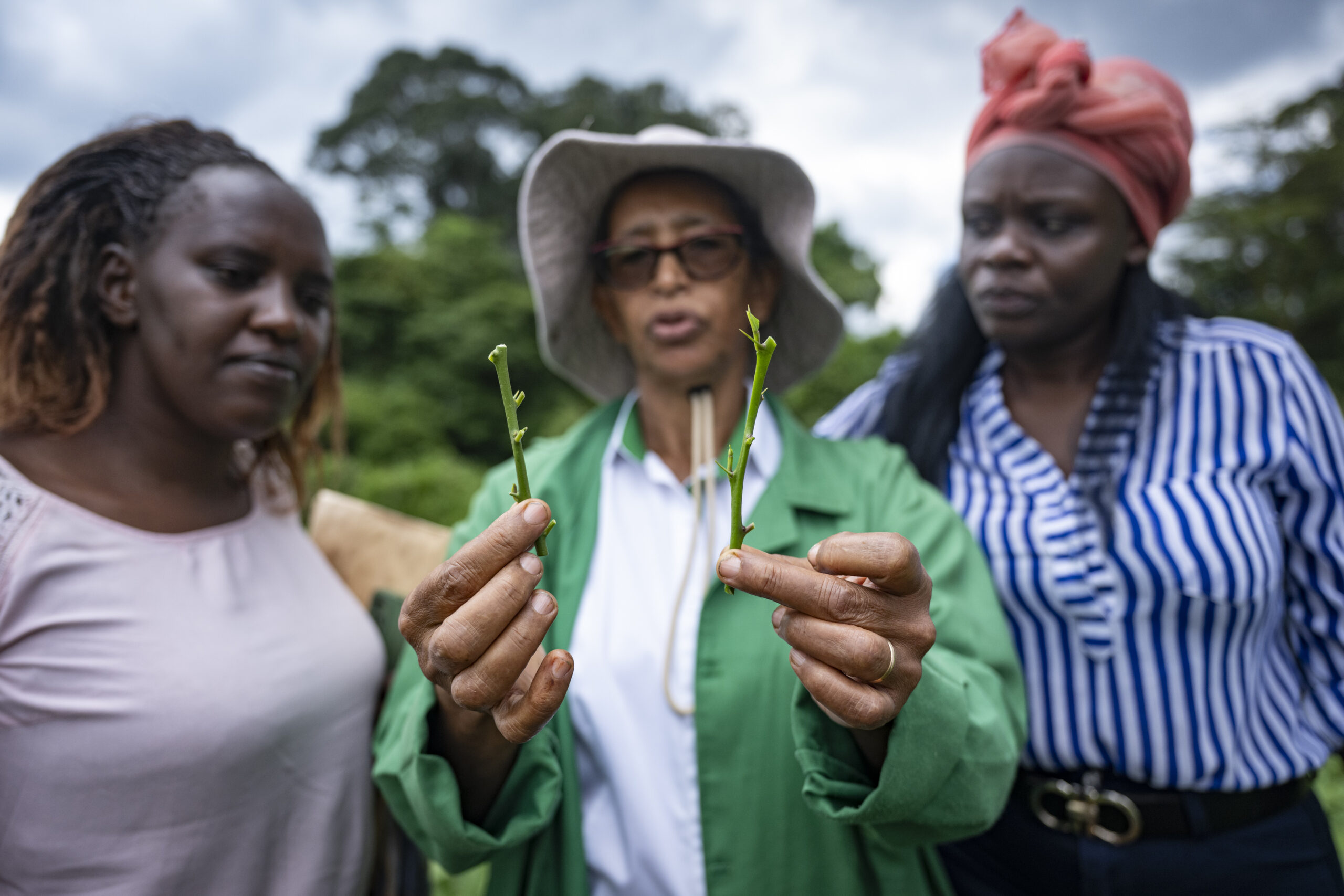
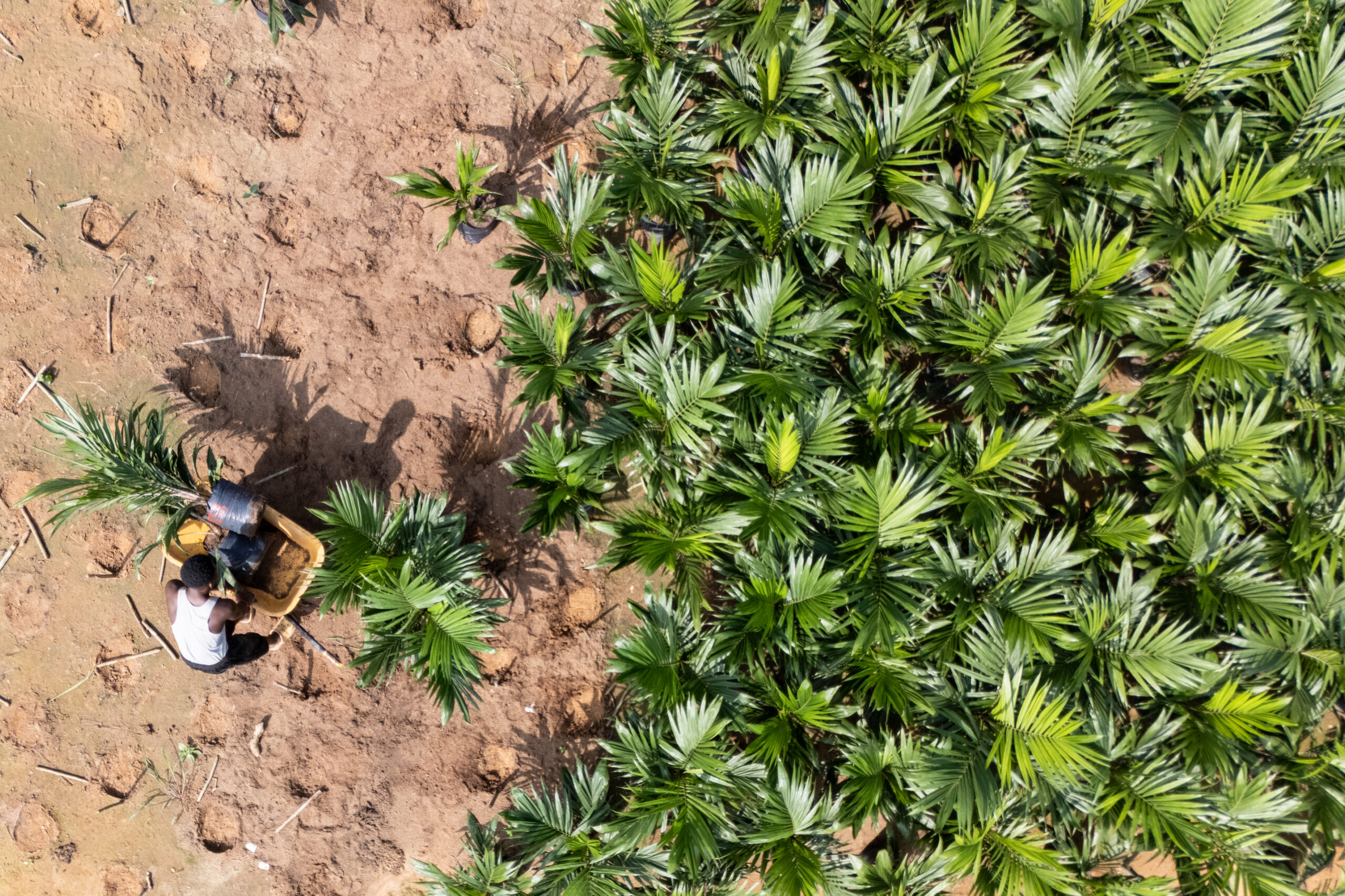
Acacia plantations established by local communities in Yangambi for renewable charcoal production. Photo by Axel Fassio / Landscape Alliance
The charcoal is the result of community agroforestry efforts in the Yangambi Engagement landscape, supported by Landscape Alliance through its Yangambi Engagement Landscape initiative since 2020, helping communities establish acacia plantations for sustainable wood fuel production.
Funded by the European Union, with complementary support from the UK Foreign, Commonwealth & Development Office (FCDO) and several other development partners, the initiative has helped establish a sustainable source of wood fuel while reducing dependence on charcoal produced from natural forests.
Following the first harvest in April 2026, producers supplied 5.6 tonnes of charcoal to urban markets in Kisangani, the capital of Tshopo Province, marking the beginning of a sustainable wood fuel value chain in the region.
The first market sales were officially celebrated during a launch ceremony in Kisangani, where Tshopo Provincial Minister of Environment, Sustainable Development and New Climate Economy Bijou Koy described the initiative as an important step towards meeting household energy needs while protecting forests.
“Today’s launch of the first production of renewable charcoal from acacia agroforestry plantations represents a major step forward for the Tshopo Province,” Koy said during the 19 June launch ceremony. “This initiative demonstrates that it is possible to meet part of the energy needs of our populations while reducing pressure on natural forests and creating economic opportunities for local communities.”
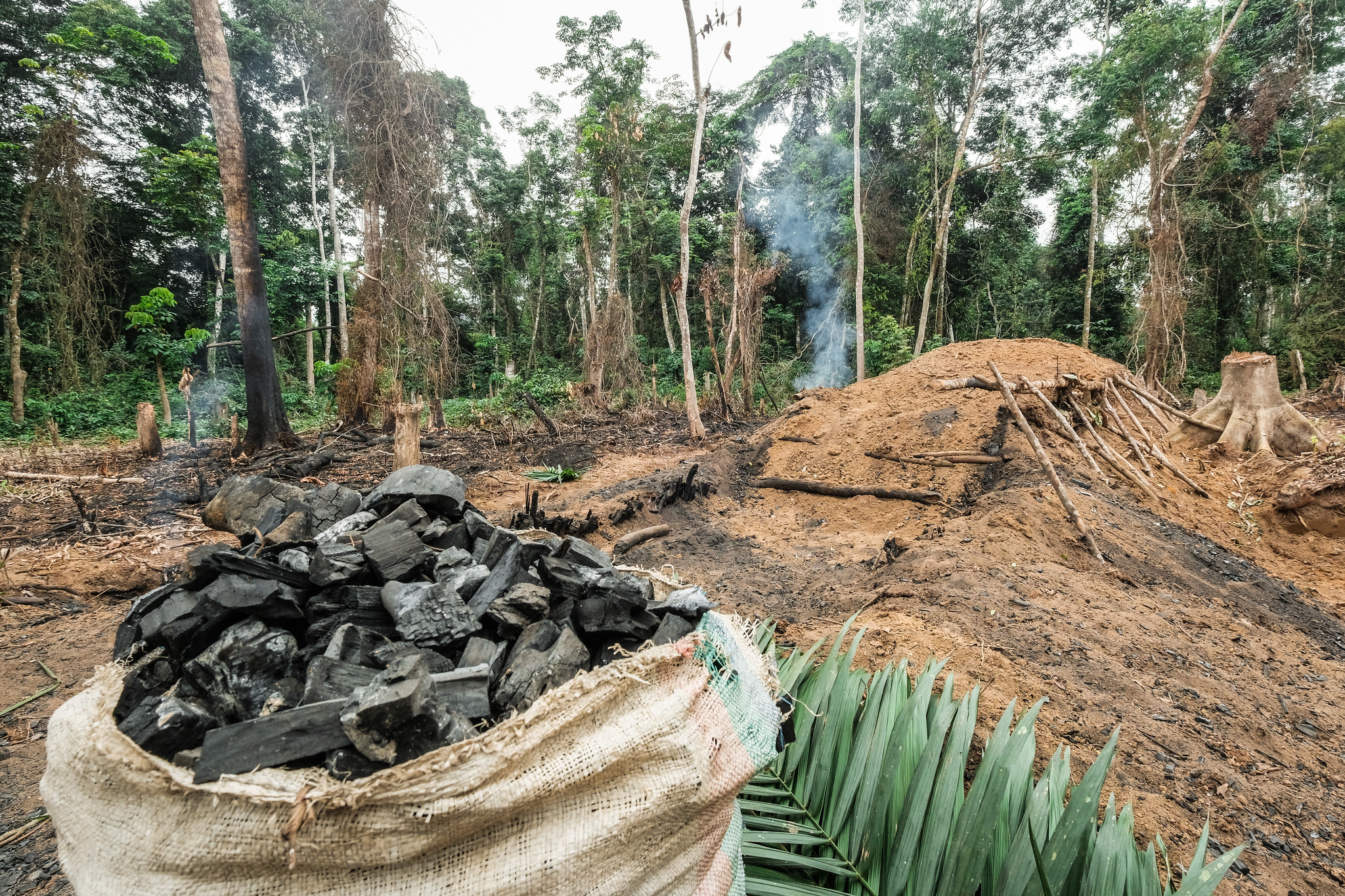
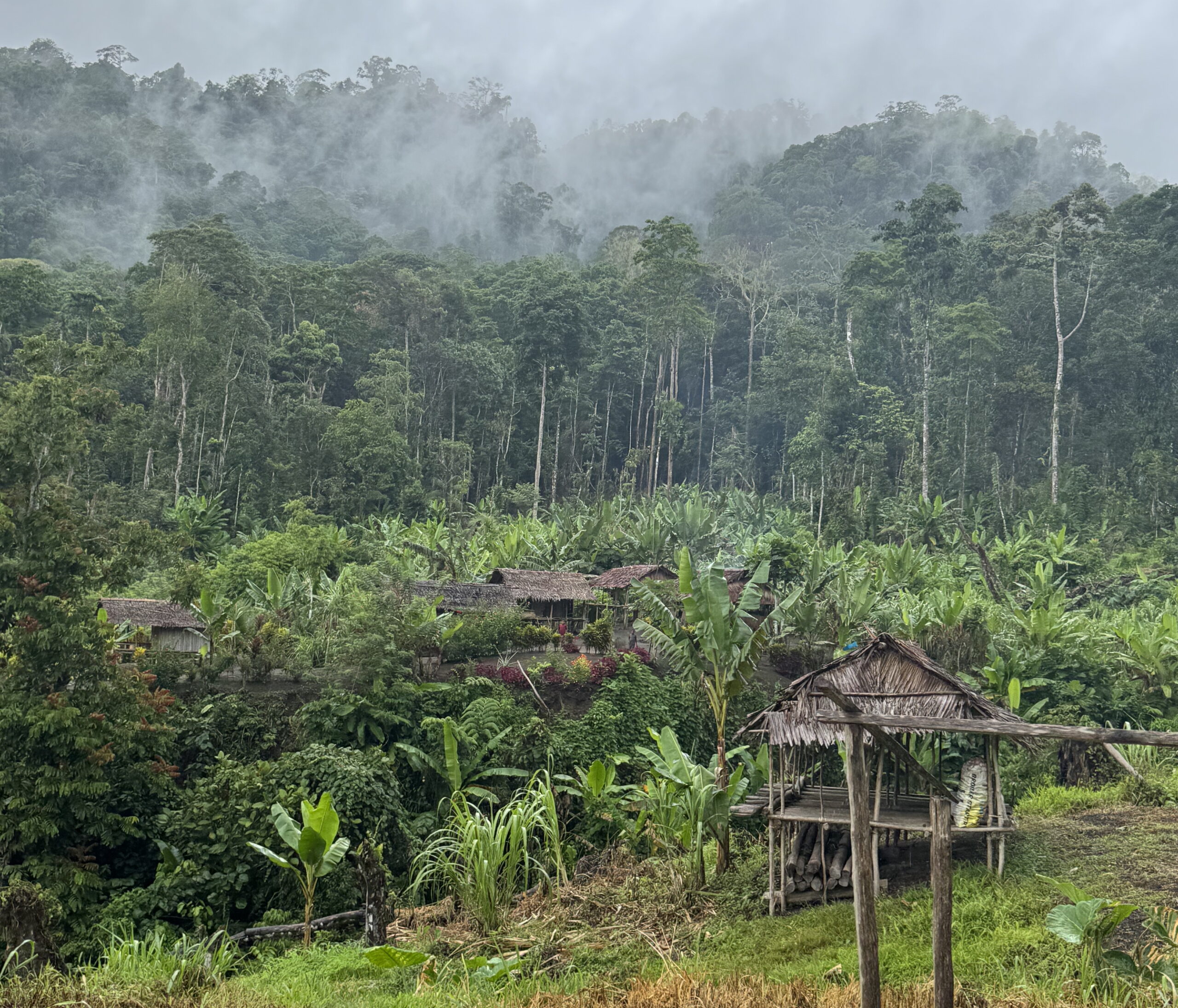
Photo by Axel Fassio / Landscape Alliance
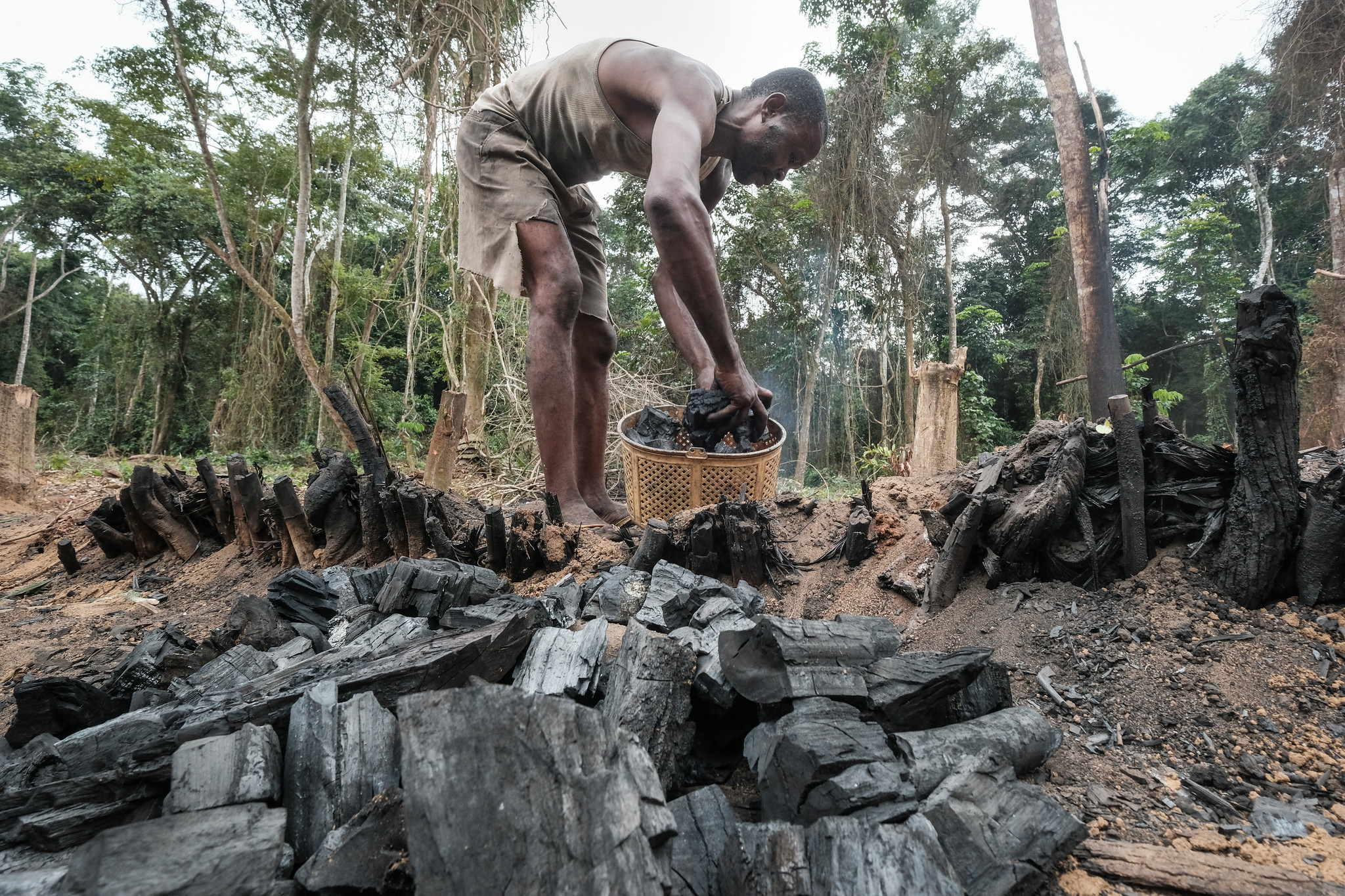
Photo by Axel Fassio / Landscape Alliance
In Tshopo Province, an estimated 81 percent of households depend on charcoal as their primary cooking fuel, making woodfuel one of the leading drivers of forest degradation around Kisangani and the surrounding Yangambi landscape. As the city’s population grows, demand for charcoal is also rising, placing greater pressure on nearby forests.
“The arrival of renewable charcoal on the market demonstrates that restoring degraded landscapes can also create sustainable economic opportunities for rural communities. By planting useful trees and investing in agroforestry, farmers are showing that it is possible to contribute to the local woodfuel demand while protecting the Congo Basin’s natural forests,” notes Jolien Schure, coordinator of the Sustainable Wood-Energy team in the Yangambi Engagement landscape.
Community agroforestry has already transformed more than 1,000 hectares of degraded land in the Yangambi landscape into productive plantations managed on a rotational basis. This includes 850 hectares of acacia and 150 hectares of indigenous tree species, creating a sustainable source of woodfuel while contributing to landscape restoration.
Today, the producers are organized into ten sustainable woodfuel associations operating across 25 villages in the sectors of Turumbu, Yalikadja Yanonge, Yaokadja in Isangi Territory and Bengamisa sector in Banalia Territory, as well as the respective chiefdoms of Kombe and Yalihila. The associations have helped farmers coordinate production, share technical knowledge, and collectively develop a sustainable woodfuel value chain.
The programme has also improved the efficiency of charcoal production. Through training in improved carbonization techniques over several years, producers now use improved earth kilns and properly dried wood to maximize charcoal yields. As a result, charcoal recovery has doubled from about 11 percent with traditional kilns to 22–24 percent, meaning less wood is needed to produce the same amount of charcoal while reducing biomass losses and increasing producers’ returns.
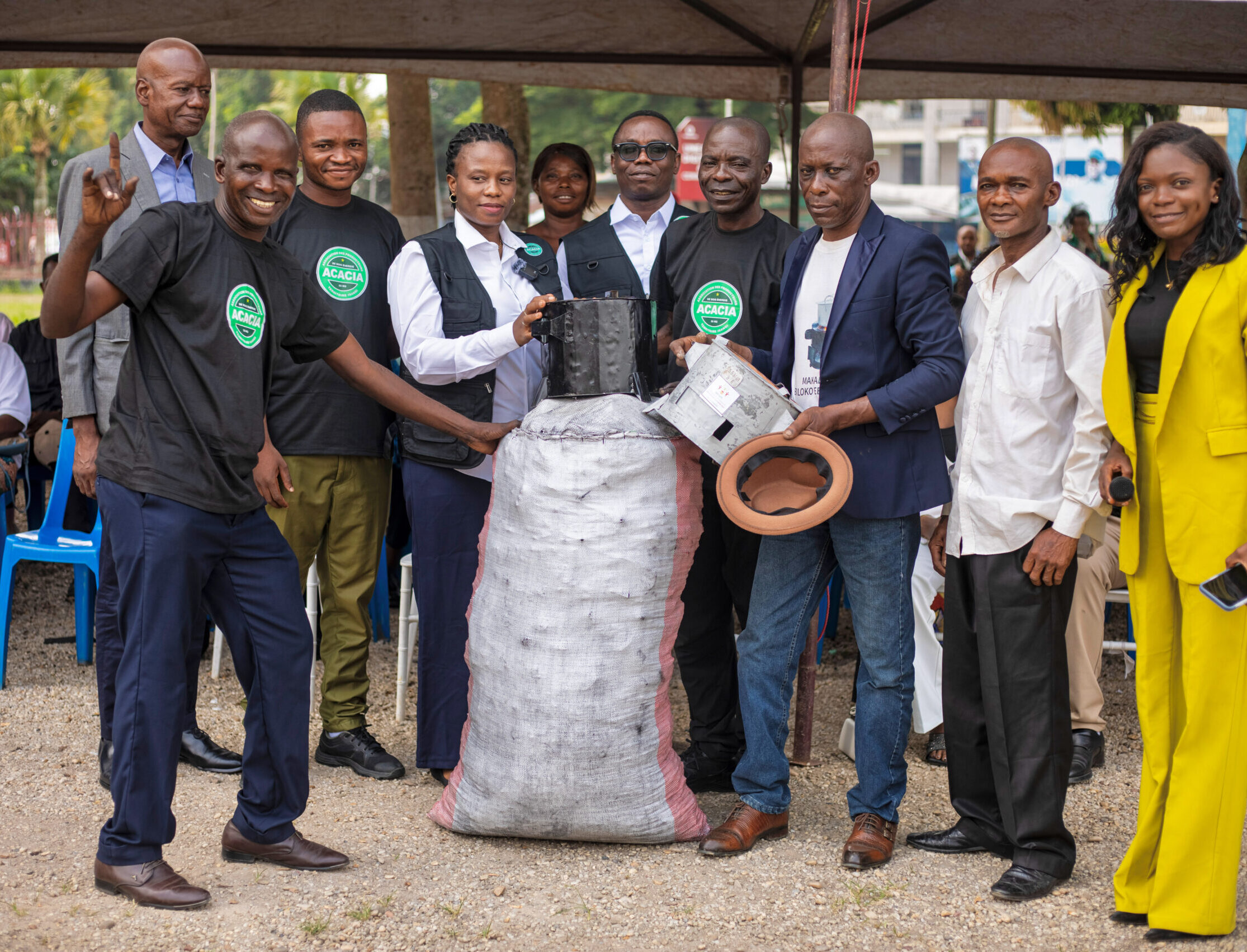
Today, the first bags of renewable charcoal reaching Kisangani’s markets demonstrate how community agroforestry can generate both income and a sustainable source of cooking energy.
“This milestone reflects years of work supporting communities to establish plantations, improve charcoal production techniques and organize themselves into producer associations. The fact that farmers are now selling charcoal from trees they planted themselves shows that sustainable woodfuel production is no longer a concept but a functioning value chain that can continue to grow,” said Maxwell Kubi, agroforestry coordinator of the Yangambi Engagement Landscape initiative.
That transformation is also reflected in the experiences of farmers who once doubted the initiative.
“When we were first encouraged to plant acacias in the Yangambi landscape, many of us thought it was a strategy to take our forests. Now we are fully convinced of the benefits these trees bring to our daily lives,” said one landowner who attended the launch in Kisangani.
The commercialization of renewable charcoal is expected to strengthen rural livelihoods by creating a new source of income for farmers who established the plantations. Alongside crop production, managed tree production offers communities a more diversified and sustainable source of revenue while reducing dependence on wood harvested from natural forests.
Renewable charcoal is only one part of a broader effort to make household energy more sustainable in Tshopo Province. Reducing pressure on forests also means reducing demand for woodfuel and charcoal itself. To support that goal, the programme has promoted improved cookstoves that consume significantly less charcoal than traditional stoves.
According to Landscape Alliance data, improved cookstoves reduce charcoal consumption by about 45 percent, helping households lower cooking costs while reducing pressure on forests.
Improved cookstove using renewable charcoal in Kisangani, Tshopo Province, Democratic Republic of the Congo. Photo by Axel Fassio / Landscape Alliance
The promotion of improved cookstoves has also created new economic opportunities. Local artisans have manufactured and sold more than 80,000 improved cookstoves since 2022, while awareness campaigns across Kisangani have reached more than 80,000 households, encouraging families to adopt cleaner and more efficient cooking technologies.
Together, renewable charcoal and improved cookstoves address both sides of the challenge by creating a more sustainable supply of woodfuel while reducing demand for it.
Provincial authorities have also expressed support for expanding the approach. During the launch, Koy praised the vision of Tshopo Governor Paulin Lendongolia Lebabonga and reaffirmed the provincial government’s commitment to promoting renewable charcoal as an alternative to wood harvested from natural forests.
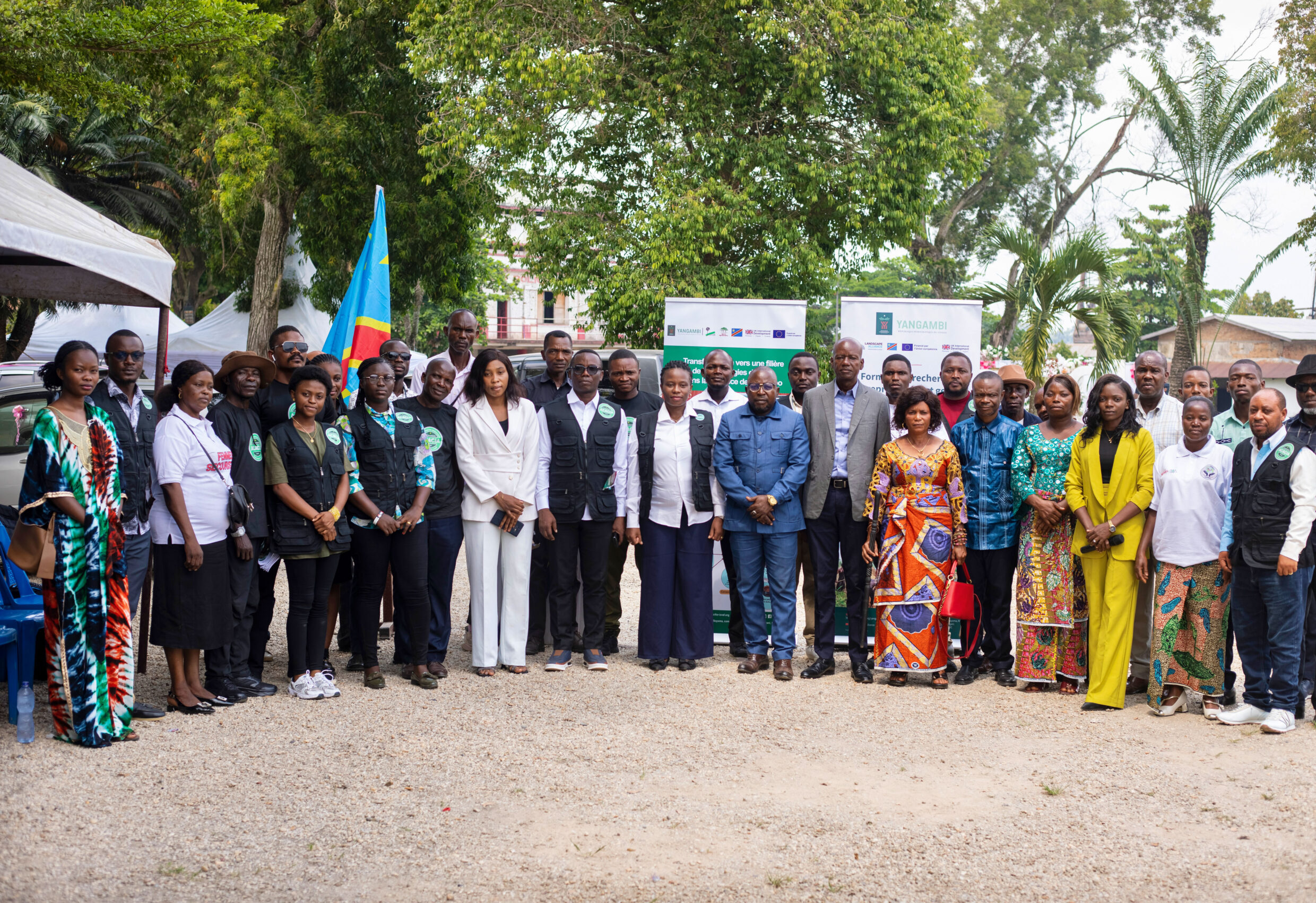
To encourage consumer uptake, Landscape Alliance, together with the Provincial Ministry of Environment, organized public awareness activities across Kisangani, including market demonstrations, community outreach and a fitness walk promoting renewable acacia charcoal and improved cookstoves. The campaign introduced residents to the new product while highlighting the environmental and economic benefits of sourcing charcoal from agroforestry plantations rather than natural forests.
For the communities that planted the first acacia seedlings six years ago, the arrival of renewable charcoal in Kisangani’s markets marks more than the launch of a new product. It demonstrates that agroforestry can help meet growing urban energy demand while restoring degraded landscapes, supporting rural livelihoods and reducing pressure on one of the world’s largest tropical forest ecosystems.
Acknowledgement
The work conducted in Yangambi Engagement Landscape by Landscape Alliance through the sustainable wood-energy value chain, as well as the results presented in this article, was funded by the European Union and the Foreign, Commonwealth & Development Office (FCDO).