
Consider the following research topics: What does it take to protect both crops and livelihoods from human-wildlife conflict in Gabon? Which tree species offer the best chances for successful forest regeneration in Cameroon? What determines marketable traits for high-value timber species traded by forest companies in the Republic of Congo?
These are far from being just abstract questions. They are real, practical challenges that researchers are working to answer. Through the Applied Research in Ecology and Social Sciences in support of the Sustainable Management of Forest Ecosystems in Central Africa (RESSAC) programme, scientists are generating insights that can directly improve how forests are managed and how communities benefit from them.
Yet despite their relevance, many of these findings remain little known or underused. Too often, they fail to reach the policymakers and practitioners who could turn them into practical solutions.
That’s because multiple, disruptive gaps between such valuable research findings on one hand, and policymakers and key actors on the other, are preventing the access, use and implementation of this information, concluded participants during the International Scientific Symposium of the RESSAC program: Forest Ecosystems of Central Africa event. The Symposium was hosted by the Ministry of Higher Education and Scientific Research of the Republic of Gabon and co-organized by the Network of Higher Education and Research Institutions in Central Africa (REESIRAC), RESSAC and the Central African Forest Observatory – Centre of Excellence (OFAC-CE).
“We need to bridge the gap between the knowledge we are generating from research, to that knowledge being used in the decision-making process,” said Abdon Awono, head of capacity building with the programme Applied Research in Ecology and Social Sciences in support of the Sustainable Management of Forest Ecosystems in Central Africa (RESSAC) and principal investigator for the OFAC-CE. Awono highlighted the complementarity between the work of OFAC-CE and RESSAC. Both are funded by the European Union in support of the Central African Forest Commission (COMIFAC).
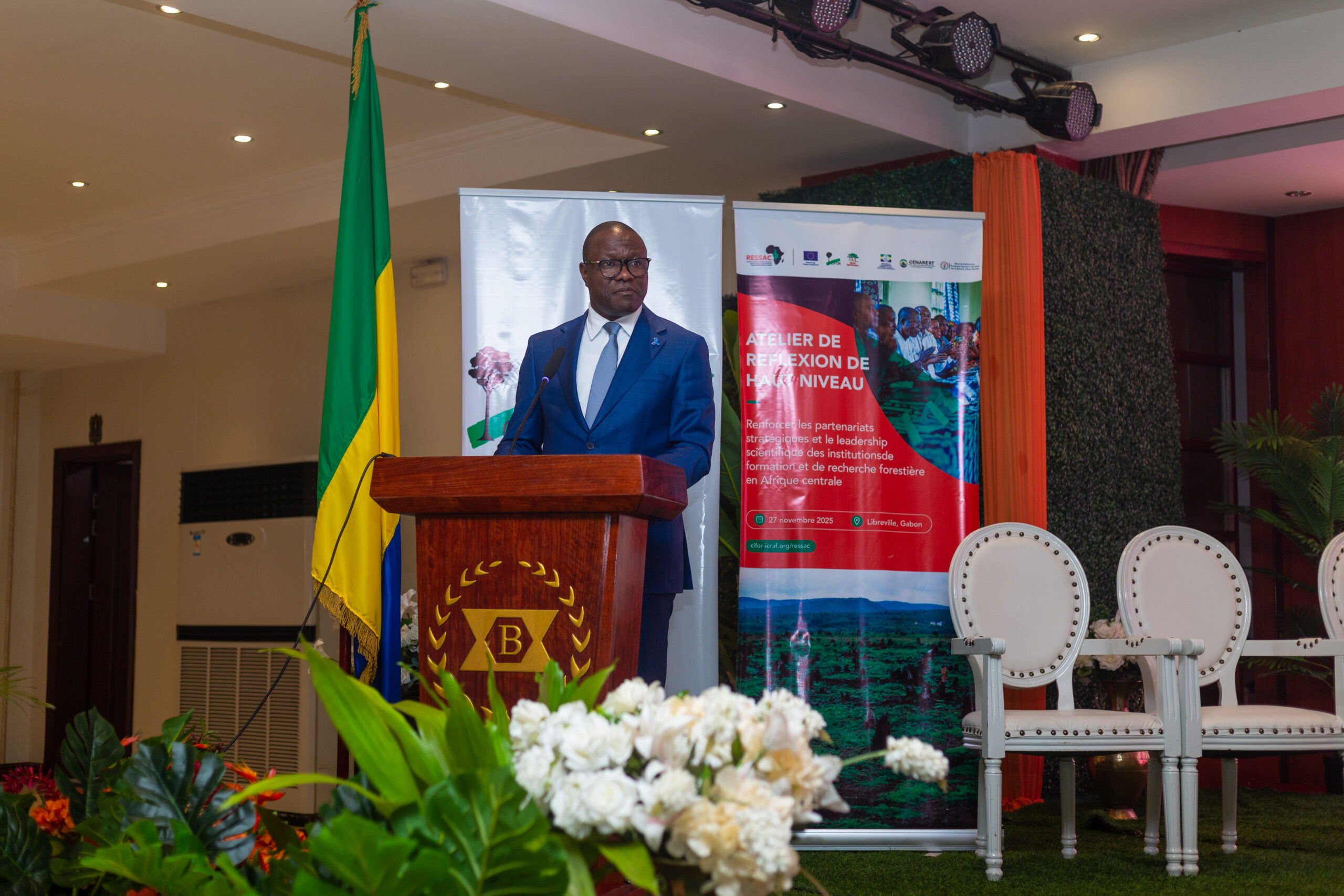
“We must find ways to link policymakers with research knowledge, to discuss the realities and how they can use the results coming from research to improve the way they are putting policies into place,” said Awono. “Because at the end of the day, it’s the impact of what we are doing that is most relevant; how the knowledge can be used by the people making decisions on forest management.”
The knowledge generated from the above studies shows how research findings can have important, practical applications if they are known to the public institutions setting and implementing policies from national to local, said Richard Sufo, coordinator of CIFOR-ICRAF’s RESSAC programme.
Those studies covered:
- Human-wildlife conflict, innovative deterrent methods and the SAFE approach in Waka National Park, Gabon;
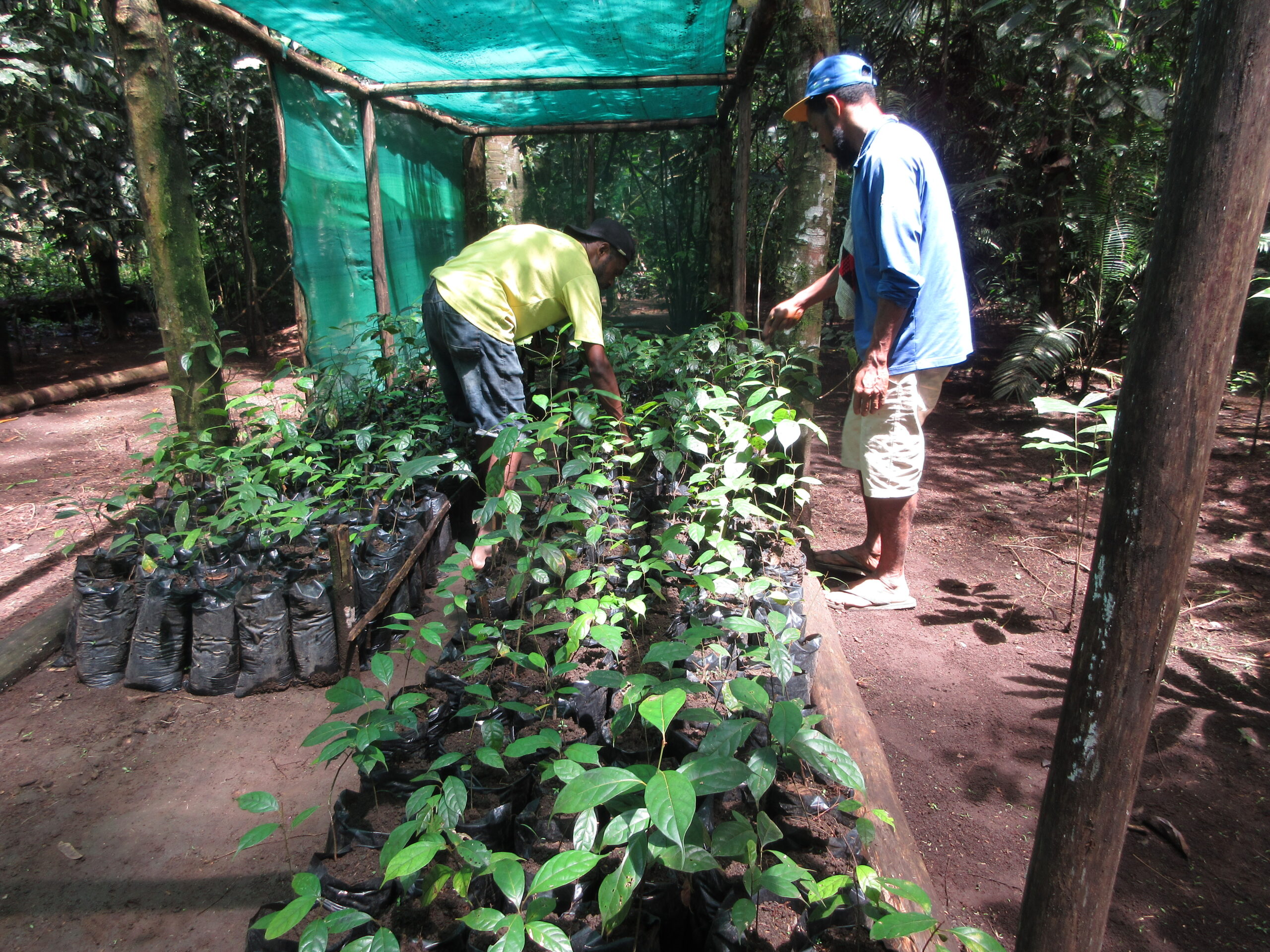
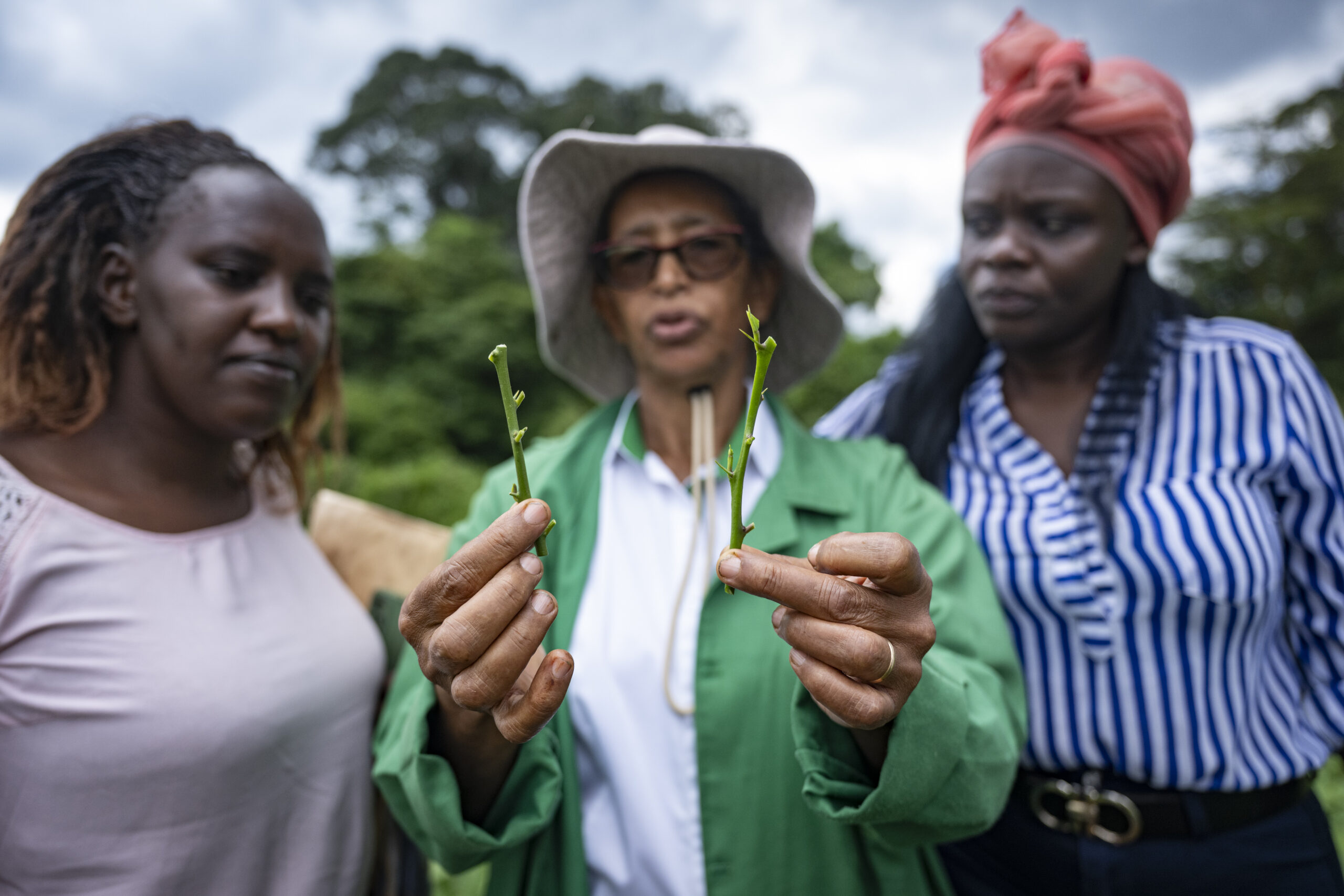
- Growth dynamics and ecology of seedlings of the main commercial tree species in the production forests of Cameroon; and
- Ecological and genetic determinants of wood quality in several harvested tree species in the Republic of Congo.
Although significant, the studies represented only a few of the many projects presented and discussed during the symposium, held in Libreville, Gabon, from 25 to 27 November 2025. Over three days, four years of research from 26 RESSAC-supported projects were presented and discussed by 350 participants.
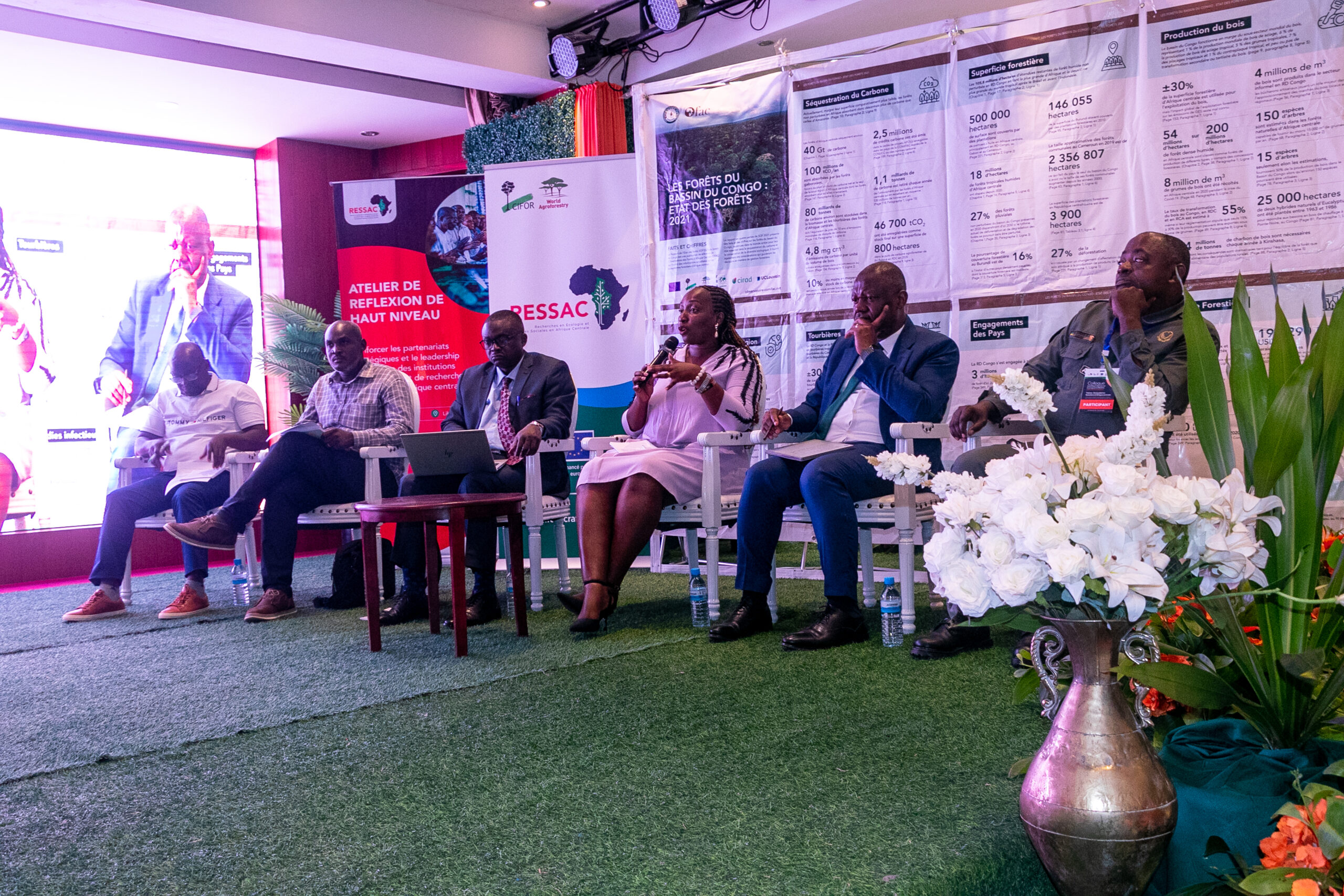
Photo by Merilyne Ojong / CIFOR-ICRAF
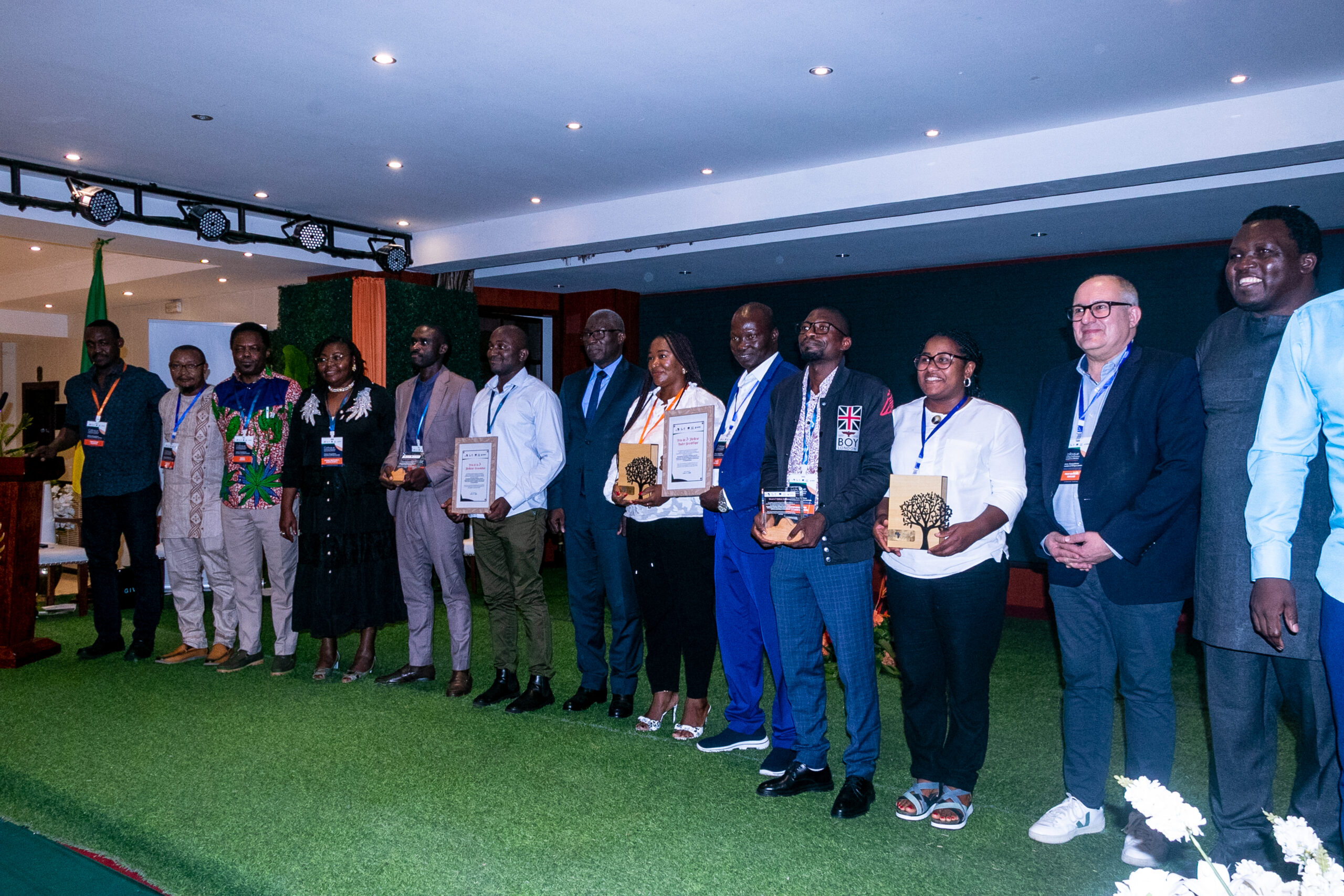
Photo by Merilyne Ojong / CIFOR-ICRAF
Other important gaps identified during the Symposium included low levels of partnership and synergies among researchers from both research institutions and universities in Central Africa, further constraining the use of research findings. Symposium participants called for better communication within the research and academic communities to avoid project duplication and to share information.
In fact, some participants took the opportunity to initiate collaborations at the Symposium, added Sufo.
“We put people together to see how they can work on common research topics across ecosystem types and geographies,” he explained.
“We asked them to imagine the next topics for research on forestry and agriculture that can be relevant in their respective contexts and for the ultimate benefit of local communities and forestry administration.”
Following the Symposium, a High-Level Roundtable on Forestry, Environmental Research and Education in Central Africa was held on 27 November 2025. It brought together scientists and key institutional leaders and concluded with a joint declaration affirming “our shared commitment to strengthening research, innovation and education in the service of inclusive governance and sustainable development in Central Africa.”
The declaration also urged greater application of this knowledge in the daily operations of targeted stakeholders, and in the development, implementation and monitoring of public policies and programmes supporting sustainable development in the region.
This will require more funding from non-governmental organizations, universities and research centres, the private sector and government to support future research as well as collaboration and reporting back to communities, said Sufo. That is particularly vital for RESSAC because the programme focuses on research in under-explored topics linking ecology and social forestry.
“Research in Central Africa has long emphasized ecological dimensions,” said Sufo. “However, what sets initiatives like RESSAC apart is the effort to bridge ecology with social sciences. This integrated approach is essential to better understand how social contexts shape ecological processes, and in turn, how forest-dependent communities can derive more sustainable and equitable benefits from forest resources.”
Publishing in high-profile, international academic journals and presenting their research findings at regional and global forums is another important way that Central African researchers can use to raise awareness and bridge the information gap. But this requires researchers to build their capacities in scientific writing, promoting their work and in mobilizing funding for more research, Awono said.
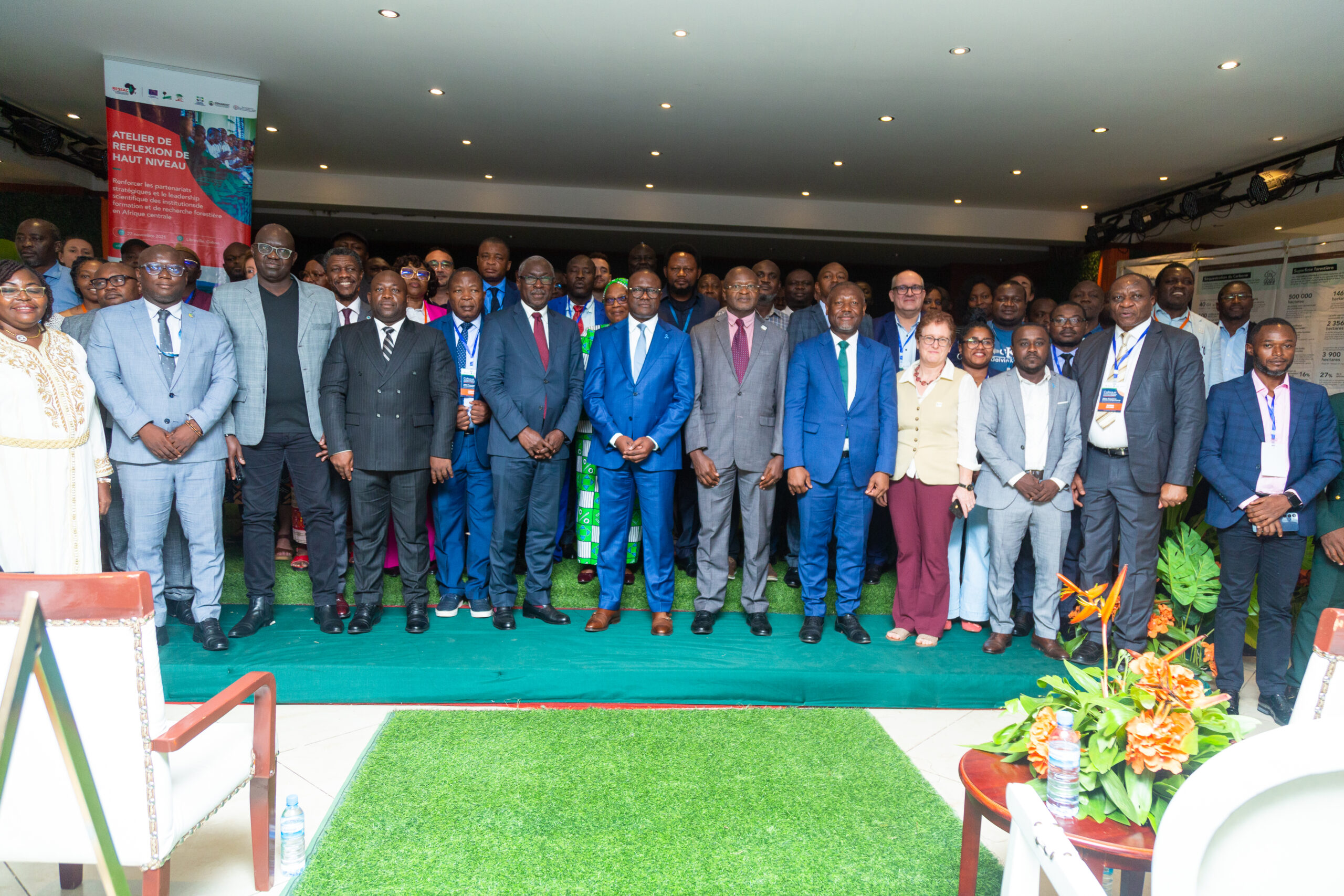
Photo by Merilyne Ojong / CIFOR-ICRAF
This also supports one of RESSAC’s underlying goals: to increase postdoctoral research through diversification of partnerships.
Information gaps can also be narrowed by translating academic research findings into clear, shorter summaries for policymakers and other non-scientific audiences, Awono said.
“Policy briefs can help people to better understand the situation on the ground, and you can understand how relevant the findings are we can get and how to use them. “
Improving policymakers’ understanding of the local knowledge held by Indigenous Peoples and local communities is another gap that must be addressed for the benefit of communities, Sufo said.
“These projects show local people are really important for forest management,” he said. “We cannot manage the forests without considering the role that people play and without the local knowledge that has helped to protect our forest heritage.”
“It’s important to show all governments, all stakeholders, that the local people are valuable and if we want to manage the forests, we need to improve their living standards and put their skills at the centre of governance of the forests.”