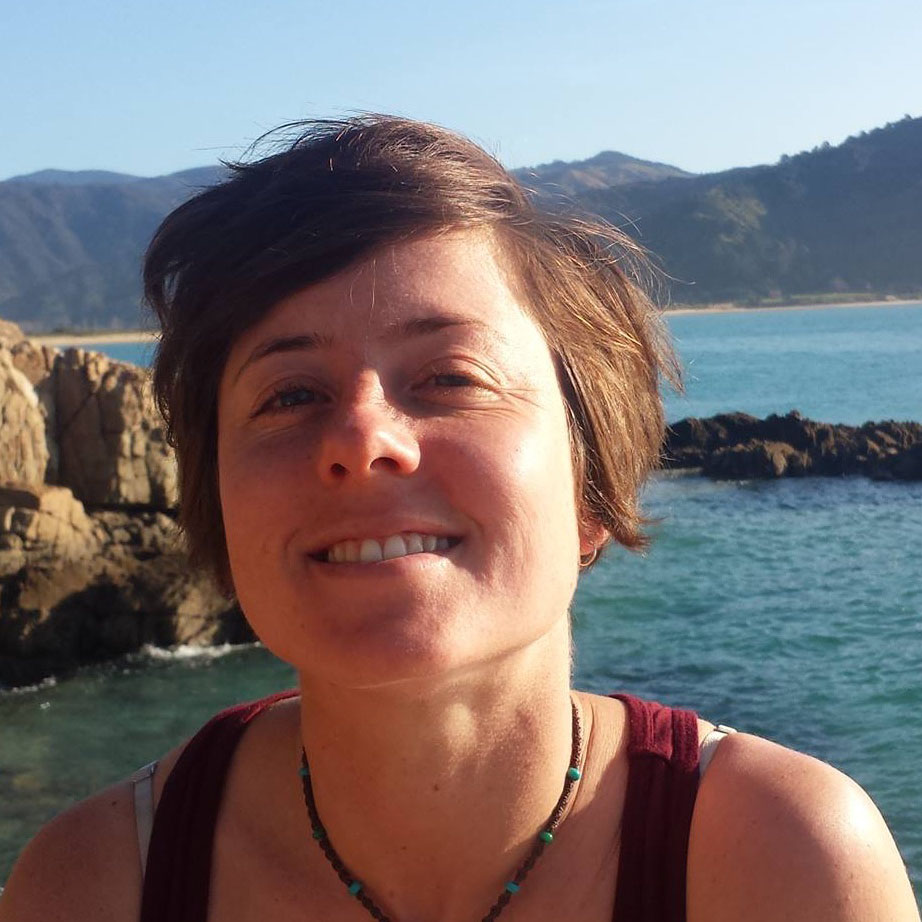
When I video-called Papua New Guinean forester Swancy Saiva, he was in his home village in the Eastern Highlands. Silvery trees quiver, birds trill, and a bunch of kids peered in at me through the screen. Behind him stood a family house that he helped to build, with timber framing and a thick palm-thatched roof.
Across rural Papua New Guinea (PNG), people craft their homes from what’s available. In towns and cities like Popondetta and Port Moresby, you’ll see concrete and corrugated iron structures, trimmed with high fences and barbed wire. But on the mostly gravel drive from Popondetta to the Managalas Plateau, it doesn’t take long before these materials become too costly or difficult for locals to transport, and the structures begin to blend more with their surroundings.
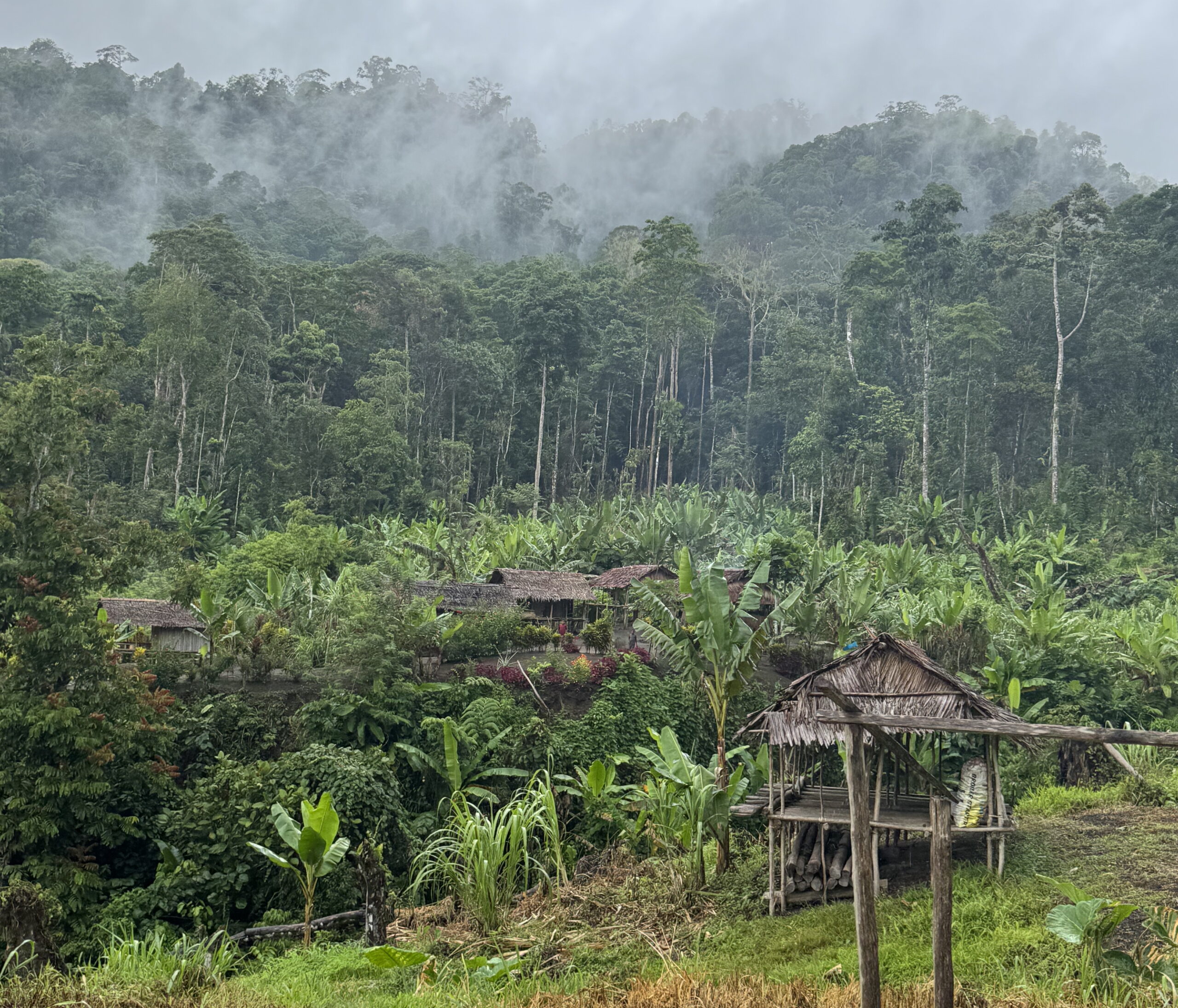
Giant sago palms jutting out of the swamps offer abundant roofing material; bamboo thickets provide strips to weave into walls and strong flooring with enough give in it for the family to sleep on comfortably. Nails are not usually available, so plant fibres are braided into ‘bush ropes’ to tie everything together. Hardwood tree branches and trunks provide the critical framing timber. But which tree species do people use for construction, and will there be enough for future generations? These are the questions Saiva spent months trekking around the Plateau in 2025 trying to answer.
Here, house-building is not just a job for carpenters, and home ownership is not the preserve of the privileged. Most men in a community can expect to build their own house. It’s not a solo task: “If I want to build my house, others in the community help bring materials from the bush, weave the walls and the sago palm roof,” says Saiva. “Then when they want to build, I help them in return. It’s reciprocal.” Both women and men have roles to play: “Men go and cut the leaves; women weave them. Men focus on the walls, the timber, the structural work.”
A traditional house in Kawowogi Village, Papua New Guinea. Photo by Monica Evans / Landscape Alliance
This means that by the time a man is ready to build his own house, he’s usually got enough experience to go on — and some favours to be repaid.
While the houses in a village may share a similar style, each one is distinct in form: some are long and low, others high off the ground. Many are multi-storey, with tiny turret-like structures on top for children to sleep in. The bamboo walls often have blackened strips woven through to create patterns or write words and phrases — including political slogans.
“I was impressed by how creative the houses in Managalas are compared with other coastal areas I’ve seen,” said Saiva. “One person I interviewed had built five separate structures: one for him and his wife, one for the children, one for guests, one for cooking, and one for food storage.”
It was this tradition that Saiva set out to map in 2025, interviewing 224 households across 48 villages on behalf of Landscape Alliance. The Managalas Plateau became a conservation area in 2017, and one question at play is how communities are using forest resources — and whether this needs to change as the population expands.
Saiva’s job was to survey households to find out what tree species theyused for housing construction. The process was complex: like much of PNG, the Plateau is extremely ethnically and linguistically diverse. He realized that a single species could have as many as 11 local names, so he spent a considerable amount of time cross-referencing them. He took photos of species in one area, then showed them to people in other areas to confirm whether they were talking about the same tree.
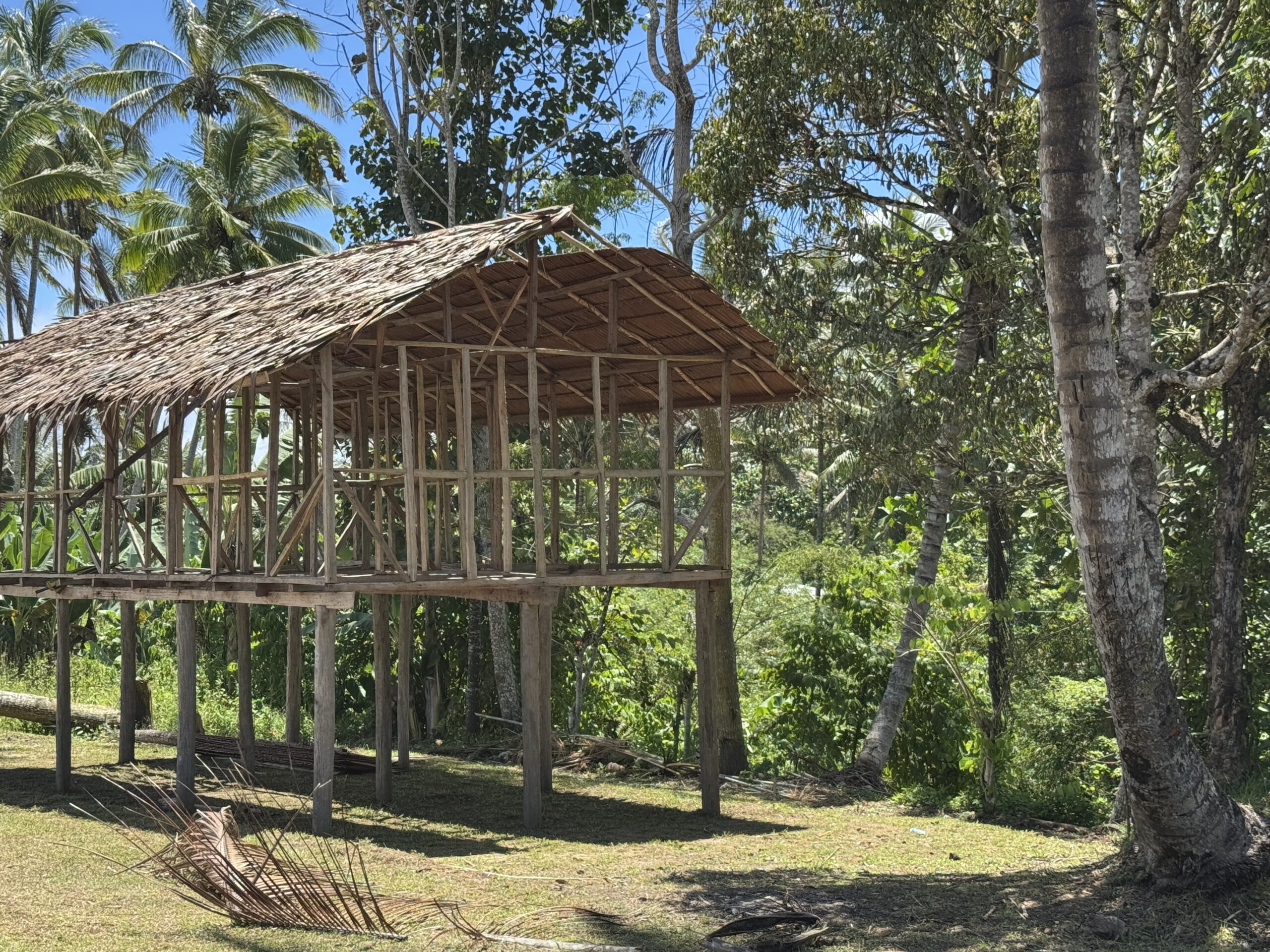
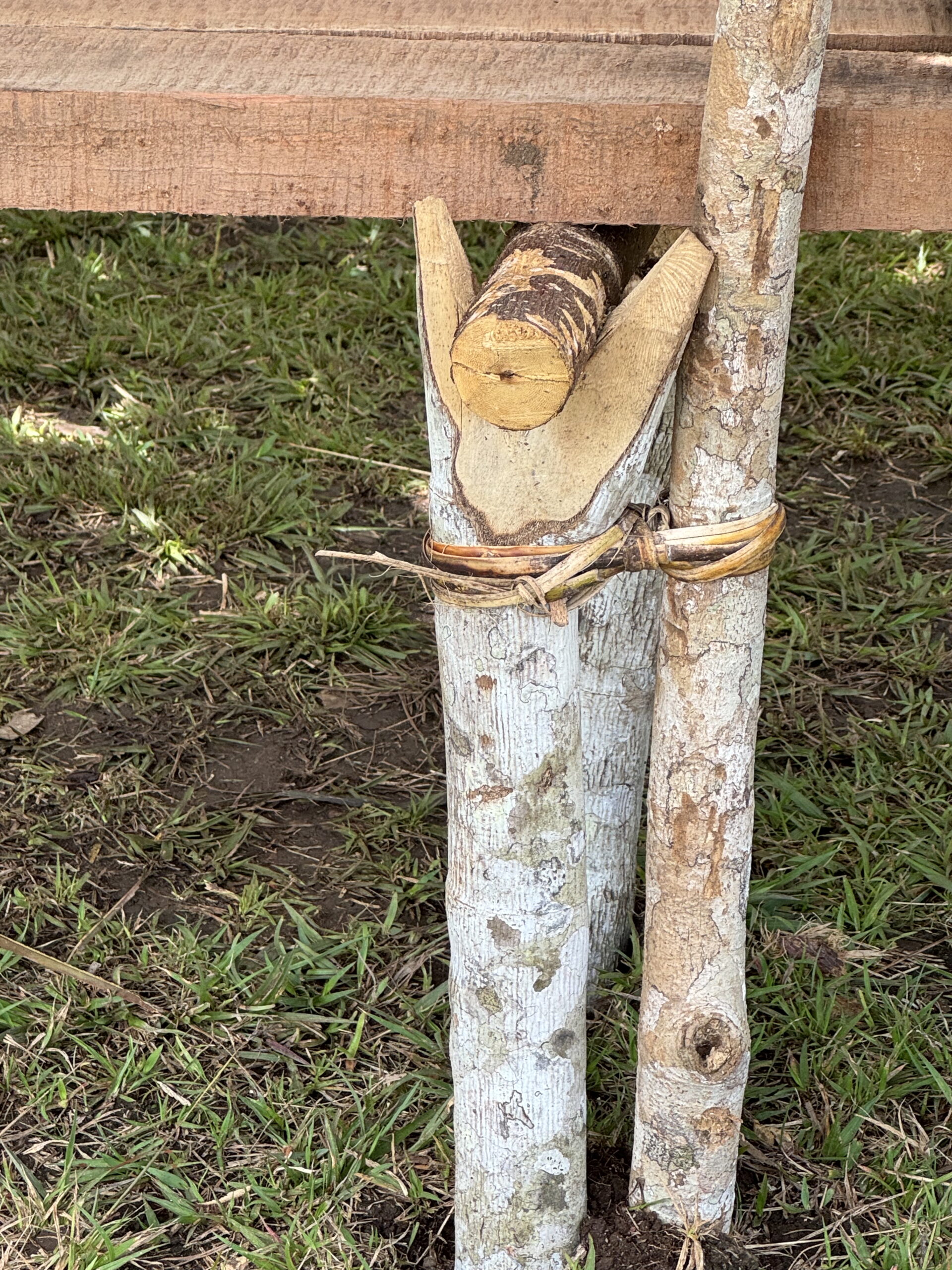
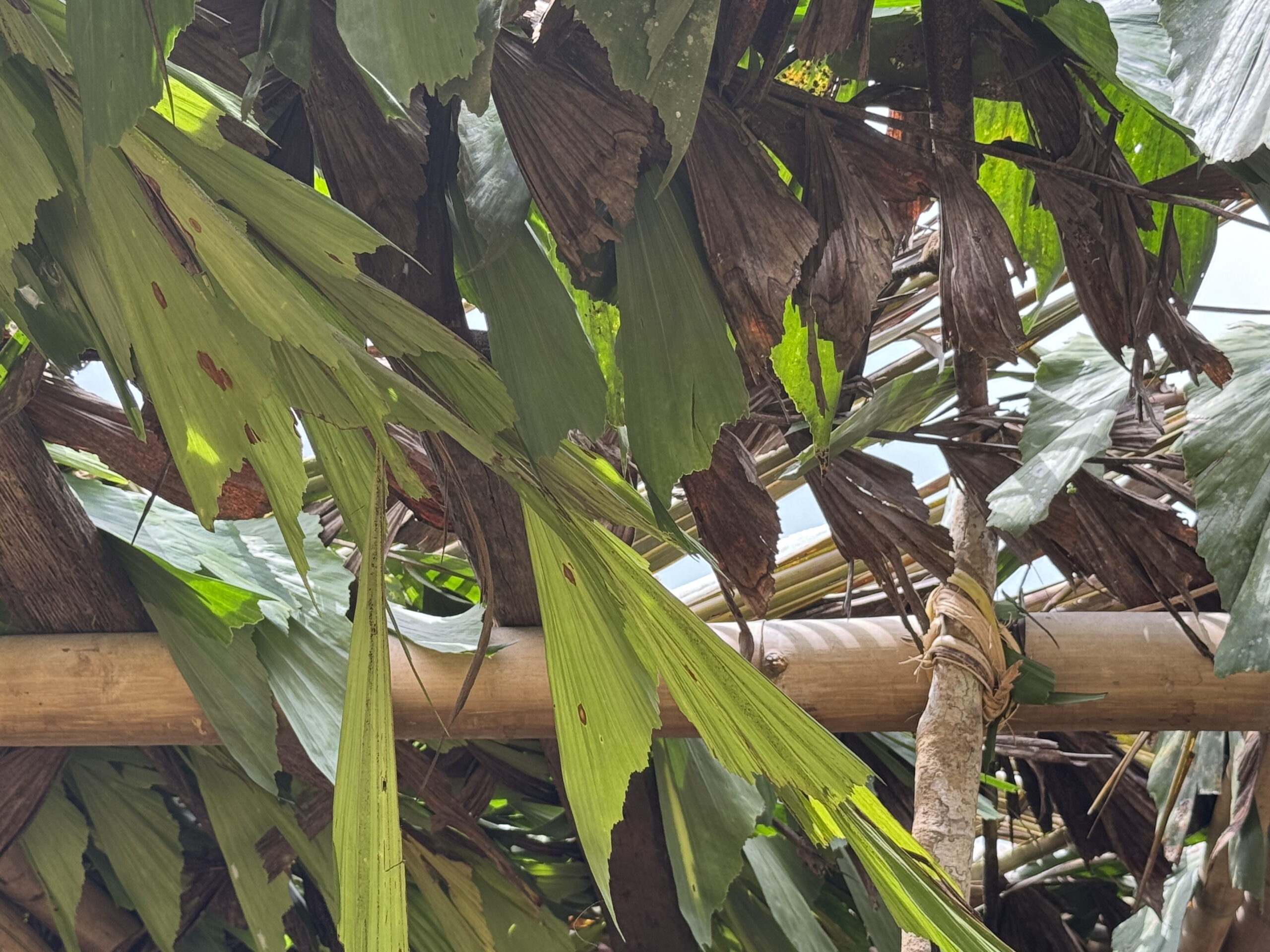
He found that most of the trees people use for timber come from old food gardens and secondary fallow forest. Primary forest exists on the plateau, but it’s too far from the villages: hauling heavy timber across rough terrain is too labour-intensive.
What the elders told him, though, suggested that this wasn’t always the case. Many described species that younger participants had never heard of: trees that were once close enough to use but are now either deep in the forest or gone entirely. “The younger generation has lost knowledge of species their grandparents used,” Saiva says. “Those trees are a long way from the village now.”
Collecting samples for such species was very challenging, he said. “We’d walk several kilometres into the bush. The trees are very tall, and we didn’t have equipment to bring down branches, so we just climbed them and collected the leaf samples by hand.”
In several cases, elders who had described species during the survey had passed away before Saiva could return to collect samples. As a result, the team could no longer obtain a plant sample or even a photograph of the tree, making it harder to identify the species and preserve knowledge of its use.
“They had passed away, so we couldn’t get the plant sample or even a photo of that tree.”
— Swancy Saiva, Project Assistant and Researcher, Landscape Alliance
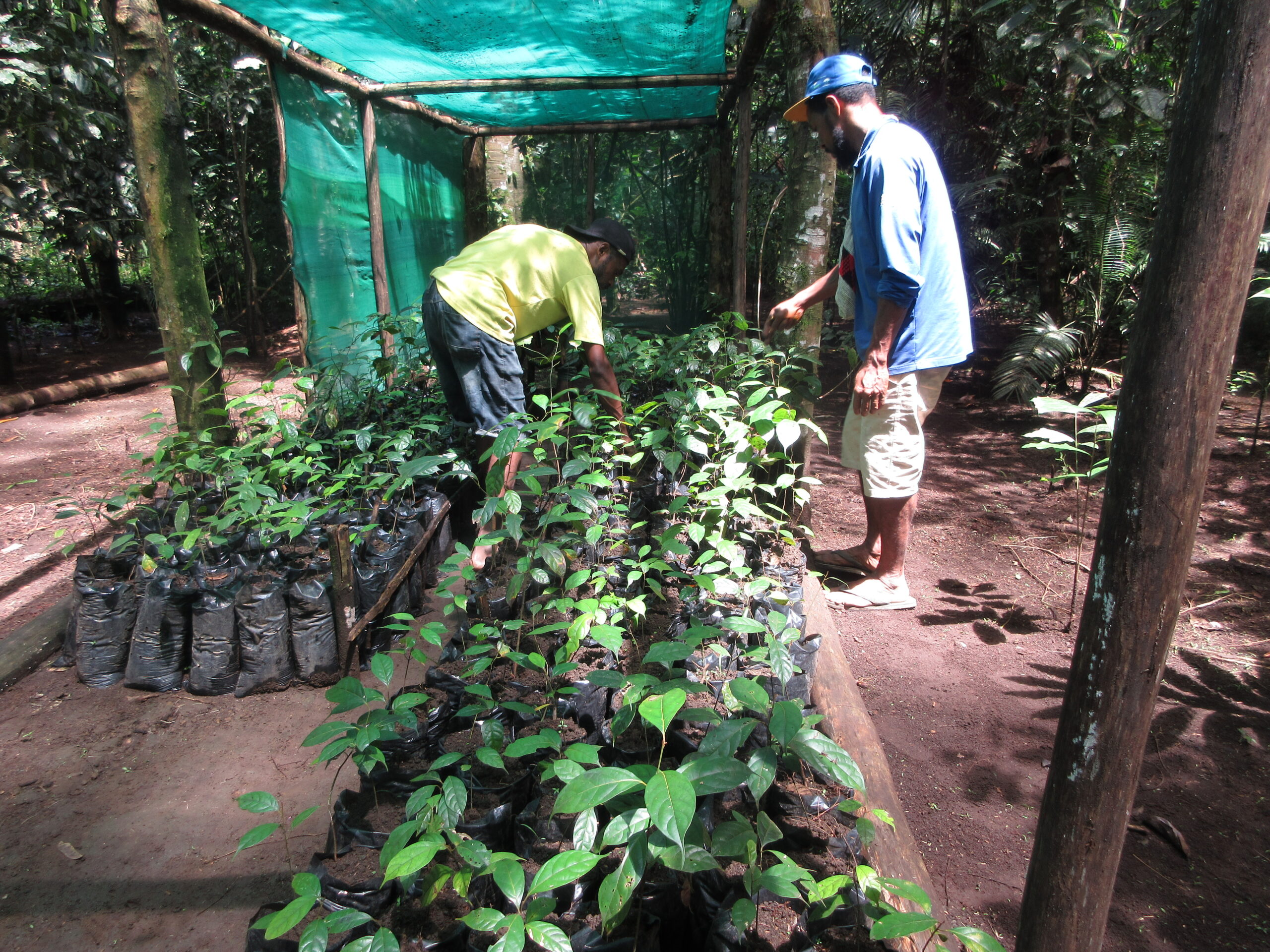
The survey results will be used to populate two nurseries in the east and west of the Plateau. By growing commonly used timber trees in these nurseries, the project hopes to prevent forest depletion and give younger builders access to some of the species used by their grandparents, without requiring them to trek deep into the bush or over-rely on the limited few who know where to find them.
For more information on the project, please contact Landscape Alliance’s PNG Program Manager, Will Unsworth: [email protected]