

As countries across the Asia-Pacific region accelerate efforts to harness blue carbon ecosystems for climate action, a central question is emerging: who has the capacity to turn ambition into impact?
Blue carbon ecosystems — mangroves, seagrasses and salt marshes — are among the most powerful natural climate solutions. They store large amounts of carbon and provide essential ecosystem services. They buffer coastlines, sustain fisheries and support millions of livelihoods. Indonesia alone is home to over 20 percent of the world’s mangroves, giving the country a central role in blue carbon policy, finance and implementation.
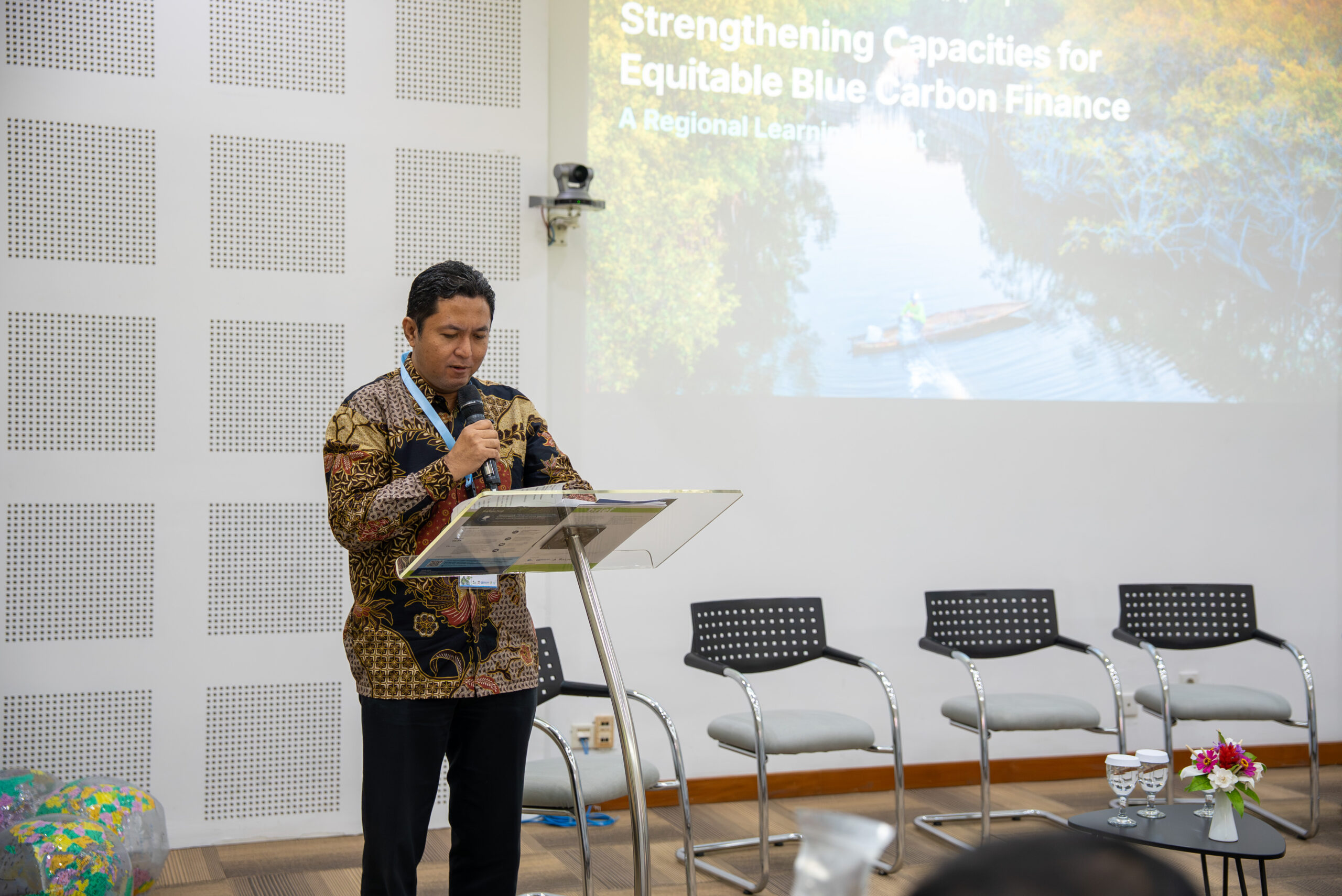
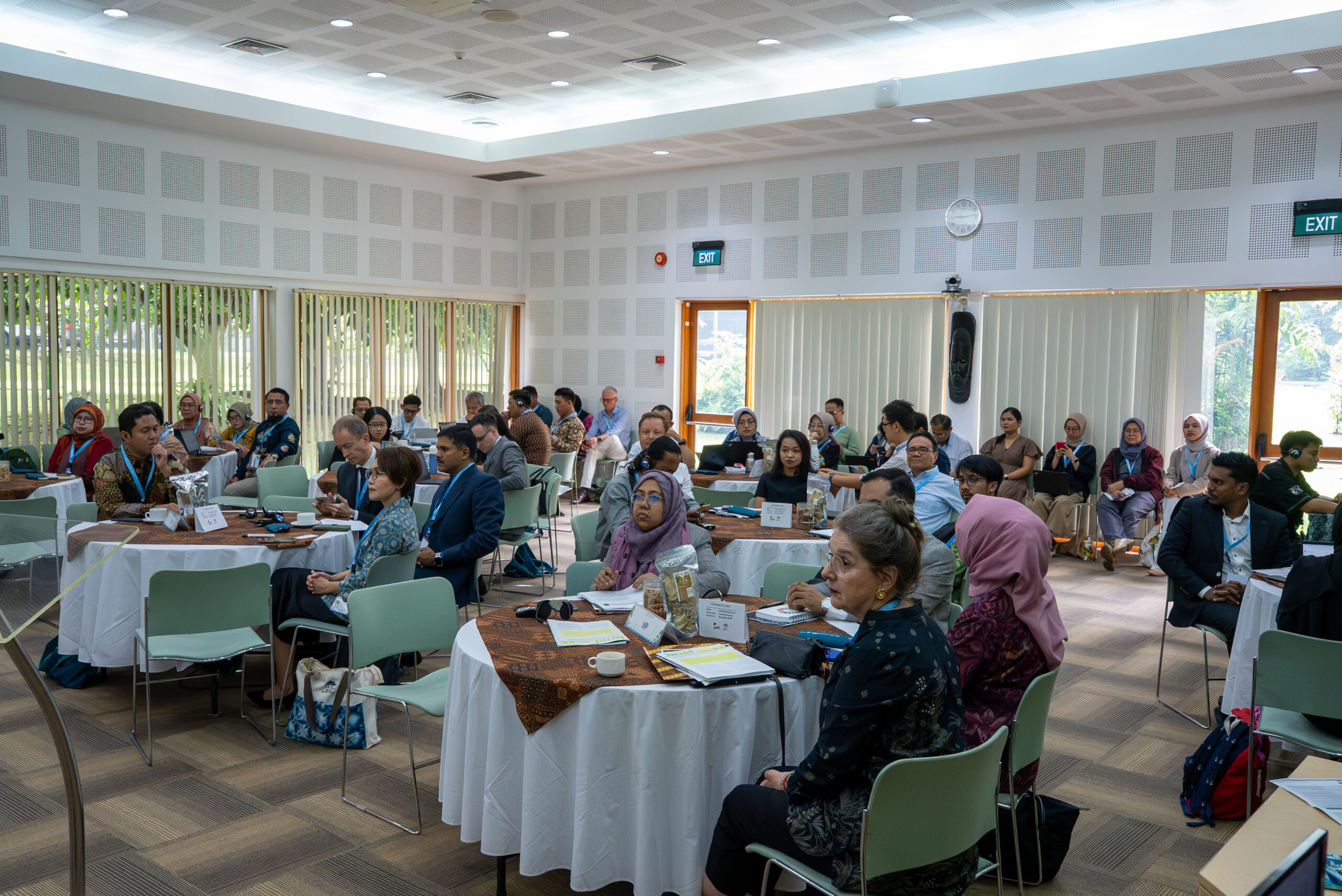
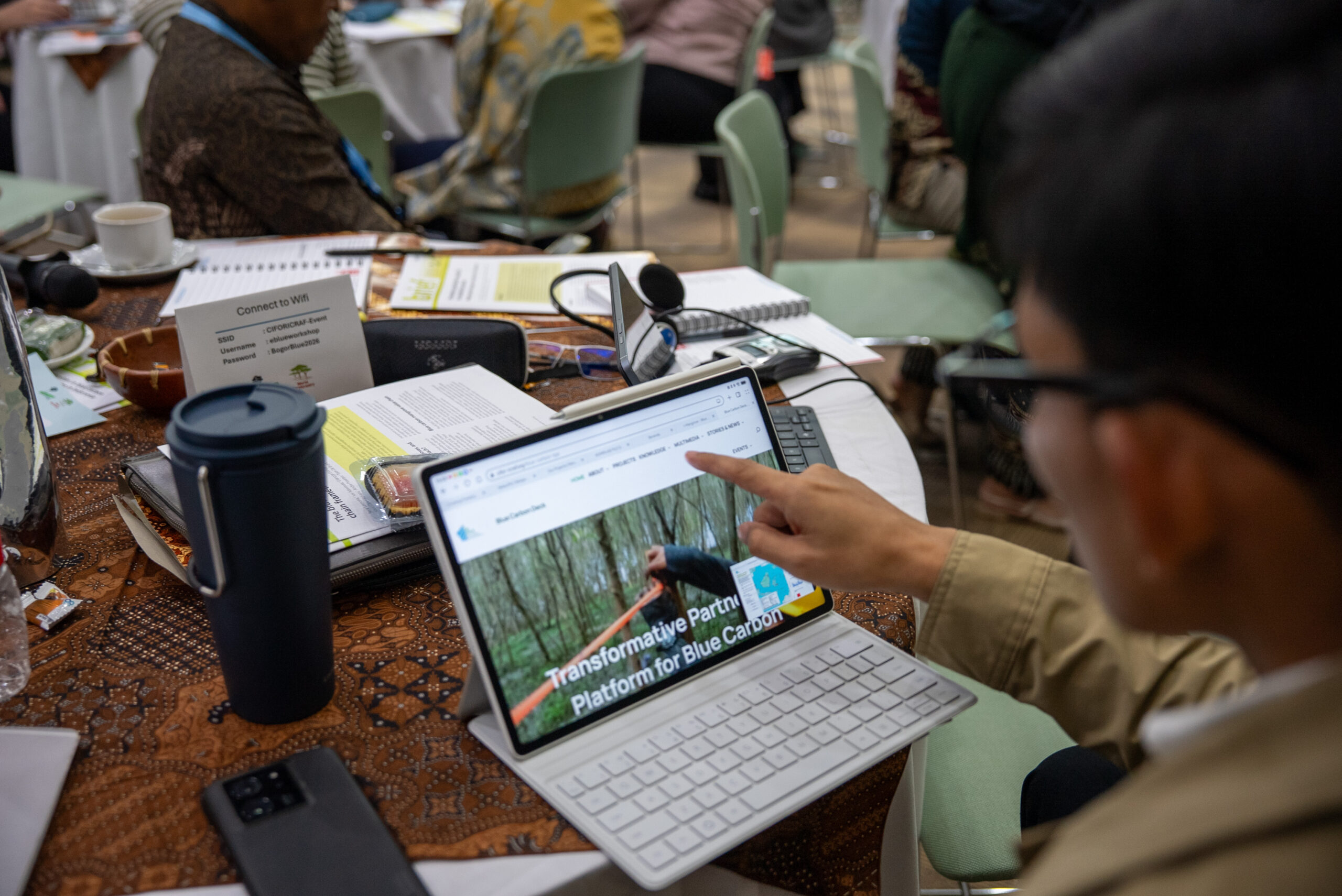
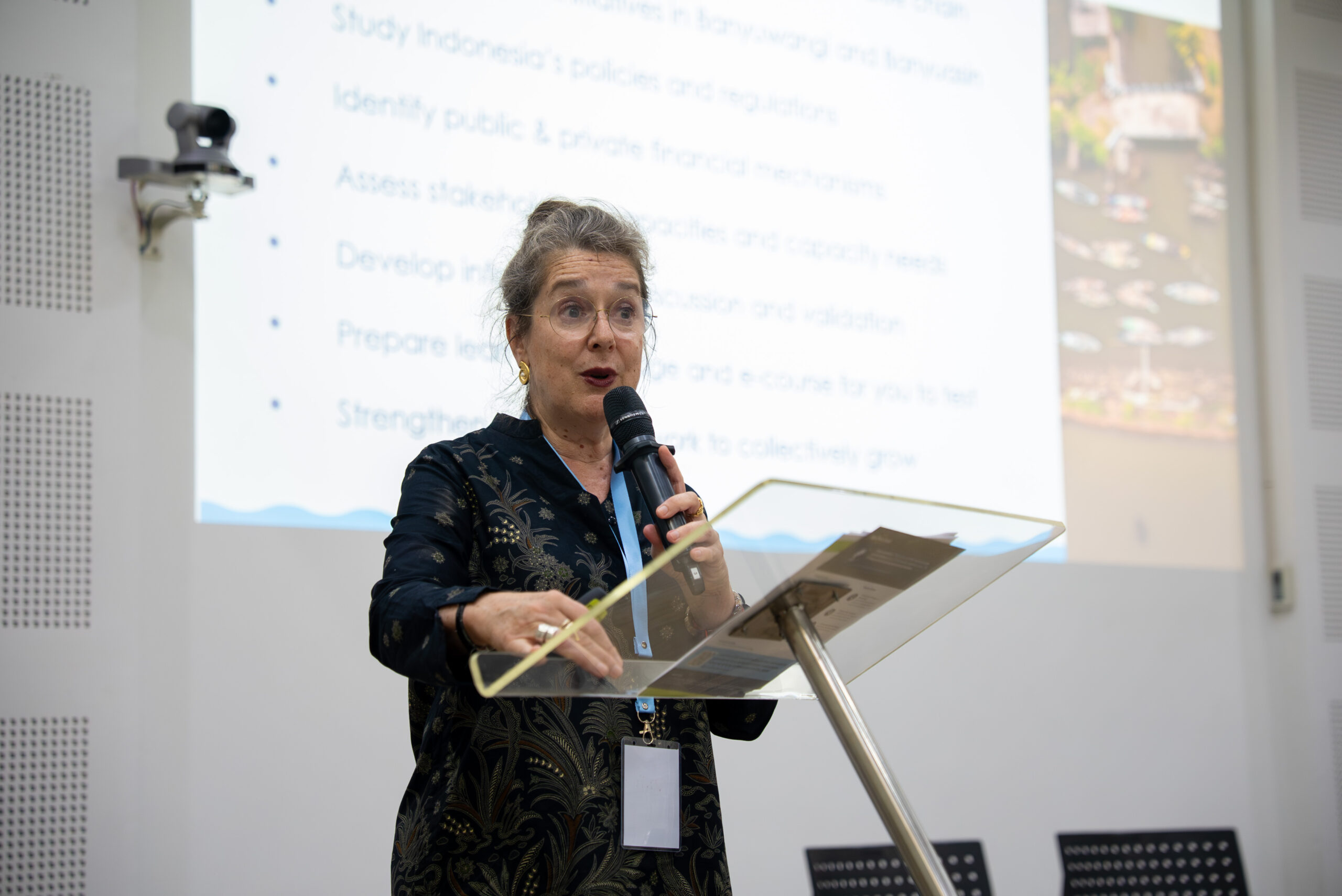
At the Regional Learning Workshop on Strengthening Capacities for Equitable Blue Carbon Finance, held at the Center for International Forestry Research and World Agroforestry (CIFOR-ICRAF) in Bogor from 28-30 April 2026, discussion revealed that the success of blue carbon depends less on ecosystems alone, and more on the systems — and people — that sustain them.
Photo by Fajrin Hanafi / CIFOR-ICRAF
From ambition to implementation
Indonesia has placed blue carbon ecosystems at the core of its climate and ocean agenda. Enggar Sadtopo, director of marine services at Indonesia’s Ministry of Marine Affairs and Fisheries, described these ecosystems as “an essential component of our pathway to achieve net zero emissions… by 2030 and 2060 or sooner.”
He was direct about the stakes. “Blue carbon ecosystems serve as some of the most efficient nature-based climate solutions available globally, delivering high-impact mitigation at scale,” Sadtopo said, while also acknowledging that ecological assets alone will not be enough; it requires strong systems. “Indonesia is building the governance, transparency, and integrity needed for sustainable blue carbon investment.”
For Sadtopo, the framing matters and is part of a broader development vision: “Blue carbon finance is not only an environmental agenda. It is a pathway to resilient oceans, prosperous communities, and a sustainable future.”
The ambition is clear. Implementation is where the harder work begins.
The “missing middle”
A recurring theme throughout the workshop was what participants described as the “missing middle” — the gap between national policies and local realities.
“There is a wealth of experience going on at the local level… and effective policy regimes at the national level. But there is a missing middle,” said Cora van Oosten of CIFOR-ICRAF.
This gap manifests in practical ways. Local governments often lack the technical capacity to translate national strategies into actionable plans. Communities — despite being central to mangrove conservation — frequently lack access to the knowledge, tools, and financing mechanisms needed to participate meaningfully. At the same time, coordination across sectors— environment, fisheries, and finance — remains fragmented.
As a result, promising policies risk remaining on paper, while community-led initiatives struggle to scale.
Capacity as the foundation of finance
Blue carbon finance — whether through carbon markets, results-based payments, or blended finance — depends on robust systems. These include measurement, reporting and verification (MRV), governance frameworks and benefit-sharing mechanisms.
But these systems cannot function without capacity.
“We want the learning that starts at the community level to go all the way up to the central government… and for investments to flow into projects that not only combat climate change but restore biodiversity,” said Lorenzo Santucci of UN ESCAP.
In practice, this means strengthening capacity across communities, subnational institutions and markets.
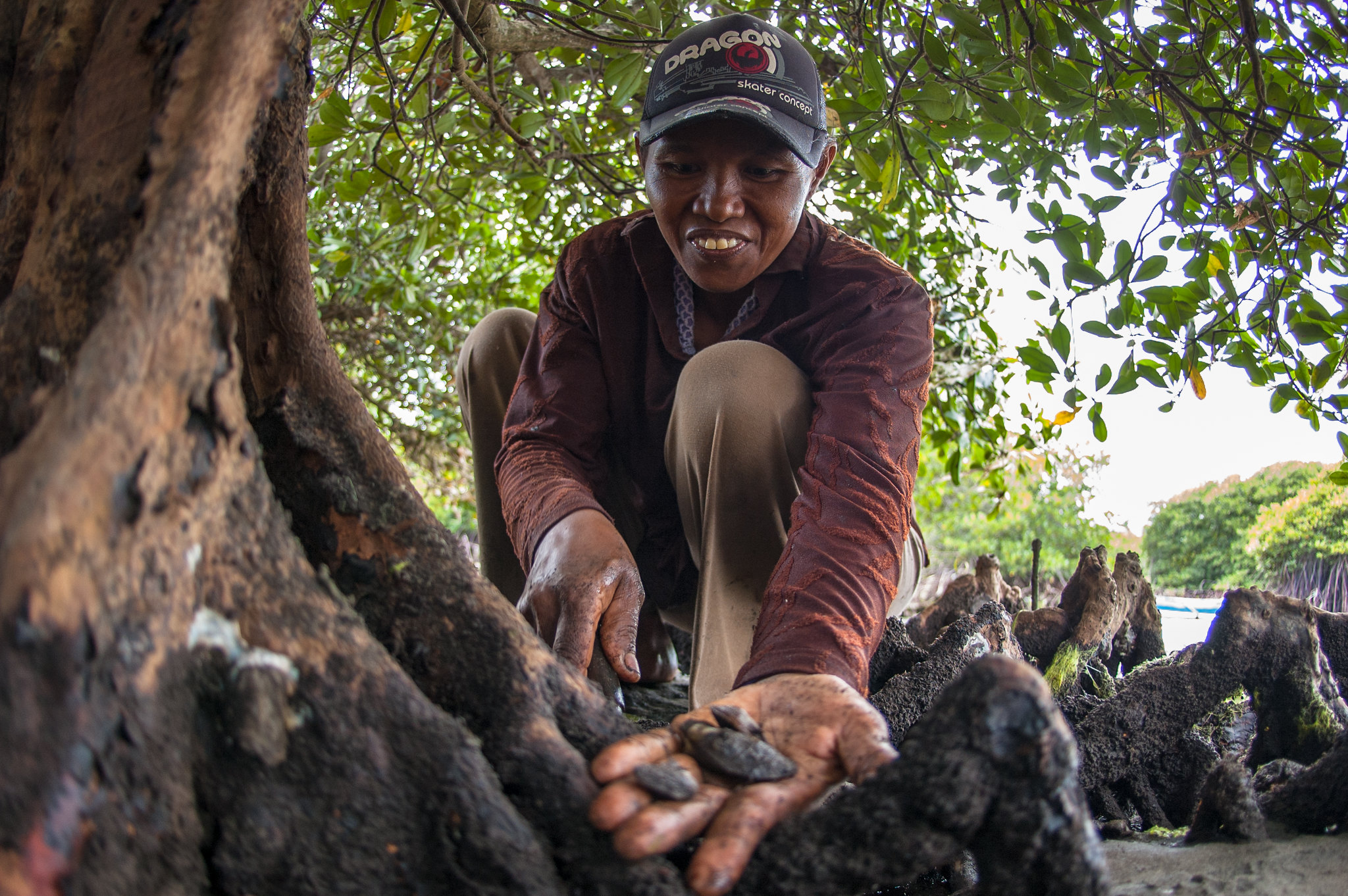
At the community level, local actors are the frontline stewards of mangroves. Their knowledge, participation and ownership determine whether conservation lasts. “The front guard that maintains the mangrove ecosystem is actually the community,” said Muzakir Achmady of the Regional Development Planning Agency in South Sumatra Province. “Benefit-sharing mechanisms must favour the community so they can feel the economic impact.”
In Sungsang IV village, local efforts are already visible. “In two years, we have planted at least 30,000 mangrove trees… all of this is done by the community,” said village head Arijandra.
However, moving beyond restoration to participation in carbon markets requires a different set of skills: data collection, monitoring, financial literacy and governance.
At the institutional level, provincial and district governments play a critical bridging role. They are responsible for integrating blue carbon into development planning, budgeting, and implementation. Yet capacity gaps often limit their effectiveness, particularly in coordinating across sectors and translating national policy into local action. “The key entry point is to put blue carbon in long-term regional development plans and put a budget on it,” said CIFOR-ICRAF scientist Ani Adiwinata Nawir.
At the market level, capacity gaps affect the supply of credible projects. Investors and developers require reliable data, clear regulations, and credible standards. Without the capacity to develop high-integrity projects, even a strong demand for blue carbon credits cannot translate into real investment. “When we put people in the picture, things become more attractive to think about,” said CIFOR-ICRAF senior associate Daniel Murdiyarso. “Blue carbon can command premium prices compared with terrestrial forest carbon.”
But premium prices do not flow to projects that cannot demonstrate integrity.
Photo by Fajrin Hanafi / CIFOR-ICRAF
From carbon sinks to community systems
The technical potential of blue carbon is only part of the equation. Discussions throughout the workshop pointed to a more practical challenge: how these ecosystems are governed, financed and managed in practice.
“We really believe in the power of trees… But we don’t believe in the power of trees alone,” said van Oosten. “We also believe in the power of people to plant, to manage, to care, and to love the trees.”
This framing reflects a broader shift. It moves the global conversation beyond viewing blue carbon as a static environmental or financial instrument, reframing it instead as a dynamic social and institutional system — one that lives or dies based on the capacity built at every level.
Linking finance to livelihoods
While much of the discussion focused on carbon finance, participants also emphasized the importance of linking blue carbon to broader coastal economies. Carbon credits are one useful mechanism, but international experts warn they are far from the whole picture.
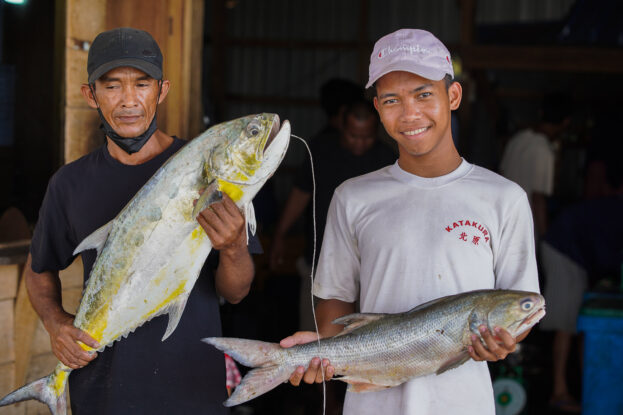
Mangroves serve as a practical foundation for coastal life, supporting local fisheries, anchoring ecotourism and sustaining traditional aquaculture. These activities generate vital, everyday income streams that families rely upon regardless of whether a project ever enters a carbon market. Workshop participants argued that blue carbon initiatives achieve far deeper resilience when they actively reinforce these local livelihoods rather than treating them as secondary priorities.
This is where capacity development intersects with supply chains and livelihoods. Strengthening local skills enables communities to engage in sustainable aquaculture and develop mangrove-based products. Supporting local enterprises linked to conservation can create new income streams, while improving market access ensures that communities benefit economically from their efforts.
Such approaches move beyond carbon credits alone, positioning blue carbon within a wider “blue economy” framework.
Photo by Fajrin Hanafi / CIFOR-ICRAF
From carbon sinks to community systems
The technical potential of blue carbon is only part of the equation. Discussions throughout the workshop pointed to a more practical challenge: how these ecosystems are governed, financed and managed in practice.
“We really believe in the power of trees… But we don’t believe in the power of trees alone,” said van Oosten. “We also believe in the power of people to plant, to manage, to care, and to love the trees.”
This framing reflects a broader shift. It moves the global conversation beyond viewing blue carbon as a static environmental or financial instrument, reframing it instead as a dynamic social and institutional system — one that lives or dies based on the capacity built at every level.
Beyond carbon: Building blue value chains
While much of the discussion focused on carbon finance, participants also emphasized the importance of linking blue carbon to broader coastal economies. Carbon credits are one useful mechanism, but international experts warn they are far from the whole picture.
Mangroves serve as a practical foundation for coastal life, supporting local fisheries, anchoring ecotourism and sustaining traditional aquaculture. These activities generate vital, everyday income streams that families rely upon regardless of whether a project ever enters a carbon market. Workshop participants argued that blue carbon initiatives achieve far deeper resilience when they actively reinforce these local livelihoods rather than treating them as secondary priorities.
This is where capacity development intersects with supply chains and livelihoods. Strengthening local skills enables communities to engage in sustainable aquaculture and develop mangrove-based products. Supporting local enterprises linked to conservation can create new income streams, while improving market access ensures that communities benefit economically from their efforts.
Such approaches move beyond carbon credits alone, positioning blue carbon within a wider “blue economy” framework.
BEYOND CARBON
For coastal communities, carbon credits are less of an everyday economic tool and more of a specialized financing channel. They are designed to funnel international climate investments down to the local level by rewarding long-term ecosystem restoration and protection.
However, because carbon markets can be volatile and take time to materialize, they do not provide the immediate, reliable revenue that families need for daily survival.
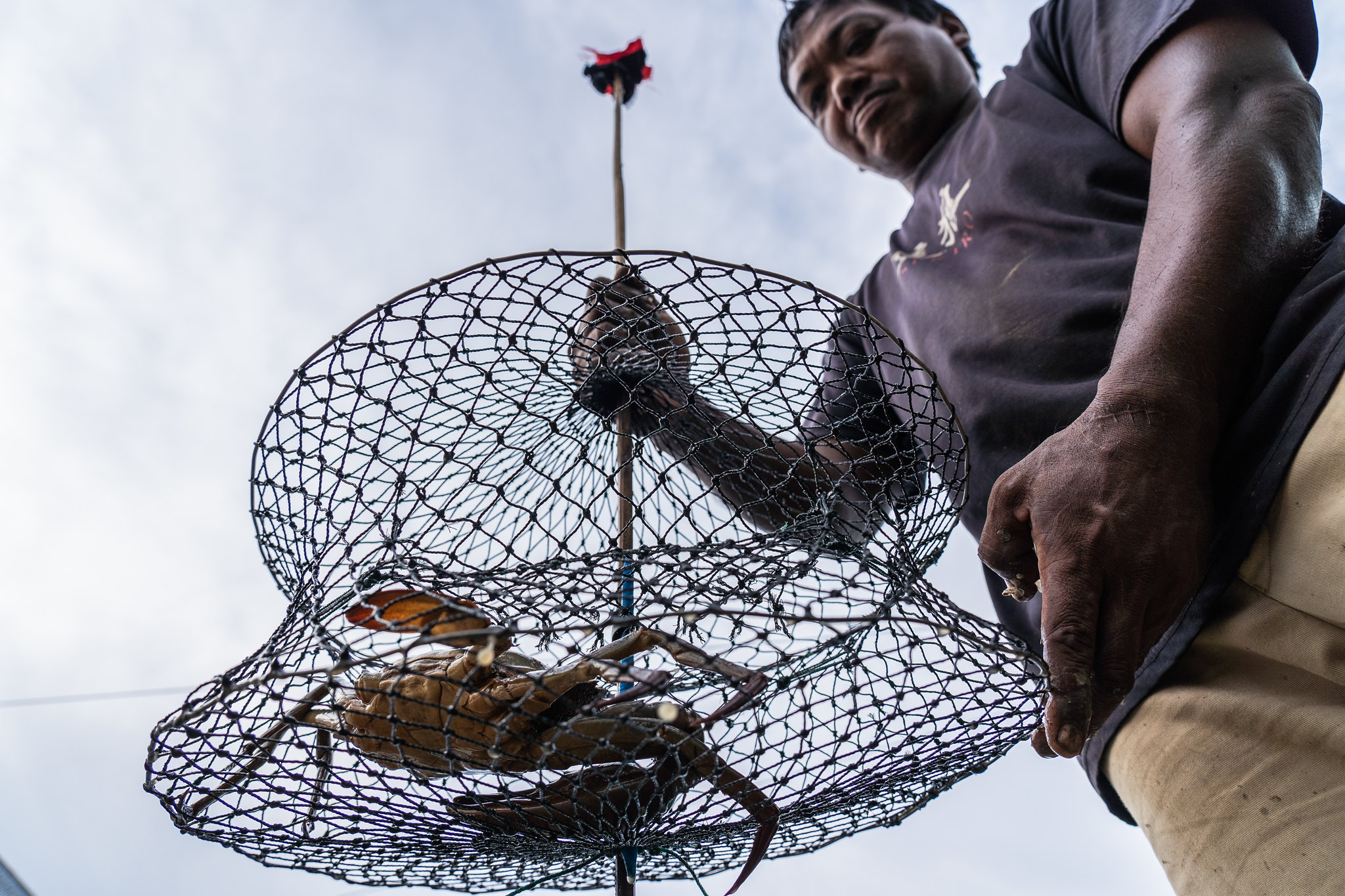
Photo by Ricky Martin / CIFOR-ICRAF
A shift in approach
Ultimately, the workshop called for a fundamental shift in how blue carbon initiatives are designed and implemented.
“We want to change the narrative from local communities as receivers and beneficiaries to local communities as partners,” van Oosten emphasized.
This shift has profound implications. It requires involving communities and other stakeholders from the start, moving away from top-down approaches toward collaborative governance, rather than consulting them after decisions have been made. It means long-term investment in capacity building, rather than project cycles that end before skills are embedded.
It also requires moving away from carbon-focused interventions to integrated ecosystem management. That challenges traditional models of climate finance, requiring investments not only in ecosystems, but in people and institutions.
The path forward
Indonesia’s leadership in blue carbon — supported by strong policy frameworks and vast ecological assets — offers a unique opportunity to demonstrate how capacity development can unlock equitable climate solutions.
But realizing this potential will require sustained effort. This includes investing in education and training systems, strengthening cross-sector coordination, ensuring inclusive participation and benefit sharing, and bridging the “missing middle” between policy and practice.
As Sadtopo noted, “with the right finance, the right governance, and the right partnerships, the opportunity can become measurable global impact.” Indonesia, he added, “stands ready to work with all partners to scale blue carbon finance that protects ecosystems, empowers communities, and delivers climate solutions.”
The message is clear: the future of blue carbon will not be determined solely by how much carbon ecosystems can store — but by how effectively societies can build the capacity to manage, finance and sustain them.
In that sense, capacity development is not a supporting element. It is the foundation.