
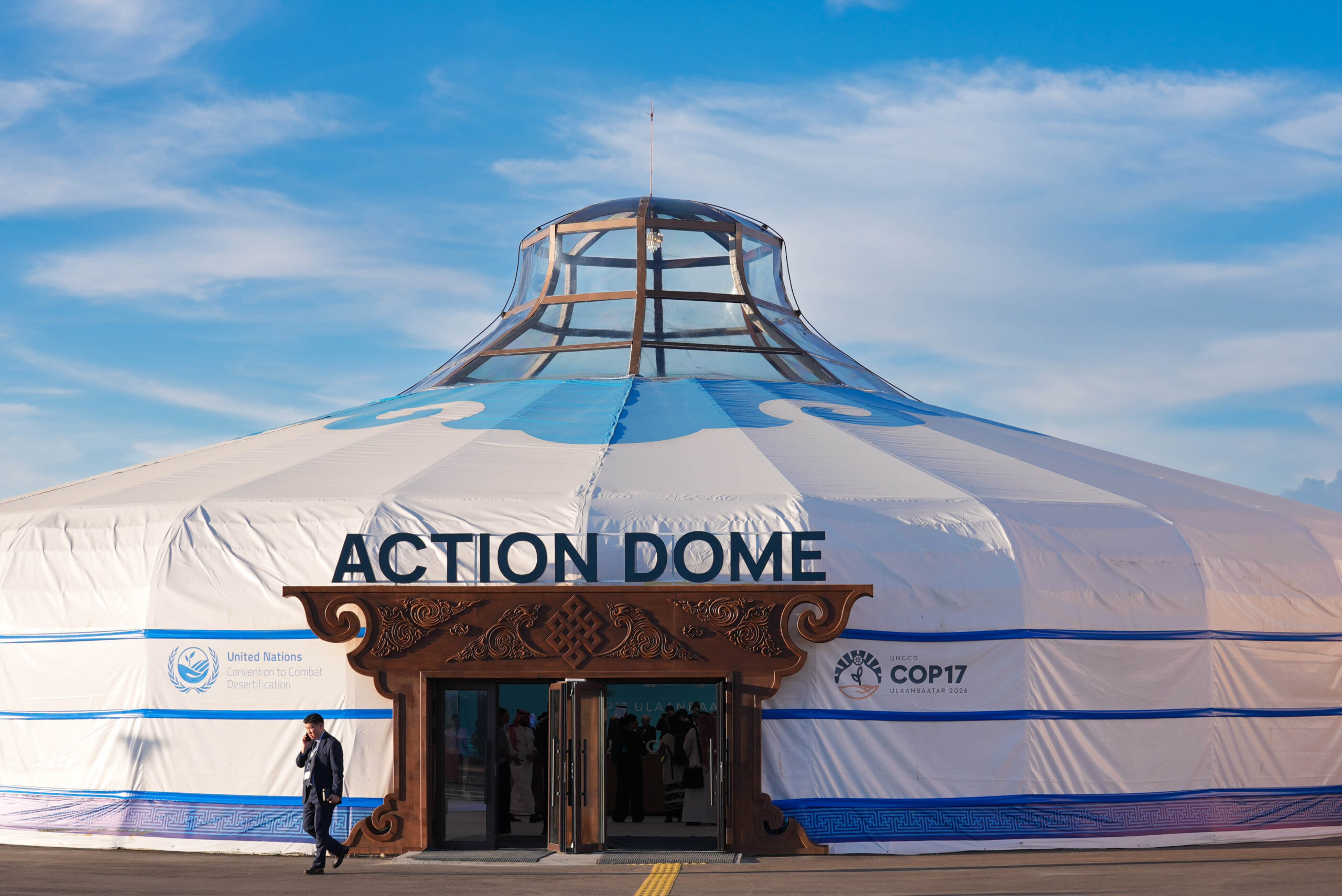
Across two weeks of discussions at the 17th session of the Conference of the Parties to the United Nations Convention to Combat Desertification (UNCCD COP17) in Mongolia, the Great Green Wall Initiative (GGWI) was highly visible. It featured prominently across a diverse spectrum of events. Increasingly, the Initiative is being positioned as a platform for multi-stakeholder investments in resilient landscapes, rural economies, data-driven approaches and innovations, green enterprises and jobs.
The focus on investment was particularly clear during Finance Day on 24 August. At the African Union (AU) High-Level Event on the Great Green Wall (GGW), African leaders and partners called for a shift from fragmented projects and financing commitments towards coordinated, investment-ready programmes that can sustain public and private capital.
Moses Vilakati, the African Union commissioner for Agriculture, Rural Development, Blue Economy and Sustainable Environment, put it plainly: “Africa’s Great Green Wall is ready to move from ambition to investment, and from investment to impact. Africa is coming with solutions.”
Activities supported by the Knowledge for Great Green Wall Action (K4GGWA) and Regreening Africa programmes throughout COP17 also focused on how evidence and experience can support investment in restoration.
Caption image here
A Great Green Wall hub at COP17
The Great Green Wall Pavilion became a meeting point for the people working to restore landscapes across Africa. Led by the Pan-African Agency of the Great Green Wall (PAGGW), the Pavilion brought together national GGW agencies, development partners, researchers and practitioners throughout COP17, with support from Landscape Alliance (K4GGWA), UNCCD, the African Development Bank, WFP, IFAD, FAO and UNEP.
The discussions ranged from agroforestry and rangeland management to water, land-health monitoring and sustainable land management. But they also addressed a question that ran through much of COP17: how can evidence and experience from restoration efforts be translated into bankable projects that can attract investment?
For K4GGWA, this connection between knowledge and investment is central to the programme’s work. Funded by the European Union and implemented by Landscape Alliance and FAO, the initiative supports shovel-ready innovations, knowledge sharing, learning and data platforms, land-health monitoring, institutional capacity and policy environments across the Great Green Wall region. Together, these activities are intended to help proven approaches move beyond individual projects and reach greater scale.
From evidence to action – and investment
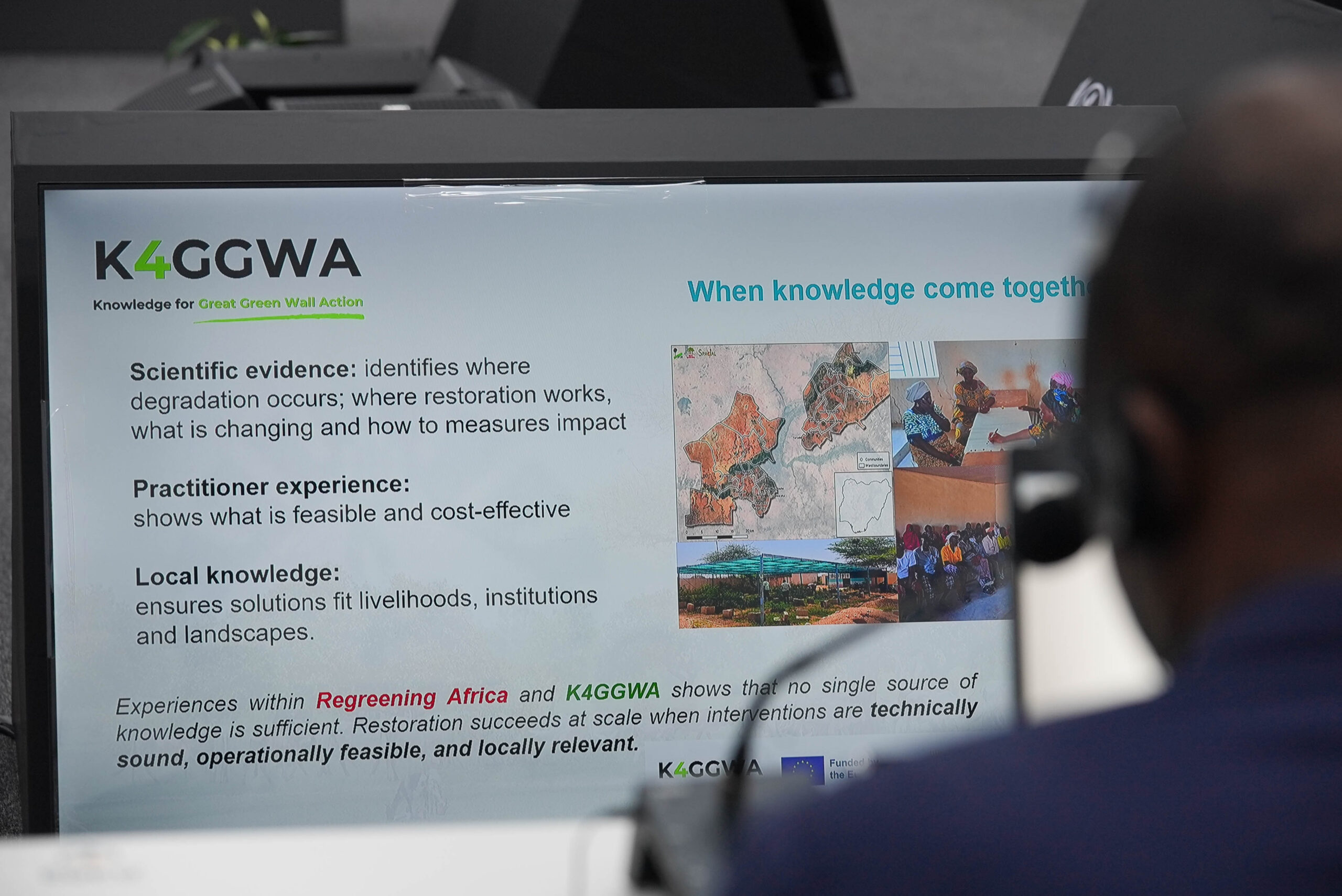
The question of how to turn restoration experience into investable programmes was the focus of the COP17 side event “Strengthening Resilience and Investment in the Great Green Wall: From Evidence to Action”, held on Finance Day and convened with K4GGWA, Regreening Africa, Landscape Alliance, the European Union, IFAD, UNCCD and the Business4Land Initiative.
The discussion brought together actors working across the investment chain, including communities and restoration practitioners, researchers, governments, development and financial institutions and businesses. A central question was what evidence investors and decision-makers need before committing finance to restoration.
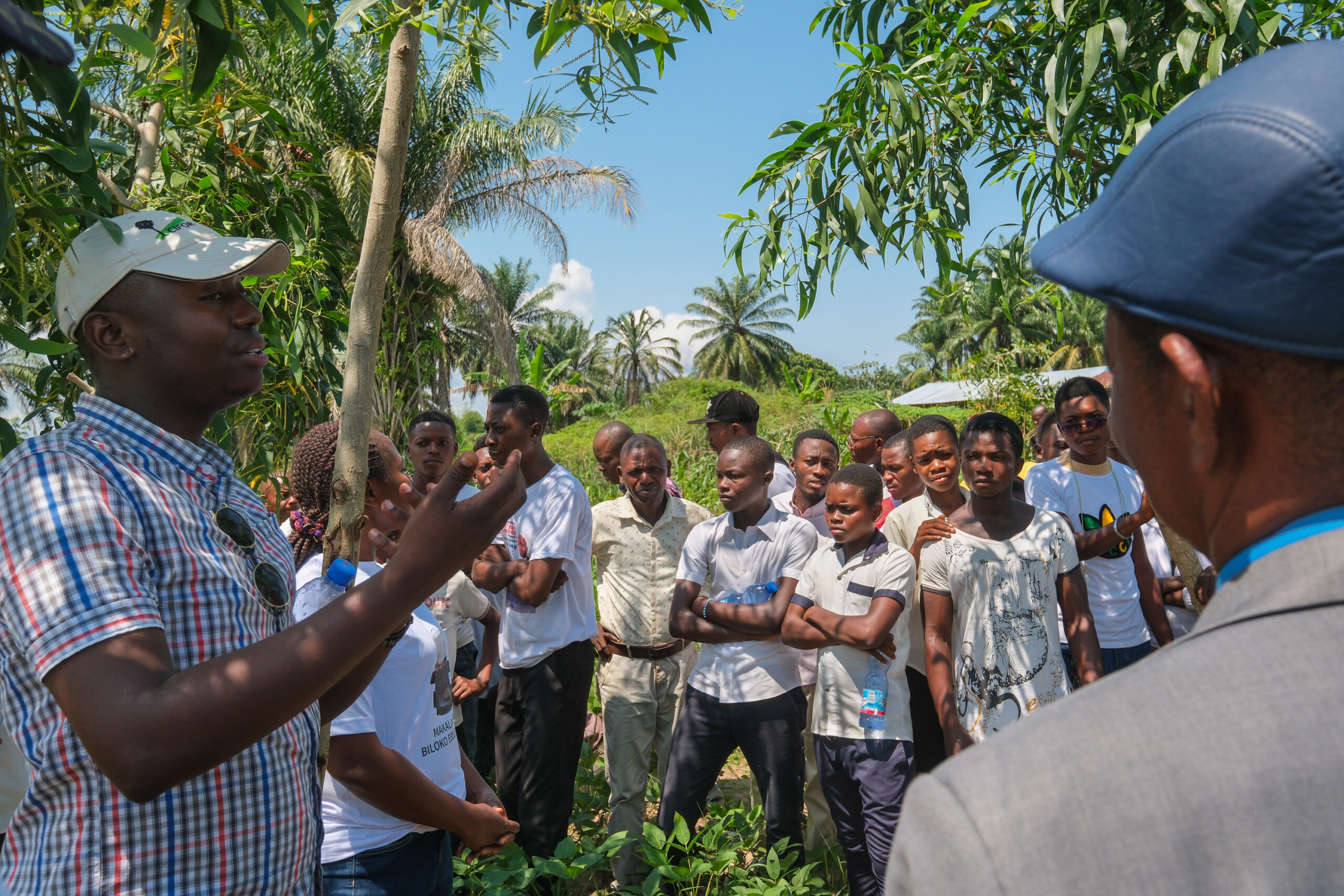
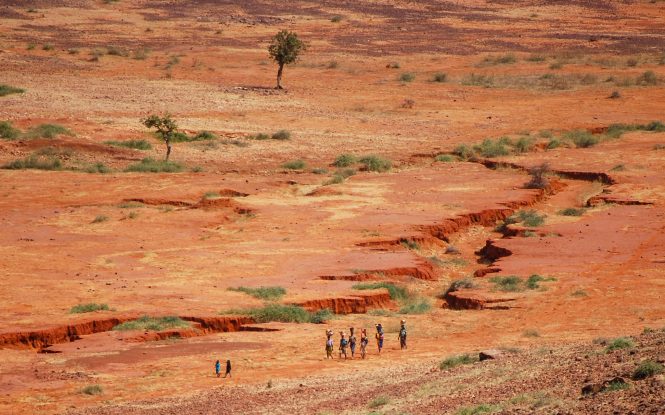
Across the Great Green Wall region, there is already extensive experience of approaches that can restore land while improving livelihoods. These include farmer-managed natural regeneration and agroforestry parklands, better rangeland management, sustainable value chains based on trees and non-timber forest products, community enterprises and locally adapted approaches to managing water and drought.
But demonstrating that an approach works is only the beginning.
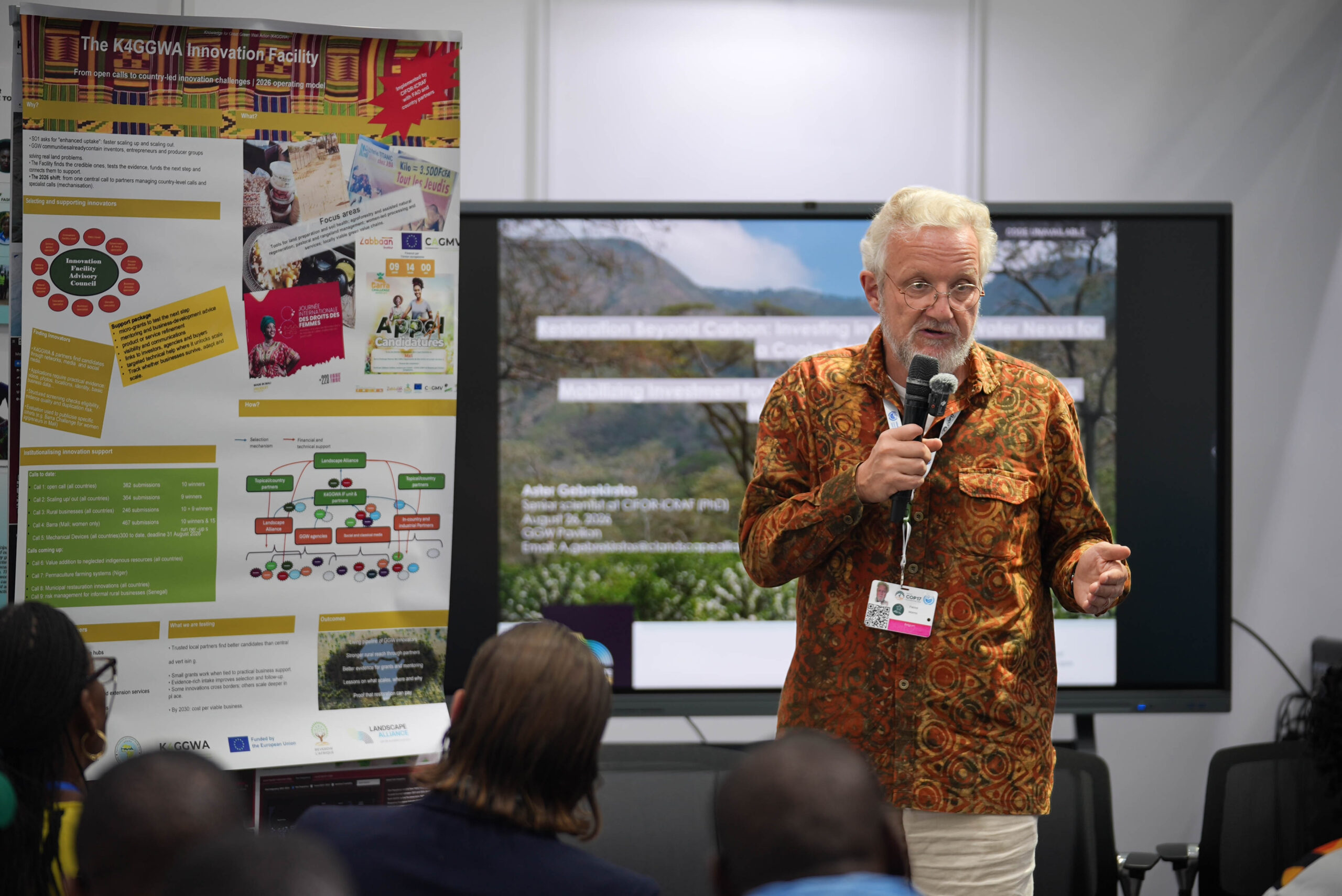
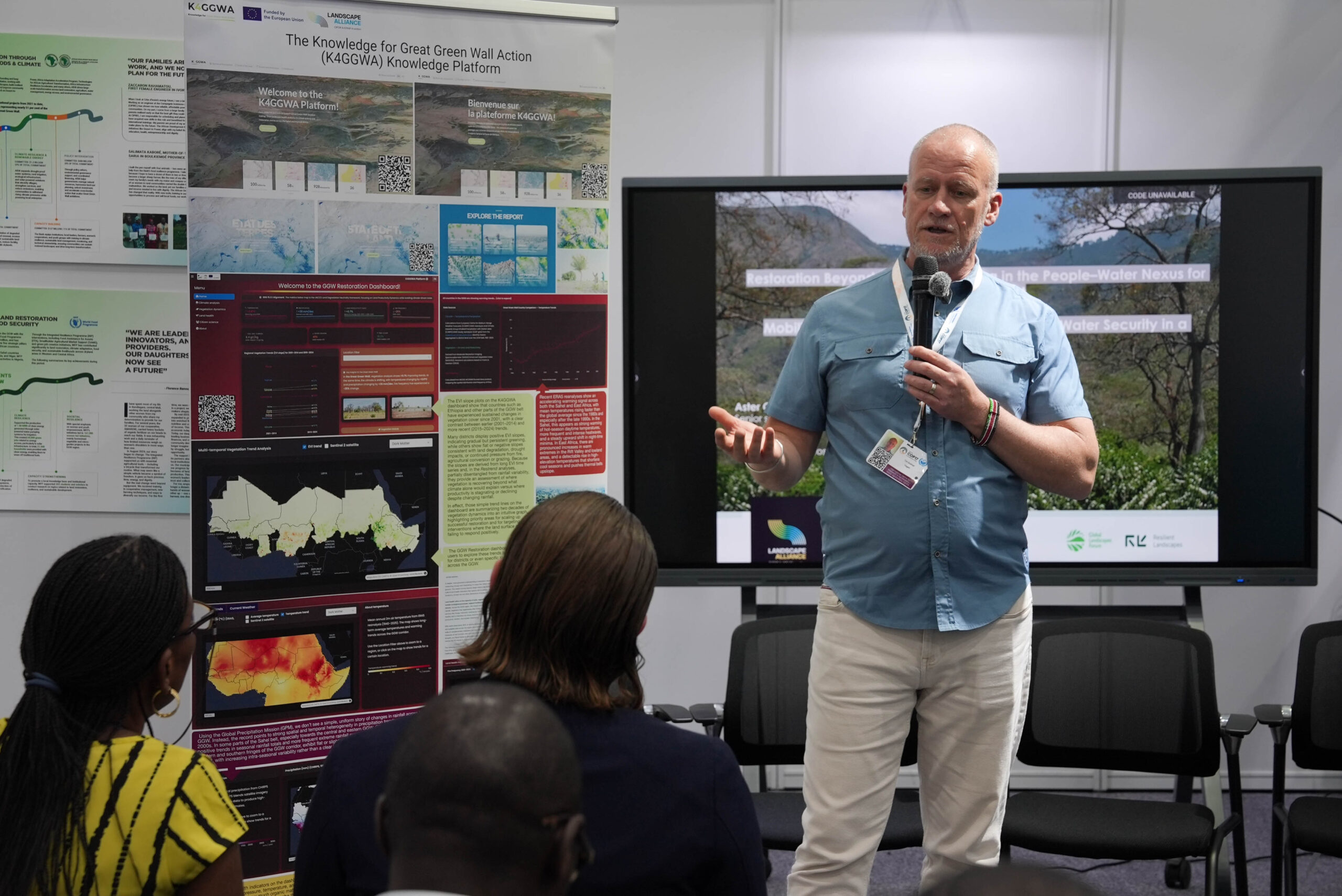
For a successful intervention to become a bankable project, investors need evidence on land health and restoration outcomes, costs and returns, markets and value chains, governance and land tenure, risk, social inclusion and the capacity of local institutions to implement at scale.
Local knowledge also needs to inform investment decisions. Farmers, pastoralists, women’s organizations, young entrepreneurs and local businesses cannot simply be regarded as beneficiaries at the end of an investment process. Their knowledge and economic priorities need to help shape investments from the beginning.
This is part of the work supported by K4GGWA Spatial Evidence Hub. Better monitoring can reduce uncertainty and evidence about what works can help investors assess risk. Learning between countries can help avoid repeating approaches that have failed elsewhere, while stronger institutions can improve implementation. Understanding viable local business models can also help restoration generate income long after an individual project has ended.
Investing in the capacity to deliver
Building investment-ready projects also depends on people and institutions with the capacity to deliver them.
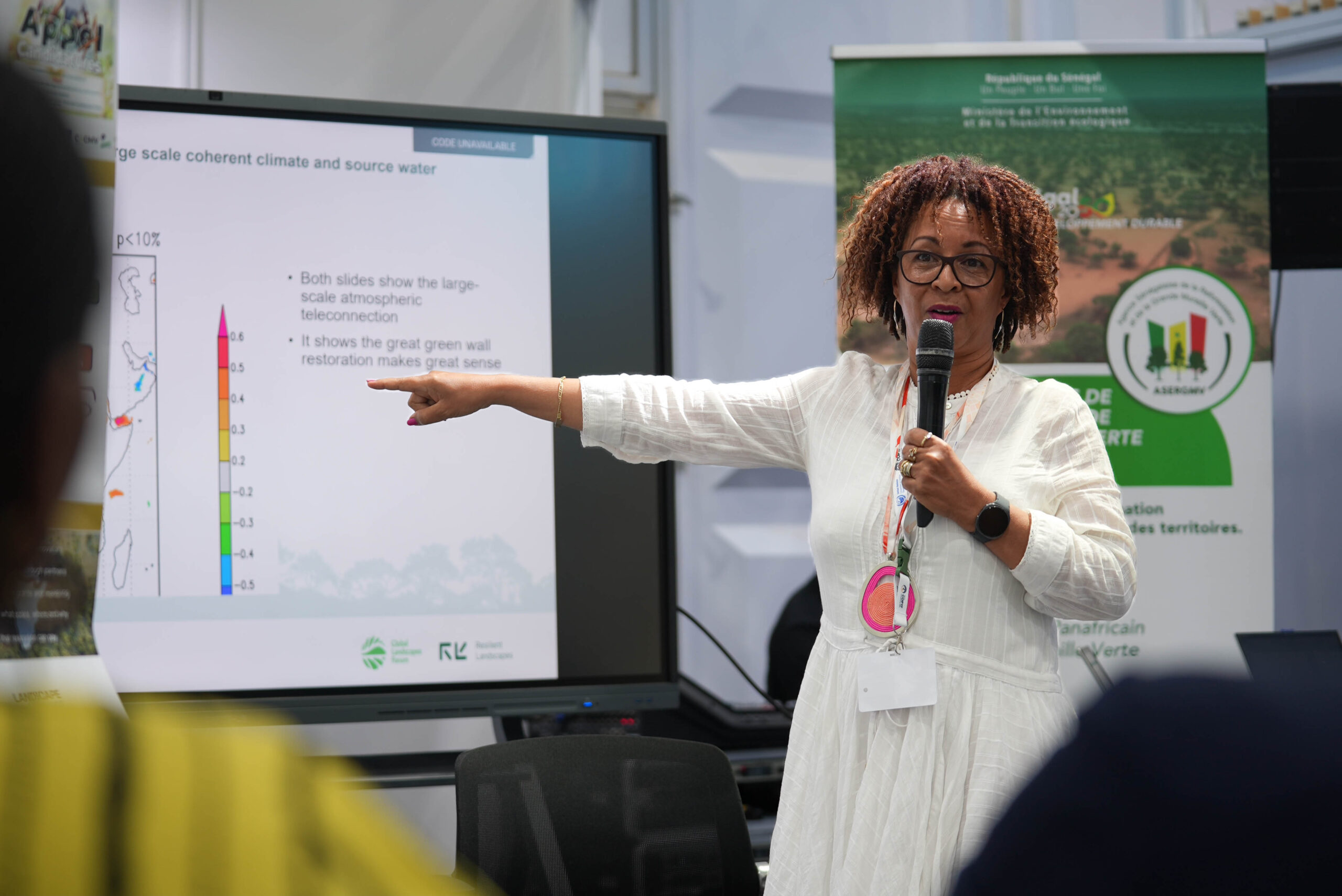
At the GGW Pavilion, Landscape Alliance and partners launched new open-access learning courses focused on agroforestry and stakeholder engagement, providing practitioners and decision-makers practical skills for evidence-based landscape restoration.
Other panel discussions supported through K4GGWA and Landscape Alliance focused on farmer-managed natural regeneration, grazing and rangeland restoration, land-health monitoring and the conditions required to scale locally proven practices.
On Water Day, 25 August, finance returned to the centre of the GGW discussion during the roundtable “Financing the Water–Land Nexus: From Commitments to Concrete Actions.” Organized by the UNCCD Global Mechanism and the Landscape Alliance (K4GGWA), created as a follow-up session on the AU–AfDB High-Level Event held the previous day. The thematic day was one of four focused on key priorities at COP17, alongside Finance, Land and People, and Food Systems and Soil Health.
Followed by key poster sessions on grazing management and monitoring and evaluation, these discussions pointed to what is needed to build a pipeline of investment-ready projects: capable institutions, credible evidence, viable enterprises, and people with the skills to implement restoration approaches into practice.
Photo by Aris Sanjaya / Landscape Alliance.
From individual projects to investment programmes
The African Union High-Level session returned to the question of how the Great Green Wall can move from individual projects towards larger, coordinated programmes capable of attracting long-term investment., Convened by the African Union Commission with UNCCD, the African Development Bank, PAGGW and SADC, the session positioned the GGW as a continental platform for nature-based solutions, climate adaptation, ecosystem restoration and green jobs.
Almoustapha Garba, executive secretary of PAGGW, emphasized that mobilizing finance must go hand in hand with building a credible pipeline of investment-ready projects.
“It is possible to link landscape restoration, institutional coordination, investment pipeline preparation and finance mobilization,” Garba said.
Garba stressed the need to develop well-structured, cost-effective, and bankable projects capable of attracting both public and private finance. He also called for stronger coordination between the African Union, Member States, regional and financial institutions, as well as development partners. He highlighted the opportunity to build a continental pipeline of prioritised, bankable GGW projects, helping move the Initiative from commitments to investment and ultimately to impact. Building that pipeline requires stronger links between restored land and viable agricultural and tree-product value chains, as well as opportunities for pastoral economies and enterprises to benefit from healthier rangelands. It also means developing businesses around products such as shea and other non-timber forest products and giving young entrepreneurs access to finance, markets and business support. Public and concessional finance can help reduce risks and attract private capital where appropriate.
Public finance will remain indispensable, particularly for public goods and communities where commercial returns alone cannot capture the full environmental and social value of restoration. Achieving the scale envisioned by the GGWI will also require engagement from development banks, climate funds, national financial institutions and responsible private investors to become increasingly engaged.
At COP17, the African Development Bank announced that it intends to convene the first African GGW Investment Forum in 2027. The forum will bring together governments, development finance institutions, climate funds and investors to strengthen investment pipelines and develop bankable projects.
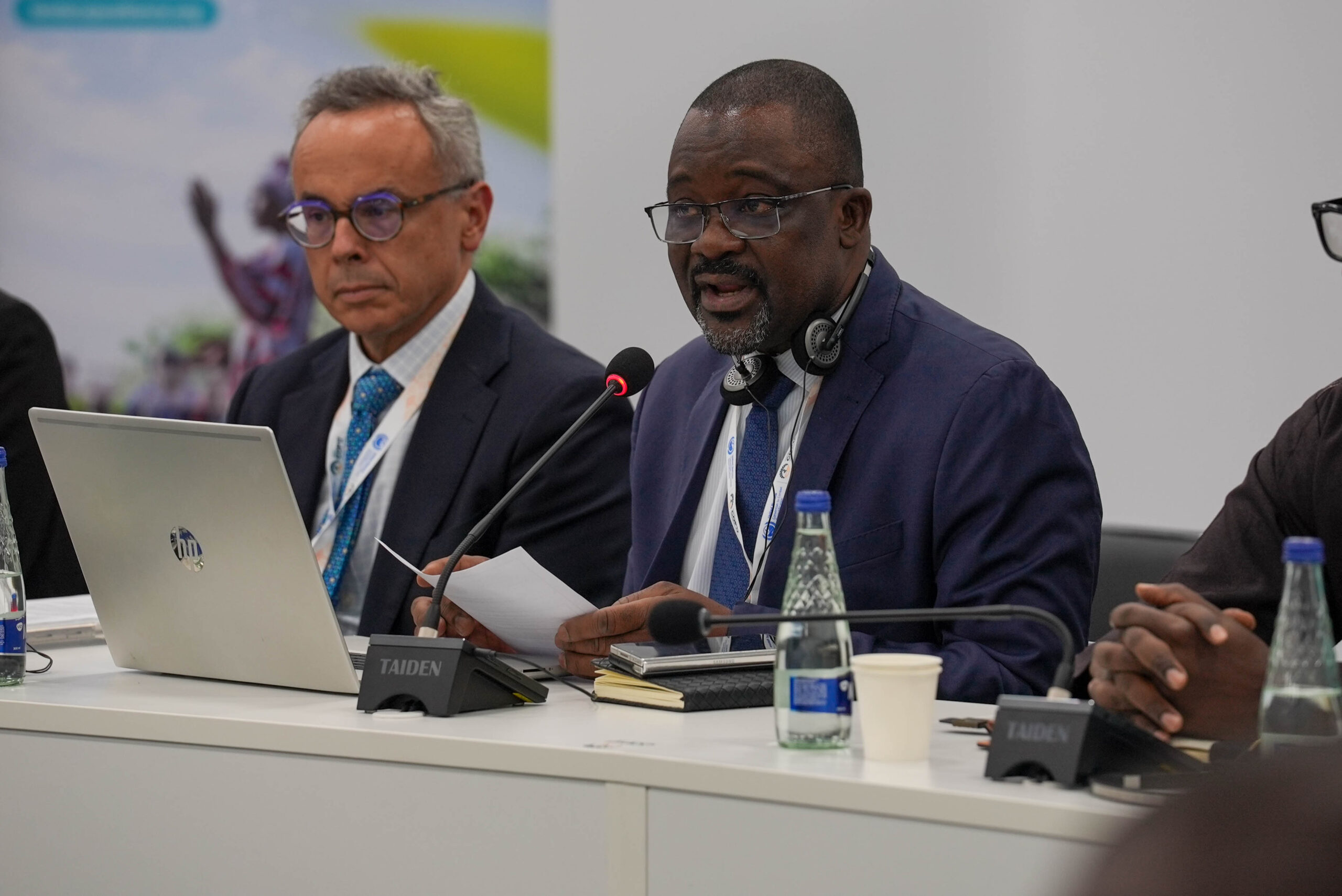
Photo by Aris Sanjaya / Landscape Alliance.
Building the investment pipeline
The GGW has never been simply about planting trees. The initiative is about restoring productive landscapes while creating opportunities for the people who live within them – farmers, pastoralists, women, young people, entrepreneurs and rural communities.
COP17 reinforced the need to translate that work into a new generation of investments. For K4GGWA, this means strengthening the knowledge, evidence, monitoring, learning, and institutional capacity needed to support investment decisions and boost innovation across GGW countries and sectors.
The focus now needs to be on identifying successful approaches and enterprises that can move beyond pilots, documenting evidence of their environmental, social and economic performance and connecting that evidence with those able to finance implementation at a greater scale.
As attention turns from Ulaanbaatar towards implementation, the challenge will be to turn evidence of what works into a credible pipeline of bankable, locally grounded and evidence-based projects.
COP17 showed that many of the solutions already exist. The task now is to connect knowledge to investment, investment to implementation and restoration to lasting economic opportunities across the GGW.