

What does a yellow-green Mexican orchid have to do with roads and schools in rural Papua New Guinea? Potentially, plenty.
The orchids are Vanilla planifolia and Vanilla tahitensis, cultivated across the tropics for their fragrant, flavoursome pods and seeds. Vanilla was first grown in Papua New Guinea (PNG) around fifty years ago, and the country has since become one of the world’s leading producers of the spice, supplying roughly 10 percent of global exports.
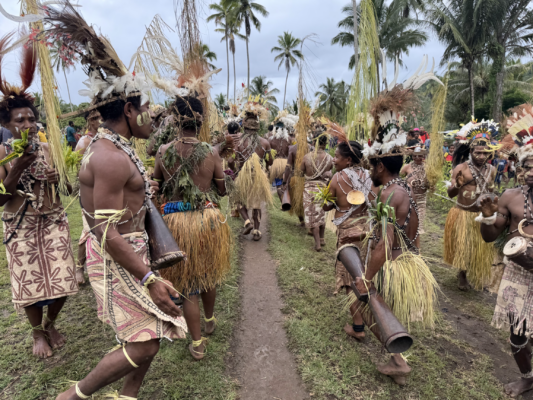
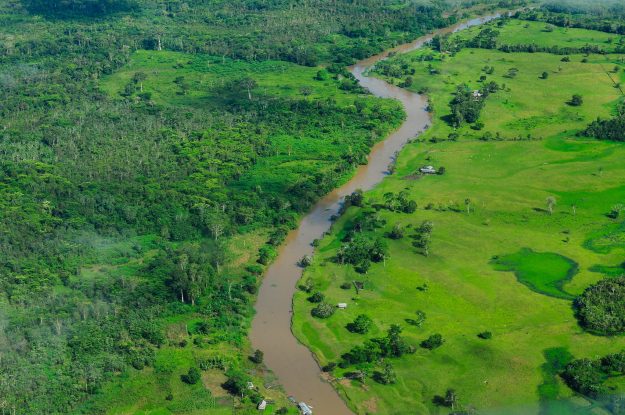
On the Managalas Plateau in Oro Province, communities have been growing vanilla at small scales for decades. The plateau’s humid climate, lush rainforest and rich volcanic soils make it a good match for the crop’s native conditions in Mexico.
Another advantage: vanilla can be grown in ways that help to conserve forests. That makes it especially well-suited to Managalas, which was recently declared a conservation area and where communities are actively seeking sustainable income options. The crop thrives in small plots, climbing up shade trees or integrated into agroforestry systems, and can generate high returns from limited land, easing pressure to clear forest.
Vanilla’s high value-to-weight ratio and long shelf life further strengthen its appeal. In remote areas like Managalas, where transport is difficult and costly, crops selling for around 5 kina [USD 1.20] or less per kilo are rarely profitable for the grower. Many also fail at the next stage of transporting them out of the Province due to high shipping costs on commercial coastal shipping.
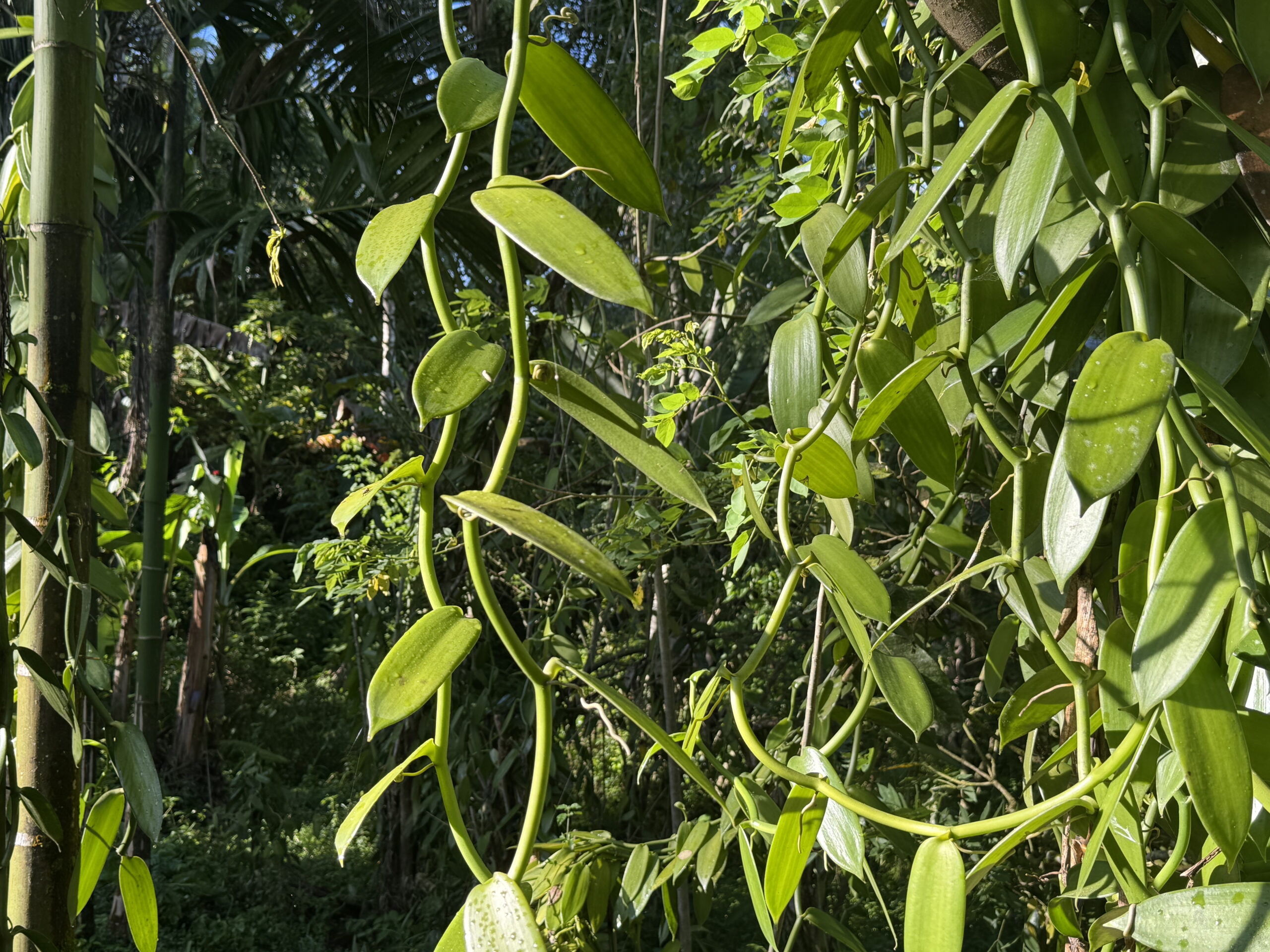

Photo by Monica Evans / CIFOR-ICRAF
“One of our mantras for value chains has been high value, low volume, non-perishable,” said Will Unsworth, PNG program manager for the Center for International Forestry Research and World Agroforestry (CIFOR-ICRAF), which has worked with local NGO Managalas Conservation Foundation (MCF) to develop and implement the area’s conservation management plan since 2021.
“Vanilla fits well within those three criteria,” continued Unsworth. “But we are learning that the challenge is helping growers understand the importance of good curing after harvest, and putting in the effort required to achieve the high value.”
Vanilla is no easy crop. The vines take about four years to produce beans and require careful pruning, mulching and training along support trees. When the flowers finally appear, each opens for only a few hours, often before dawn. That means growers need to get up very early every day during the flowering season to check for open flowers and pollinate them by hand, since the plant’s natural pollinator lives only in Mexico.
And harvesting is just the beginning. The beans must then be dried and cured in the sun for months, kept safe from mould and theft, before they can be sold.
Even then, farmers still face the challenge of getting their beans to buyers along roads that are often impassable. Given these constraints, many households prioritize food crops, which provide faster and more reliable returns.
Because of these challenges — and the crop’s promise — vanilla training has long been part of development and conservation work in Managalas. In the early 2000s, the Port Moresby-based NGO Partners with Melanesians (PwM), supported by the Rainforest Foundation Norway, began offering vanilla trainings. In 2017, PwM brought in expert Mark Gozapao from Highlands Vanilla to run a week-long course on quality assurance.
“It’s exciting to cultivate a cash crop that can fetch a very high value for our communities, in a place where government services are so lacking,” said Lusian Loibambe, chair of the Managalas Vanilla Association.
But new hurdles keep appearing. In 2023, the European Union (EU) introduced strict limits on nicotine residues in imported vanilla. In PNG, where most people smoke, and vanilla beans are often dried alongside tobacco leaves in their homes, the regulation quickly became a major barrier to market access.
To help, natural products company Kamapim Ltd has trained farmers in simple practices like handwashing and drying beans in separate areas from tobacco. Their tests now show that farmers who follow these steps are producing vanilla that meets EU standards.
“Over the last 18 months, we’ve gone from very low-quality vanilla to a product that is suitable for the best markets in the world,” said Kamapim’s CEO, Nancy Irwin.
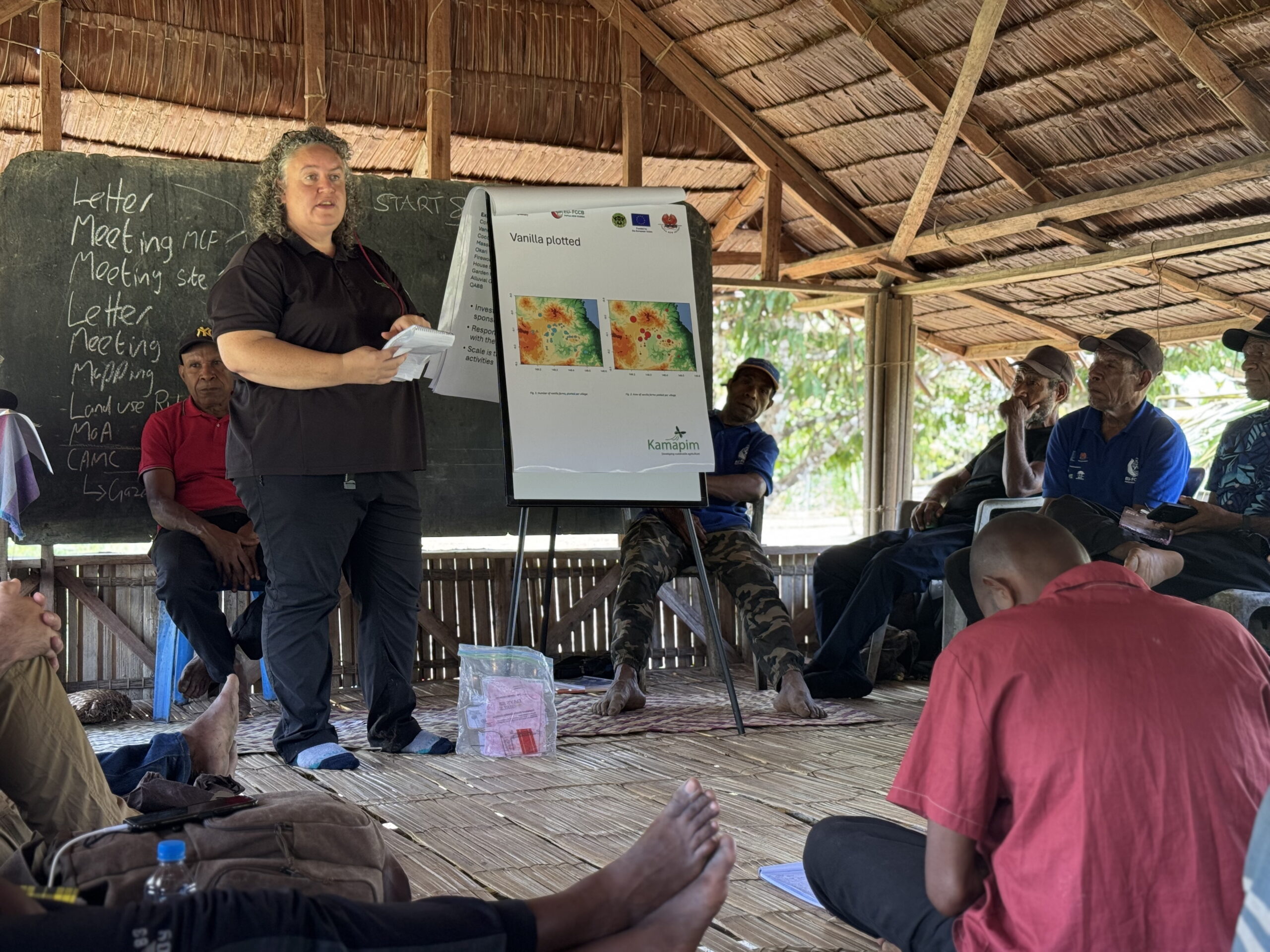
Other obstacles are harder to tackle. An invasive fire ant has spread across parts of the Plateau, and its painful stings are driving some farmers to abandon their plantations altogether. “Many farmers decided to just abandon their plantations,” said Joshua Ombo, a project officer with CIFOR-ICRAF.
Despite sustained training and growing technical capacity, the Managalas vanilla trade has not yet taken off. Transport remains the most persistent constraint, along with weak and unreliable market linkages. For many residents, frustration is mounting. When communities agreed to conserve their forests instead of opening them up to logging or mining, they expected tangible support for sustainable livelihoods in return.
“Landowners are not seeing the outcome of the conservation program. That’s why they are not very happy,” said Lancealot Piritano, MCF’s vice-chair, in a 2024 interview.
“We need markets for coffee, cocoa and vanilla. Our roads are very bad. A bridge washed away during Cyclone Guba in 2007, and it still hasn’t been replaced.”
MCF chair Malchus Kajia agreed: “People want to see livelihoods from things like coffee, cocoa and vanilla. That’s what they have dreamed of and talked about for the last 32 years.” He suggested that reopening the Plateau’s airstrips might be a more realistic short-term solution than fixing the road. “Coffee, vanilla and some vegetables could be transported by plane far more reliably than by road.”
With the Plateau’s ideal growing conditions and the committed consortium working to strengthen the supply chain, this petite and picky plant still holds promise. The next time you taste or smell vanilla — perhaps in ice cream, a latte, or a scented candle — it may be worth pausing to consider its origins. It could well have been grown in the rainforests of Papua New Guinea.