

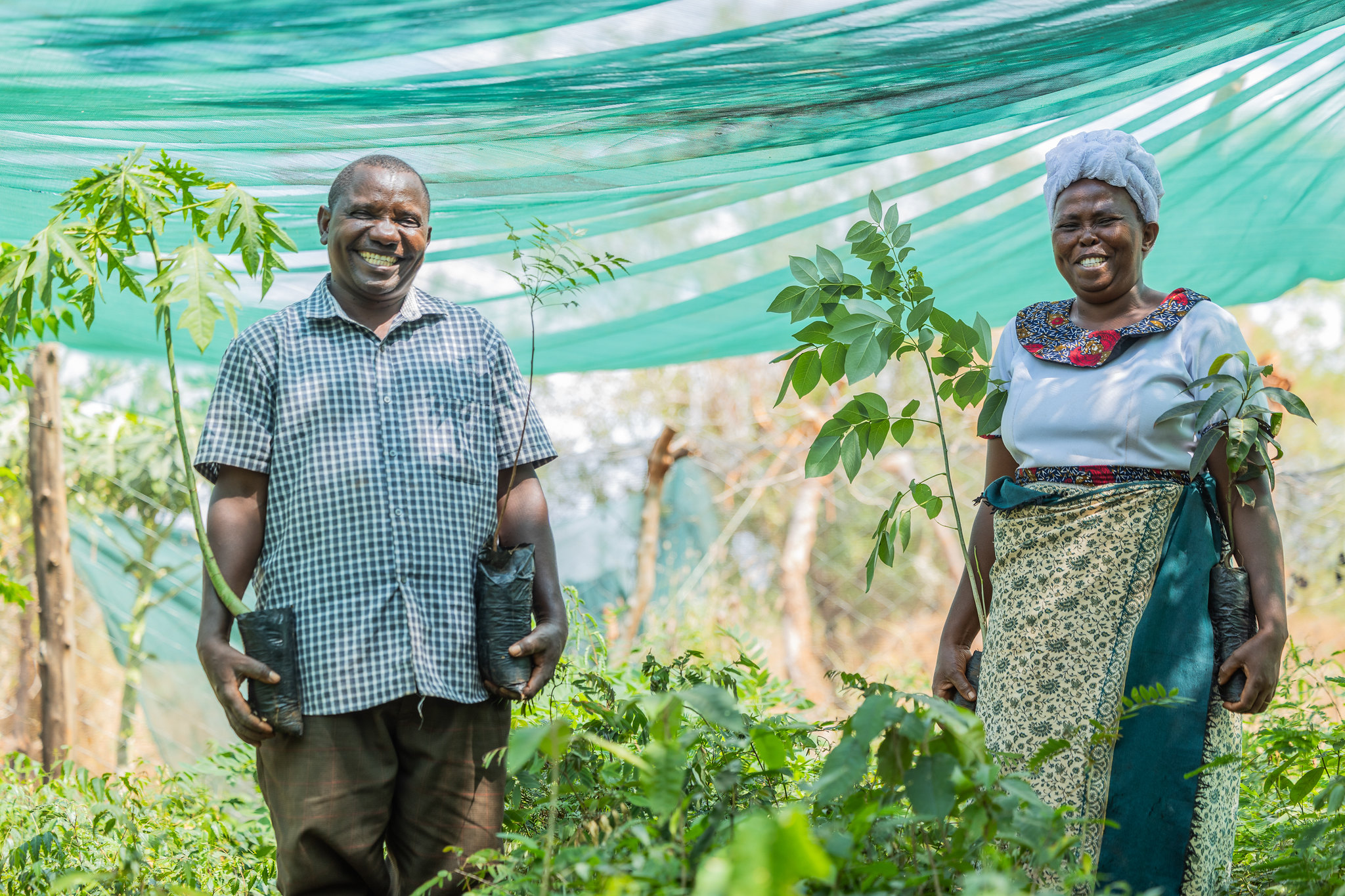
Planting trees is often presented as a solution to land degradation, biodiversity loss and climate change. But planting the wrong trees, or planting trees in the wrong places for the wrong purposes, can damage the ecosystems that restoration aims to recover.
For restoration practitioners, the question is therefore not simply how many trees to plant, but which species, where and why.
These questions are at the centre of the Right Tree, Right Place – Seed (RTRP-Seed) Masterclass Series, a set of expert-led learning events designed to help restoration practitioners, planners and policymakers make better decisions about tree planting.
The masterclasses are part of the Quality Tree Seed Transformative Partnership Platform (TPP), convened by Landscape Alliance to strengthen sustainable, high-quality tree seed and seedling systems for restoration. The platform brings together partners including the Botanic Gardens Conservation International (BGCI) and Unique Land Use, while RTRP-Seed provides its initial support and focuses on improving the availability of quality native tree seeds and seedlings in Africa.
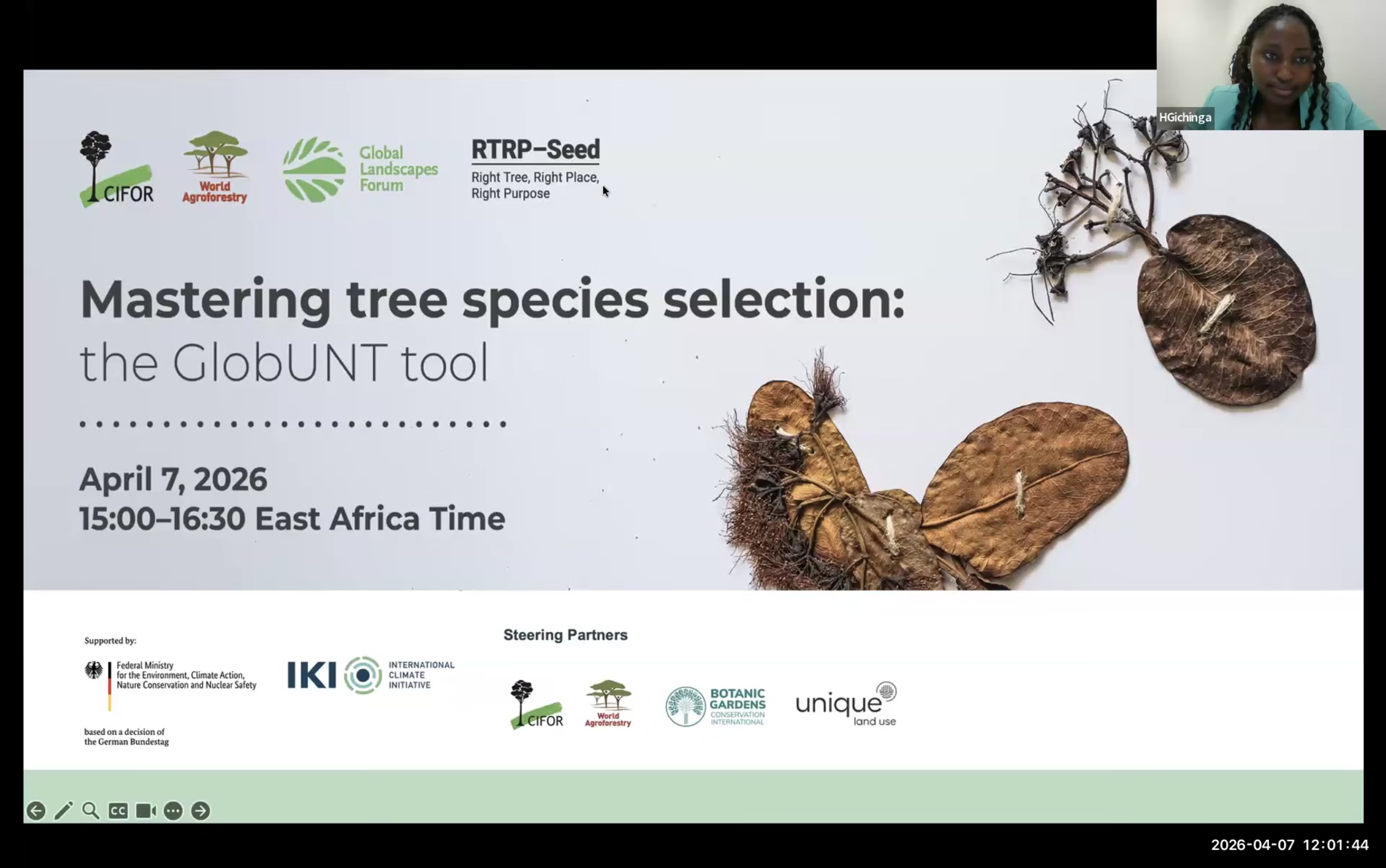
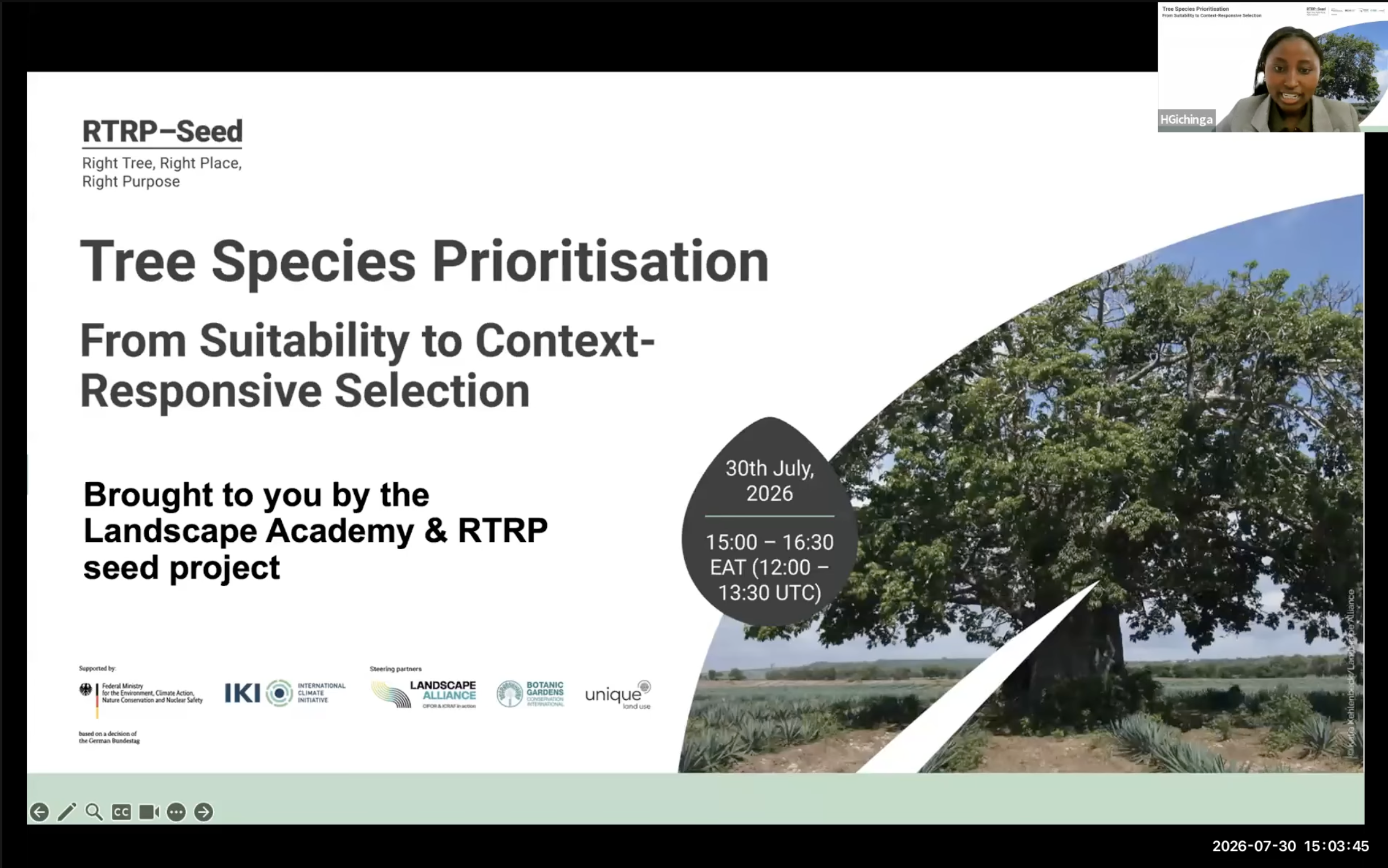
The first masterclass, held in April, explored tree species selection using the GlobalUsefulNativeTrees (GlobUNT) tool. The second, held in July, moved from suitability to species prioritisation: how practitioners can narrow a potentially long list of suitable species to a portfolio that reflects ecological, livelihood and local priorities. A third session, scheduled for October, will focus on tree seed sourcing.
A young tree seedling is watered at a restoration site. Photo by Anthony Ochieng / Landscape Alliance
Finding trees that fit the place
The first masterclass began with a warning against assuming that planting trees automatically delivers environmental benefits.
Paul Smith, former BGCI secretary general and now chair of The Global Biodiversity Standard, pointed to the risk of unintentionally damaging biodiversity through inappropriate planting, including the use of invasive species or planting trees in habitats where they do not belong.
In one example, Smith described tree planting on natural grassland in Madagascar that displaced endemic grass species, illustrating how an intervention intended to restore nature can instead harm it.
“There are a lot of factors involved in growing healthy seedlings and ensuring their survival.”
Roeland Kindt, senior ecologist at Landscape Alliance.
The session explored how practitioners can avoid such unintended impacts by identifying native species suited to a particular site and its intended uses.
GlobUNT, an online species-selection tool developed by Landscape Alliance, combines information on the native distribution of tree species from BGCI’s GlobalTreeSearch with data on their human uses from the World Checklist of Useful Plant Species. The tool can also take future climate conditions into account.
Users can filter species by factors including location, potential uses and environmental conditions, producing a starting list of species to consider for a particular restoration context. The database covers 14,014 tree species across 242 countries and territories.
But GlobUNT is not intended to make the final choice.
“There are a lot of factors involved in growing healthy seedlings and ensuring their survival, and that is also part of the wider work of the RTRP-Seed project to get the right tree for the right place,” said Roeland Kindt, senior ecologist at Landscape Alliance.
The resulting list, he said, needs to be considered alongside other information, including species conservation status, seed characteristics, invasiveness and local knowledge.
That distinction became central to the second session, which moved from identifying potentially suitable species to deciding which ones should actually be prioritized.
Narrowing down the choices
The second masterclass looked at how practitioners can select a range of species that reflects restoration objectives as well as the priorities of people living and working in the area.
One starting point is the use of reference ecosystems, relatively intact sites that provide a tangible benchmark for what restoration could aim to achieve.
“Reference sites are tangible benchmarks for what we want to achieve; they give us a blueprint for what success looks like,” said Paul Smith.
Such sites, he said, can help practitioners identify the species and ecological characteristics they want to recover. Observations and local knowledge can add further information about how an area has changed and which species return first in fallow fields.
Ecological suitability, however, is only one part of the decision. Livelihood and economic considerations also shape which species are ultimately prioritized.
Abrham Abiyu, tree breeding and seed source scientist at Landscape Alliance, described how these priorities can pull in different directions. Drawing on experience in Ethiopia, he noted that donors, government institutions and conservation organisations may favour different species, from native trees valued for biodiversity to fast-growing trees valued for timber, fuel or income.
“There is no single silver bullet that can solve species prioritization. We need to use a collection of tools,” said Abiyu.
Victor Otieno of the Center for Ecosystem Restoration Kenya described a process that combines expert input with community validation. Practitioners rank species against agreed criteria, then test the selection in demonstration plots. The results, he said, can be used to refine the list as practitioners learn what works in practice.
The selection process also needs to account for the priorities of the people who will use and care for the land.
▼ Watch the second Masterclass
Bringing communities into the decision
“We need to place communities at the centre of each and every activity that goes into the restoration,” said Jeniffer Kandagor Chemisto, project manager at Solidaridad East and Central Africa. “We must involve them from the beginning, taking into account their preferences and the Indigenous and local knowledge on which trees perform well locally.”
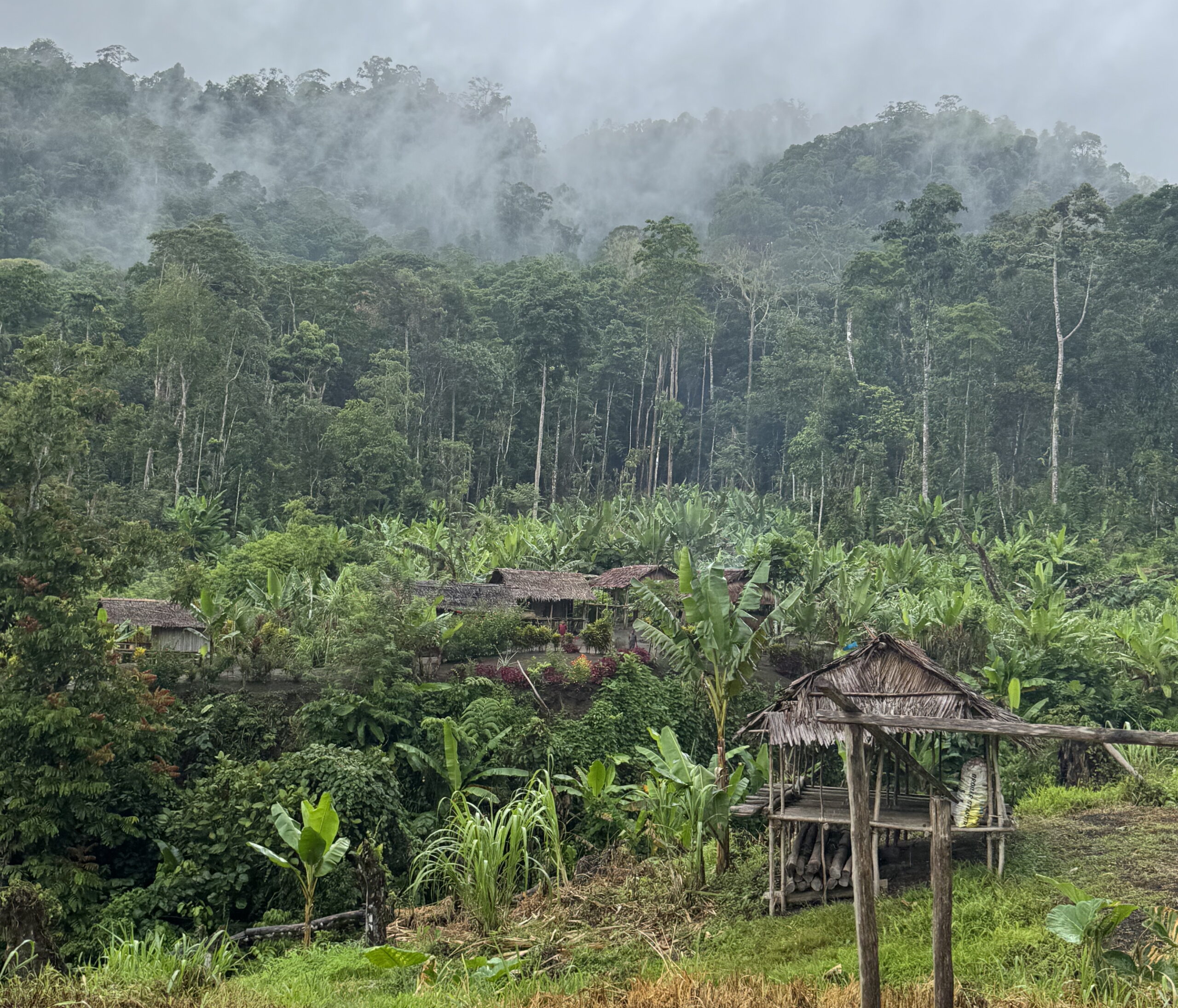
That knowledge can influence both where restoration takes place and which species are chosen, as communities may prioritize fruit trees, woodlots, soil and water conservation, or species with cultural value.
Meeting these different needs may require a diverse mix of species, which can also provide greater resilience to climate change, pests and disease while helping to balance immediate livelihood requirements with longer-term goals.
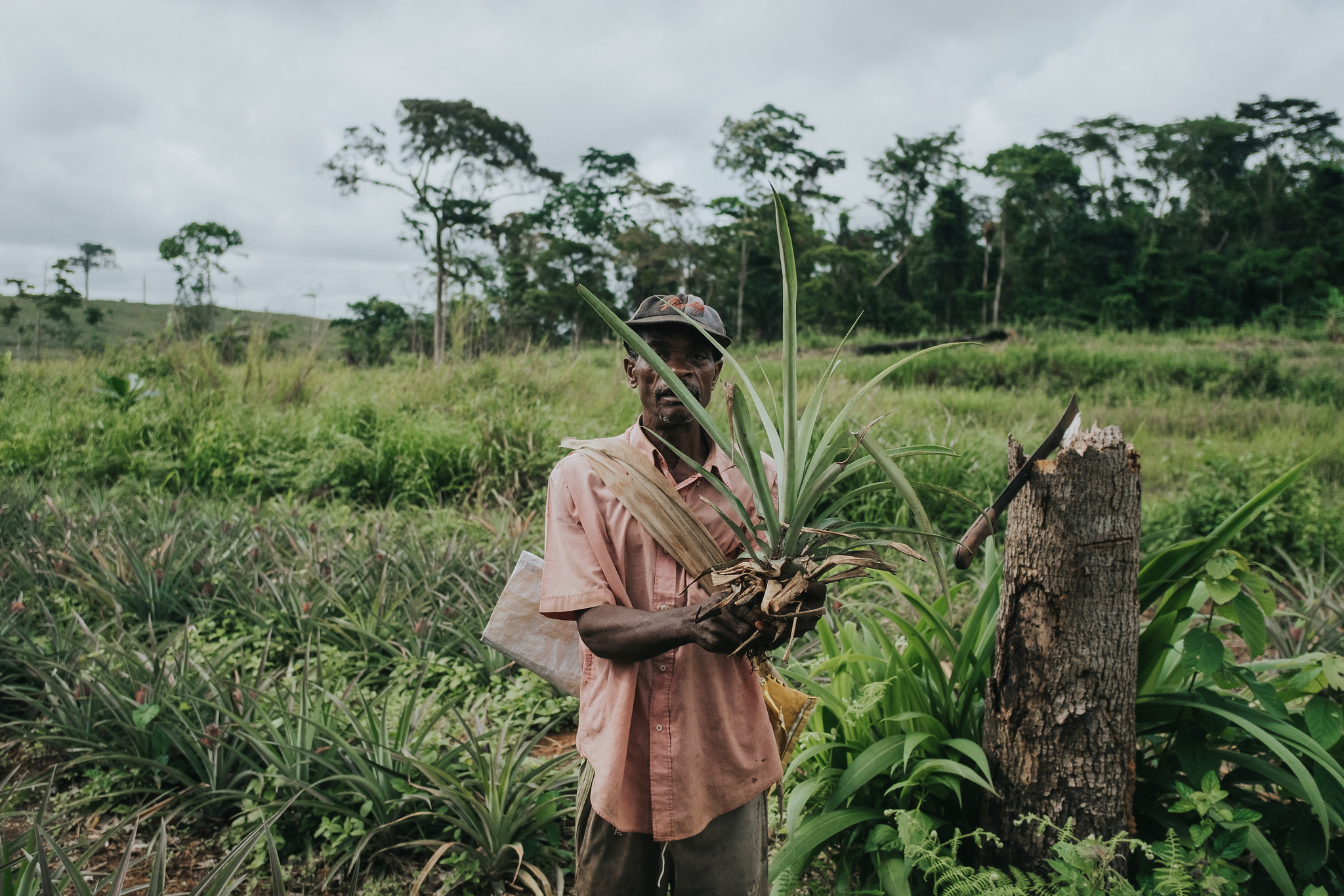
Photo by Ollivier Girard / Landscape Alliance
Photo by Ollivier Girard / Landscape Alliance
From species choice to seed supply
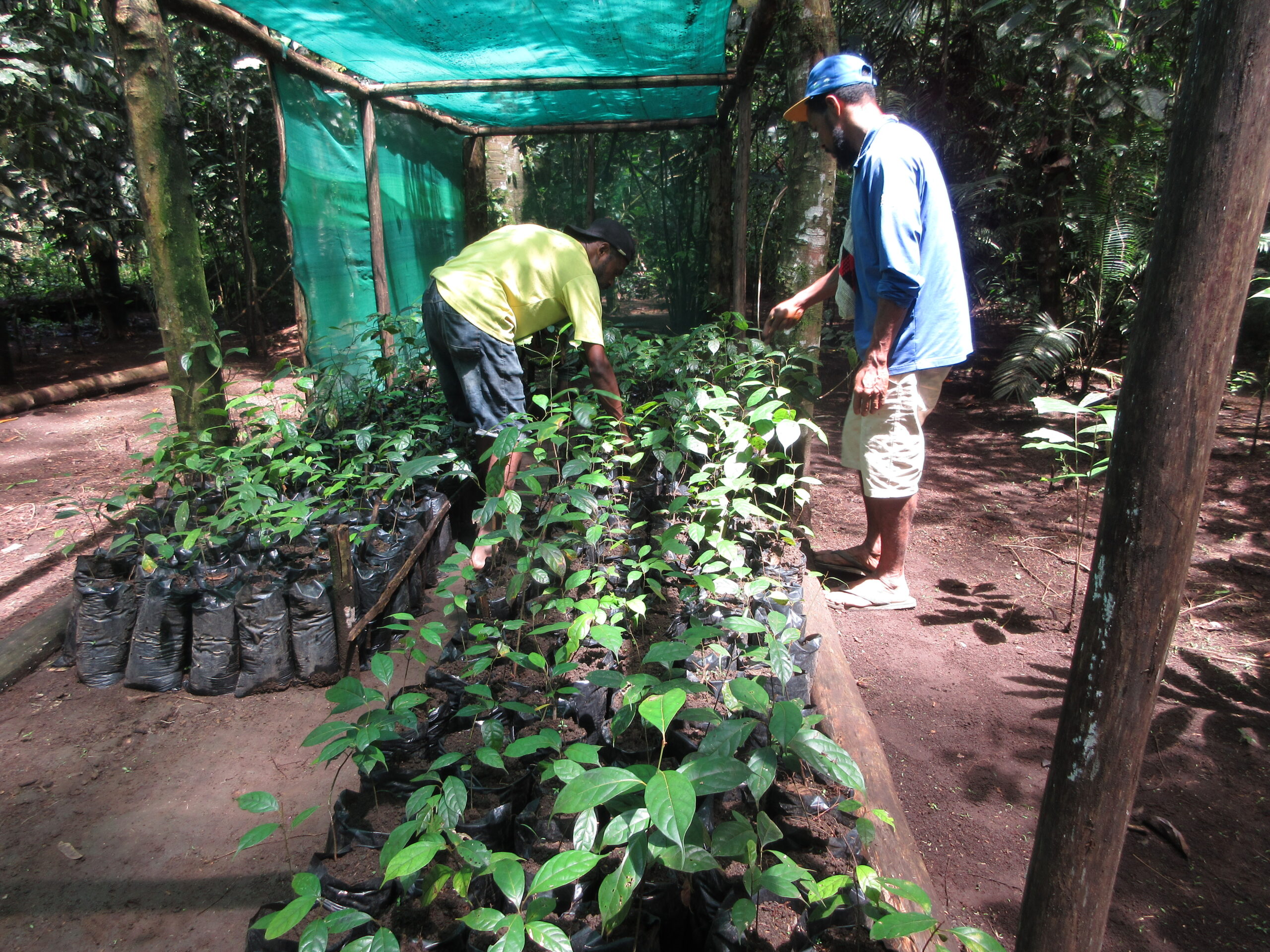
Yet choosing the right species is only part of the challenge. They also need to be available as quality planting material, and that depends on functioning nurseries, reliable seed supplies and demand for the resulting seedlings.
Thomas Asbeck, technical lead at Unique Land Use, described the challenge from the private-sector perspective. His experience in Uganda showed that native species can be produced commercially, but doing so requires more than knowing which trees to plant.
“If you want to produce something in a commercial sense, you need to not only know where to get your seeds, how the seedling is produced, but also the whole value chain that you want to enter at that stage,” Asbeck said.
The next masterclass, scheduled for October, will focus on tree seed sourcing, a key step in moving from species selection on paper to restoration in practice.