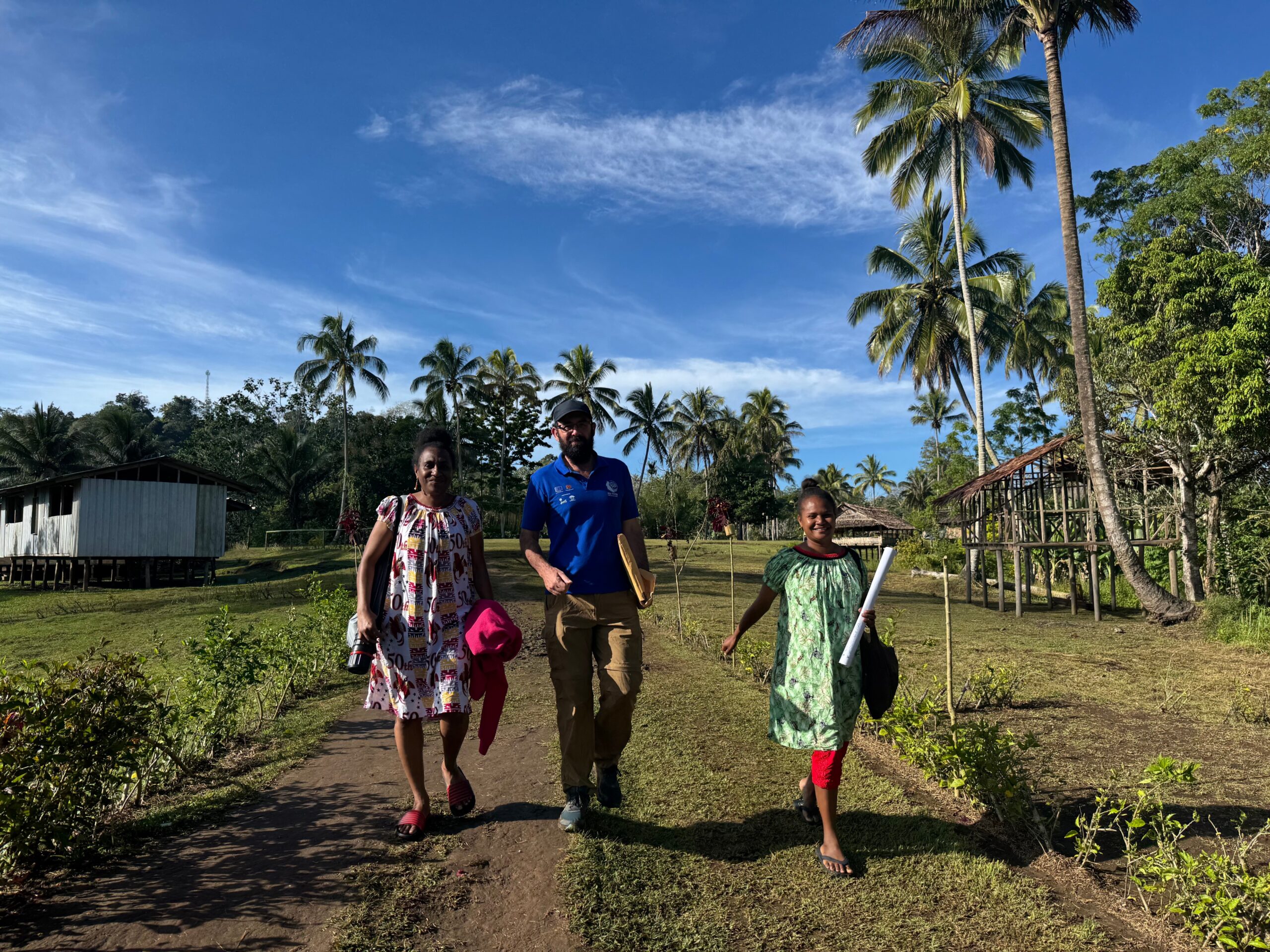

We heard the drums long before we saw them. It was the morning of 15 October 2025, and the Center for International Forestry Research and World Agroforestry (CIFOR-ICRAF) team was hiking up a steep bank towards Kawowogi Village, clutching camera gear, plastic bins of stationery and large printout presentations.
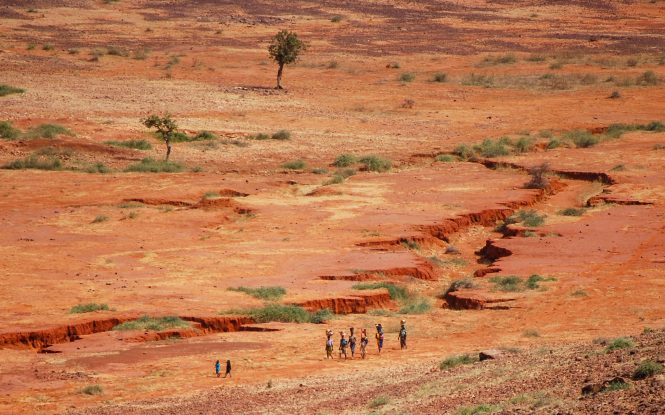
We had driven most of the way from Afore Station, in another part of the Managalas Conservation Area (MCA) in Papua New Guinea’s Oro Province. But the road was so badly eroded — carved through, riddled with precarious drop-offs and tractionless puddles — that we were forced to walk a few times. The final half-kilometre to the village could only be done on foot.
As we rounded the ridgeline, a group of local performers came into view. Dressed in printed tapa, adorned with shells and crowned with bright feather headdresses, they guided us forward with a cyclical dance, song and rhythm. We passed beneath a series of delicate palm-frond archways strung with red and yellow hibiscus on our way to the meeting house. Overhead, a Raggiana bird-of-paradise (Paradisea raggiana) swept across the sky, its sunset-coloured tail feathers streaming behind it.
It felt like an appropriate symbol for the gathering at hand, which sought progress on a long-held aspiration shared by the Managalas communities: to develop more sustainable and reliable livelihoods on the Plateau, whilst conserving their rich and biodiverse natural environment.
A forum for consensus
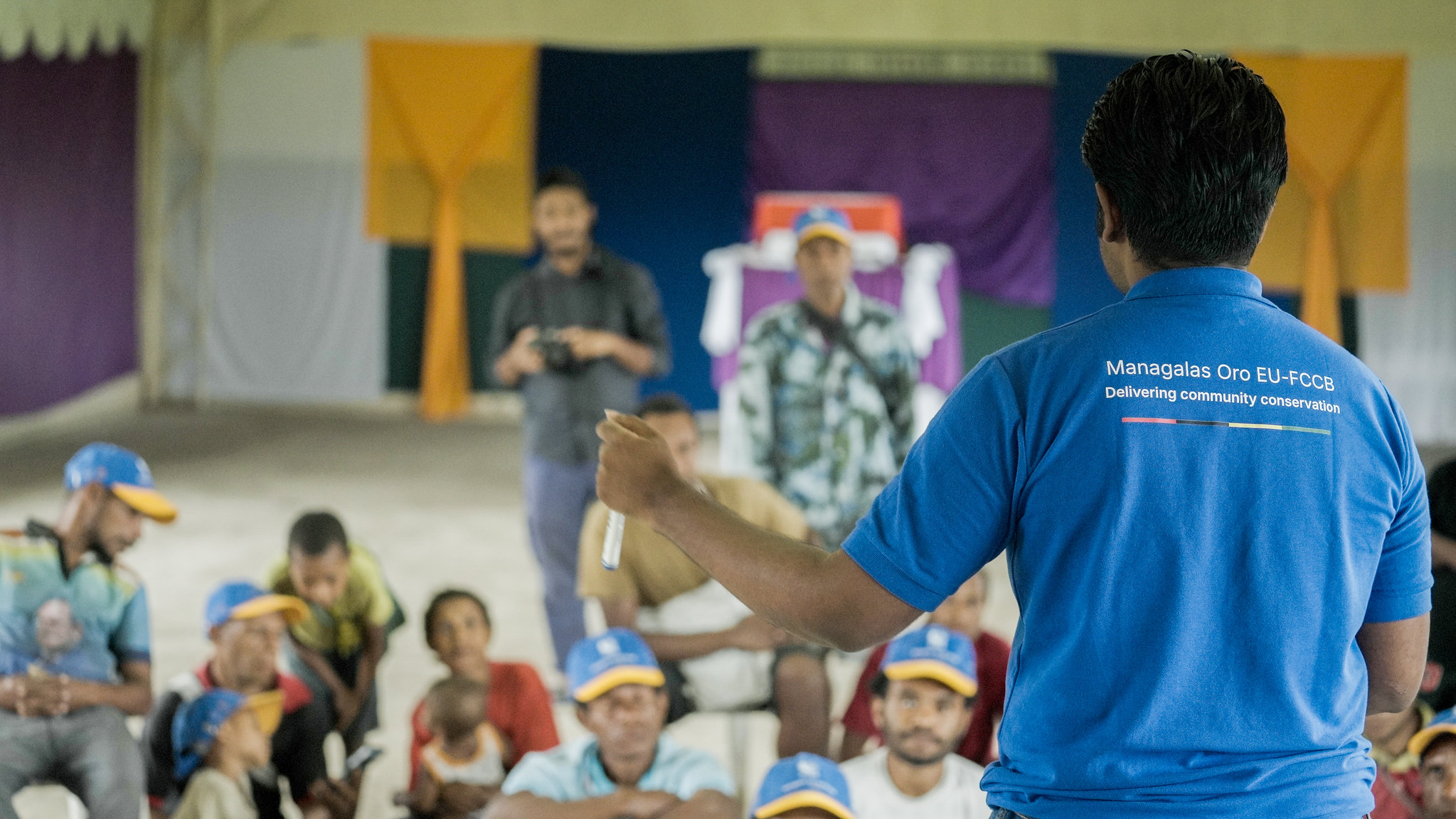
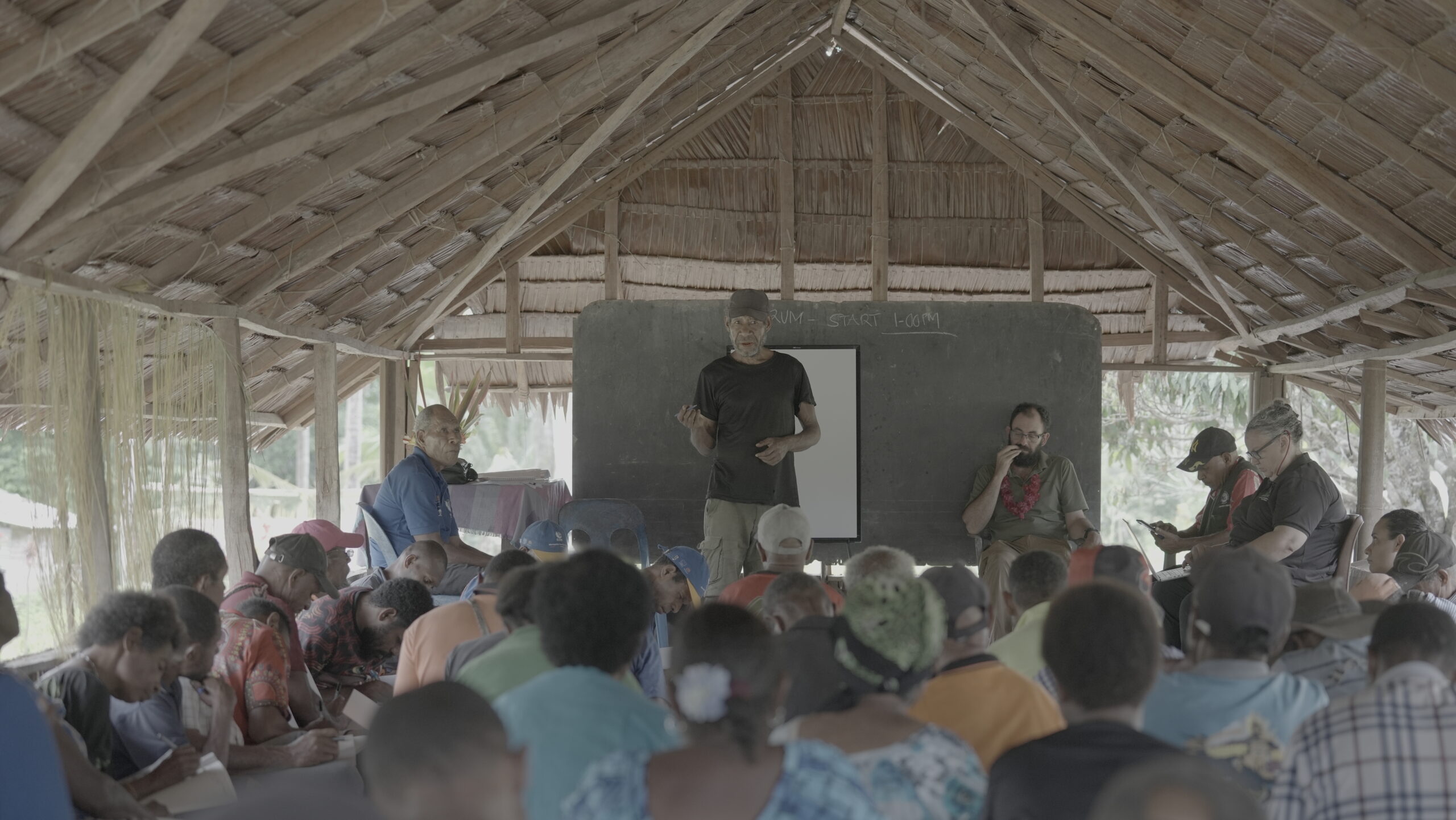
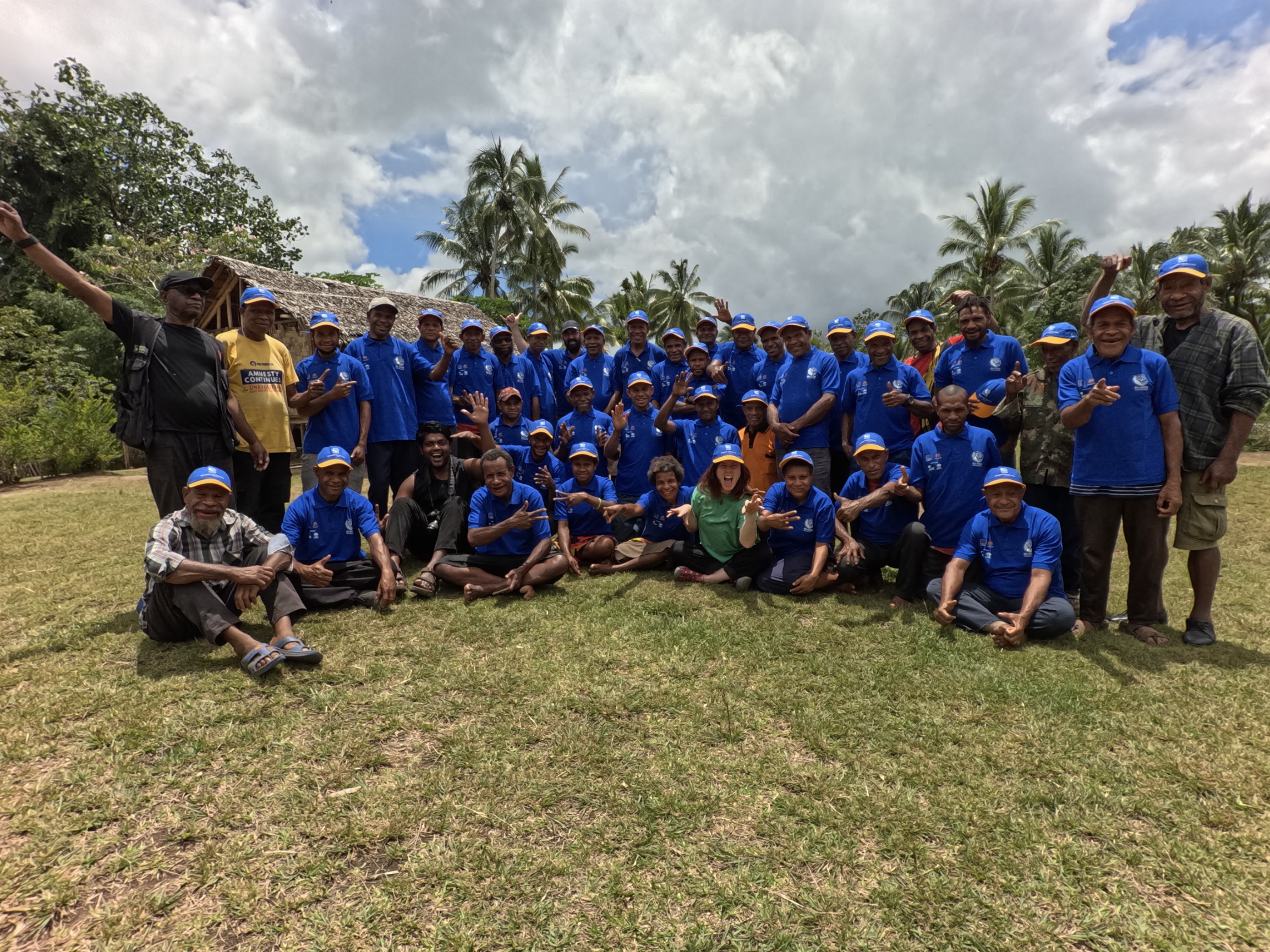
Such gatherings are a regular part of life on the Plateau. For decades, Managalas Conservation Foundation (MCF) and its partners have held an annual Combined Forum, bringing together representatives from across the region. In a place where decisions are typically made at the clan level, such fora are vital to building consensus at broader scales.
They have already yielded fruit. In 2017, Managalas’ 152 clans agreed to declare the entire Plateau a conservation area — an outcome that is striking in the Papua New Guinean context.
That achievement, however, has not translated seamlessly into tangible benefits. Many people supported the conservation concept with the understanding that it would draw alternative livelihoods and improve much-needed services to the Plateau. Progress on both fronts has been slower than hoped.
“People are still waiting to find out when they will benefit from what has been done,” said Malchus Kajia, MCF’s chair, during the forum’s opening remarks.
Caption image here
Barriers on the ground
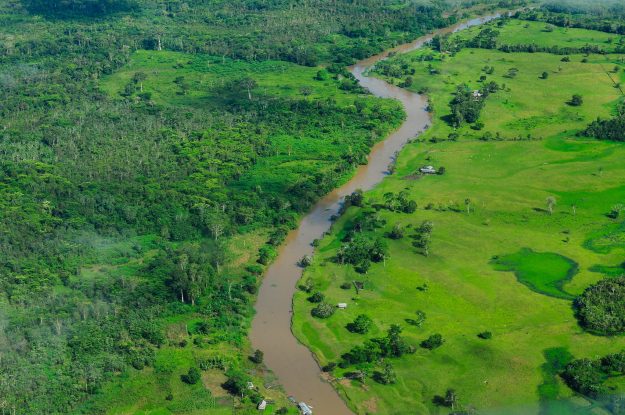
There are complex reasons for the lack of progress. Managalas is endowed with rich, fertile volcanic soils and a climate well-suited to food and timber production, as well as high-value non-timber forest products such as okari nuts and massoia bark. Yet converting that potential into viable, sustainable value chains is a perennial challenge.
Poor infrastructure — including the bad roads that had slowed our own journey — raises transport costs and limits access to markets. Freight is expensive, business capacity is uneven and many communities lack the necessary experience to operate at scale.
Meanwhile, government services that ought to address many of these constraints are constrained by their own resource and capacity gaps. Past interventions have also shaped people’s expectations, sometimes encouraging reliance on external support without the accompanying responsibilities required to sustain it. Intra-community tensions further complicate coordination.
“We don’t have a problem that can’t be solved,” said Conwell Nukara, a community-based organization manager on the Plateau, during the forum. “It’s just that we don’t work together enough. We need to get up, work hard and do things in our zones.”
Sharing the benefits
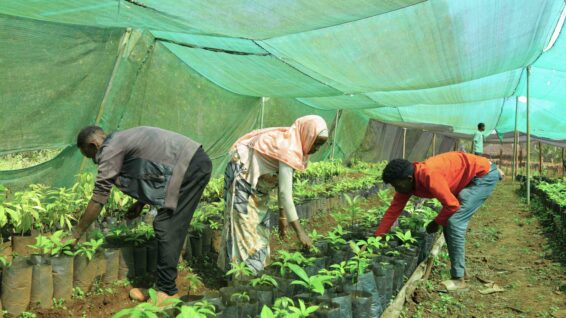
During the forum, Will Unsworth, CIFOR-ICRAF’s Papua New Guinea (PNG) country manager, led discussions to decide where several new livelihood activities would be located. These included fish farming, egg production, piggeries, duck rearing and vegetable farms — initiatives designed to supplement local diets, create economic opportunities and offset reliance on hunting wildlife. Each activity was allocated to specific villages and clans to ensure that benefits are felt widely across Managalas.
“This is the bit of the project that people will feel the benefit,” Unsworth said. “So it’s important that we distribute it fairly.”
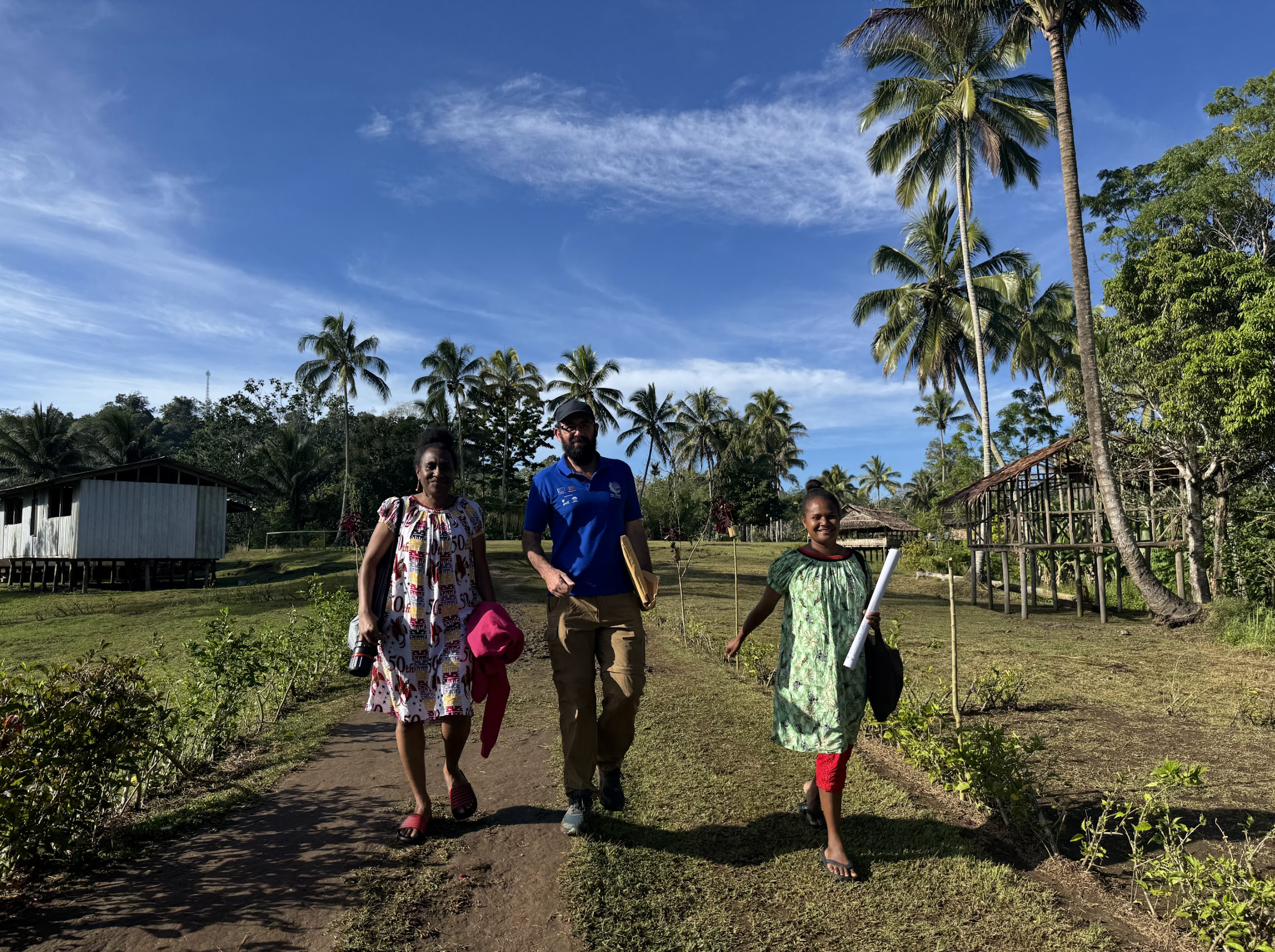
Photo by Monica Evans / CIFOR-ICRAF
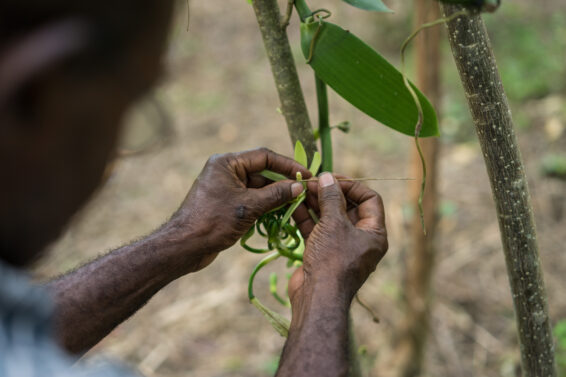
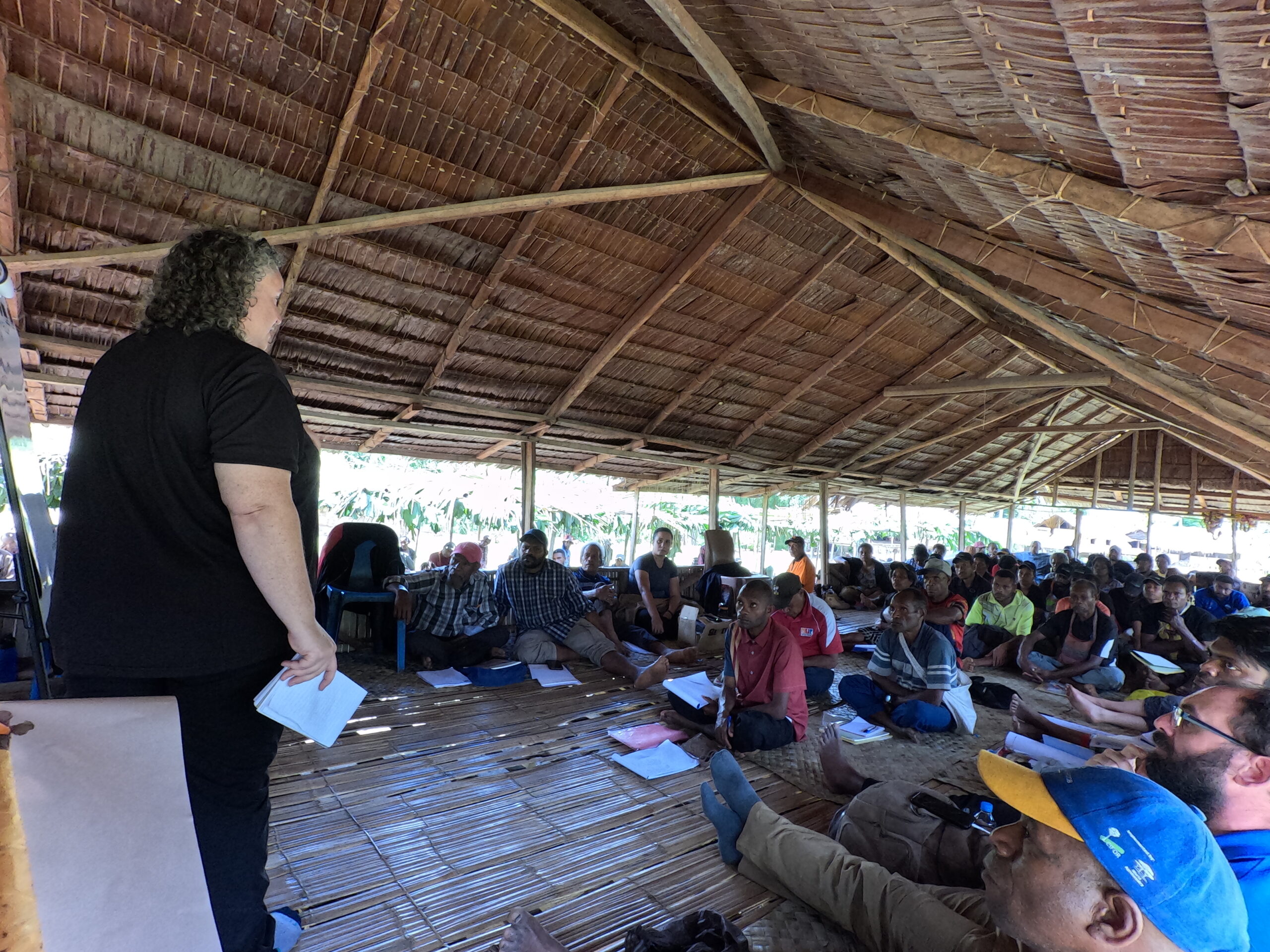
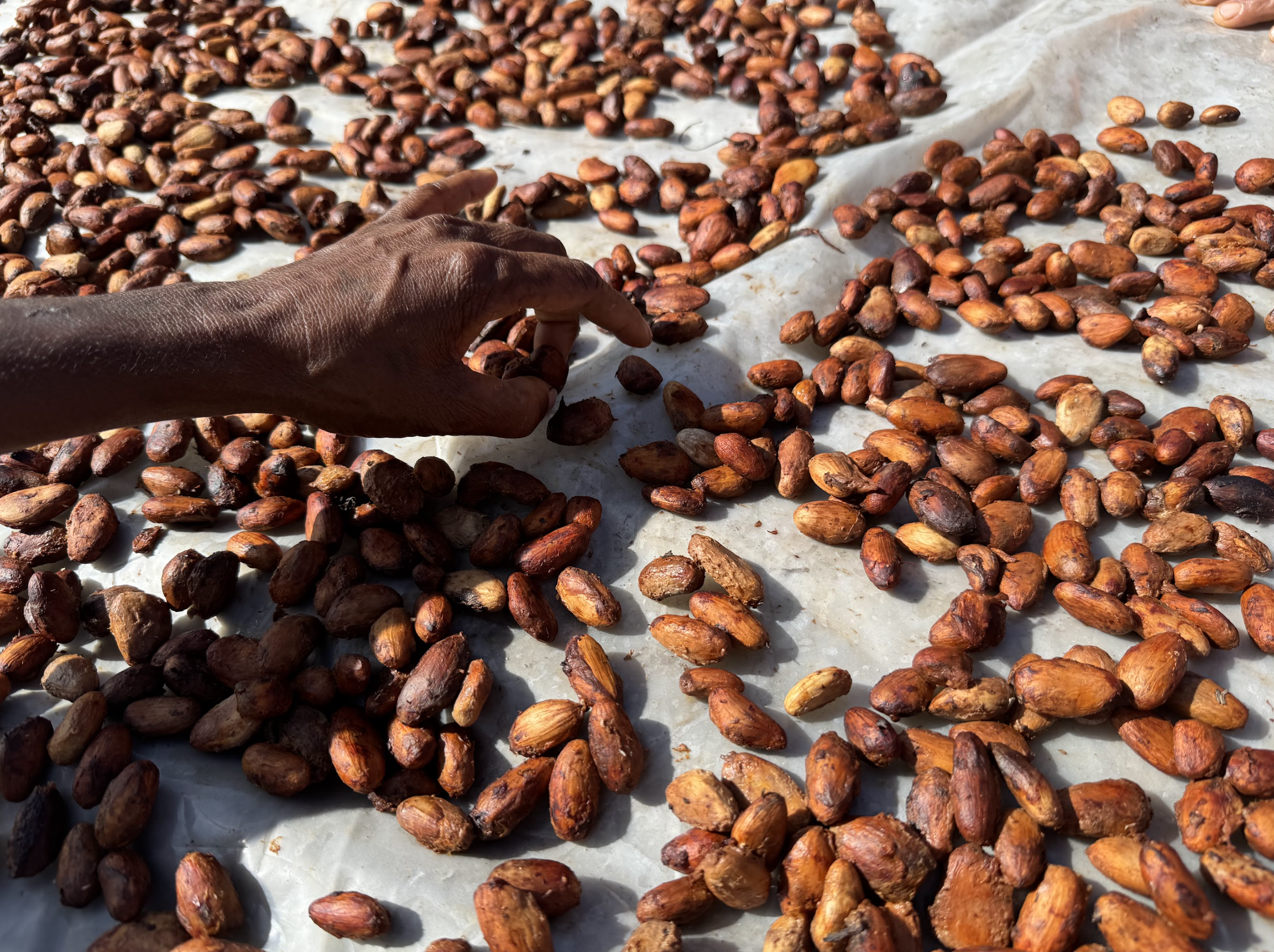
Unsworth also outlined some of the ways that MCF, CIFOR-ICRAF and Kamapim — a private-sector partner focused on sustainable agriculture — are helping to hone the process of making profits. The partners are working with government service providers and private-sector experts to support farmers already producing cocoa, coffee and vanilla.
Nancy Irwin, Kamapim’s managing director, explained to forum participants that growers of these commodities on the Plateau would need to focus on high-value, high-quality crops: “Here, freight is much more than in other places, so the only way to get people buying is if you have quality.”
Kamapim is also helping community members establish mobile phone-based bank accounts. And, in the coming year, partners plan to organize tractor transport and build a central storage facility to improve access to markets. That process, however, has been hindered by many community members’ unwillingness to share information about what they grow and sell. “People don’t want to say where their coffee is,” said Irwin. “But that’s how you make decisions about how to spend your money: with data.” Unsworth reiterated: “When we know where the volumes are, we know what to build and where.”
Proof close to home
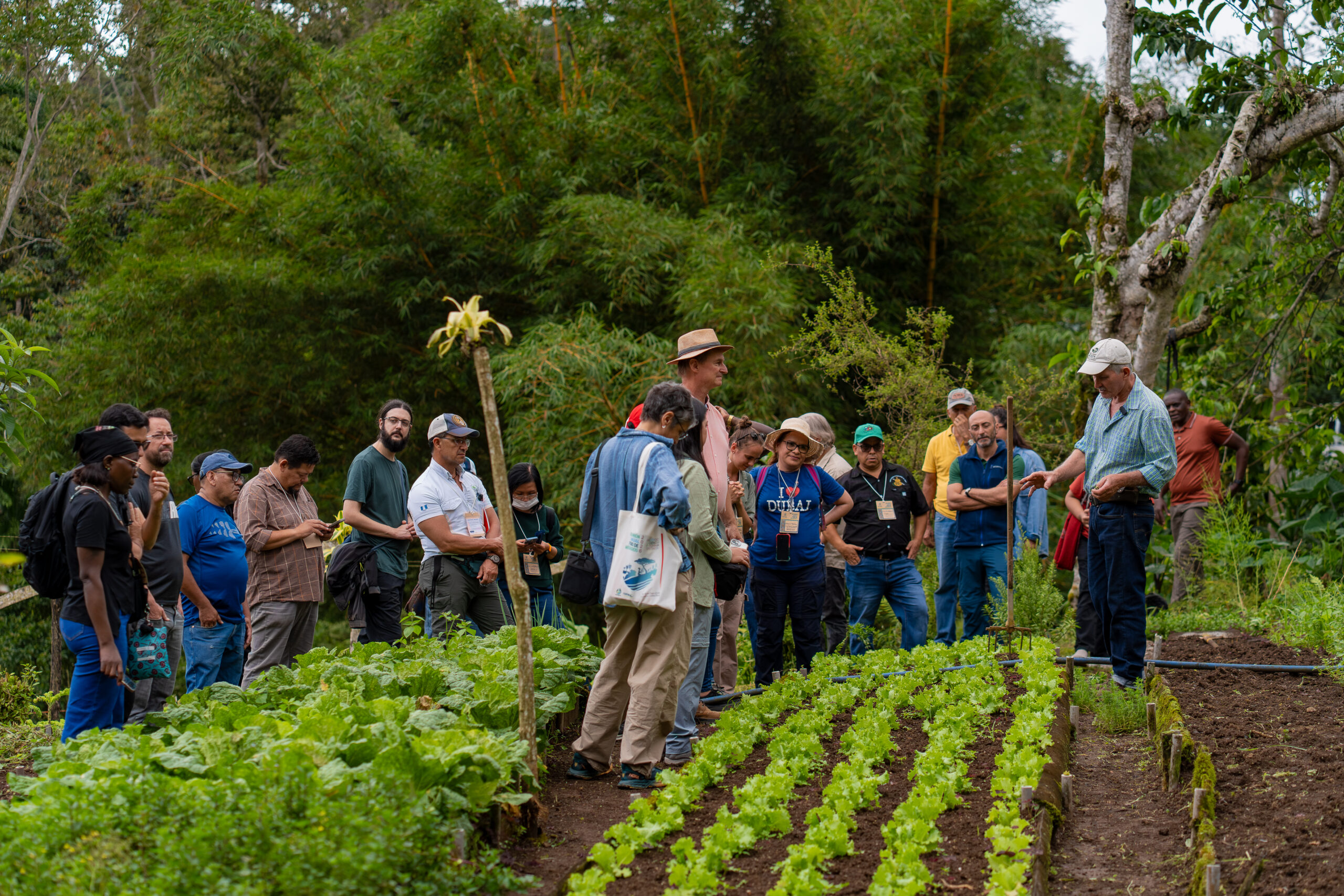
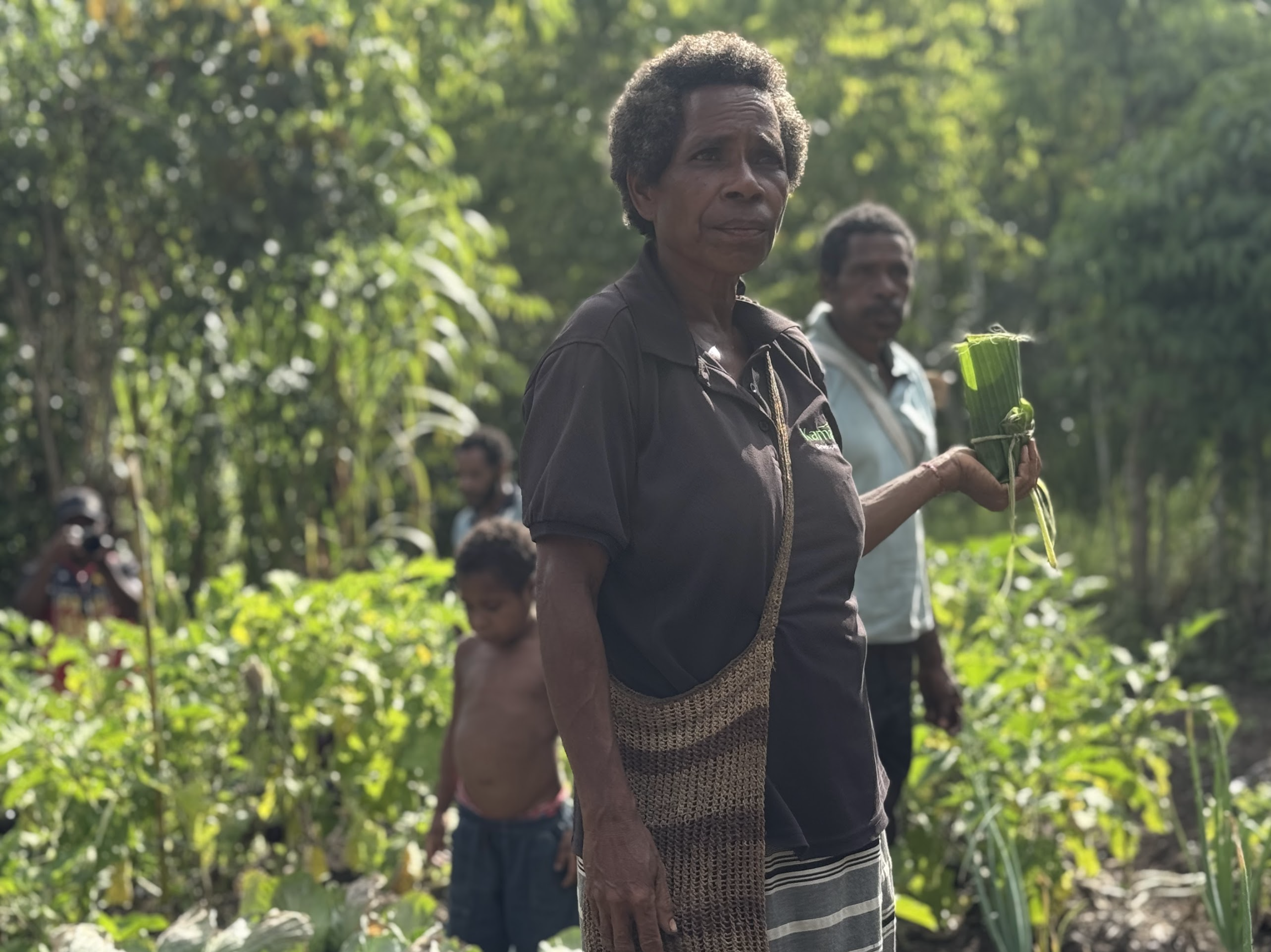
For local farmer Grace Juo, the benefits of this approach are already visible. With Kamapim’s support, she has led the development of a model vegetable farm and supplied cabbage for the meals shared at the Forum.
“You can become somebody in your own garden,” she told participants. “Today at the model farm, I’m harvesting my second harvest and feeding you all. You can create something right here, and it will serve you and your children too.”
Conservation still central
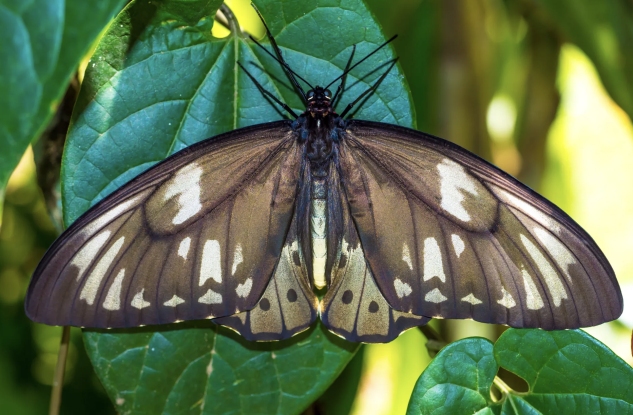
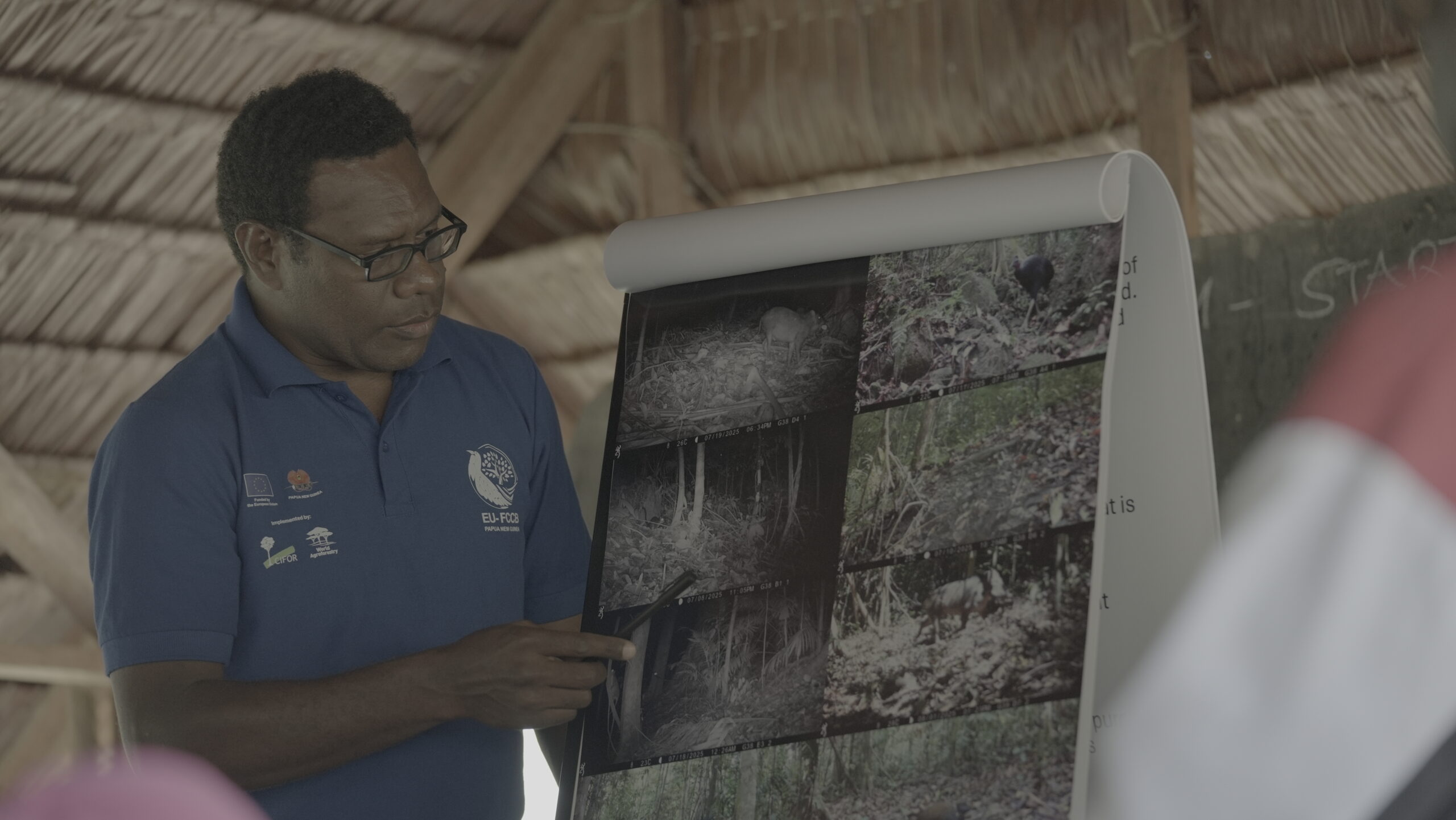
While much of the discussion focused on livelihoods, biodiversity conservation was also on the agenda. Particular attention was given to the Queen Alexandra Birdwing Butterfly (Ornithopthera alexandreae), the world’s largest known butterfly, which lives only in Managalas and one other site in Oro Province.
Christine Pokana, a postgraduate student at PNG Unitech, presented the results of her research, indicating that populations of the butterfly on the Plateau have declined since the last formal surveys in 1991.
Joshua Ombo, a CIFOR-ICRAF project officer, shared data from his ongoing investigation into sustainable management of massoia (Cryptocarya massoia), a wild-growing tree valued for its aromatic bark, used in perfumery, flavourings and traditional medicine. While the industry could prove lucrative for Managalas, it must be managed carefully, said Ombo: “If people keep harvesting it at the current rate, there will be no more left for the next generation.” Fellow project officer Swancy Saiva also shared some of his work investigating timber value chains on the Plateau.
Who belongs — and when
Participants also debated what to do about the numerous requests coming from surrounding clans to join MCA. Some advocated that expanding the MCA could strengthen conservation outcomes, attract funding and improve security — particularly along the road used to transport crops to market, which passes through neighbouring land.
“We have troubles with safety on the road, so we want to make sure we have good relations with them,” said gender officer Matilda Duga.
Others, however, wondered if including more people in the MCA might dilute its benefits. ”Our butterfly is still not flying high here yet,” said Solomon Kotuba. “We need to do more things, then we can talk about the neighbouring clans. When everyone here is flying high, then we can focus on the neighbours.”
Looking ahead
The forum closed with a discussion on the development of a Wi-Fi network across the Plateau to improve communications, coordination and provide access to services such as online banking and Flexible Open and Distance Education in rural areas.
On the final day of the event, the MCF Board was re-elected with an improved structure to ensure that all areas of Managalas are represented. Addressing the incoming board, Kajia acknowledged the efforts of past members and urged incumbents to aim high: “We have raised things up this far,” he said; “now you will come with fresh energy to make Managalas a better place for us and for generations to come.”
For more information on this project, please contact William Unsworth (CIFOR-ICRAF): [email protected]