
For many students, school lessons end when the bell rings. But for Héritier Litoma Wewe and André Mosala Misandu, the day continues beyond the classroom. Heading home, they put their training in agroforestry and sustainable farming to work, applying what they have learned to support their families and build livelihoods. Both 18, the students are studying agricultural technical humanities in Kisangani, Democratic Republic of Congo (DRC). Litoma runs a cocoa nursery, while Mosala grows vegetables for local markets.
Today, Litoma’s cocoa nursery has generated thousands of US dollars for his family, while Mosala supplies fresh vegetables to local markets and dreams of expanding into poultry farming. Their businesses grew with initial support through the French Development Agency (AFD) and Enabel, the Belgian development agency, through the Governance, Inclusion, and Agricultural and Rural Training in Tshopo Province (GIFT) project.
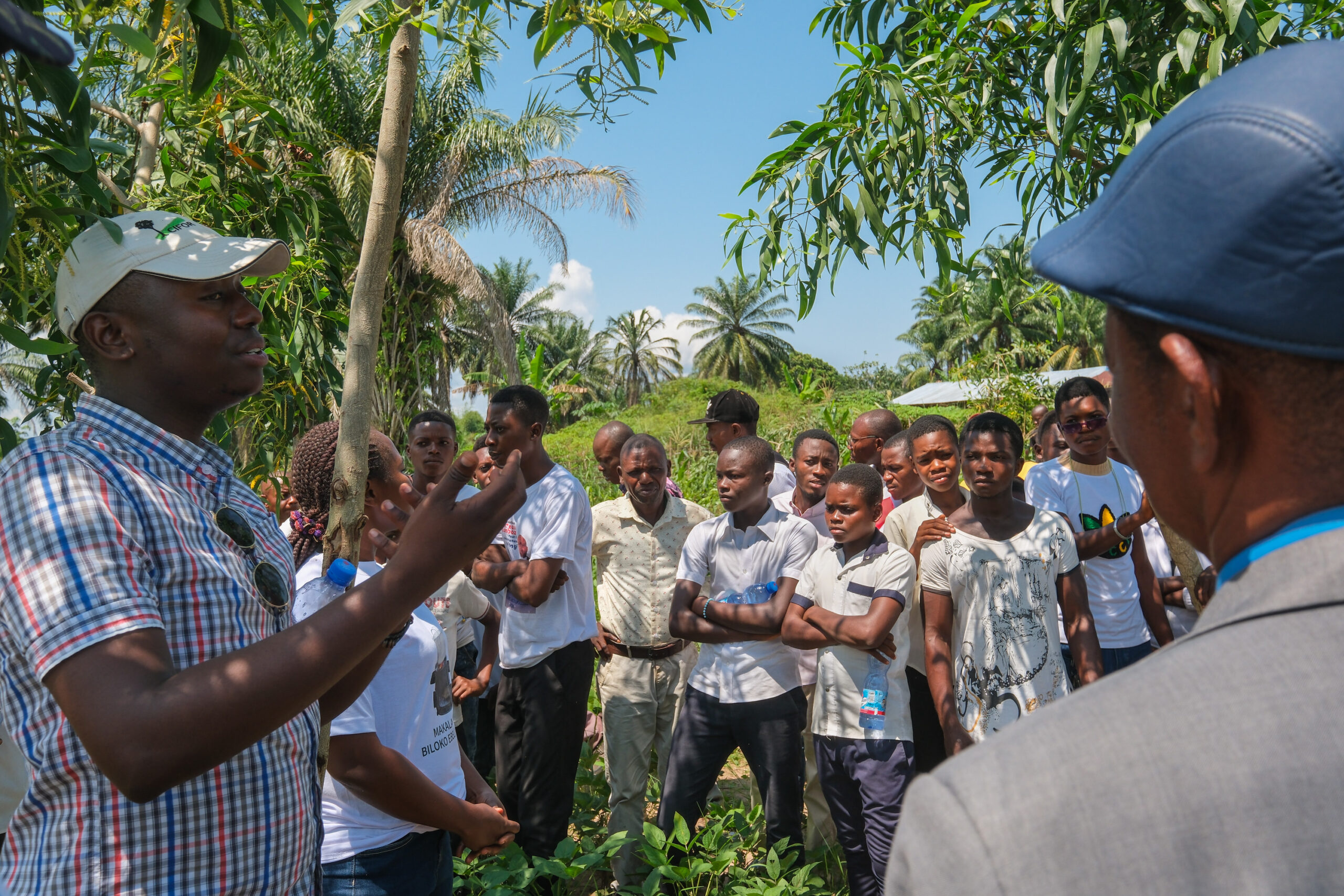
The project works with Agricultural Technical Institutes (ITAs) to equip young people with practical skills in agroforestry, nursery management and sustainable agriculture. The students are encouraged to take those skills home and put them into practice, helping their families produce food, earn income and manage the natural resources on which communities depend.
Photo by Axel Fassio / Landscape Alliance.
“Young people are proving that when equipped with solid practical and long-term support, their newly acquired skills can lead to entrepreneurial innovation, improving their families’ livelihoods and inspiring change within their communities,” says Joëlle Grandjean, Environmental Education coordinator at Landscape Alliance for the Yangambi Engagement Landscape (YEL) project in DRC. Our goal is to maintain long-term technical support to ensure that what students learn in the classroom continues to create lasting benefits long after the initial training and financial support end.”
Between 2024 and 2026, the project has trained 250 students and 28 teachers from four ITAs in Kisangani, Tshopo province, in tree planting, nursery management, agroforestry and vegetable production. The students also received agricultural materials and technical support from their teachers and members of the project’s technical team.
Litoma and Mosala, both fourth-year Agricultural Technical Humanities students from ITA Simi-Simi and ITA Maendeleo respectively, established farming enterprises at home with support from Landscape Alliance teams.
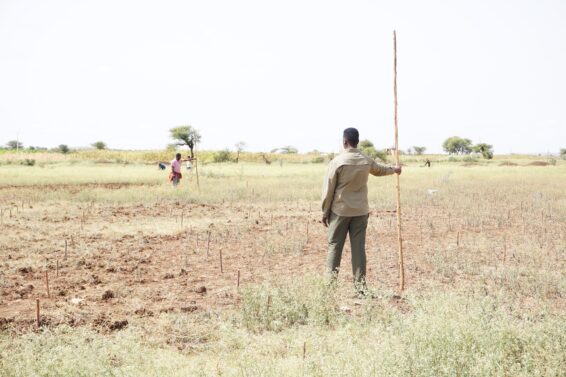
Litoma drew on his training in nursery management and the agricultural tools provided through the GIFT project to establish his cocoa nursery. He raised the start-up funds himself and used land belonging to his family. He also received technical support from his teachers and members of the Environmental Education and GIFT project technical team. In less than a year, Litoma produced 2,514 cocoa seedlings. More than 500 seedlings were used to establish a 0.5-hectare family cocoa plot, while about 2,000 were sold to local farmers growing cocoa.
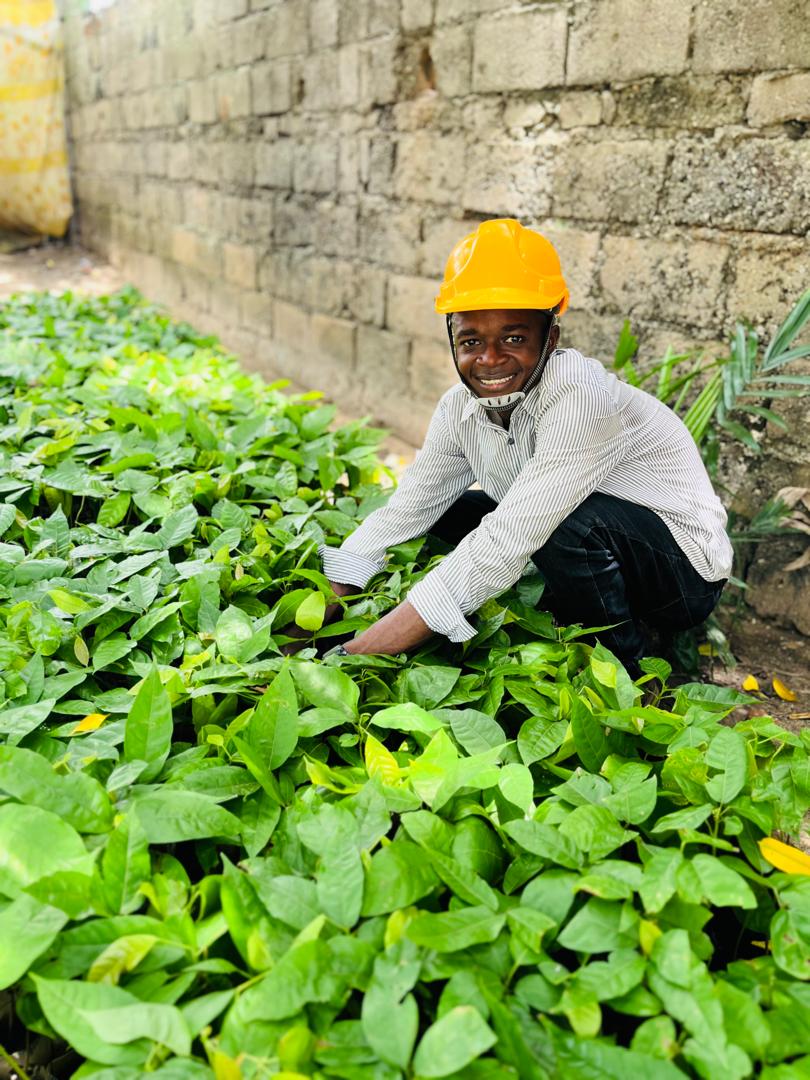
Photo by Axel Fassio / Landscape Alliance.
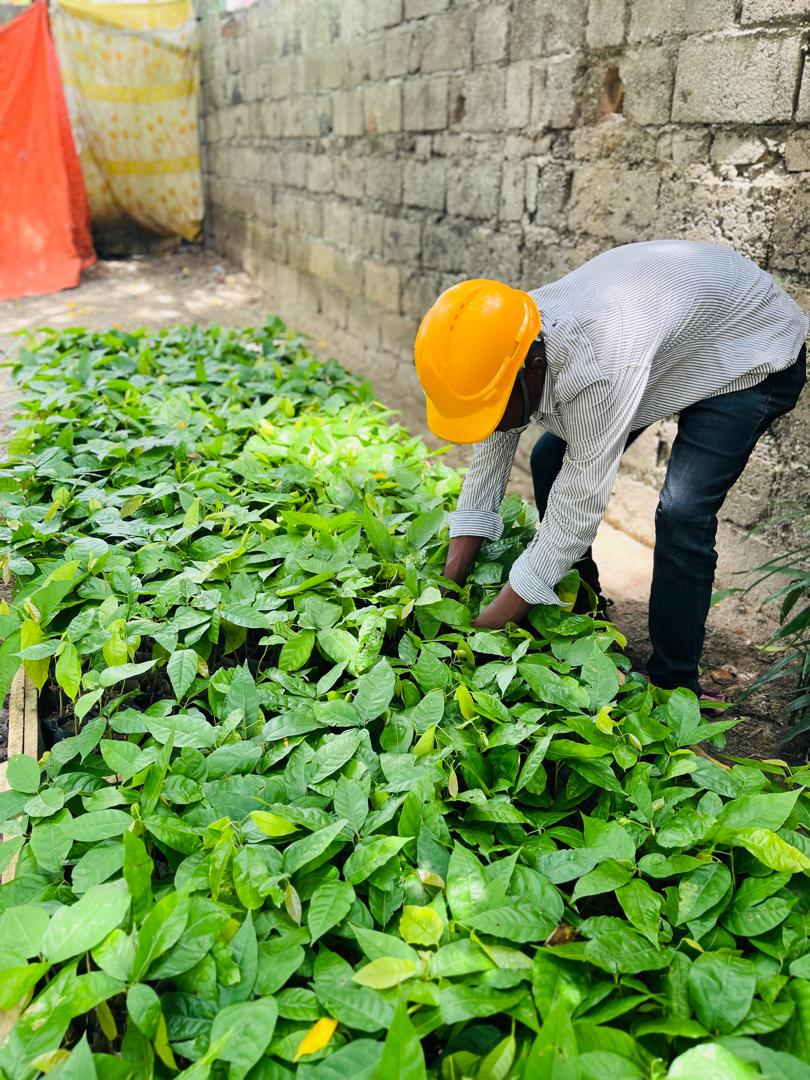
Photo by Axel Fassio / Landscape Alliance
“Before the training, I never imagined that raising cocoa seedlings could become a source of income for my family. What I learned at school gave me the confidence to start my own nursery, and seeing farmers buy my seedlings has motivated me to keep expanding the business,” says Litoma.
Litoma is the first member of his family to start a cocoa seedling production business. His agriculture teacher says his persistence, curiosity and interest in business set him apart, as does his willingness to keep learning. He was also the first member of his family to access the training and business orientation provided through the project.
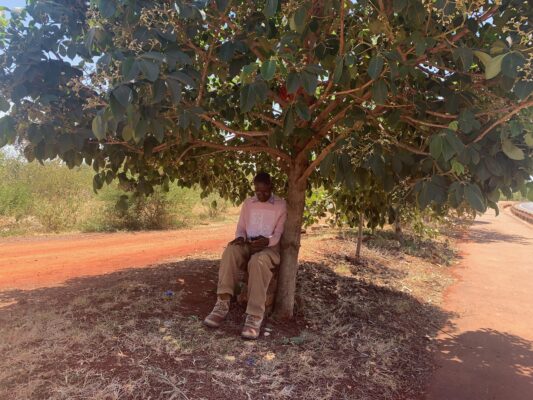
During the 2025 Season B production cycle, which ran from October 2024 to February 2025, André Mosala, a student at ITA Maendeleo, harvested 130 kilograms of vegetables and watermelons, along with 78 bunches of scallions and amaranth. He sold three-quarters of his production and used the rest to supplement his family’s diet.
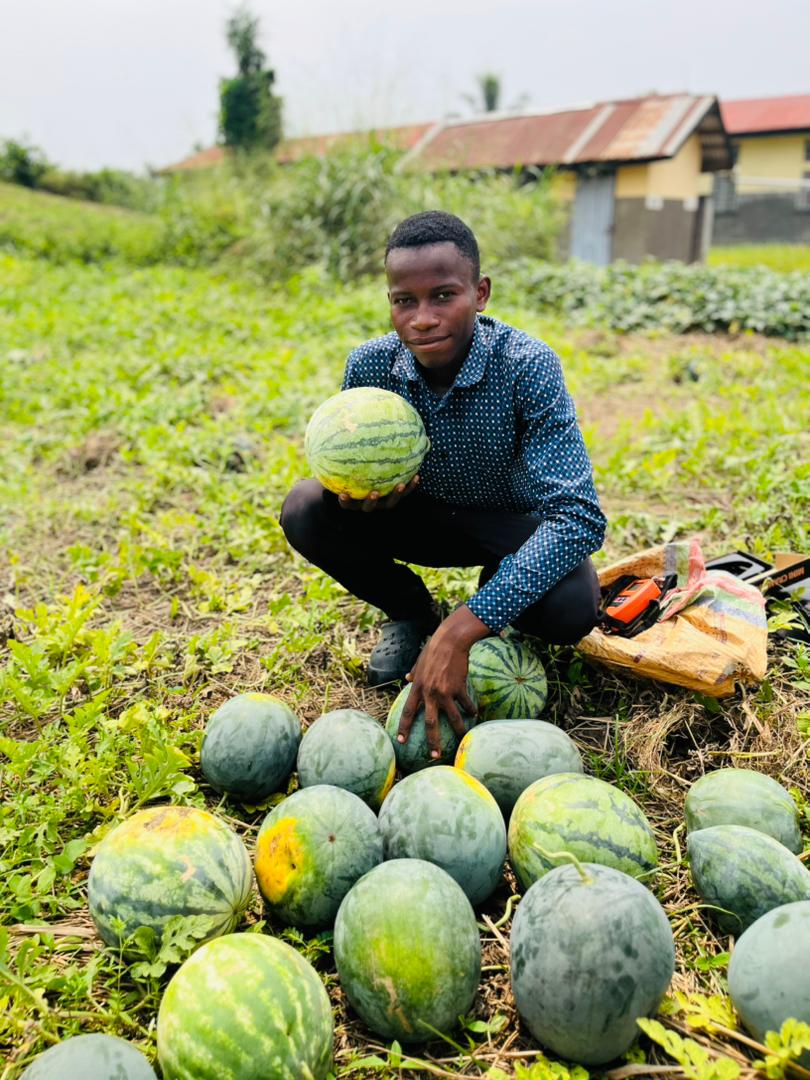
Photo by Axel Fassio / Landscape Alliance.
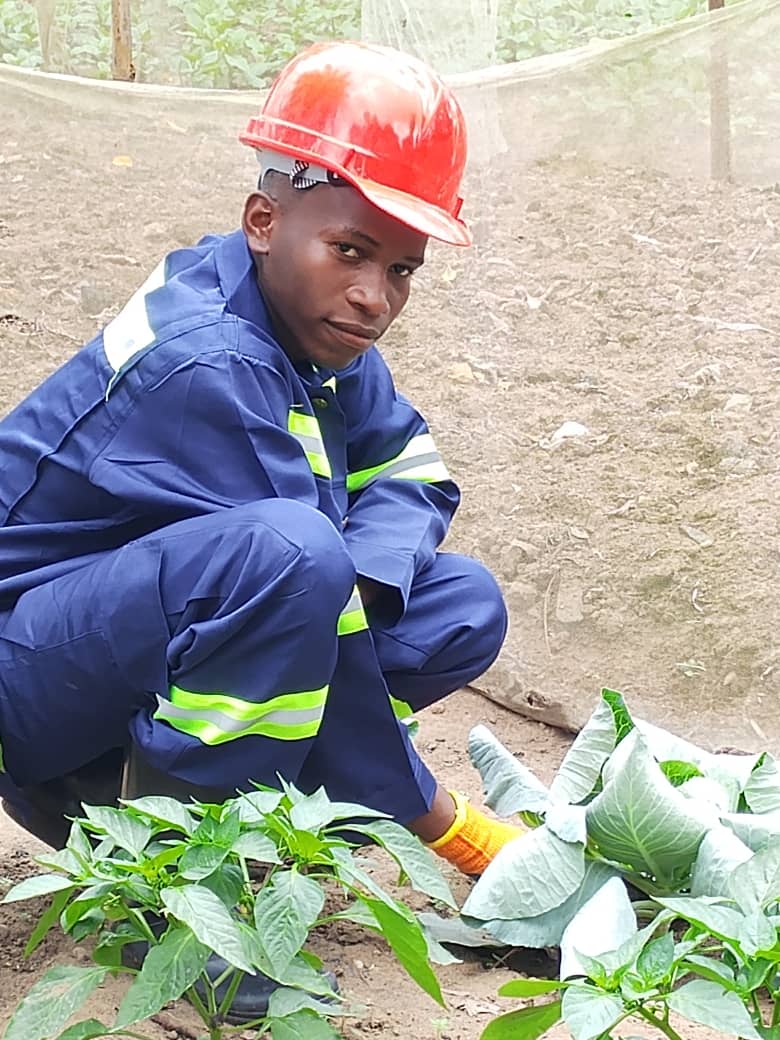
“I am proud that the skills I learned at school are now helping me produce food for my family and earn an income. Seeing the results of my own work has given me confidence that I can build a livelihood through agriculture,” says Mosala.
Beyond the economic results, Mosala has progressively established himself as a role model among his peers. His market garden has enabled him to develop regular relationships with local market traders, whom he supplies with fresh vegetables. He now plans to build on this experience by developing a chicken farming project.
The experiences of Litoma and Mosala show what students can achieve when they have the opportunity to apply agricultural training beyond the classroom. Both students stood out for their achievements after completing the training and receiving support alongside the other students. While all students in the cohort received technical support, Litoma and Mosala achieved results fastest, drawing the attention of trainers and community members who witnessed the launch of their initiatives. The project hopes that other students will join them in the near future.
Building on these experiences, project teams are expanding at-home mentoring and involving teachers more closely in supporting students’ agricultural activities. As of mid-2026, 59 students across four partner Agricultural Technical Institutes (ITAs) are benefiting from this approach. These students are part of the 250 who received training, agricultural materials and technical support from their teachers and members of the project’s technical team. The approach provides continued guidance as students develop their enterprises.