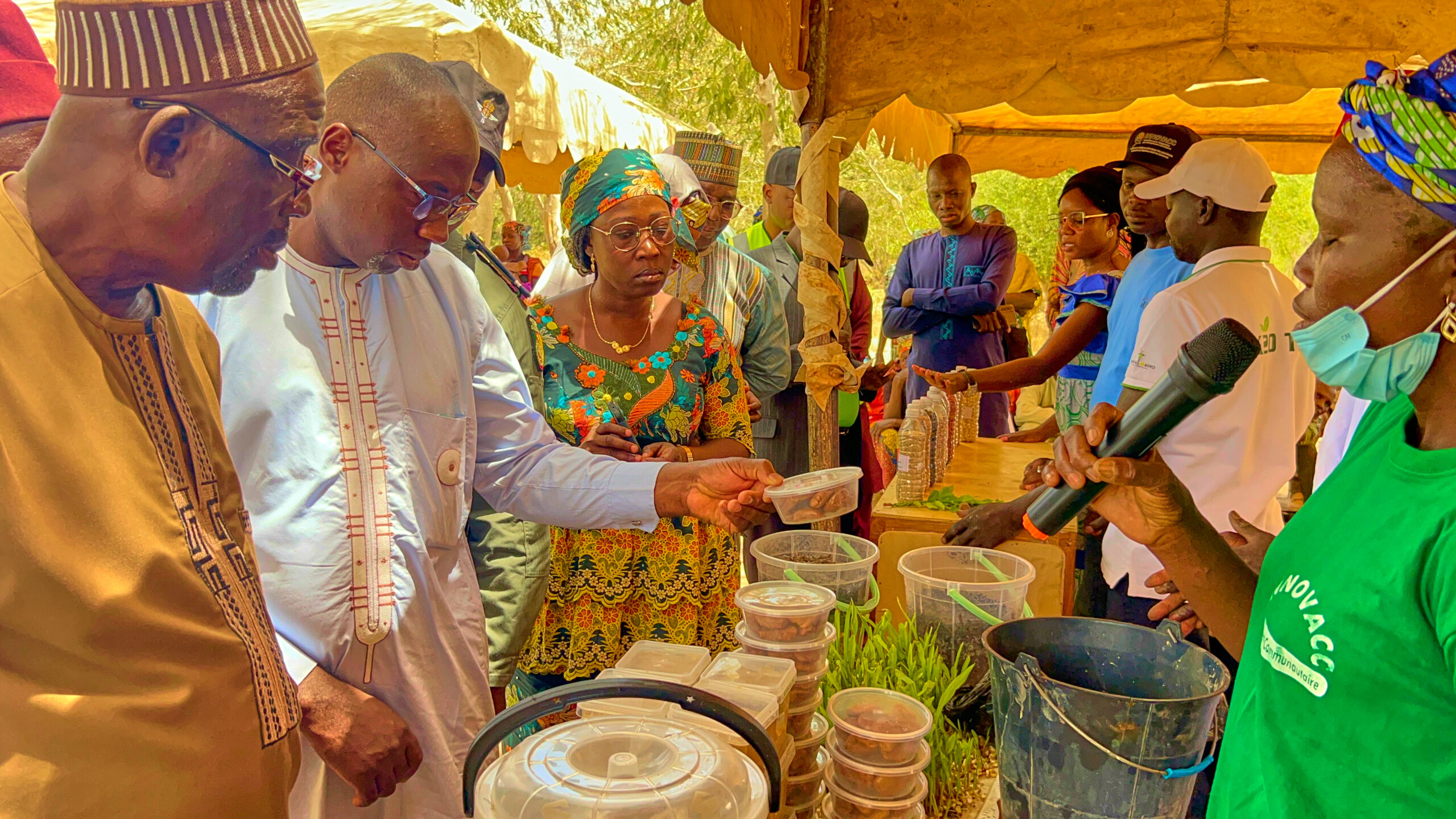



In Choma, Southern Province of Zambia, jars of honey sat beside trays of fish at the Sustainable Wildlife Management (SWM) Programme exhibition stand.
The products came from community cooperatives supported through beekeeping initiatives and community fisheries. Together, they gave a concrete form to the day’s theme, “Forests and economies”, showing how forest and aquatic ecosystems can sustain local value chains when communities are involved in managing them.
The exhibition formed part of Zambia’s commemoration of the International Day of Forests, which brought together government officials, traditional leaders, cooperating partners, and community members to reflect on the value of forests and the urgent need to protect them.
Representing the SWM Programme, the Center for International Forestry Research and World Agroforestry (CIFOR-ICRAF) joined the event with a clear message: conserving forests must go hand in hand with improving livelihoods.
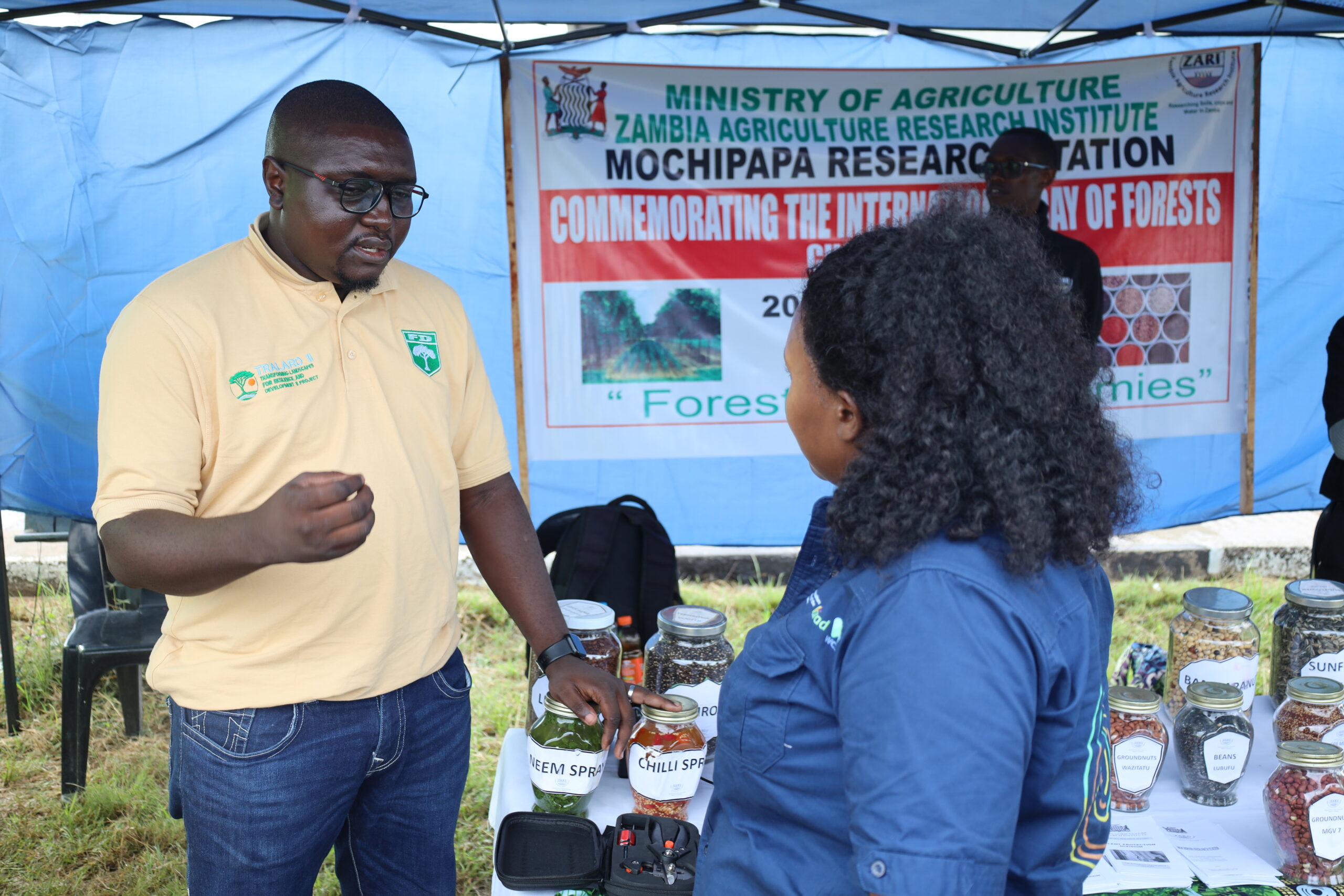
Visitors to the exhibition engaged with the SWM team, learning how honey and fish are linked to broader ecosystem health. Beekeeping, for instance, depends on thriving forest landscapes, while sustainable fisheries rely on well-managed aquatic ecosystems often supported by surrounding forest catchments. By presenting the products side by side, the team demonstrated the interconnectedness of forests, wildlife, water systems and livelihoods.
From a scientific perspective, this interconnectedness is well established.
“From a research perspective, forests are not just ecological assets but productive systems that support agriculture, food security and climate resilience,” said Yasa Luo Chisanga, senior agricultural research officer at the Zambia Agriculture Research Institute (ZARI). “When we protect forest ecosystems, we are also safeguarding the scientific foundation that sustains rural livelihoods and national development.”
The private sector also sees growing opportunity in translating forest-linked products into viable markets.
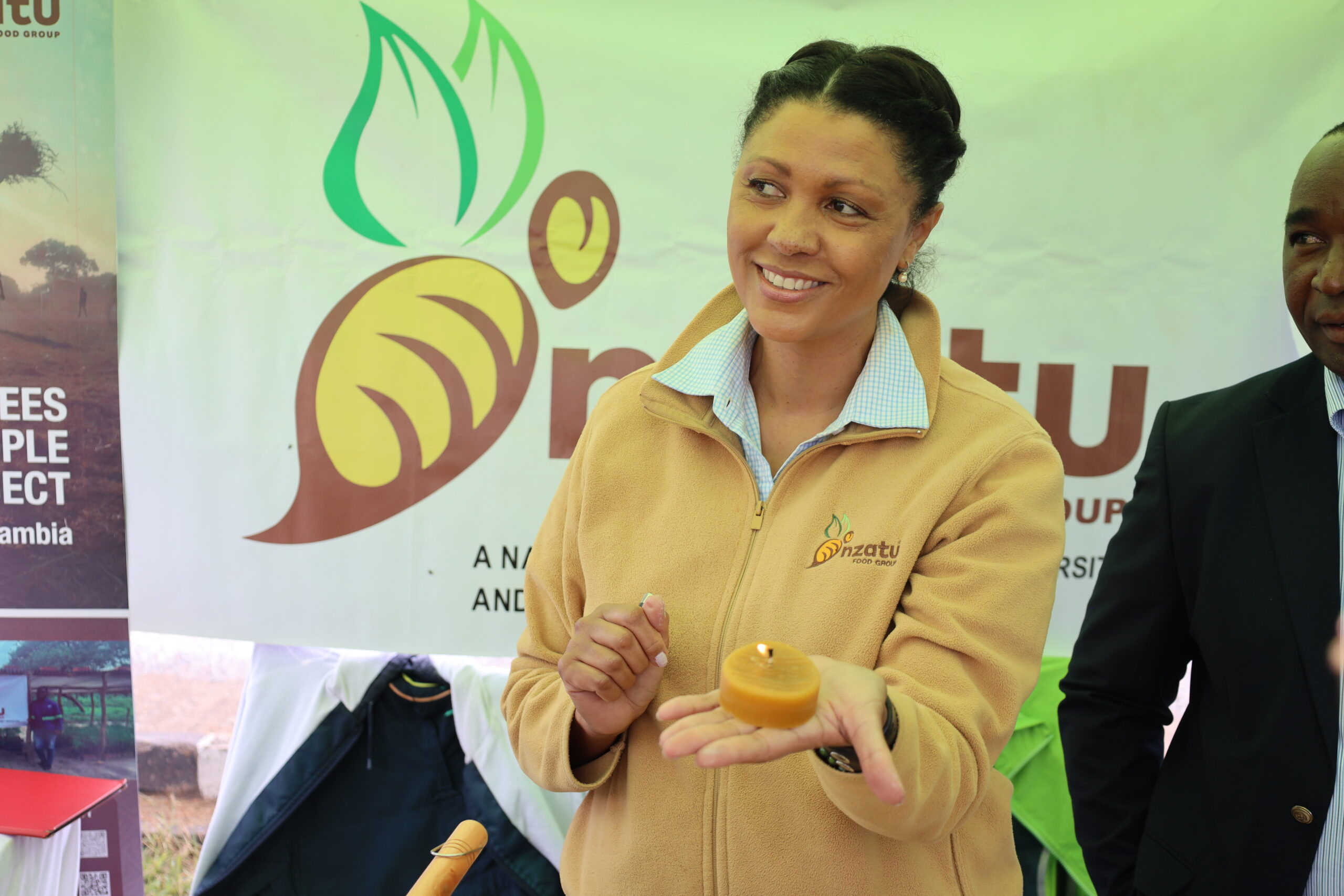
“For us in the private sector, sustainably sourced products like honey represent more than commodities; they tell a story of responsible production and community empowerment,” said Denise Madiro, chief operations officer at Nzatu Food Group. “Strengthening these value chains means creating market opportunities that reward conservation while improving incomes for local producers.”
At the policy level, the urgency of protecting these systems was equally clear. In a speech read on behalf of Southern Province Permanent Secretary Dr Namani Monze by Deputy Permanent Secretary Mrs Yolanta Mutyambe Malunga, Dr Monze pointed to growing pressure from unsustainable land use, climate change and resource extraction.
“These challenges demand urgent and collective action if we are to secure our natural heritage for future generations,” Dr Monze said, emphasizing the urgency of collective action.
He added that the International Day of Forests serves as a reminder of the shared responsibility to safeguard forests, which remain vital to both environmental stability and economic development.
“The International Day of Forests serves as a reminder of the shared responsibility to safeguard forests, which remain vital to both environmental stability and economic development.”
The economic value of forests also featured prominently in the discussions.
“Forests are engines of economic activity,” Monze said. “They provide jobs, generate income, and support livelihoods while delivering critical ecosystem services.”
In the same speech, Monze called on communities and institutions to treat forest restoration as a shared obligation.
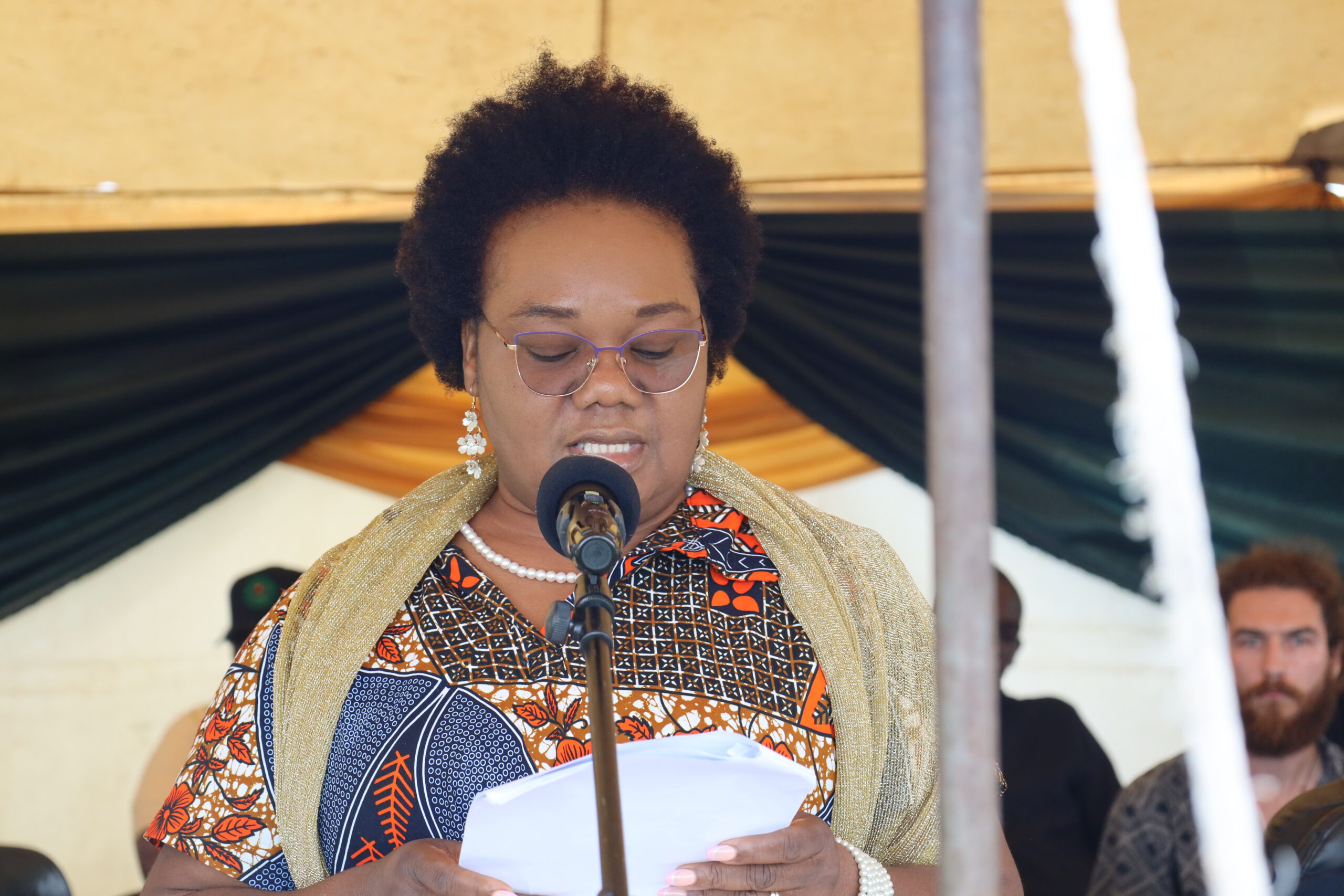
Photo by Andreas Muhwanga / CIFOR-ICRAF
“Protecting our forests is a shared responsibility. Let us take responsibility to restore our forests, empower our communities and build a climate-resilient future for Zambia.”
This message aligned with the work of the SWM Programme. Speaking at the exhibition, CIFOR-ICRAF Communications Officer, Lydia Amanzi, highlighted the importance of linking conservation to livelihoods.
“When communities see the direct benefits from sustainable resource management, whether through honey production or fisheries, they become active stewards of the ecosystems they depend on,” Amanzi said.
The SWM team further emphasized the importance of community-led approaches in conservation.
“Our work is centred on ensuring that communities are not just beneficiaries, but key decision-makers in how natural resources are managed,” Lydia added. “This is what makes conservation efforts sustainable in the long term.
The honey and fish on display illustrated how conservation can create value chains that benefit households while reducing pressure on forests and wildlife. These livelihood activities are part of a broader effort to promote sustainable land use practices that balance environmental protection with economic development.
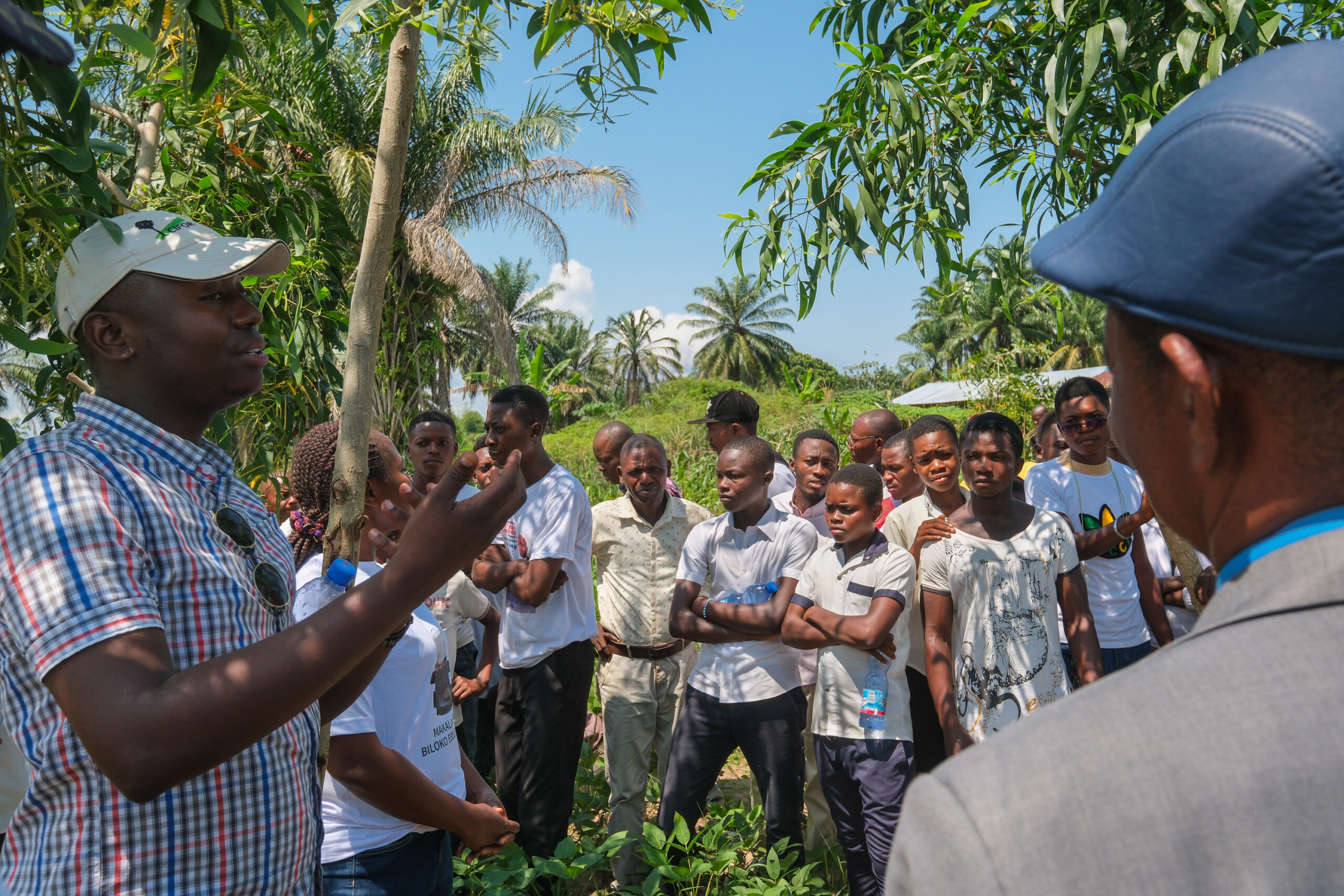
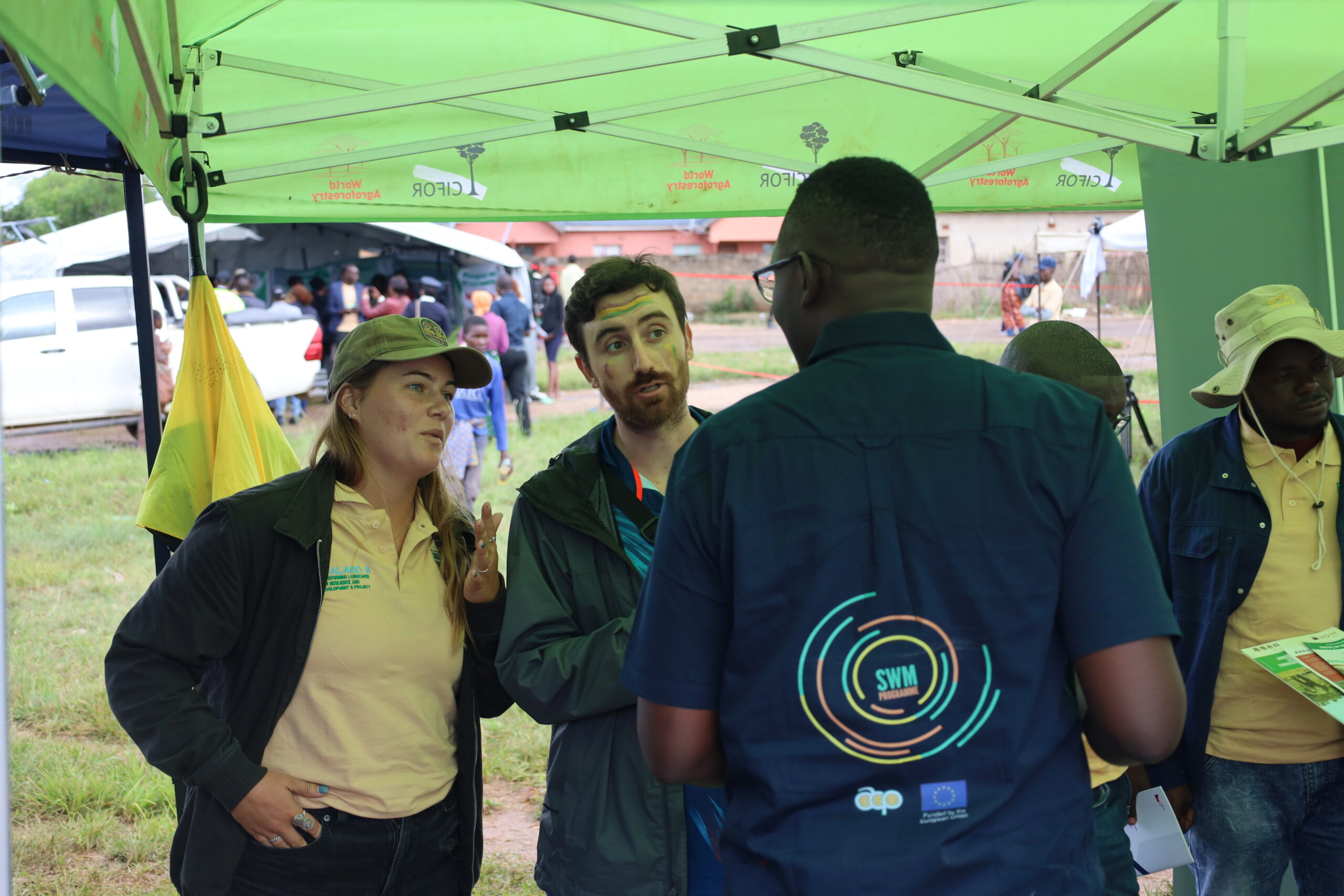
The event also provided an opportunity for government representatives, development partners and community members to engage directly with the SWM team, exchange ideas and explore opportunities for collaboration.
SWM team member Daniel Phiri spent much of the day speaking with stakeholders at the exhibition stand. Those conversations reflected a wider question running through the event: how can communities participate in forest-based economies, rather than only be asked to protect forests?
The conversations reinforced a growing recognition that sustainable forest management cannot be achieved in isolation. It requires coordinated efforts across sectors and strong partnerships at all levels.
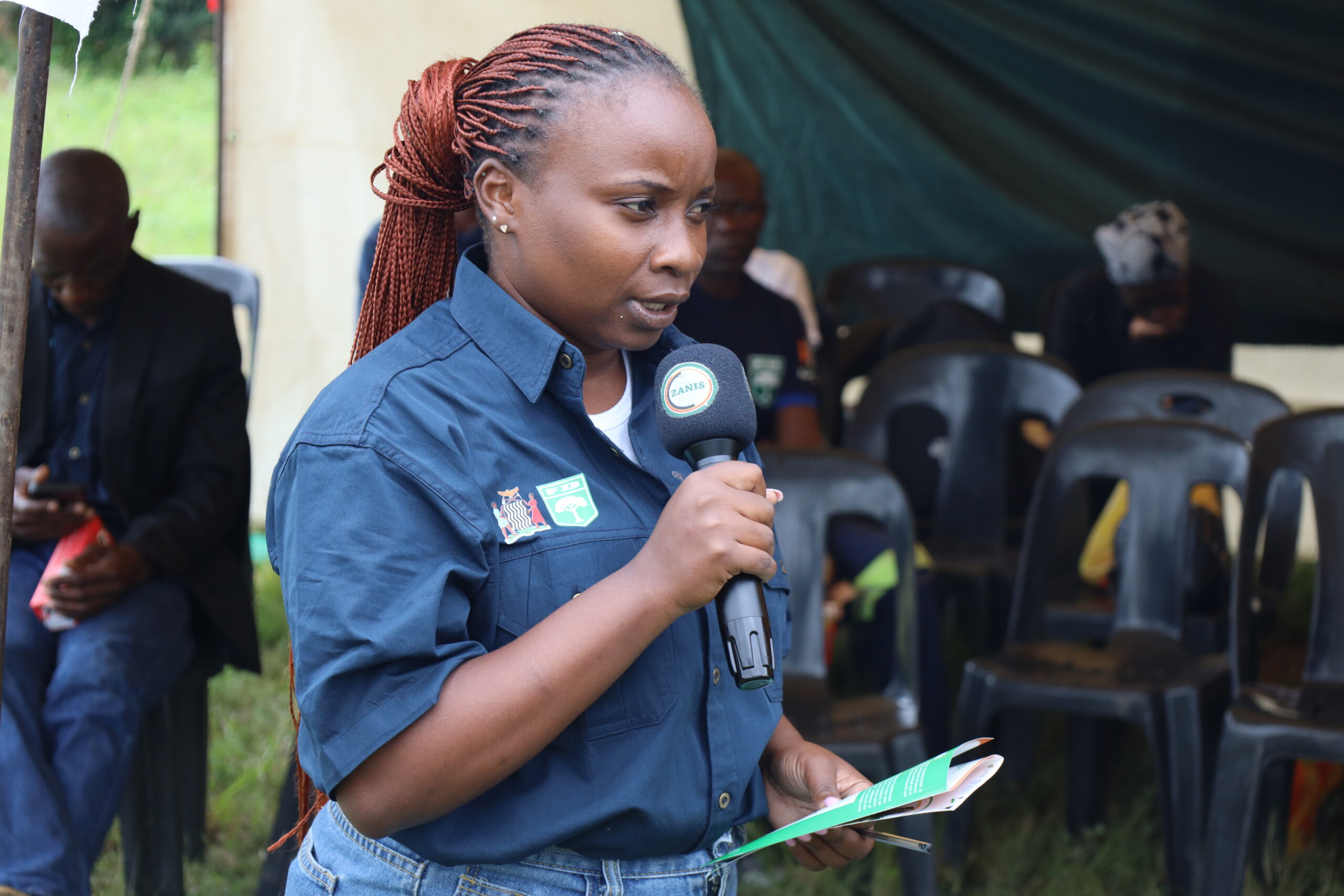
Photo by Andreas Muhwanga / CIFOR-ICRAF
As Zambia marked the International Day of Forests under the theme of the economic importance of forests, the message from Choma was clear: protecting forests is not only about conservation, but about securing livelihoods, strengthening resilience, and building a sustainable future.
Through its participation, CIFOR-ICRAF reaffirmed its role as a partner in advancing integrated approaches to conservation, approaches that recognize healthy forests as sources of biodiversity, income and resilience for the communities that depend on them.