


[Editor’s note: This article reflects the personal views of the author]
Paul Ehrlich died on 13 March 2026, at the age of 93, twelve days before the 112th anniversary of Norman Borlaug’s birth. In January, the American Economic Association convened a session in Philadelphia to mark the 50th anniversary of Milton Friedman’s Nobel Prize in Economics. And in September 2025, Johan Rockström’s Planetary Health Check confirmed that a seventh planetary boundary, ocean acidification, had been breached. These four thinkers never collaborated, and their frameworks are in important respects incompatible. Yet the convergence of these milestones offers an occasion to ask what happens when their diagnoses of the human predicament are brought into the same room, and what, if anything, they collectively reveal about the role that forests and agroforestry might play in navigating the polycrisis — or failing to do so.
Ehrlich diagnosed overshoot: too many people consuming too much, drawing down ecological capital faster than it regenerates (The Population Bomb, Ehrlich, 1968). Rockström mapped the safe operating space and showed, in successive updates culminating in Richardson et al. (2023), that humanity has transgressed six of nine planetary boundaries, now seven. Borlaug demonstrated that technological innovation can dramatically expand the food production frontier, and warned that the Green Revolution had achieved only a “temporary success”. Friedman argued that unpriced externalities, not markets themselves, drive environmental failure, and that the price mechanism is a more effective adjustment tool than command-and-control regulation (Friedman 1979, cited in Greenstone and Cicala 2014).
Each diagnosis is substantially correct within its own domain. Each contains a blind spot that is not peripheral but central: Ehrlich on politics (who bears the cost of contraction?), Rockström on power (who blocks implementation?), Borlaug on distribution (why does hunger persist alongside caloric surplus?), Friedman on concentration (who captures and distorts the price signals?). The polycrisis is a polycrisis precisely because these frameworks cannot encompass it individually, and because, taken together, they often pull in different — and sometimes opposing — political directions.
I have argued elsewhere that this incompatibility is itself the structural impasse.
There is, however, a domain that receives too little attention in any of these frameworks and that could, if properly understood and governed, address each blind spot simultaneously. I should declare an obvious interest: I lead a forest research institution, and the domain I have in mind is forests, more specifically, the continuum of land-use systems from intact forests through managed forests to agroforestry landscapes. The reader may adjust for institutional bias accordingly. The structural argument, however, stands on its own terms.

The planetary boundaries framework defines the land-system change boundary explicitly in terms of remaining forest cover: 75 percent of the original forest area must remain intact, including 85 percent of boreal and tropical forests and 50 percent of temperate forests. However, today, only 59 percent remains globally, placing us well within the zone of increasing risk.
What makes forests unusual is that they simultaneously regulate at least four other transgressed boundaries.
They are the largest terrestrial carbon sink, absorbing a net 5.5 gigatonnes of CO₂ equivalent per year on average between 2001 and 2023, according to the updated Global Forest Watch flux model. They regulate freshwater cycles through evapotranspiration, soil moisture retention and rainfall recycling, processes central to the freshwater change boundary. They harbour the majority of terrestrial biodiversity, making them inseparable from the biosphere integrity boundary. And through biological nitrogen fixation and nutrient cycling in forest soils, they modulate the biogeochemical flows, a boundary the framework identifies as deeply transgressed.
No other single land-use category simultaneously touches five of the nine planetary boundaries in this way, a structural reality with direct governance implications.
And yet forests continue to be treated as a sectoral concern, rather than as the biophysical system on which other sectors depend.
A finance minister who understood that the Amazon regulates the hydrological cycle for Brazilian agriculture, that intact tropical forests in the Congo Basin sequester 600 million tonnes of CO₂ per year more than they emit, or that the world’s forests store approximately 714 gigatonnes of carbon across all pools, would approach deforestation as a macroeconomic and security question rather than a sectoral environmental concern. The persistent failure to make this reframing is not incidental; it reflects how the systems that sustain every economy continue to be governed, where they are governed at all, through fragmented, underfunded and largely voluntary mechanisms.
What happens, then, when each of the four visions of 2050 is examined through the lens of forestry and agroforestry?
Ehrlich’s demand-side vision requires contraction of material throughput and a reduction in humanity’s ecological footprint. The political difficulty is real: contraction imposed uniformly is regressive and illegitimate in the Global South, where per-capita consumption is lowest and population growth is highest. Forests do not resolve this political problem, but they reframe it.
Maintaining and restoring forest cover preserves the absorptive and regulatory infrastructure of the Earth system, the carbon sinks that process emissions, the watersheds that generate rainfall and the biological communities that sustain pollination and pest regulation, without requiring the politically impossible step of universal consumption restriction.
In biophysical terms, protecting intact forests is among the most cost-effective ways to reduce the net ecological footprint of the global economy. The constraint, of course, is that forest protection requires confronting the economic drivers of deforestation, primarily commodity agriculture, which brings us immediately back to questions of distribution and power.
Ehrlich’s framework, when supplemented with a serious forest governance agenda, becomes more defensible and less regressive than Ehrlich’s framework alone, even if the governance challenge remains formidable.
Rockström’s governance vision requires binding targets translated into enforceable regulations. Forests are the most promising test case for this translation, because the land-system change boundary is the one boundary where the control variable — remaining forest cover by biome — is directly measurable through satellite observation and therefore governable through trade policy, supply chain regulation and land-use law. The European Union’s deforestation regulation, whatever its implementation difficulties and recent dilution, embodies this logic: embedding a planetary boundary into the conditions of market access.
If extended to nitrogen-intensive commodities grown on recently deforested land, this regulatory architecture could simultaneously address two transgressed boundaries through a single governance mechanism. Rockström’s blind spot, the absence of a political economy of implementation, is partially addressed when the governance target is a tangible, satellite-verifiable asset like forest cover rather than an atmospheric concentration or a biodiversity index. The Montreal Protocol succeeded partly because compliance was verifiable. Forest cover offers comparable verifiability.
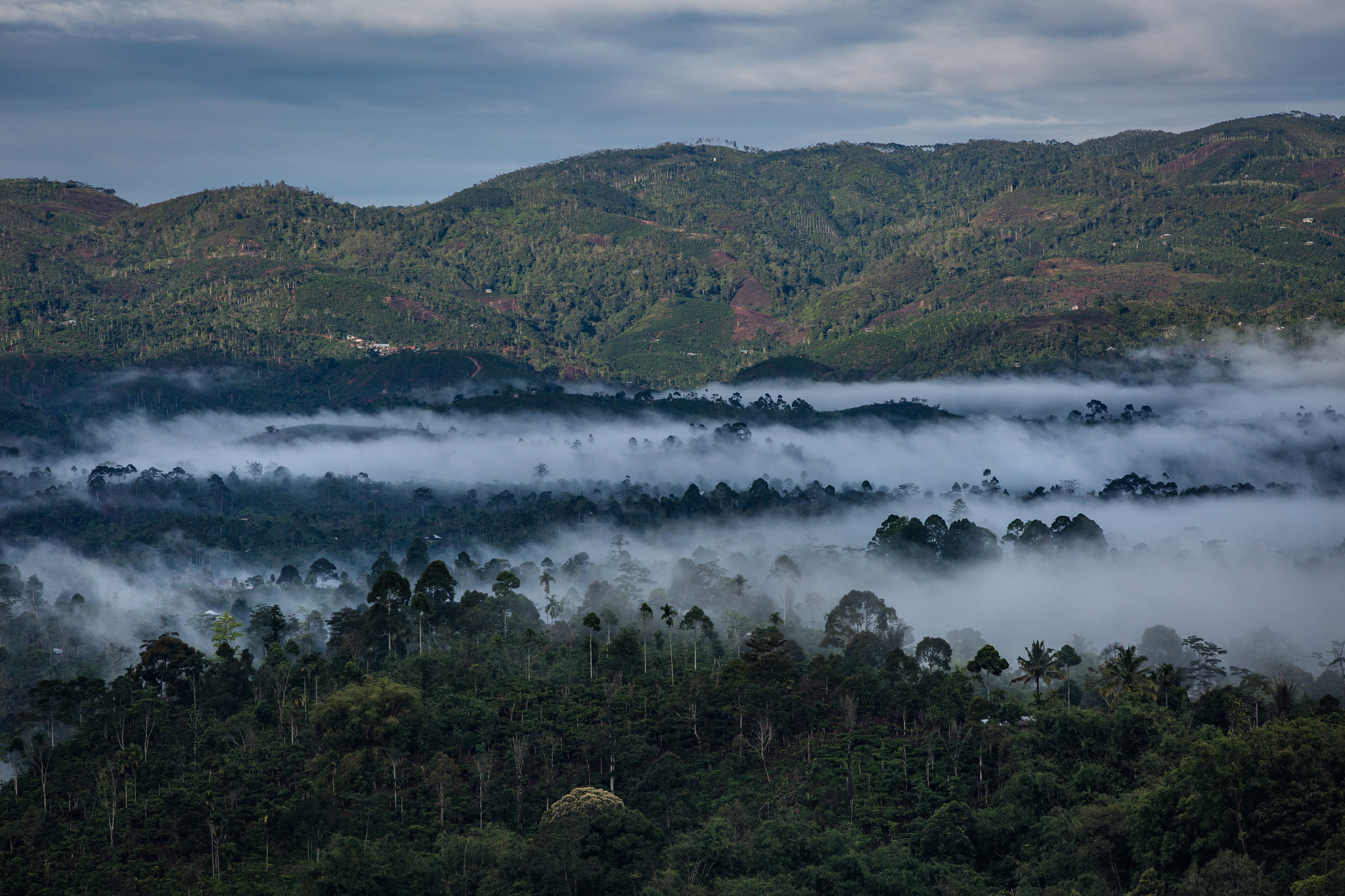
Borlaug’s supply-side vision requires continued productivity gains, particularly in sub-Saharan Africa, where cereal yields remain at approximately 1.4 tonnes per hectare, roughly where the global average stood in 1961. This is where agroforestry becomes essential. A meta-analysis of 126 peer-reviewed studies across sub-Saharan Africa found that crop yields in agroforestry systems were on average nearly twice as high as in conventional systems, while simultaneously improving soil fertility by a factor of 1.2, reducing runoff and soil loss by factors of five and nine, respectively, and tripling water infiltration. Agroforestry systems can sequester between 3.5 and 9.8 tonnes of CO₂ per hectare per year, depending on species composition and local conditions, and reduce surface temperatures by 2–5°C within the production landscape, a consequential buffer against heat stress in a warming climate.
The critical difference between agroforestry and the original Green Revolution is distributional, and this is where Borlaug’s blind spot is most directly addressed. The Green Revolution’s high-yielding varieties required purchased inputs: fertilizer, irrigation, pesticides and market access, which meant that benefits accrued disproportionately to farmers who already had capital.
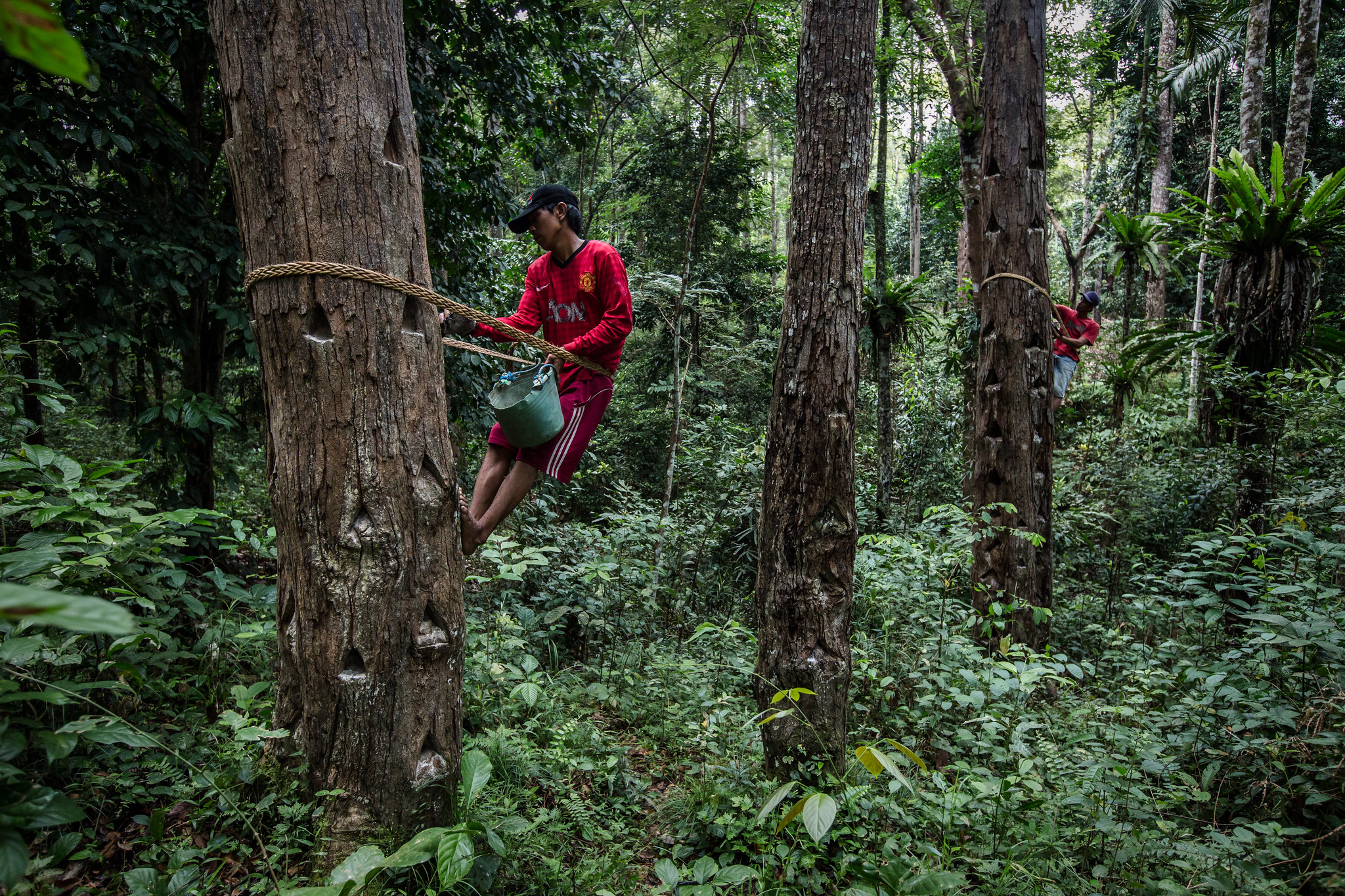
Agroforestry works with biological processes: nitrogen-fixing trees that reduce or replace synthetic fertilizer, deep-rooted species that access subsoil water, diversified systems that provide food, fodder, fuel, timber and income from a single hectare.
In Niger, farmer-managed natural regeneration of Faidherbia albida and other leguminous trees has led to the regreening of approximately 5 million hectares since 1985, driven not by external input subsidies but by a policy shift that awarded tree tenure to farmers. The International Fund for Agricultural Development (IFAD) estimates that agroforestry can increase annual income by USD 100 to USD 300 per hectare from higher yields alone, with diversified tree products adding USD 200 to USD 2,000 per hectare over time, and estimates a return of USD 1.52 for every dollar invested.
Of course, agroforestry is not without constraints of its own.
Trees take years to mature, requiring farmers to accept delayed returns that are difficult to finance without credit or tenure security. Competition for light and water between trees and crops must be managed, and the knowledge required to manage these interactions is site-specific and labour-intensive. These are real limitations that have slowed adoption in many contexts despite the evidence. Despite these constraints, the structural advantage remains: agroforestry delivers Borlaug’s productivity logic through an institutional mechanism that reaches smallholders rather than bypassing them
Friedman’s pricing vision requires that externalities be internalized so that market signals reflect true costs. The forest sector represents one of the largest unpriced externalities in the global economy. Forests provide climate regulation, hydrological services, pollination support, soil formation and biodiversity maintenance, services that are consumed by every economic actor on Earth and paid for by almost none. When forests are cleared for soy, palm oil or cattle, the market registers the value of the commodity produced and ignores the value of the services destroyed.
Friedman’s framework, if honestly applied, would demand that these services be priced and that deforestation bear its full social cost. Carbon pricing is the most developed mechanism, but it captures only one of at least five major service categories. A comprehensive pricing of forest ecosystem services would make standing forests more economically valuable than cleared land in the vast majority of tropical landscapes. The difficulty, as with all applications of Friedman’s logic to concentrated markets, is that the institutions best positioned to run such pricing systems are often the same institutions whose current business models depend on the services remaining unpriced. Friedman’s blind spot does not disappear when applied to forests. It must be governed.
What emerges from this exercise is something that none of the four thinkers individually provides: a convergence point.
Forests and agroforestry constitute the rare domain where demand-side logic (maintaining absorptive capacity), governance logic (measurable, enforceable boundaries), supply-side logic (productivity gains for the poorest producers) and pricing logic (internalizing the largest unpriced externalities) all point in the same direction. This convergence does not make politics easy. It does not resolve the power asymmetries that drive deforestation, the corporate capture that weakens regulation, or the distributional failures that leave 673 million people hungry in a world of caloric surplus. It does, however, narrow the problem space.
It identifies a domain where structurally incompatible frameworks overlap, and where concrete interventions, supply chain regulation, tenure reform, agroforestry extension, ecosystem service pricing, and landscape-level governance can advance all four agendas simultaneously rather than trading one against another.
The forest carbon sink, it should be noted, is not guaranteed. In 2023 and 2024, extreme fires caused forests to absorb only a quarter of the CO₂ they remove in an average year. Pan et al. (2024), writing in Nature, found that the carbon sink in tropical intact forests declined by 31 percent over three decades, while boreal forest sinks fell by 36 percent due to intensified disturbances. These are measured losses of functional infrastructure on which the entire climate mitigation strategy implicitly depends. If the forest sink continues to weaken while emissions continue to rise, the gap between what governance promises and what the atmosphere receives will widen beyond any plausible policy response.
Ehrlich, Rockström, Borlaug and Friedman each saw part of the architecture of crisis. None saw the whole. What forests and agroforestry offer is not a solution to the polycrisis, because no single domain can provide one.
What they offer is a structural convergence: a domain where the four diagnoses stop contradicting one another and start reinforcing the same set of interventions. Whether that convergence is exploited depends on whether governance systems can treat forests as what they functionally are, the hidden infrastructure of planetary stability. The evidence for doing so has never been stronger. The political conditions for doing so have rarely been more constrained. That tension defines the space in which the next quarter-century of forestry and agroforestry policy will be made.
References
- Borlaug, N.E. 1970. The Green Revolution, Peace, and Humanity. Nobel Lecture, 11 December 1970. Oslo: Norwegian Nobel Institute. Available at: nobelprize.org/prizes/peace/1970/borlaug/lecture/
- Ehrlich, P.R. 1968. The Population Bomb. New York: Sierra Club/Ballantine Books.
- Ehrlich, P.R. and Ehrlich, A.H. 2009. The Population Bomb revisited. Electronic Journal of Sustainable Development 1(3): 63–71.
- FAO. 2025. Global Forest Resources Assessment 2025: Key Findings. Rome: Food and Agriculture Organization of the United Nations.
- FAO, IFAD, UNICEF, WFP and WHO. 2025. The State of Food Security and Nutrition in the World 2025. Rome: FAO.
- Friedman, M. 1979. Interview on the Phil Donahue Show, discussing pollution and externalities. Cited in Greenstone, M. and Cicala, S. 2014. What Would Milton Friedman Do About Climate Change? Forum at the University of Chicago Energy Policy Institute.
- Gibbs, D., Harris, N., Seymour, F. et al. 2024. Revised and updated geospatial forest carbon flux modelling framework. Preprint, Earth System Science Data Discussions. doi.org/10.5194/essd-2024-397
- Harris, N.L., Gibbs, D.A., Baccini, A. et al. 2021. Global maps of twenty-first century forest carbon fluxes. Nature Climate Change 11: 234–240.
- IFAD. 2024. How agroforestry can empower farmers and protect our planet. Rome: International Fund for Agricultural Development. Available at: ifad.org/en/w/explainers/how-agroforestry-can-empower-farmers-and-protect-our-planet
- Nair, P.K.R. 2012. Climate change mitigation: a low-hanging fruit of agroforestry. In: Nair, P.K.R. and Garrity, D. (eds) Agroforestry: The Future of Global Land Use. Advances in Agroforestry 9. Dordrecht: Springer.
- Pan, Y., Birdsey, R.A., Phillips, O.L. et al. 2024. The enduring world forest carbon sink. Nature 631: 563–569.
- Richardson, K., Steffen, W., Lucht, W. et al. 2023. Earth beyond six of nine planetary boundaries. Science Advances 9(37): eadh2458.
- Sakschewski, B., Caesar, L. et al. 2025. Planetary Health Check 2025. Potsdam: Potsdam Institute for Climate Impact Research (PIK). Available at: planetaryhealthcheck.org
- Sendzimir, J., Reij, C.P. and Magnuszewski, P. 2011. Rebuilding resilience in the Sahel: regreening in the Maradi and Zinder regions of Niger. Ecology and Society 16(3): 1.
- Steffen, W., Richardson, K., Rockström, J. et al. 2015. Planetary boundaries: Guiding human development on a changing planet. Science 347(6223): 1259855.
- Thorlakson, T. and Neufeldt, H. 2012. Reducing subsistence farmers’ vulnerability to climate change: evaluating the potential contributions of agroforestry in western Kenya. Agriculture and Food Security 1: 15.
- Whitney, C.W., Tabuti, J.R.S., Hensel, O. et al. 2019. Agroforestry delivers a win-win solution for ecosystem services in sub-Saharan Africa. A meta-analysis. Agronomy for Sustainable Development 39: 47.
- World Bank. 2017. Cereal yield (kg per hectare). World Development Indicators. Washington, DC: World Bank Group.
- WRI. 2025. World’s forest carbon sink shrank to its lowest point in at least two decades, due to fires and persistent deforestation. Washington, DC: World Resources Institute. Available at: wri.org/insights/forest-carbon-sink-shrinking-fires-deforestation