
“A farmer’s best fertilizer is knowing the cropping calendar,” says Touré Kignelman Pierre, a rice farmer and translator of agrometeorological advisories into the local language.
In Toumbokaha and the surrounding villages of the Katiola department in northern Côte d’Ivoire, this saying guides farming decisions. A 2020 study published in Agronomie Africaine and based on 37 years of weather data from central Côte d’Ivoire found that delayed and variable starts to the rainy season, false starts, shorter rainy seasons, seasonal droughts and water deficits pose risks to rainfed rice, including through poor timing of sowing.
The Agricultural Value Chain Development Support Programme (PADFA), with technical support from Landscape Alliance, helps farming communities respond to these risks by improving access to agrometeorological information, translating it into local languages and encouraging farmers to use it when making planting decisions.
When unpredictable rainfall pushed farmers away from upland rice
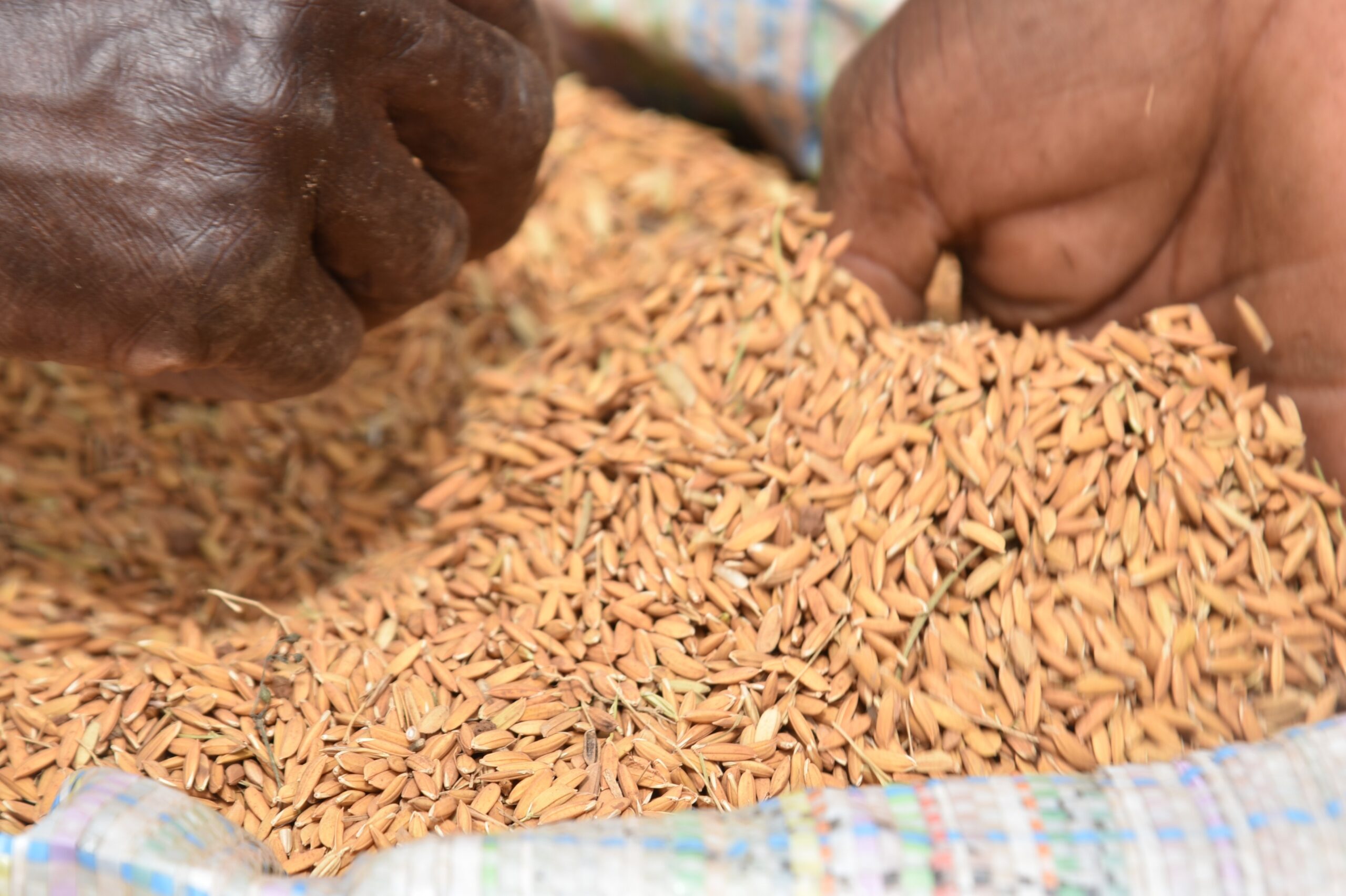
Touré, a rice farmer since the late 1980s, gradually came to associate upland rice with repeated crop losses and eventually stopped cultivating it in 1998. Like many farmers in northern Côte d’Ivoire, he relied largely on planting traditions passed down through generations, without access to information about recommended sowing periods or careful planning. “Upland rice had discouraged us. We planted whenever we wanted, without knowing there were specific planting windows to follow,” Touré explains.
For years, unplanned sowing, combined with increasingly unpredictable rainfall, resulted in repeated crop losses. As the seasons became harder to anticipate, even Touré’s decades of farming experience could no longer reliably guide his planting decisions. He eventually shifted to irrigated rice production and left upland rice behind.
‘The right rice, planted at the wrong time’
PADFA supports farmers by combining their knowledge and experience with timely, locally relevant climate information. Based on needs identified with farming communities, its agrometeorological advisories offer practical guidance that helps farmers choose suitable sowing windows and manage the risks associated with upland rice production.
To produce these advisories, Landscape Alliance manages agrometeorological stations across the five regions where PADFA operates: Hambol, Gbêkê, Bagoué, Poro and Tchologo. The stations automatically record rainfall, temperature and humidity. The data are then transmitted to the climate team in Korhogo for analysis.
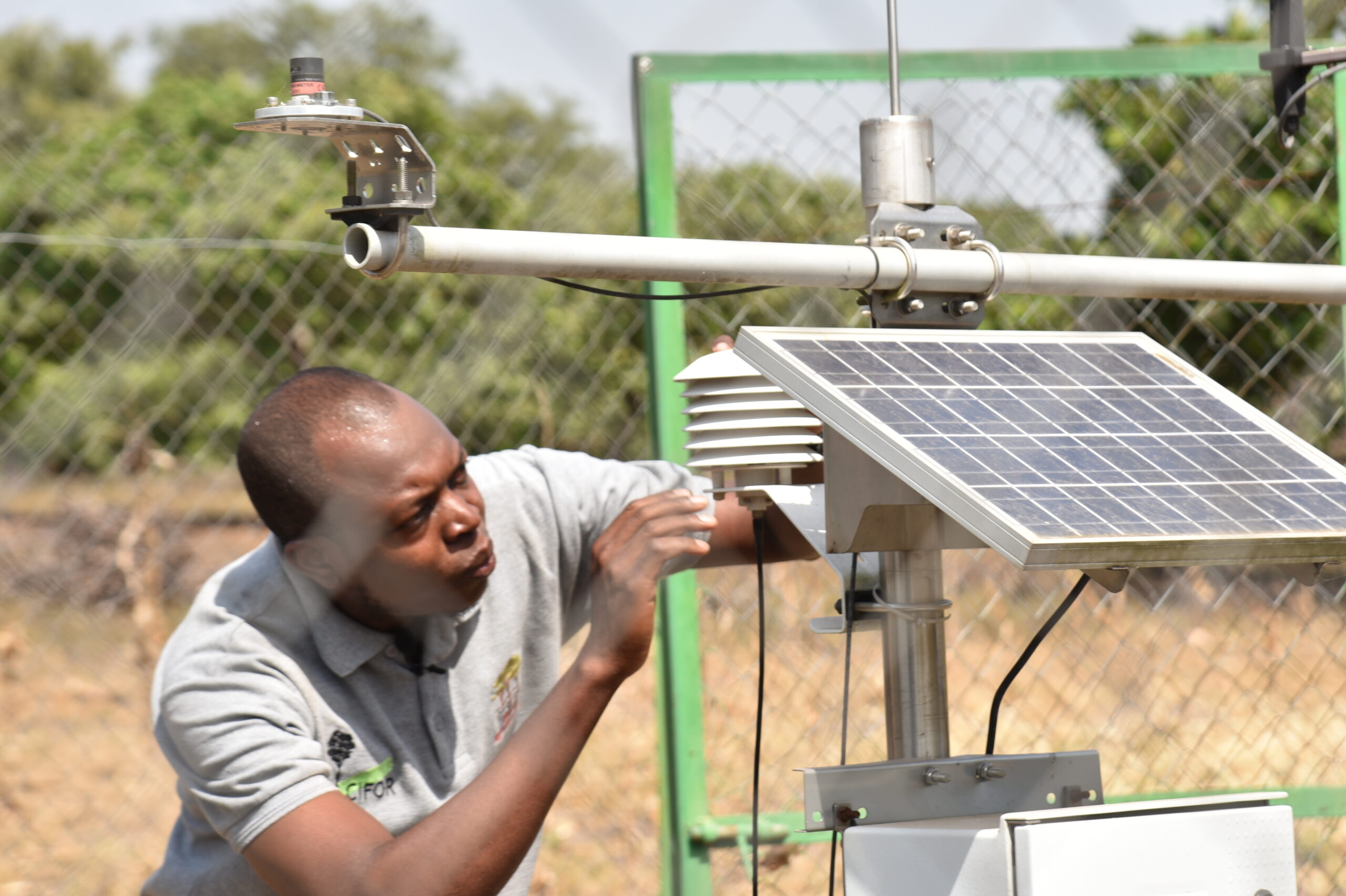
“Our role is to turn climate data into practical recommendations that help farmers improve production across different value chains, particularly rice and vegetables,” explains Akaffou, climate information officer at Landscape Alliance.
The climate team in Korhogo uses the station data to prepare agrometeorological advisories in French. The advisories are then sent to community translators, including Touré. “As soon as I receive the agrometeorological advisories on my phone, I translate them into the local language, especially Tagbana,” he says.
Translation allows Touré to pass the advisories and information to other farmers. “I also share the advisories during our cooperative meetings and in our WhatsApp groups,” he says.
The messages also move beyond these networks. These channels reflect farmers’ own preferences. Community consultations across the five project regions identified WhatsApp, SMS, local radio, community meetings and agricultural extension services among their preferred ways of receiving climate information. The project then partnered with 12 local radio stations identified during the consultations as stations already listened to by members of farmer organizations. The stations broadcast the advisories in local languages.
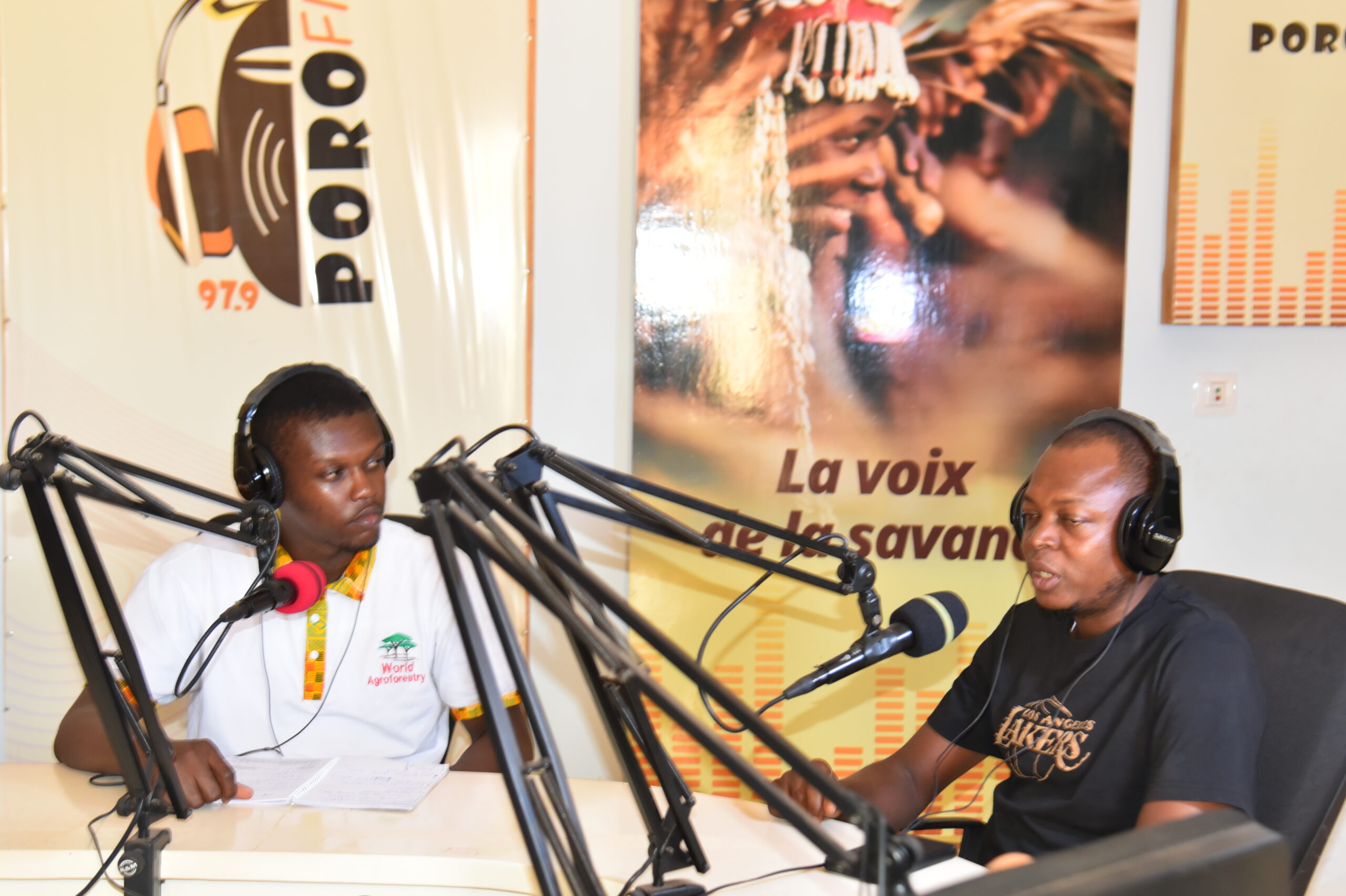
Photo by Gilberte Koffi / Landscape Alliance.
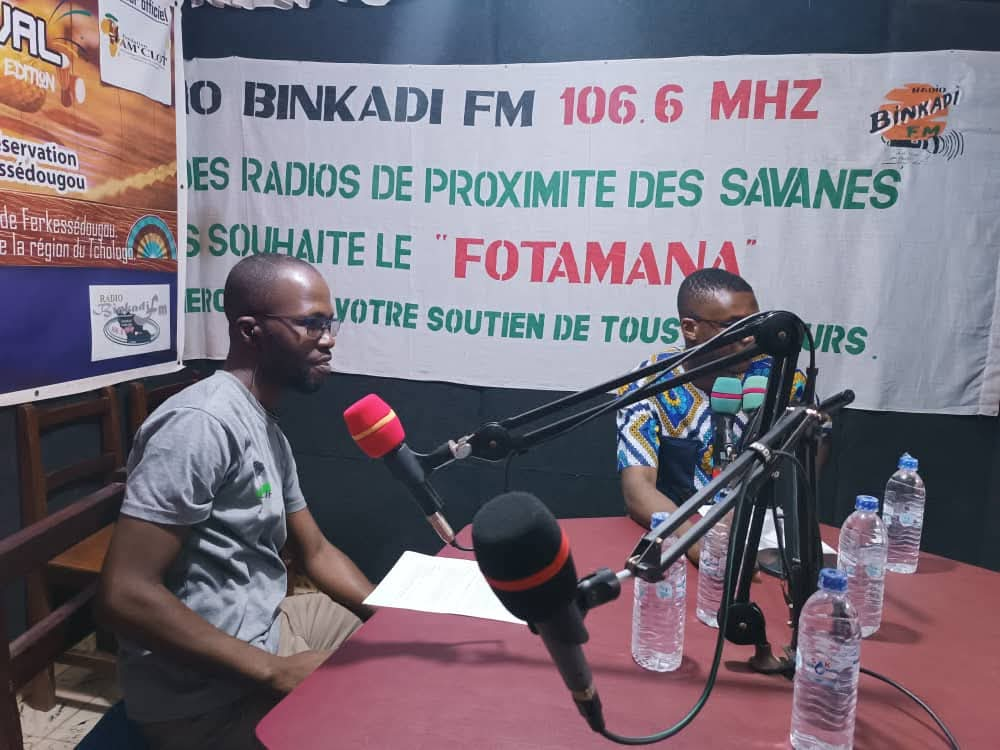
Photo by Gilberte Koffi / Landscape Alliance.
Together, these channels help farmers receive guidance in a language they understand and a form they can use. For Touré, that guidance also changed how he viewed upland rice. “We realized that upland rice wasn’t the problem. The problem was our lack of knowledge. We simply didn’t understand the cropping calendar anymore,” he says.
Uncertainty remains, but farmers now have clearer guidance on recommended sowing windows for rice varieties with different growing cycles, together with weather forecasts they can consider alongside their own experience.
The three-hectare test
Touré says he began to see the effect of the broadcasts in farmers’ fields. “Some farmers quietly grew upland rice simply by following the agrometeorological advisories broadcast on the radio. When I went to see their fields, I saw the results for myself: the rice had produced a good harvest,” he recalls.
Touré later heard about Koné Pétai Félix, a farmer from the neighbouring village of Kofissioka who had acted on the radio advisories. Koné had made several failed attempts to grow upland rice since 2005. In 2024, he lost almost his entire harvest when the rain stopped while his rice was still at the stem elongation stage.
After hearing Touré explain the recommended sowing windows for three- and four-month upland rice varieties on the radio, Koné decided to try again. To limit his risk, he planted three hectares, compared with 16 the previous year, and followed the recommended sowing window.
Three to four months later, the results exceeded his expectations. “I’ve already harvested 25 bags, each weighing 50 kg, from two hectares, and I haven’t even finished harvesting the rest of my field yet.”
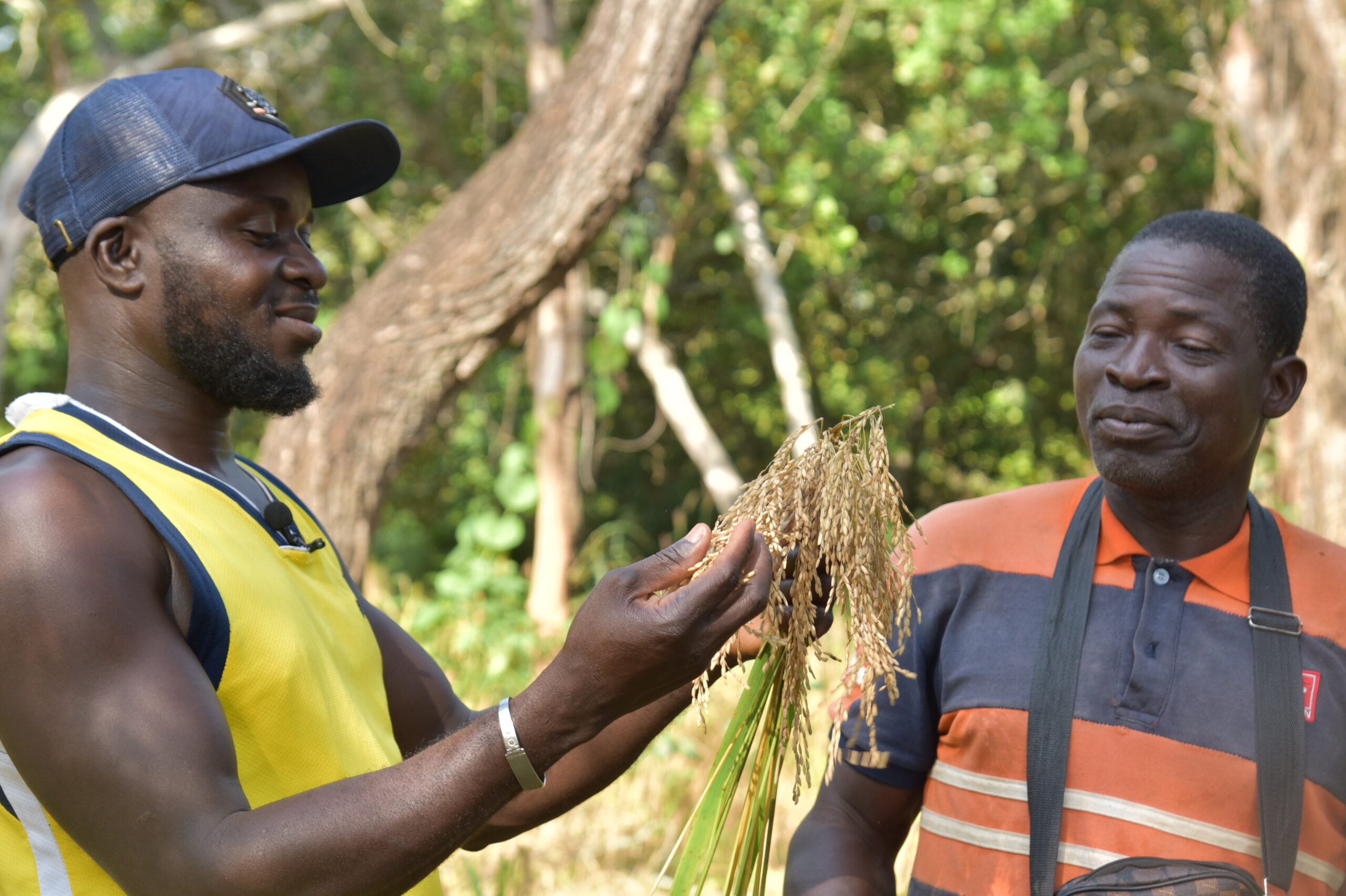
Rice on the table and money for school
Beyond higher yields, the impact is tangible in the daily lives of farming households.
According to Koné, this is the first time he has harvested enough rice to meet his family’s needs and reduce the household’s spending on rice. The harvest also generates enough income to help cover his children’s school expenses.
Other farmers have followed Koné’s example. Touré points to Ouattara Jean, who he says reportedly harvested nearly 30 bags from one hectare after following the same sowing recommendations.
Touré says these harvests are encouraging farmers in Toumbokaha and Kofissioka, who had given up on upland rice to reconsider the crop. “Upland rice hasn’t changed. What has changed are the conditions for its success,” he says.
PADFA, with technical support from Landscape Alliance, provides agrometeorological advisories that farmers can use when planning their sowing.
“With climate change, no farmer can succeed alone. It is only through climate information that we can overcome these challenges,” Touré concludes.