



“Biodiversity doesn’t vote. Biodiversity is not what wins elections,” said Paul Smith, Secretary-General of Botanical Gardens Conservation International (BGCI), at a recent webinar on Choosing between native and introduced tree species during tree planting.
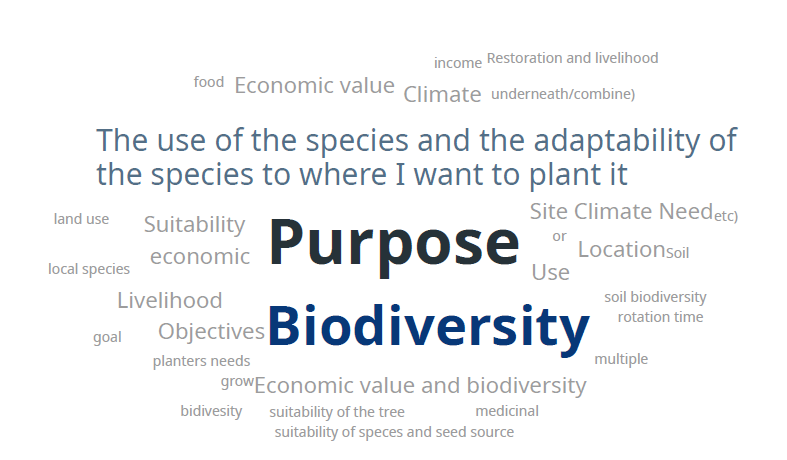
This was a sobering message for the 230 participants in attendance. Nine out of ten respondents, based on a quick poll conducted during the webinar, said they preferred planting native rather than introduced tree species and ranked purpose and biodiversity above other considerations when choosing species.
Hosted by the Transformative Partnership Platform for quality tree seed and seedling delivery systems (Quality Tree Seed TPP), the inaugural webinar was opened by Alice Muchugi, Theme Leader for Tree Diversity and Productivity at the Center for International Forestry Research and World Agroforestry (CIFOR-ICRAF). Presentations then explored cases for planting native species, followed by examples involving introduced tree species. The event combined expert inputs with interactive polls, a moderate Q&A session and an optional 30-minute extension for further discussions.
The often-controversial question of whether to plant native or introduced trees proved highly engaging, with 70 percent of participants choosing to join the added session.
From debate to collaboration
Led by CIFOR-ICRAF, in collaboration with BGCI and Unique Land Use, the Quality Tree Seed TPP builds on decades of research and practical experience in tree seed and seedling systems. In its initial phase, implemented through the Right Tree in the Right Place for the Right Purpose project (RTRP-Seed) and supported by Germany’s International Climate Initiative (IKI), the TPP brings together tree-planting stakeholders to co-identify challenges, co-develop solutions and share knowledge on how to improve access to quality tree seeds and seedlings for biodiversity and livelihoods.
Biodiversity and livelihoods in practice
Biodiversity encompasses the full range of living organisms — plants, animals, insects, microorganisms — associated with a particular place. Native tree species play a central role in maintaining and restoring these ecosystems, as thousands of other species are associated and adapted to them and depend on them for survival.
Small and medium-scale tree-planters, who make up the majority, generally plant to improve their livelihoods, with a focus on economics rather than on biodiversity.
“Smallholders don’t plant trees and walk away,” noted Chris Harwood, a researcher formerly with Australia’s Commonwealth Scientific and Industrial Research Organisation (CSIRO), who spoke during the webinar about planting introduced, or ‘exotic’, tree species. “In the case of smallholder wood production, which is based mostly on exotic trees, they normally cut the trees down on short rotations, generally less than ten years.”
A case study from the Sawlog Production Grant Scheme in Uganda showed tangible benefits for farmers planting introduced trees. Farmers gained “good income per hectare of planting, guaranteed buyers, and good cash flows,” noted Elizabeth Mungai, programme manager for Commercial Forestry at Gatsby Africa, a foundation that promotes smallholder wood production.
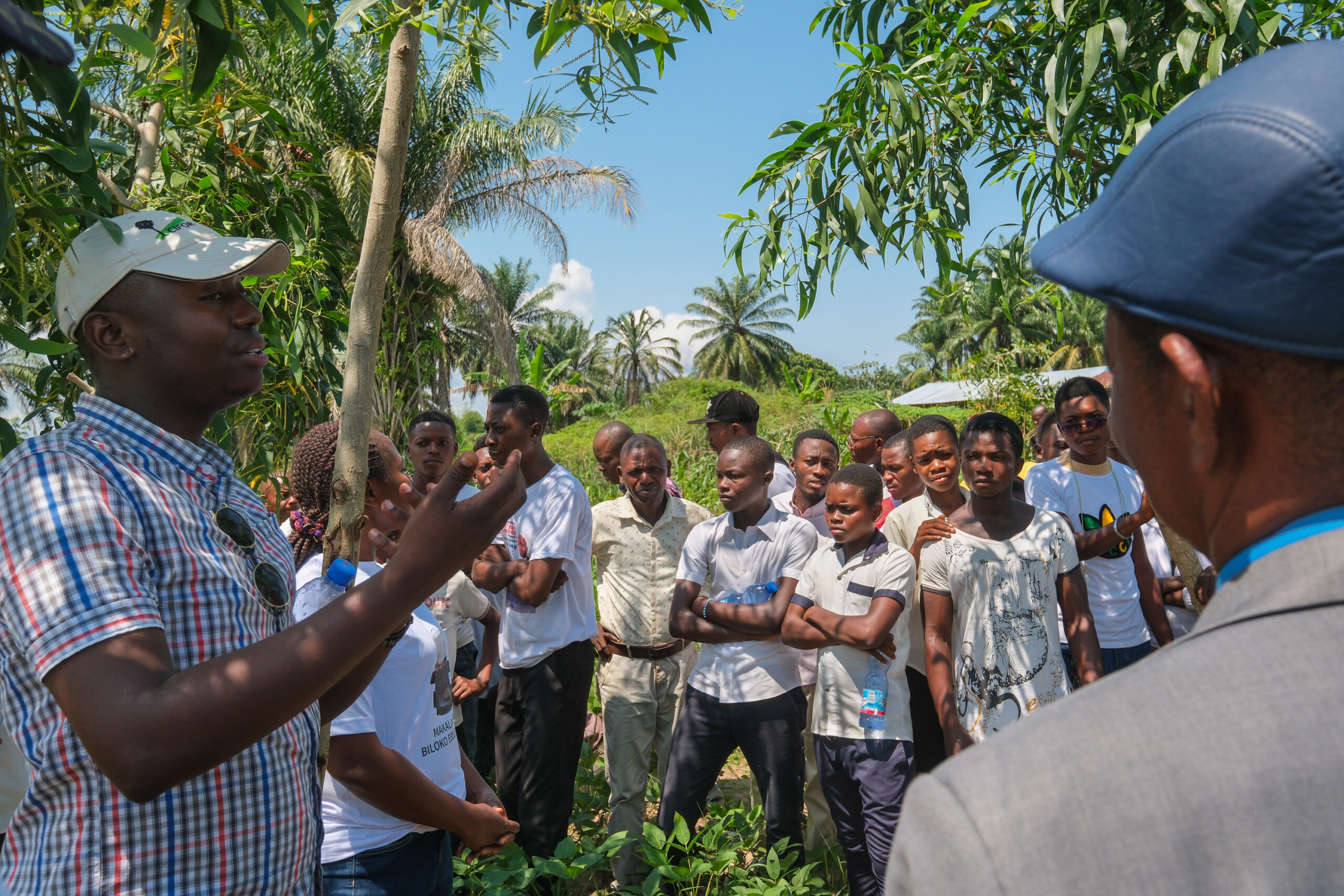
Wincate Kagane, head of Terrestrial Restoration at the Little Environmental Action Foundation (LEAF) in Kenya, highlighted the organization’s work with communities living near biodiverse forests that harbour threatened tree species. LEAF supports restoration by educating the communities, engaging them in tree-planting with a focus on native trees, while also promoting alternative means of livelihood.
“Improving their livelihoods means that they can take care of these natural resources better,” noted Kagane.
Photo by Axel Fassio / CIFOR-ICRAF
Can native and introduced species coexist?
People do not always see the benefits of biodiversity. For those struggling to make a living, it is no surprise that they often focus on planting a limited number of commercially valuable tree species, Smith explained. As a public good, biodiversity often requires broader policy and institutional support. “The convergence of planting native and introduced trees, of biodiversity and livelihoods, will depend on governments,” Smith indicated.
Presenters agreed that countries can enhance livelihoods, alleviate poverty and support economic development through smallholder plantations of introduced trees, while also facilitating the planting of native trees for biodiversity and landscape restoration — contributing to ambitious restoration commitments.
The sustainability of introduced species was another point of debate. “There’s no such thing as sustainable species,” Harwood observed. “There are sustainable practices.”
During the optional session, discussions focused on how climate change affects tree-planting choices, the possibility of combining carbon and biodiversity credits to encourage planting of native trees and the policy directions required to support the appropriate planting of both native and introduced trees. Participants were also directed to an infobrief on choosing between native and introduced tree species that informed the webinar.
Why was such a fraught topic chosen to launch the Quality Tree Seed TPP’s webinar series?
“Tree seed systems that supply tree planting materials to growers are shaped by many actors – researchers, regulators, nurseries, farmers, investors, and communities – whose incentives often diverge. Fixing one constraint can create others, creating a classic ‘wicked problem’,” said CIFOR-ICRAF Senior Ecologist Ian Dawson, who moderated the webinar discussion, after the event. “The Quality Tree Seed TPP was designed to bring all stakeholders together to collectively solve the systemic problems that make it difficult to plant the right trees in the right place for the right purpose.”
Participants were invited to shape the TPP by filling out a short survey, which explores current tree-planting activities, tools used/needed, and support required to improve the delivery of quality tree seed and seedlings.
Future webinars will focus on related critical issues, such as what ‘quality’ means in tree seed and seedling systems, how to do sectoral assessments, and operationalizing climate-appropriate tree planting.