


Leprosy (caused by the bacterium Mycobacterium leprae) is an ongoing public health challenge across the tropical Americas. The disease primarily affects the skin and peripheral nerves and – until recently – was thought to spread mainly from human to human through respiratory droplets. Mounting evidence, however, suggests armadillos can also transmit the disease to humans, especially when people hunt and handle them directly.
An estimated 25 percent of all new human leprosy cases in Brazil are now linked to armadillos, and that figure jumps to 40 percent in deforestation hotspots, such as the Amazon’s so-called “arc of deforestation“.
These findings come from a 2025 study in Infectious Diseases of Poverty, which maps where armadillo-to-human leprosy transmission happens most and where public health interventions work best.
Drawing on more than 326,000 reported leprosy cases across Brazil between 2013 and 2022 and a dataset of 554 hunted armadillos across 175 municipalities, the researchers developed a model to estimate the armadillo-hunting infection risk. They also identified other factors that amplify the risk, including higher population density, environmental degradation (deforestation), malnutrition and socioeconomic status.
Hani Rocha El Bizri, lead author and coordinator of the Sustainable Use of Wild Species Transformative Partnership Platform (SU-TPP), sat down with Forests News to share more.
What is the link between armadillo hunting, deforestation and leprosy in Brazil?
The most important finding of the study is that an estimated 25 percent of all new human leprosy cases in Brazil relate to hunting and consumption of armadillo meat.
Before this study, the World Health Organization (WHO) recognized a link between armadillos and leprosy transmission; a few human cases had been reported in the United States that matched the genotype of the leprosy bacteria, Mycobacterium leprae. However, our findings suggest the number of people infected through hunting armadillos is much higher than expected.
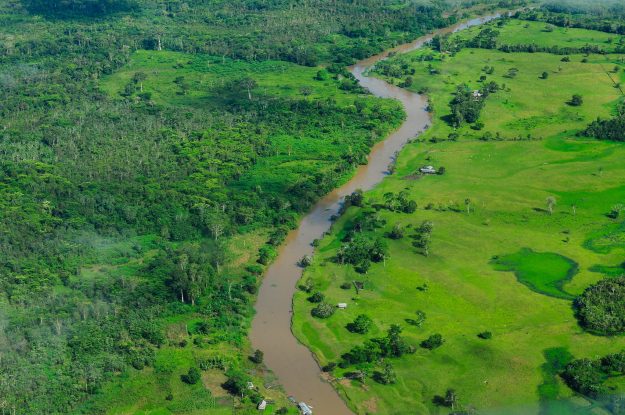
We also identified several other variables responsible for zoonotic disease transfer. In heavily deforested areas, we see a higher prevalence of the disease in both humans and armadillos. In some municipalities located in Brazil’s ‘arc of deforestation,’ up to 40 percent of leprosy cases could be attributed to armadillo hunting and use. This is very high and very concerning.
What is the unique contribution of this study?
The scale of areas studied is unique. Brazil is the largest tropical country in the world, containing roughly 40 percent of the tropical areas in the Americas – it’s huge.
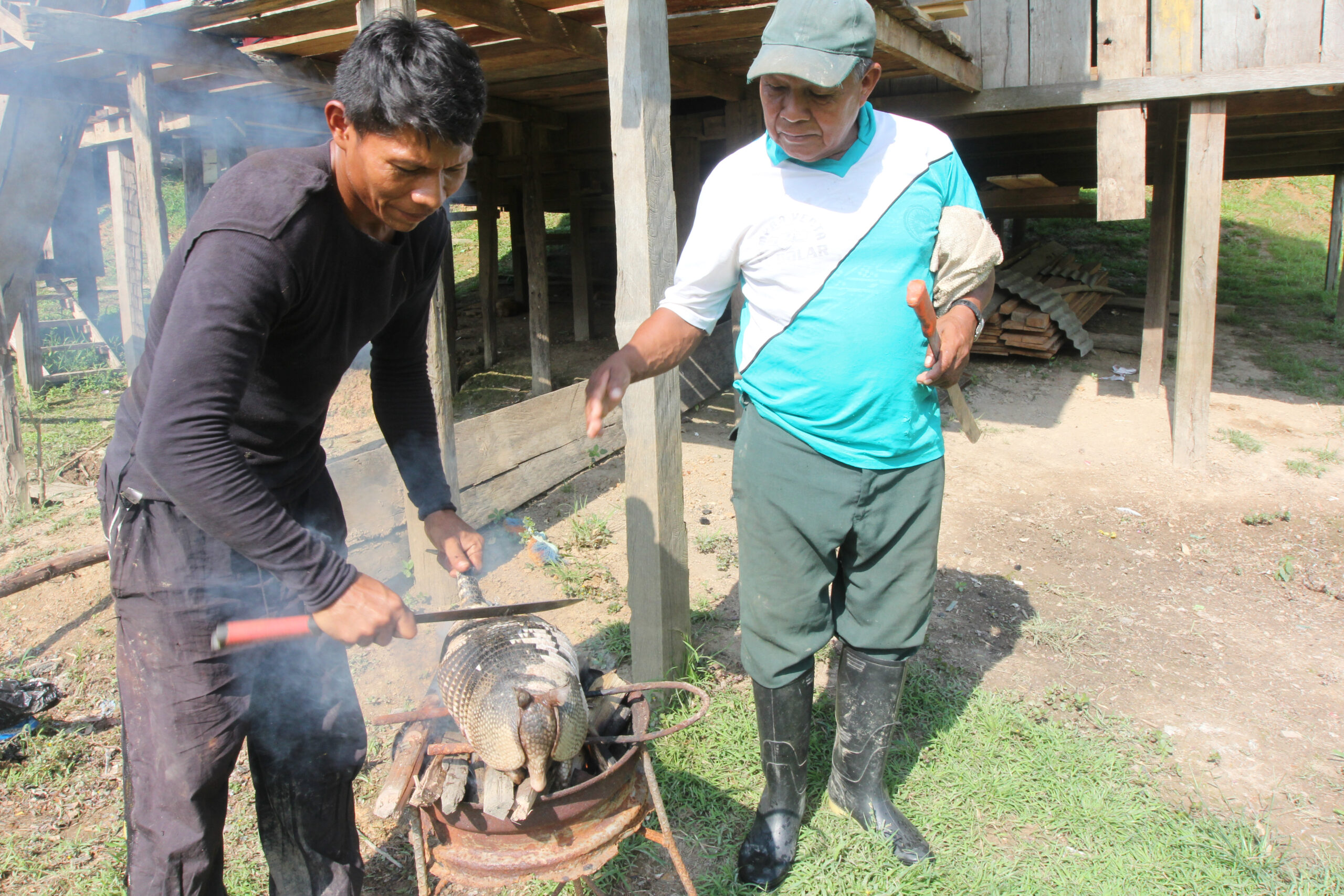
The data on hunting that we incorporated into this study is also a major contribution. Before, we couldn’t link armadillo hunting with leprosy cases because we lacked independent data on hunting. Asking leprosy patients whether they hunt armadillos can be very inaccurate; people often hide the truth. Data gathered from our recent TradeHUB project on hunting across all major biomes and municipalities in Brazil gave us a clear picture of where hunting was more prominent. With this information, we established the link between armadillo hunting and leprosy outbreaks.
How did you establish the link between armadillo hunting and leprosy outbreaks?
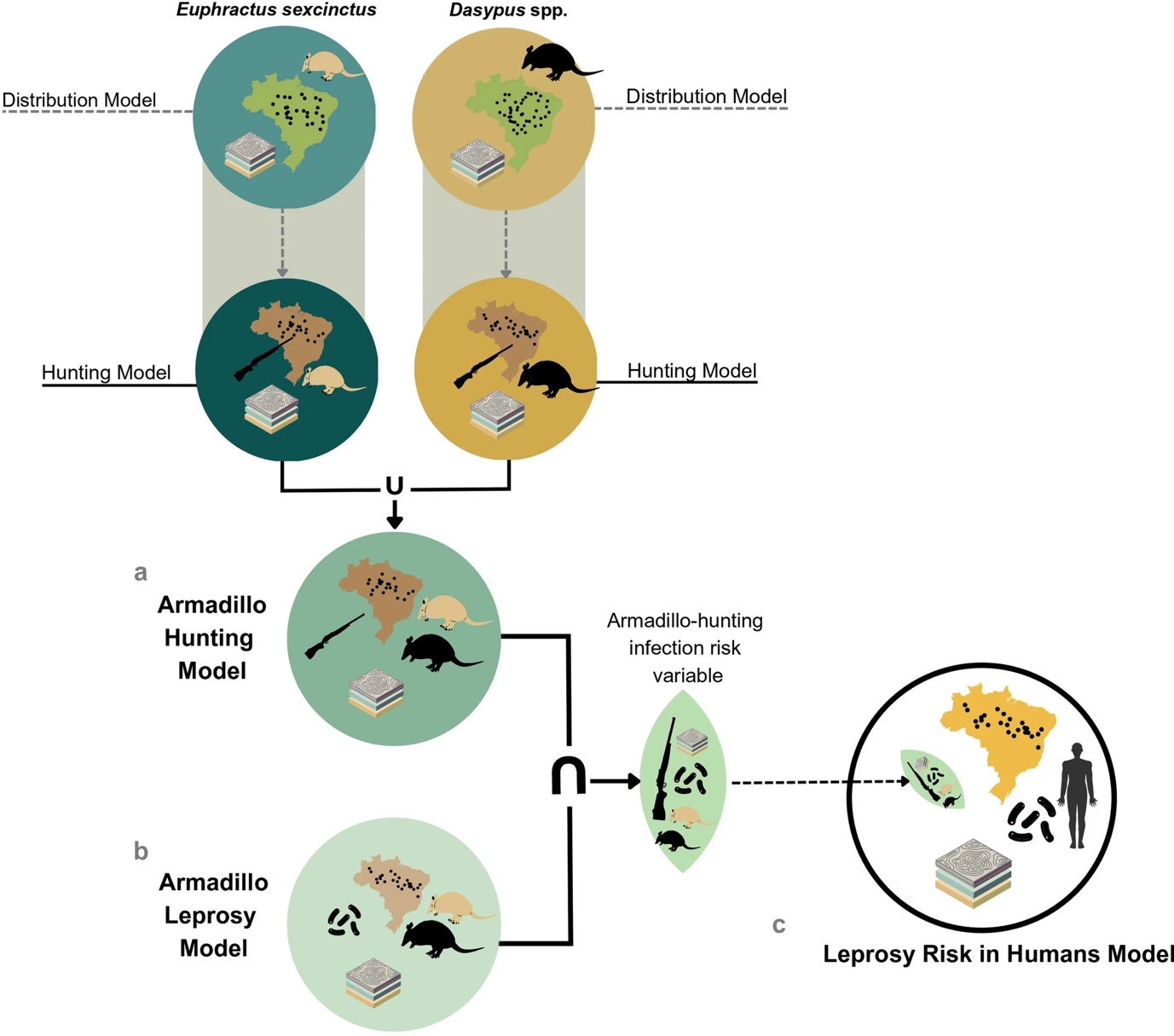
We created a variable by combining hunting prevalence with how likely an armadillo is to be infected by M. leprae in a given area.
Existing literature included PCR samples from about 300 armadillos across Brazil.
Using these cases, we mapped the locations where armadillos tested positive or negative for leprosy, then calculated the prevalence of infected armadillos at the municipality level. Once we had prepared the dataset on armadillo infection prevalence and the dataset on hunting, we used a mathematical model called the ‘favorability model’ to standardize and combine them. This gave us the “Armadillo hunting infection risk” variable, which basically tells you how likely you are to be infected by hunting an armadillo in each municipality.
We couldn’t rely on the hunting model alone, as it doesn’t reflect whether an armadillo was really infected or not. Likewise, we couldn’t use only the armadillo infection model because that would not tell us if people were hunting them or not. We needed to combine the two.
Did the findings surprise you?
What surprised me the most was how strong the armadillo infection-risk factor was.
We didn’t know what we would find when we began. Discovering that an estimated 25 per cent of new leprosy cases are linked to armadillo hunting is massive.
If future studies confirm this infection risk, managing the disease will become much harder, given how deeply embedded hunting is in the culture of the tropical Americas.
The link to deforestation is also troubling. While we expected hunting and deforestation to influence and be a factor in human-armadillo leprosy transmission, the strength of these factors in our models was unexpected. This shifts our understanding: what we once considered a small, localized issue is responsible for a quarter of all new cases in Brazil. We’re already conducting follow-up studies to digest these implications.
Do you think these findings are applicable beyond Brazil?
Yes. Because Brazil represents 40 percent of the tropical Americas, we can assume the findings are relevant outside of the country as well. Ecological systems do not respect political borders, and I believe we can use data from Brazil as a model.
Brazil is a good case study because the country has very good data sets and collections on human cases of leprosy. All new cases of leprosy are entered into a national health database across all 5,570 municipalities in Brazil.
There are also studies from other countries that have found armadillos infected with M. leprae, so we know that it’s not exclusive to the Brazilian territory – it’s widespread. Hunting wild meat is also common in different areas of the tropical Americas.
A three-banded armadillo (Tolypeutes tricinctus) photographed during field research near Chapada Diamantina, Bahia. Photo by Olívia dos Anjos / Instituto Tamanduá
How do you hope the data will be used?
I hope it can be used to inform health policies. Some of the people involved in this research have direct connections to agencies like the WHO’s technical advisory group on leprosy, as well as to the Brazilian Ministry of Health.
Leprosy is a neglected disease in terms of zoonotic research, and there’s much more funding for research on viral disease spread compared to bacterial disease. We are forgetting about bacteria, how they can spread and mutate to become resistant to antibiotics. This is also relevant considering the link we found between leprosy transmission and deforestation, when you consider all the current environmental and climate changes.
We are currently working on another project funded by the Leprosy Research Initiative (LRI) on collecting and genotyping samples collected from armadillos positive for leprosy, and this will help us to make a stronger recommendation for health policy related to leprosy and interaction with armadillos. The genotype can fully confirm that the same bacteria found in the armadillos can be found in humans.
For this, we have established partnerships with environmental and medical professionals and colleges across Brazil to collect samples from live or dead armadillos in new areas. What we are creating is probably the largest biobank of armadillo samples anywhere, and the data can help us to match genomes between human cases and armadillos to confirm zoonotic transmission. The biobank also allows us to test for and trace the evolution of M. leprae over time, including whether or not they are developing antibacterial resistance.
We want to have all the evidence to put forward strong advice for public and global health agencies.
Further readings
- Using Facebook to expose illegal sport hunting in Brazil
- Pesquisas buscam mapear relação entre hanseníase e caça ilegal de tatus no Brasil
- Exposing illegal hunting and wildlife depletion in the world’s largest tropical country through social media data
- Arc of deforestation