

An advanced new online prediction engine is transforming how soil spectroscopy laboratories assess landscape health across countries, cutting analysis and prediction costs while dramatically accelerating the delivery of data critical to landscape restoration and food system transformation.
The new technology was developed through the Soil and Land Health Lab and the Spatial Data Science and Applied Learning Lab (SPACIAL) at the Center for International Forestry Research and World Agroforestry (CIFOR-ICRAF). It builds on the state-of-the-art soil spectroscopy analysis combined with remote sensing to rapidly generate a widening network of detailed predictive maps showing what landscapes need to support sustainable agriculture and healthy ecosystems.
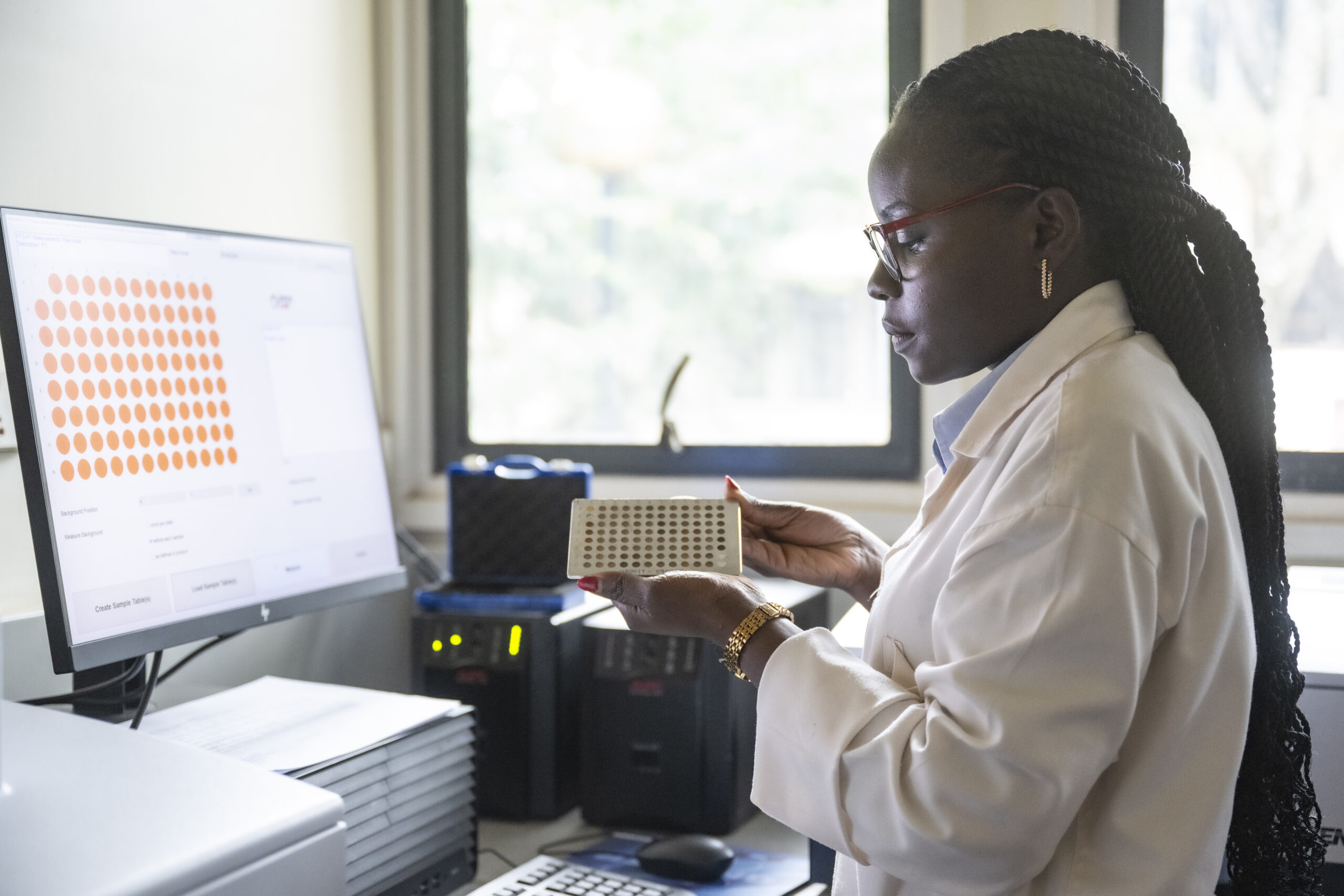
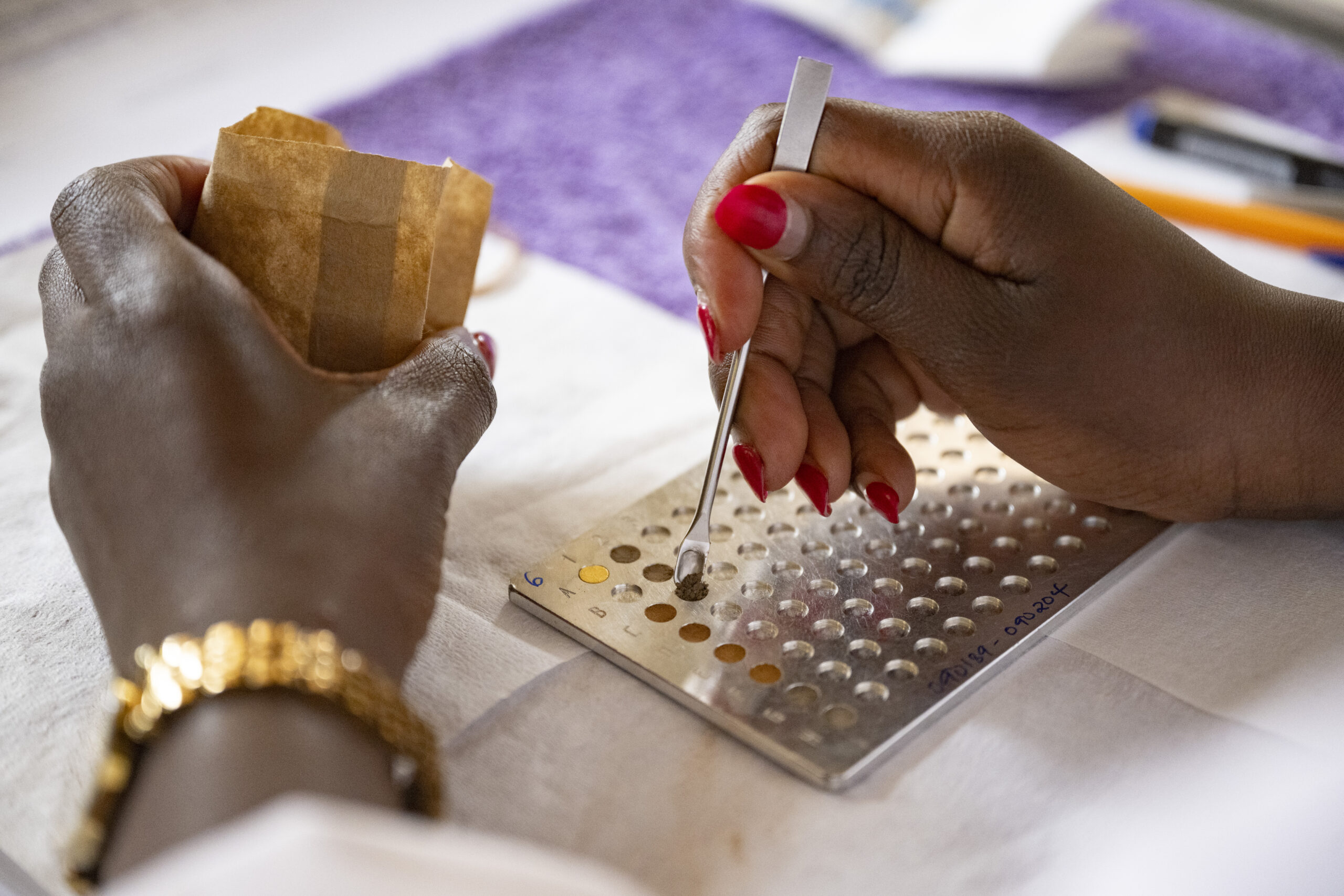
Until now, CIFOR-ICRAF’s 20-year leadership in soil spectroscopy analysis has supported regional laboratories around the world to build capacity in using spectrometers to measure soil properties and produce their unique spectra – soil signatures. However, those labs often lacked long-term investments to go further with analytics and predictive mapping.
With the new online prediction engine, that’s no longer an issue.
“We’ve been bringing this all together on one platform to increase efficiency and make turnaround much quicker while also ensuring consistent and reproducible results,” said Tor-Gunnar Vågen, senior scientist heading SPACIAL at CIFOR-ICRAF. Compared with traditional methods of analysis, prediction costs are slashed by as much as 90 percent, added Vågen.
Photo by CIFOR-ICRAF
At the core of the work is CIFOR-ICRAF’s Laboratory Information Management Systems (LIMS) – one of the world’s largest, with more than 200,000 spectra translated into detailed and meaningful soil properties, such as soil texture, organic carbon, total nitrogen and pH. To ensure consistency and reliability, soil samples are collected using CIFOR-ICRAF’s acclaimed Land Degradation Surveillance Framework methodology.
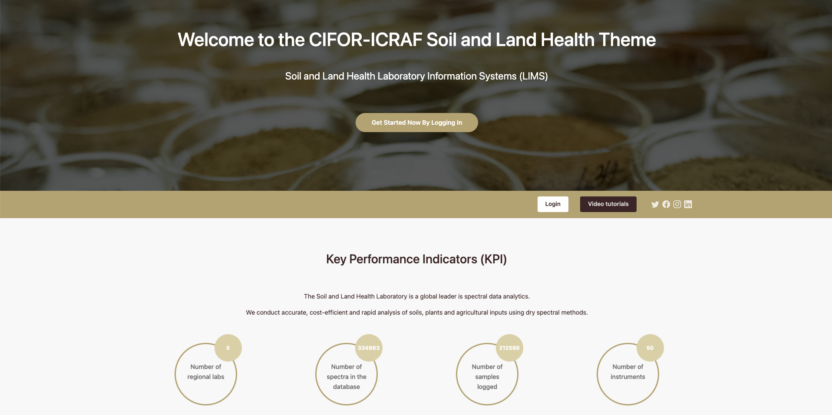
The Soil and Land Health Laboratory Information Management System (LIMS) provides a centralized platform for managing soil data and analysis workflows. Screenshot by CIFOR-ICRAF. 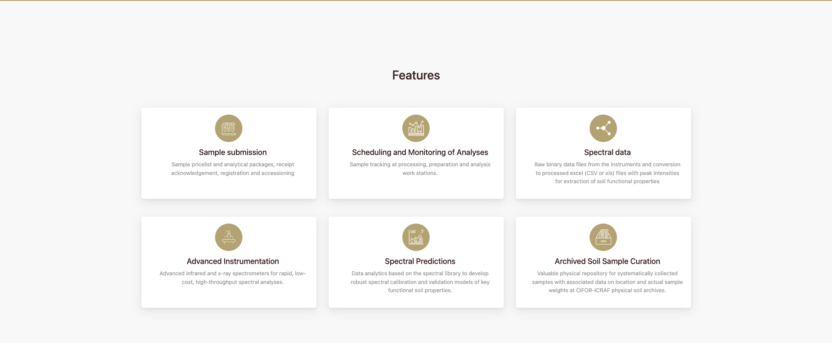
Key functions include sample submission, spectral data processing and predictive modelling of soil properties. Screenshot by CIFOR-ICRAF. 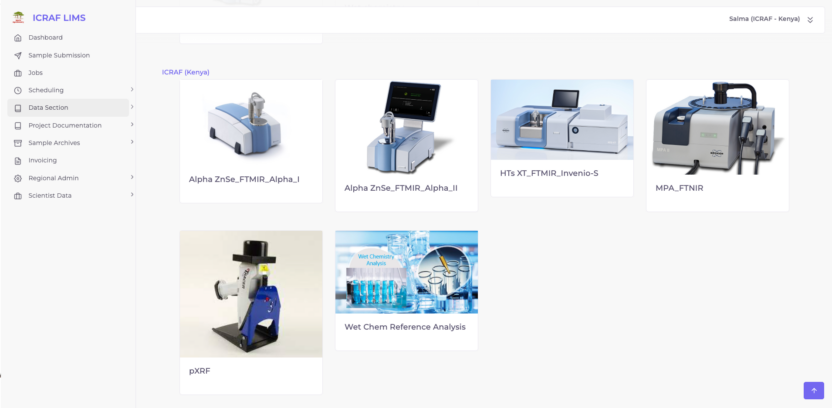
The platform integrates multiple analytical instruments, enabling standardized soil data collection and processing across laboratories. Screenshot by CIFOR-ICRAF. 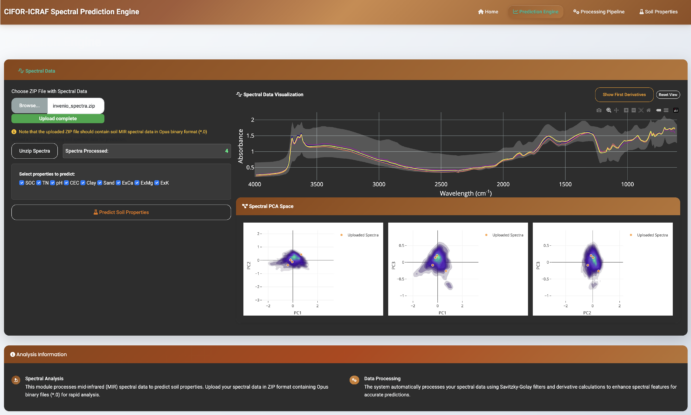
Spectral data visualizations underpin predictive models, translating soil signatures into measurable properties. Screenshot by CIFOR-ICRAF. 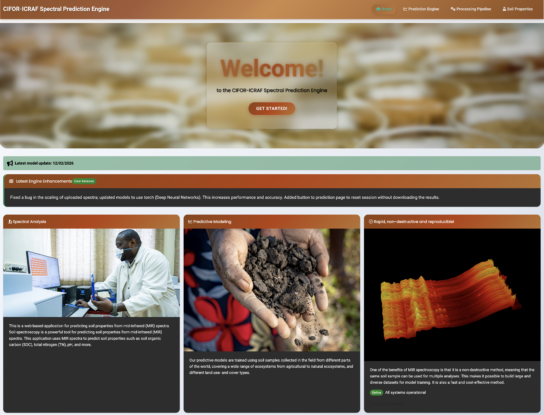
The prediction engine uses spectral data to estimate soil properties, supporting faster and more cost-efficient analysis. Screenshot by CIFOR-ICRAF.
Information stored in the LIMS is then used to build far-reaching, predictive maps to better understand soil constraints on a larger, more efficient scale.
A key feature of the new prediction engine is its ability to automate and drastically streamline the prediction process, simplifying the work of regional laboratories. It adjusts for differences between systems, verifies data quality and flags any errors to ensure predictions can be made confidently. As regional laboratories become able to upload and share increasing amounts of information, the database expands, improving the quality of predictive maps.
“One of the bottlenecks has been the prediction part of this,” explained Vågen. “It requires big data to make things more consistent. So, we have been supporting labs in various regions – partner labs, including governments – to set up their own spectrometers and have their own spectroscopy labs.”
By identifying restoration hot spots, or priority areas, the new engine will have enormous relevance for restoration work across landscapes, including small- and large-scale agriculture, said Dickens Ateku, senior laboratory manager at the CIFOR-ICRAF Soil and Land Health laboratories.
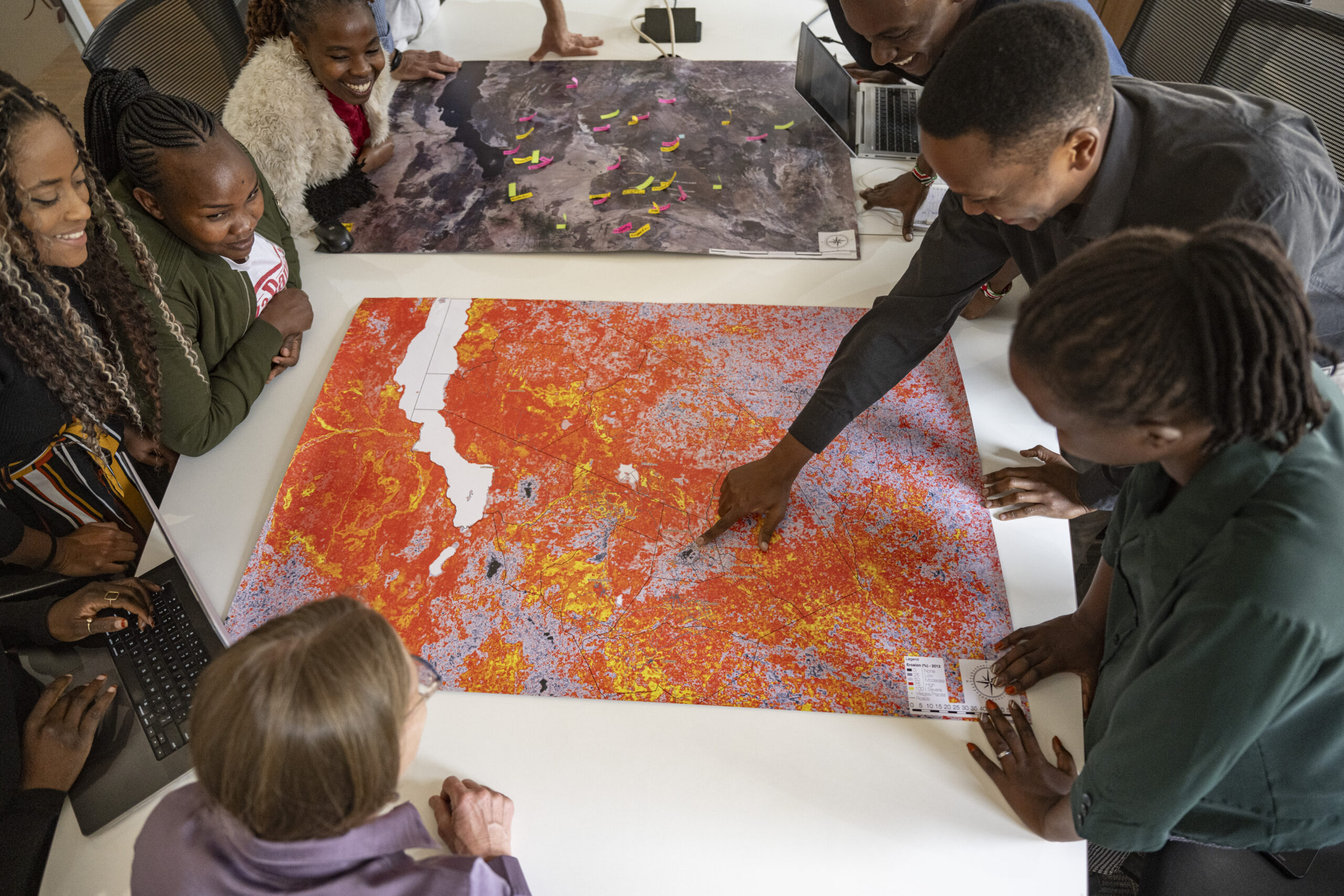
“If you’re working in land restoration, it’s helpful to find those hot spots and target your intervention,” said Ateku. “This tech-innovation is cross-cutting: from huge landscapes that support policymakers in making informed decisions on restoration investment, to also helping smallholder farmers make decisions on how to improve soil health.”
“Data is power,” added Zampela Pittaki, data scientist in soil spectroscopy with CIFOR-ICRAF’s Soil and Land Health Theme. Large datasets enable predictions and mapping across vast landscapes, “helping us to better understand what is happening in the soil, supporting more informed decision-making and policymaking,” she added.
Critical to the success of the new prediction engine is scaling the training of scientists and technicians from regional laboratories to understand the entire analysis process, beginning with the use of soil spectrometers and including the role of the LIMS. Week-long training sessions cover laboratory workflow processes, infrared spectrometer techniques, field sample preparation, instrumentation, data acquisition, as well as generating and interpreting data, said Elvis Weullow, senior soil laboratory enterprise manager with CIFOR-ICRAF’s Soil and Land Health lab.
“Not everyone is versed in the technology. It’s new, it’s different from what is traditionally used… we give them a basic foundation of knowledge,” said Weullow.
Demand for training is high. Upcoming sessions in 2026 include an OCP Ethiopia training and several sponsored by the Islamic Development Bank for the West Africa region, including soil fertility and mapping projects in Guinea, Mali, Niger and Senegal. The CIFOR-ICRAF team is also supporting the Green Climate Fund-supported Knuckles project in Sri Lanka and collaborating with the Rythu Sadhikara Samstha (RySS) Community-Managed Natural Farming (APCNF) project in India. Private-sector training is also expanding, focused on scaling soil health assessments.
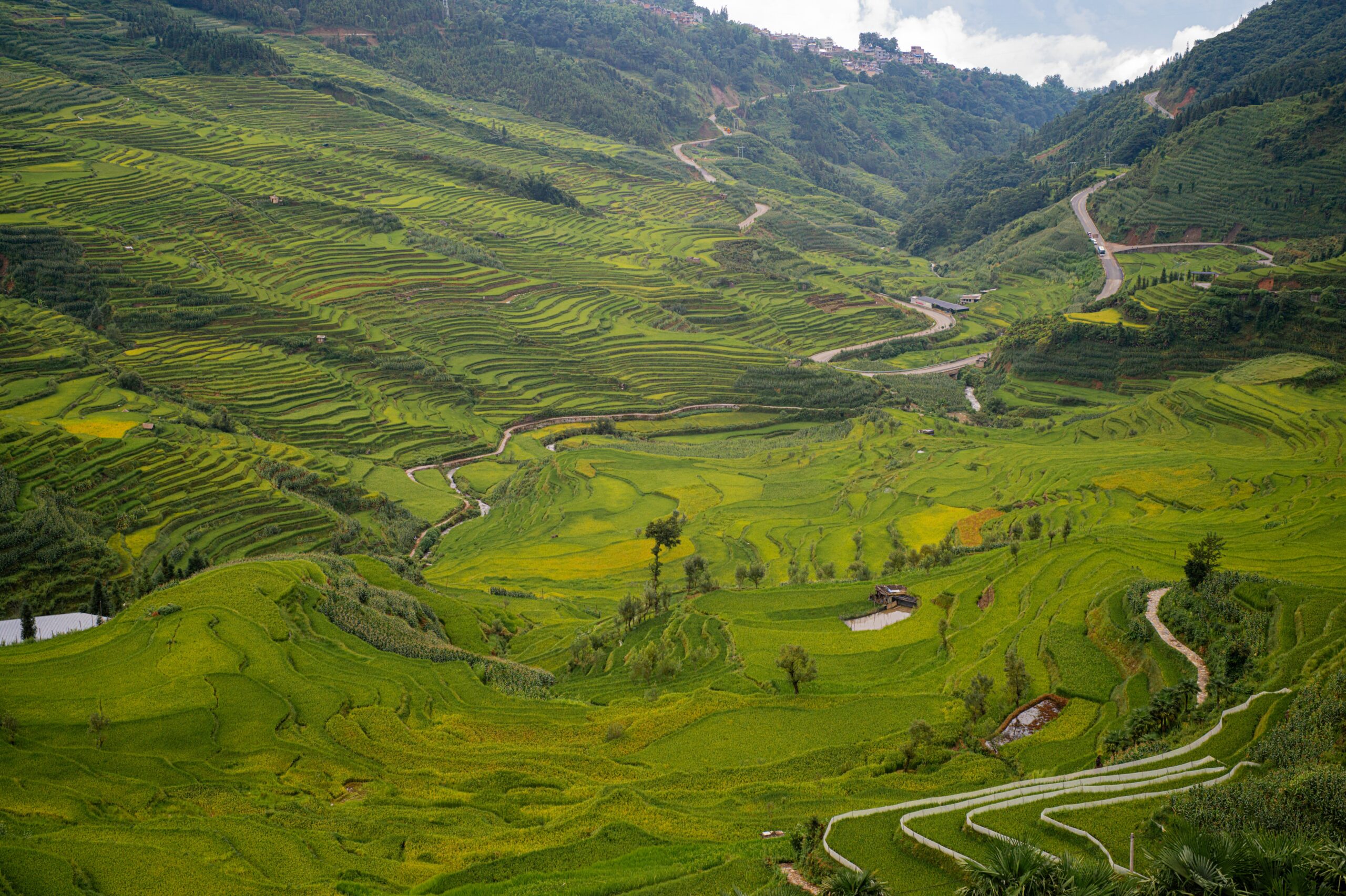
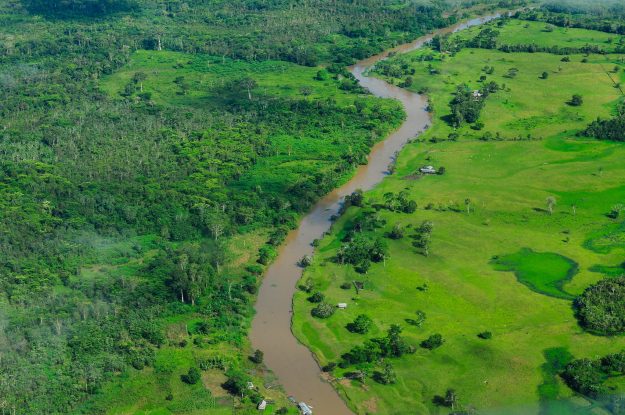
Aerial view of agricultural landscapes. Photo by CIFOR-ICRAF.
Trainees come from very different backgrounds, knowledge and technical skills, said Bellah Kauma, senior laboratory technician in infrared spectroscopy at CIFOR-ICRAF. Policymakers and administrators are keen to understand just how these tools bring value to sustainably improving land productivity through healthy soil.
Training programmes may be tailored to different labs and their needs, but all must follow standardized protocols for handling soil sample processing in order to protect credibility, said Kauma.
“We must consistently have standard protocols – right from field sampling to the lab, to data analytics, to the prediction engine so that everyone complies by following a similar approach,” said Kauma.
One such training for the Tupande project in Kenya in August 2025 deepened participants’ knowledge of LIMS and the critical role of spectroscopy in soil, compost, and plant analysis. Tupande, the Kenya programme of One Acre Fund, works directly with smallholder farmers and runs a spectral laboratory that conducts soil analysis for farmers, providing vital data to guide better land and crop management decisions.
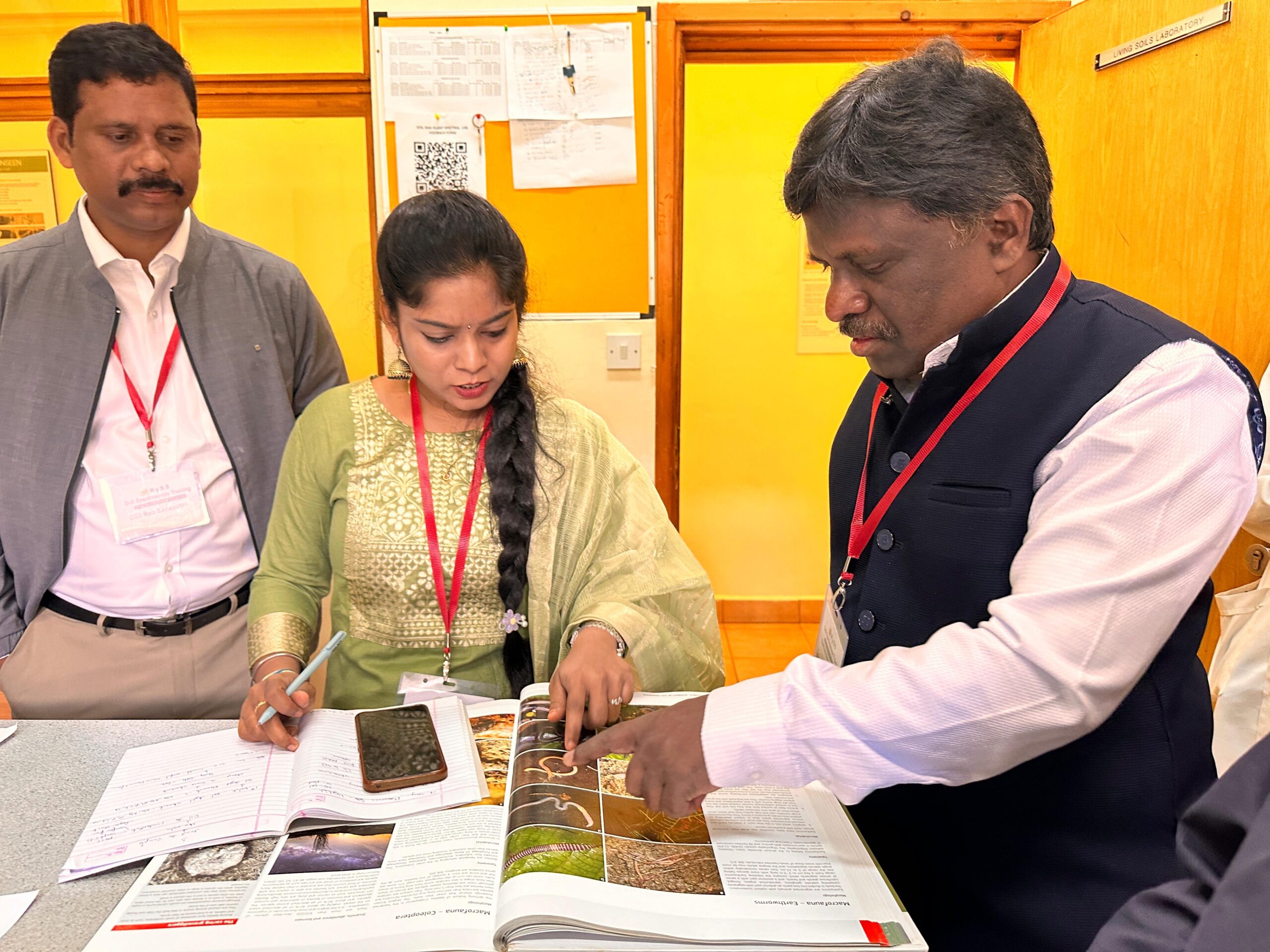
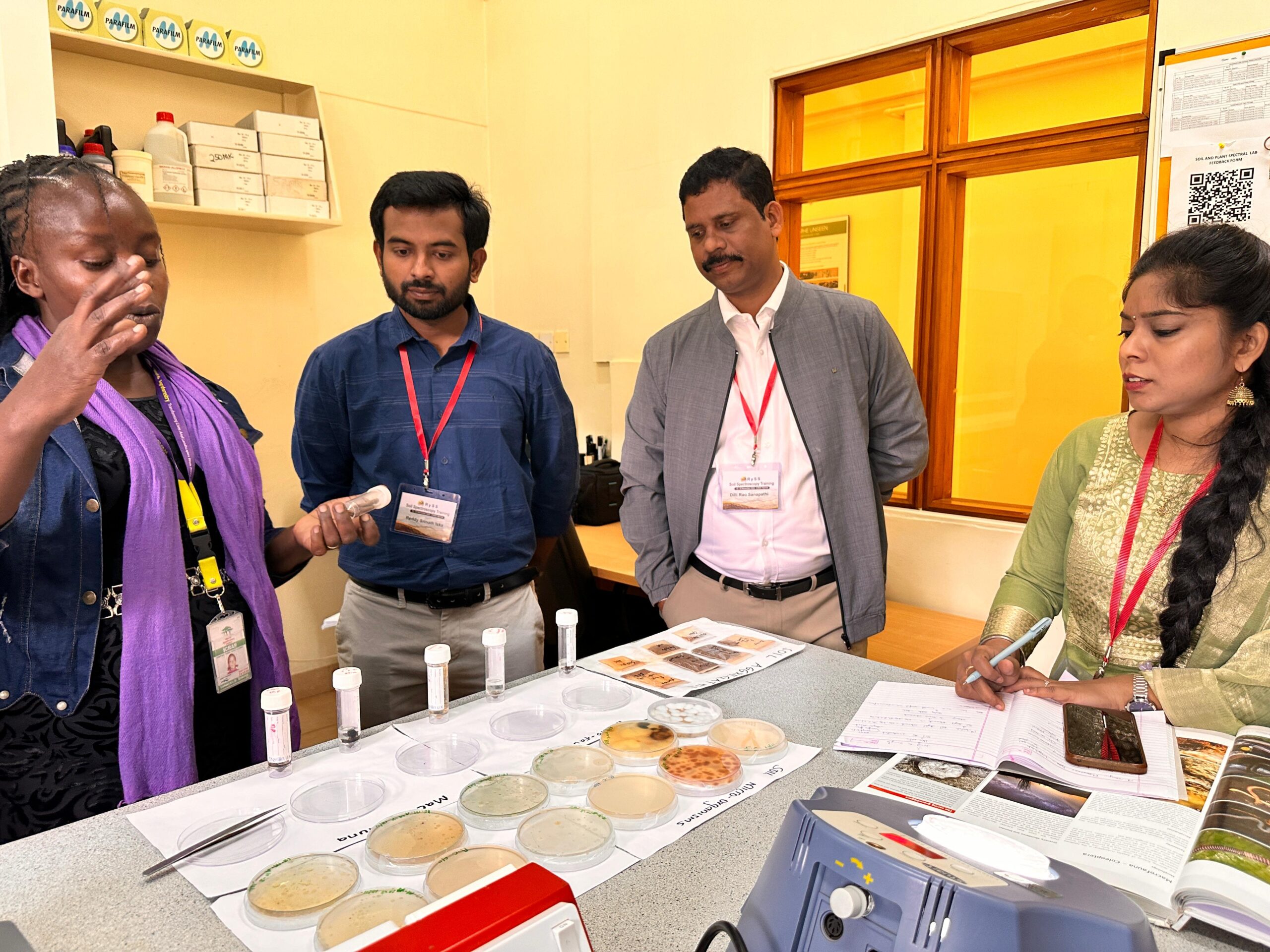
Shared experience and strengthened collaboration were the goal of discussions and study of CIFOR-ICRAF’s spectroscopy process for a professor of soil science from Cairo’s Helipolis University in a week-long session in 2024.
Uses for the new prediction engine are broadening, including a growing interest from private-sector investors seeking soil and carbon mapping across landscapes, including the potential for carbon storage, said Vågen.
“We’ve had a lot of spin-offs… so you’re not just engaging with a conceptual thing, but you have something substantial people can work with and innovate around.”