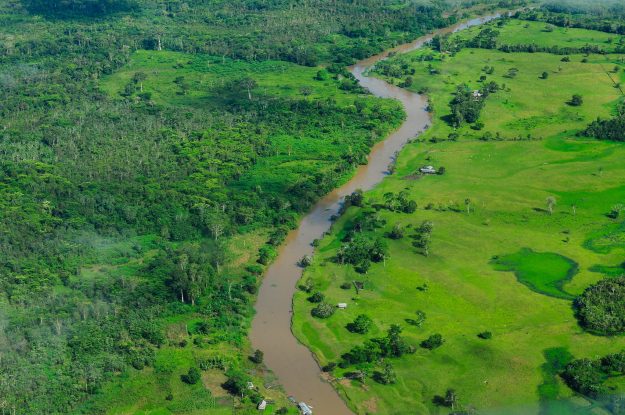


In the lowland Peruvian Amazon, diverse and unique ecosystems flow in a constant rhythm. Understanding the seasonal shifts of the Pacaya Samiria National Reserve isno simple task. Yet for the Indigenous communities of San Francisco and Chanchamayo, who live deep within this vast flooded forest, the cycles are not just phenomena to observe but the foundation of daily life. And these cycles are changing.
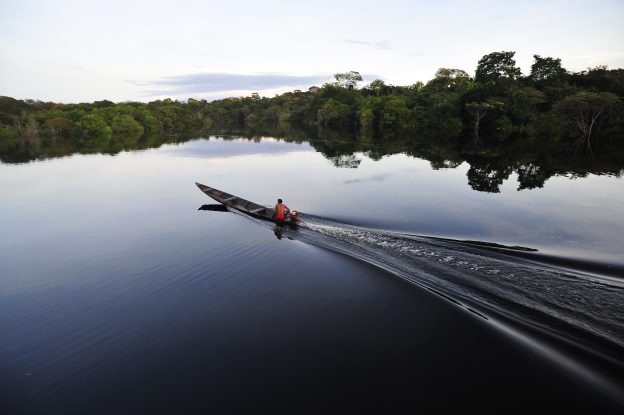
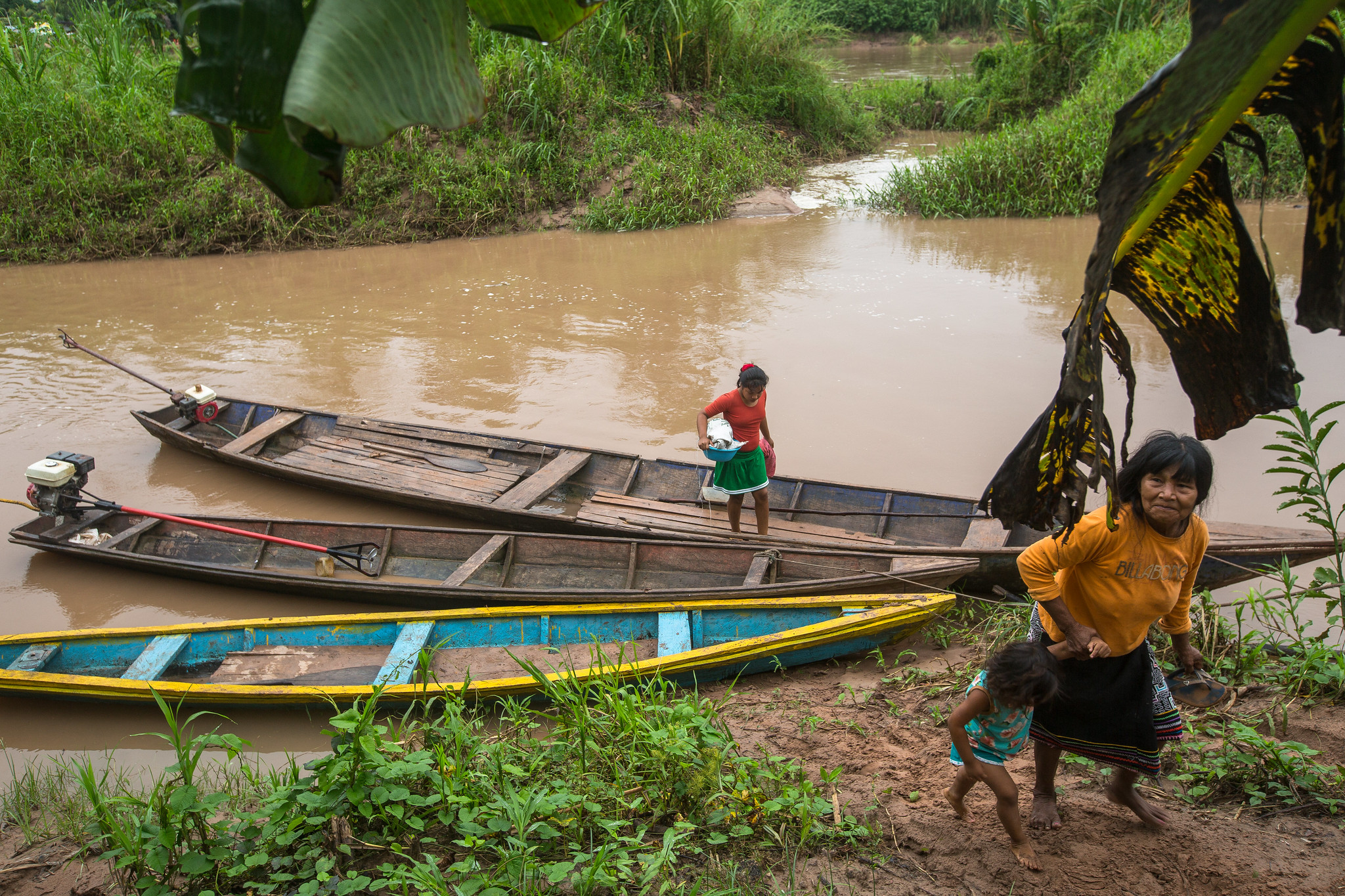
Along the banks of the Marañón River, families in two communities — among 140 neighbouring the reserve — have long tied their livelihoods to the river’s rise and fall. Its waters guide when they fish, plant, hunt and harvest.
“When the river level drops, it signals fishing season,” explains Alexandro Lache, the young Apu (community leader) of San Francisco. “Fish begin to surface, and people cast their nets—for food, sometimes for income. It’s not steady earnings, but our way of life is to use what nature provides.”
The Pacaya Samiria Reserve, a Ramsar-listed wetland, is rich in wildlife and forest resources. Still, many residents, including Apu Alexandro, worry about the declining availability of these resources.
“Elders say they once hunted nearby. Now we walk for hours into the flooded forest and sometimes return empty-handed,” he says.
At just 23, Apu Alexandro has stepped into leadership, hoping to inspire other young people to share responsibilities at a time of mounting challenges. For him and many others, remaining on their land and managing it sustainably is the only viable path to survival and prosperity.
Life with the river
The Marañón River is a lifeline, a pantry and a transport route for riverside communities. But it is increasingly under threat.
For decades, oil spills from pipelines crossing Peru’s Amazonian rivers have harmed both people and the surrounding ecosystems. Apu Alexandro recalls the 2014 spill disaster vividly: “We used to drink from the river. When the spill came, we didn’t know what it would mean. Today, some people carry mercury in their bodies. That’s why now we collect rainwater in cisterns.”
More recently, one of the region’s most severe droughts on record left the Marañón running dangerously low. Communities were cut off, crops withered, and fish died.
“This river dried up,” remembers Ostin Lomas, lieutenant governor of Chanchamayo. “Sandbanks trapped us. Only a small pool of water was left, heated almost to a boiling point. That was the water we had to drink. We couldn’t bathe, and our crops — cacao, bananas, cassava — were devastated.”
For Lache, it was a turning point. “I had never seen such a drought,” he says. With San Francisco located ten hours by boat from Nauta, the nearest port, livelihoods collapsed when navigation stopped. “The risk was losing the harvest,” he explains.
At 53, Lomas has witnessed the environment change dramatically. “Now in the rainy season, we get summer,” he says. The lack of rainfall and extreme heat have disrupted entire ecosystems. Even aguaje or palm swamps — wetlands dominated by the palm Mauritia flexuosa — have dried up.
Aguaje palms rise above a peatland forest in Peru’s Amazon, where flooded ecosystems support biodiversity, livelihoods and carbon storage.
Photo by Junior Raborg / CIFOR-ICRAF
The palm swamp forests
The aguaje palms are essential for both biodiversity and local economies. Its fruit is a staple food and income source for many, and wildlife such as birds and mammals also depend on it. But for decades, traditional harvesting practices meant felling female palms to reach the fruit, leaving large swathes degraded.
Between 2007 and 2018, palm swamp peatlands in Peru’s Amazon lost an average of 17,650 hectares annually to degradation and 4,200 hectares to outright deforestation, according to a study by the Center for International Forestry Research and World Agroforestry (CIFOR-ICRAF) and partners. This loss not only reduces palm availability but also alters the climate. In Peru’s flooded lowland Amazon, palm swamp peatlands store vast amounts of carbon in their soils, which is released when they are degraded, contributing to global warming.
In San Francisco, families are beginning to act. “We’re thinking of our children,” says community agent Belvi López.
“In the past, harvesting aguaje palms wasn’t regulated — whoever wanted to cut them, did so, and no one said anything,” she recalls. But with the creation of the Pacaya Samiria National Reserve in 1972, communities living inside the protected area had to adapt to new rules for resource use and trade.
Harvesting is now regulated through management plans overseen by Peru’s national protected areas service (Sernanp). Training workshops have taught residents to climb aguaje palms — towering up to 35 meters high — rather than cut them down.
“At first, people said, ‘How can we climb?’ But little by little, we learned. Last year, a group of young people decided to harvest aguaje this way,” says Apu Alexandro.
Still, barriers remain. “There are requirements that often represent barriers. For example, they don’t have a GPS, can’t afford a forest inventory, or don’t know the State’s administrative procedures,” explains Alonso Pérez, a researcher at the Instituto del Bien Común (IBC).
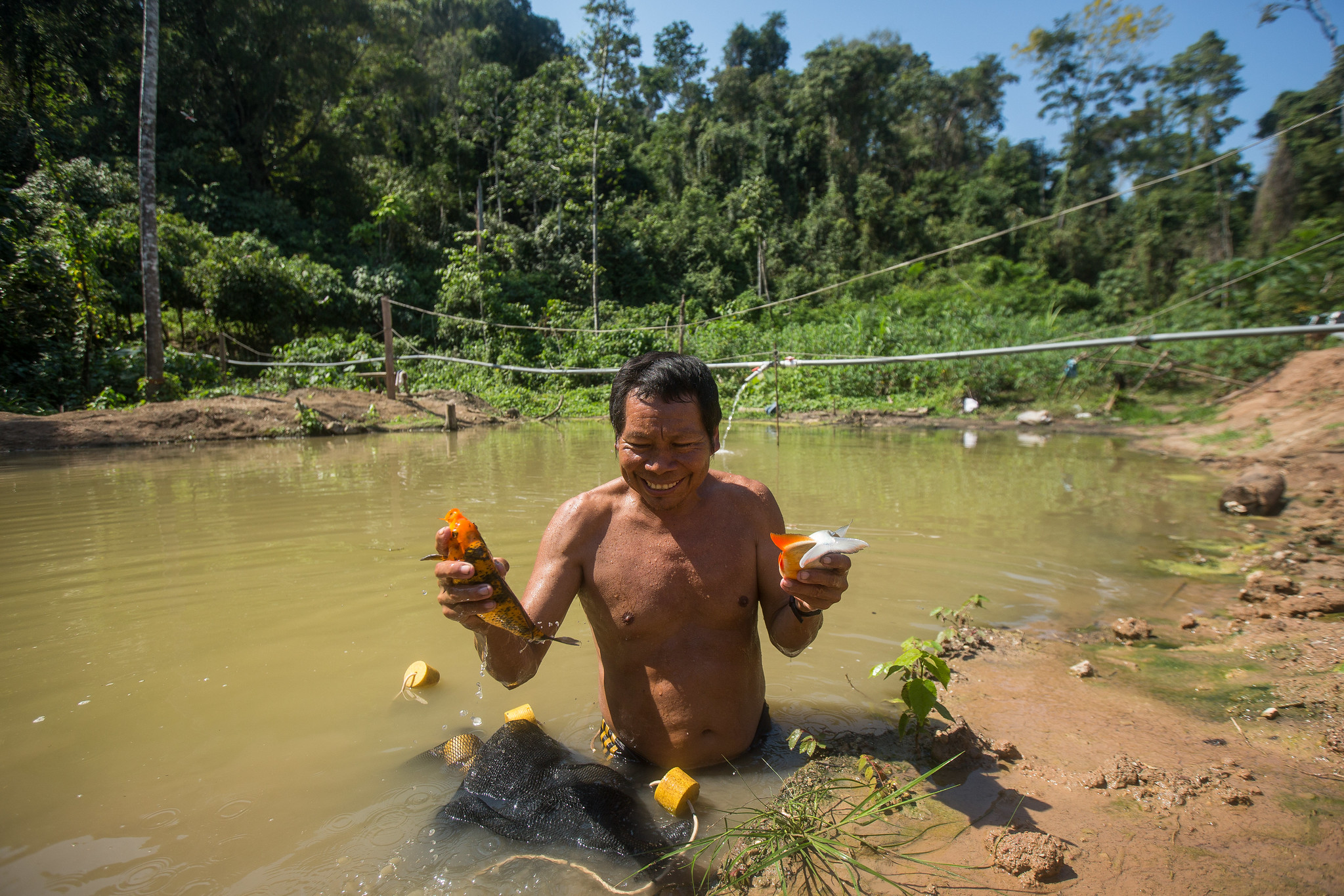
To help, the project Sustainable management of palm swamp peatlands by local communities — led by CIFOR-ICRAF and partners—began working in June this year with San Francisco and Chanchamayo. Beyond guiding them through the required paperwork, the project aims to co-design aguaje management strategies with communities and the institutions responsible for their oversight.
Conserving palm swamps, says Apu Alexandro, “protects not only the fruit, but also the animals that feed on it and sustain our diets.” Community monitoring could also curb illegal logging. “Outsiders come to cut palms without permission, harming what we’re trying to protect,” he warns.
Traditional knowledge is also bound up in these ecosystems. “We use plant medicine, and we don’t want it to disappear,” says Lache. He mentions shirisanago, a root macerated with liquor and used to treat rheumatism in the flooded forest.
In Chanchamayo, Roberto Núñez is both harvesting and planting aguaje. “I planted my first palm 20 years ago, when my son was born—so that one day he too could harvest its fruit,” he recalls. Today, those palms still stand, and Roberto keeps planting, convinced that “aguaje must be cared for like life itself.”
For more information, please contact Kristell Hergoualc’h at [email protected]