
For years, Southeast Asia has faced the debilitating impact of devastating wildfires and toxic haze, with the catastrophic events of 2015 marking a tragic turning point. That year, huge areas of peatland burned and massive clouds of toxic smoke enveloped the region, with Indonesia alone experiencing the loss of over 100,000 lives and more than USD 16 billion in economic damage. The fires, fuelled by a complex interplay of climate, land and human factors, highlighted the urgent need for coordinated action across borders. The haze was not only a health risk; it was a warning that the ways of managing land and fire could not continue.
Since that crisis, countries in Southeast Asia have worked together to find lasting solutions. By 2025, their efforts are bearing fruit. The Measurable Action for Haze-Free Sustainable Land Management in Southeast Asia (MAHFSA) programme, which started in 2019, gave a new structure and direction to this work.
MAHFSA was a nearly six-year joint initiative (2019–2025) between the Association of South-East Asian Nations (ASEAN) and the International Fund for Agricultural Development (IFAD). The programme was implemented in collaboration with key partners, ASEAN Secretariat, the Center for International Forestry Research and World Agroforestry (CIFOR-ICRAF) and Global Environment Centre. MAHFSA aimed to address the haze problem by promoting sustainable peatland and land management.
In March 2025, as the programme was nearing its end, a final policy dialogue and closing event were held in Bangkok, Thailand, to showcase achievements and acknowledge the continuing effort of ASEAN Member States in addressing fire and transboundary haze, followed by the final meeting of the MAHFSA’s steering committee.
Government officials, scientists, civil society leaders and business representatives attended the closing event. Their purpose was not just to reflect on what had been achieved but to set new goals and keep attention focused on the risk and potential ahead. The event served as a reminder: progress is possible, but it requires continued commitment.
Causes
Fires resulting in haze had many causes: dry peatlands, changes in rainfall patterns and increasing pressure to turn forests into farms and plantations all played a part. Weak enforcement and slow policy changes made things worse. But these challenges did not stop MAHFSA’s partners from acting. Over the past six years, they brought together new knowledge, technology and cooperation across borders. The programme showed how a joint approach can reduce risks and improve outcomes for people and the environment.
Haze from forest fires blankets a peatland area in Pangkalanpasi, Riau, Indonesia, revealing how land clearing and drained peatlands continue to drive fire risk across the region. Addressing these pressures is essential for progressing toward a Southeast Asia haze-free future. Photo by Aulia Erlangga / CIFOR-ICRAF
Results
One key result from MAHFSA was the development of the Second Haze-Free Roadmap, which sets out clear targets and steps for each country. It gives governments a way to track progress and adjust plans when needed. The Roadmap is practical, based on evidence and designed to be flexible. It breaks down a complex problem into smaller actions that each country can take.
The ASEAN Investment Framework for Haze-Free Sustainable Land Management (AIF-HFSLM) complements the Roadmap. It connects climate action, land management and finance, showing how investments can move from the page to real work on farms, forests and protected areas. The Framework calls for USD 1.5 billion in funding by 2030, a sum designed to prevent future fires, restore damaged land and promote farming methods that protect nature and reduce emissions. Support from governments, businesses and communities is a core part of the Framework, recognising that responsibility does not fall on one group alone.
“The Framework is a great achievement and MAHFSA overall has really helped ASEAN Member States understand the importance of peatlands and being free of haze events,” said Anupa Rimal Lamichhane, lead regional environment and climate specialist for Asia Pacific at IFAD during her keynote address. “The Framework can help leverage nationally determined contributions to the UN Framework Convention on Climate Change to attract more international investment. This is not the end of MAHFSA. IFAD is keen to continue support.”
Technology played a direct role in MAHFSA’s progress.
“MAHFSA has been systematising management of data and information and making operational a more flexible regional coordination platform for building capacity, harmonising programmes and projects, coordinating the activities of everyone engaged in combating haze and channelling multiple sources of finance,” said Swetha Peteru, MAHFSA lead at CIFOR-ICRAF. “One of the major challenges to implementing ASEAN’s regional strategies has been the lack of unified systems and approaches to track the progress and results of actions to enhance peatland management and prevent transboundary haze. MAHFSA has worked hard to address that gap”.
Peteru pointed to the ASEAN Haze Portal as an important result of the MAHFSA work. The Portal provides a single entry point for researchers, policy makers and civil society to learn, share and act. The portal hosts reports, research findings and real-time information to help guide policy and on-the-ground action.
Faizal Parish of the Global Environment Centre provided another example of MAHFSA’s technological support: the ASEAN Fire Alert Tool. “The Tool provides early detection for more rapid responses; supports communities’ preparedness; and has accessible data in real time that is accurate to avoid false alarms or missing hotspots,” he said. “There is an administration portal, a phone app and a website available in nine regional languages and English, with a Fire Risk Indicator based on the user’s geolocation; daily updated statistics per region; ability to receive specific geolocated information; and data available for climatic components, such as rainfall and temperatures. The information can be shared by users directly from the field and back again”.
Capacity development was another pillar of the MAHFSA approach. The programme developed 52 training manuals and guides and hosted 17 training sessions across the region in which more than 1200 people took part, including local officials, community leaders and young people. Most materials are available online, free to use, and in several local languages, covering safe burning, zero-burning techniques and new ways to manage land that blend scientific knowledge with local traditions. Drones and satellite data help, but the knowledge of people who live and work on the land is equally, if not more, important. Regional cooperation has strengthened as a result of MAHFSA. The programme made older agreements, like the ASEAN Agreement on Transboundary Haze Pollution, more effective by bringing in new resources and ideas. It supported continuing work under the ASEAN Peatland Management Strategy, showing that old commitments could deliver better results with renewed energy and coordination.
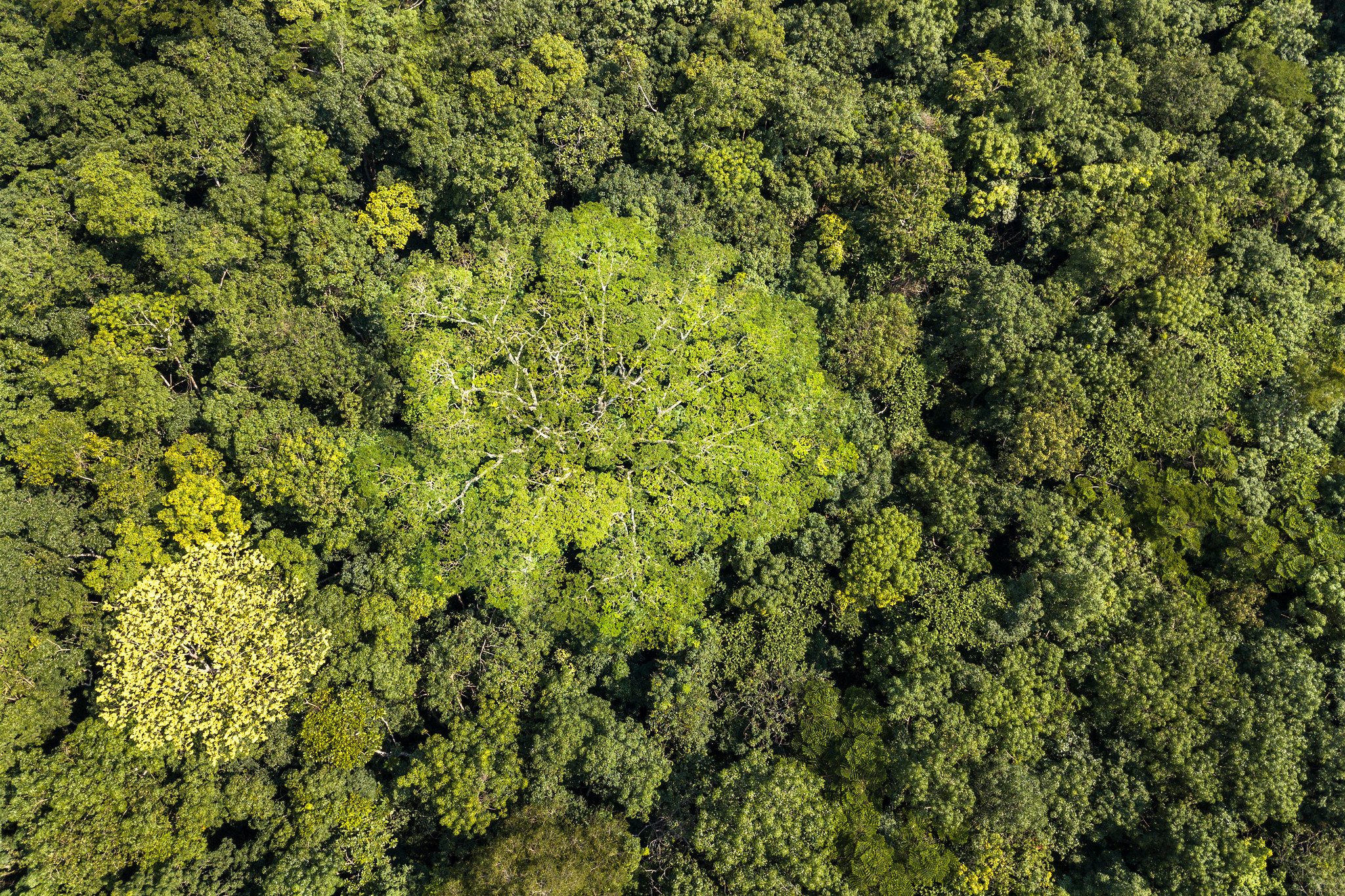
Aerial view of peatland vegetation in the Padang Sugihan Wildlife Reserve in Rambutan, South Sumatra, Indonesia. Healthy peatlands are essential for reducing fire risk and supporting regional efforts toward a Southeast Asia haze-free future. Photo by Faizal Abdul Aziz / CIFOR-ICRAF
Way forward
At the Bangkok event, leaders spoke openly about what comes next.
Cora van Oosten, CIFOR-ICRAF’s acting director-general, highlighted the end goal that can be achieved through teamwork: “All the effort has helped us craft a shared vision: one free of haze”.
Vong Sok, head of the Environment Division at the ASEAN Secretariat, stressed that long-term success depends on continued commitment: “Much has been achieved, but conservation of peatlands and haze elimination are ongoing priorities that require persistent effort.”
The successes of MAHFSA demonstrate the persistent power of partnership. Government agencies, private companies, local communities and international donor agencies have all played a part. The programme’s actions are now part of national plans and local activities. There are twelve IFAD-supported projects underway in Indonesia, Malaysia and Viet Nam, each one applying MAHFSA’s approach in a different way. The message is clear: Keep building skills, keep sharing experience and keep working together across borders.
Nevertheless, the region faces ongoing challenges. The climate continues to change, putting pressure on forests and peatlands. Demand for land for agriculture and oil palm remains high. Some communities still use fire to clear land because it is fast and cheap. Weak rules and limited resources can slow efforts to stop illegal burning. Yet, there is strong evidence that MAHFSA’s model works. When people have clear information, access to technology and support from their governments, they can reduce risks and protect their environment.
Preparing for the next phase of MAHFSA is now the main focus. This new phase will put the AIF-HFSLM into practice by turning it into real projects and finding new ways to fund them, so ultimately the Second Haze-Free Roadmap can be implemented. The ASEAN Secretariat will continue to lead and support efforts to keep countries working together, share lessons and link new ideas with proven approaches.
The story of MAHFSA is one of steady, practical progress; not a dramatic leap but a series of meaningful steps built on collaboration and commitment. Real solutions lie in joint action: Sharing data, building skills, funding tangible efforts, and sustaining public attention.
MAHFSA has shown that change is possible and, with better tools, open data and stronger partnerships, a haze-free future is getting closer.
By building on lessons learned and keeping all partners actively engaged, the region can continue moving forward with confidence, determination and a shared vision of clean air, healthy landscapes and safe communities.
Acknowledgements
This article was developed as part of the Measurable Action for Haze-Free Southeast Asia (MAHFSA) programme, a joint initiative between ASEAN and the International Fund for Agricultural Development (IFAD) that supports efforts to reduce transboundary haze pollution and its impact in Southeast Asia.