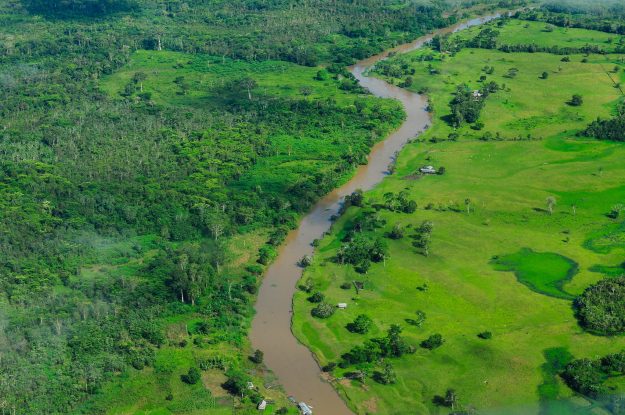
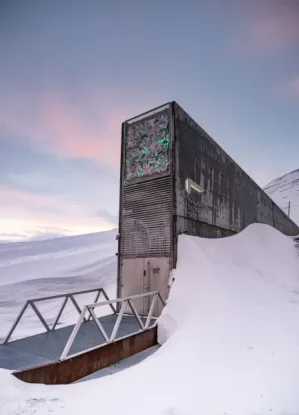


Drylands cover 41 percent of the planet’s land surface, support one-third of humanity and supply almost half of the world’s food. Yet despite their scale and importance, they remain largely absent from climate finance and environmental policy.
A new initiative aims to change that.
Rapid degradation of these fragile yet vital ecosystems not only threatens all the benefits made possible by drylands but also undermines all the possibilities they contain. By any measure, these landscapes — from savannahs, shrublands, semi-arid plains to agroforestry parklands that sprawl across continents — are basic to the foundation of global food and climate security.
Despite this, they are routinely missing from both the headlines and the funding streams that shape global environmental policy.
“It’s important to remember that these landscapes are dry, but they’re not to be seen as barren lands, as places where nothing can happen,” says Mieke Bourne, lead, stakeholder engagement with the Evidence Hub at Landscape Alliance, a global research and development organization that has spent years working across the world’s dryland regions.
“There are opportunities, and things are happening in dry areas. We need to speak to their potential.”
A new initiative, Thrivelands, aims to draw these threads together into a broad coalition that makes dryland restoration a driver of climate resilience, food security and livelihoods at scale, building on years of earlier drylands work by Landscape Alliance.
But those working across these landscapes are clear that a great deal of scientific and technical knowledge needed to act already exists. The tools – sustainable land management, agroforestry, value chain development built around what drylands actually produce – have been refined through decades of field research and community practice.
Terraced hillsides in Kitui County, Kenya, a dryland region where communities are adapting land management practices to improve soil and water conservation. Photo by Axel Fassio / Landscape Alliance
What has been missing is not knowledge but recognition. Dryland carbon is underground rather than overhead. Much of its biodiversity is found in the soil and among the animals that inhabit these landscapes. Its food production feeds billions of people who rarely appear in the narratives that drive investment. Drylands are rarely visible in the supply chains that drive conservation and restoration finance.
“As the nature agenda and the financing behind it begin to take off, my hope for Thrivelands is that we build the coalition and the momentum to do more than show what works – but to scale new models for managing these landscapes that are sustainable in every sense that matters,” says Salina Abraham, Landscape Alliance chief of staff and Thrivelands program lead.
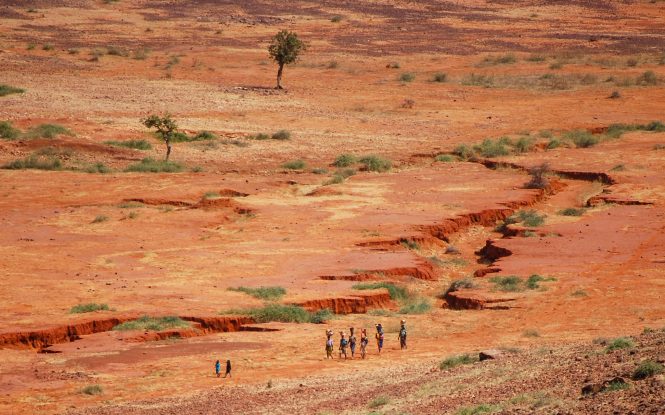
The cost of not doing so is mounting. Land degradation in drylands could cut global food production by 12 percent over the next 25 years. About 60 percent of carbon in dryland soils is released when those soils degrade. Warming in these regions is happening at twice the global average, driving water stress, biodiversity loss and livelihood collapse. Up to 700 million people face displacement by 2030.
The link between land degradation, conflict and migration, already visible across the Sahel, is expected to intensify.
Central to the dryland opportunity is something largely invisible to the naked eye: the carbon stored in the soil beneath them. Dryland soils hold 646 petagrams of organic carbon, or about 32 percent of global soil organic carbon pool, researchers say. But that vast reservoir is fragile. When degradation occurs, the carbon doesn’t stay in the ground.
Landscape Alliance’s Land and Soil Health Laboratory is working to map this resource in very fine detail, combining state-of-the-art soil spectroscopy analysis with satellite remote sensing to produce predictive maps showing carbon stocks, soil health and restoration needs across large landscapes. To ensure consistency and reliability, soil samples are collected using Landscape Alliance’s acclaimed Land Degradation Surveillance Framework methodology.
The data has begun attracting wide attention, including interest from private investors, long concerned about measurement and verification, opening potential new channels to link sustainable drylands to corporate key performance indicators and real returns.
Across West Africa, restoration is being pursued through one of the region’s most commercially significant dryland trees. The shea tree, source of the butter used in cosmetics, food manufacturing and traditional medicine, grows naturally across the dry savannah belt from Senegal to Ethiopia. An estimated 16 million women across 21 African countries depend on it for their livelihoods.
Landscape Alliance has a substantial and long-running body of work supporting the shea industry, spanning scientific research, policy advocacy, value chain development and parkland restoration.
That work reveals how shea parklands are under pressure. Research has found that restoring plant diversity in shea landscapes increases pollinator numbers and shea yields – a finding adopted into biodiversity guidelines by the Global Shea Alliance, which represents 500 member organizations across the food and cosmetics industries and collaborates with Landscape Alliance on projects. Regreening Africa is also supporting these areas with on-the-ground restoration and enabling governance conditions.
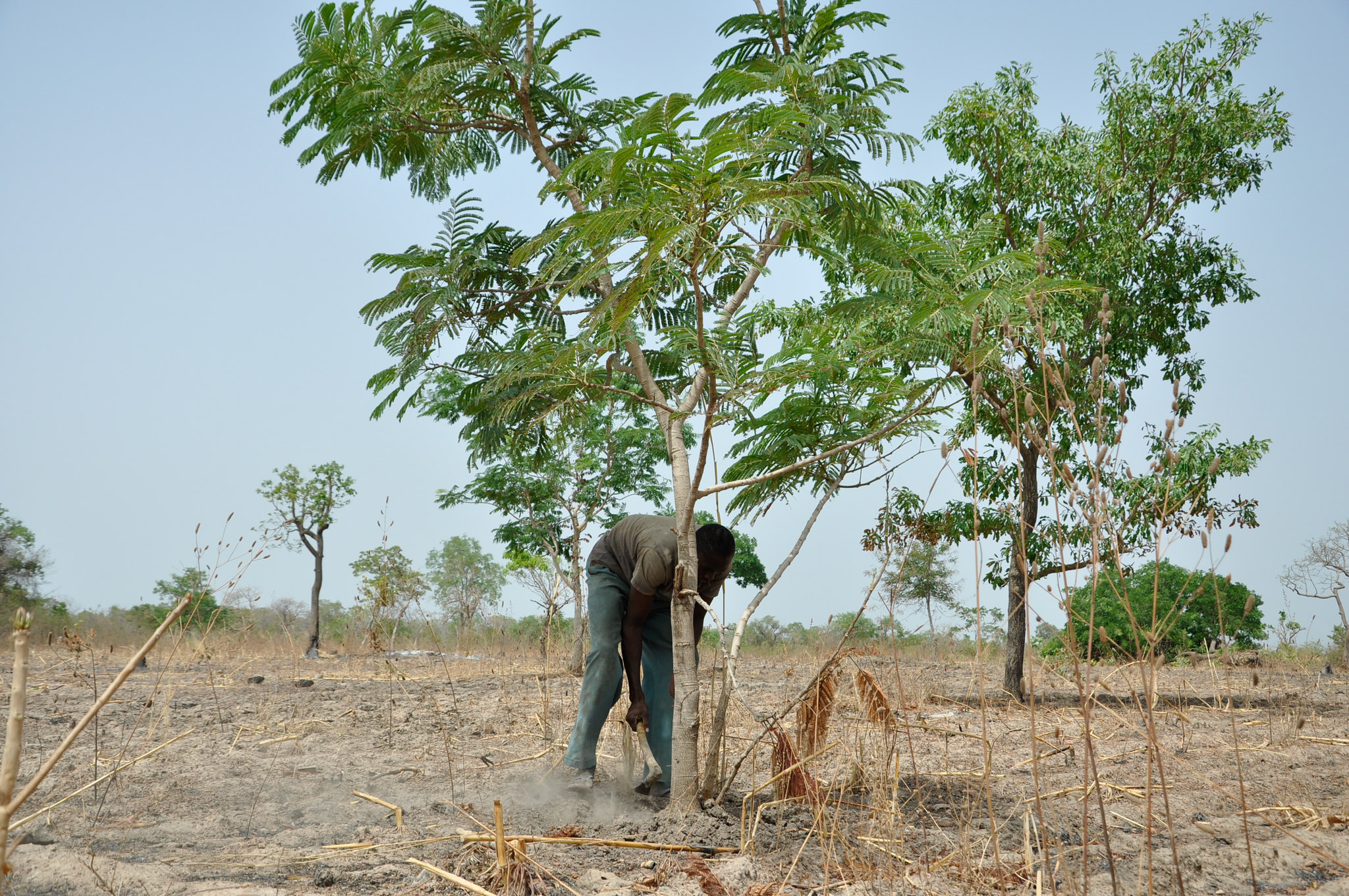
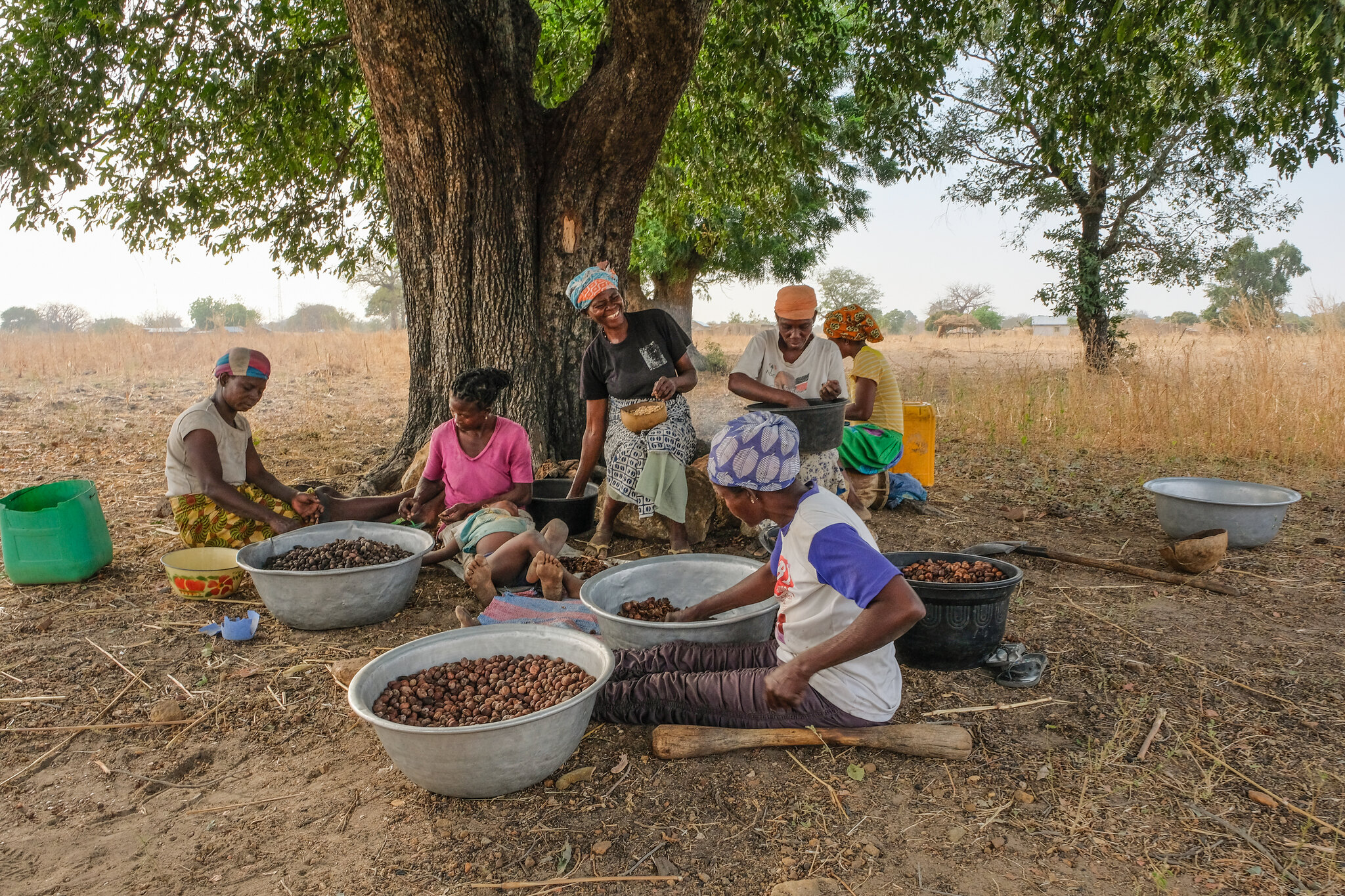
The Ghana Shea Landscape Emission Reductions Project, supported by Landscape Alliance in partnership with Ghana’s Forestry Commission and the United Nations Development Program (UNDP), empowers women as the primary stakeholders in the shea value chain.
The flagship USD 54.5 million Green Climate Fund project aims to promote protection and restoration through the planting of high-performing shea genetic material and other indigenous species to boost biodiversity; strengthening women’s cooperative organizations to attract private investment; and leveraging local processing infrastructure through improved cookstoves and warehouses to increase capacity and incomes.
One of the most striking dryland innovations concerns a plant most farmers consider a weed. Calotropis procera, a research subject for the Landscape Alliance, thrives in some of Africa’s most arid zones. In parts of the Sahel, it is the only plant that survives at all.
It has long been used for firewood and folk medicine, but analysis has shown that fibre from its mature fruit has silk-like qualities and may be suitable for textile manufacturing, giving it potential as a cash crop.
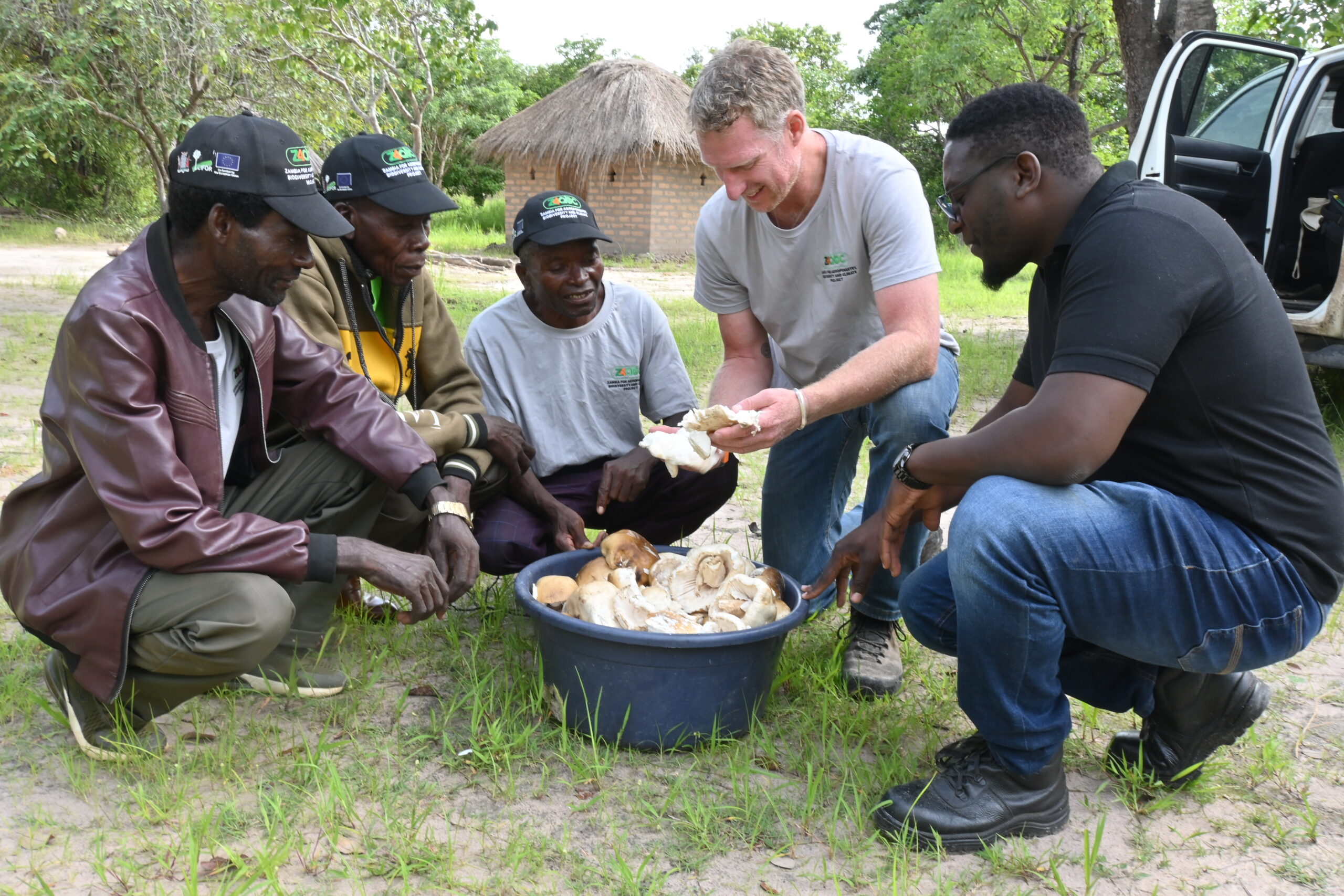
In southern Africa, the Landscape Alliance’s Zambia for agroforestry, biodiversity and climate (Z4ABC) project is working across Zambia’s Lower Zambezi-Luangwa-Nyika corridor, aiming to support climate-smart transformation of agriculture and food systems while helping the country meet its emissions reduction targets.
One of the project’s more inventive threads involves mushrooms. Researchers documenting the rich fungal diversity of Zambia’s Miombo woodlands are building nature-based value chains that could connect forest communities to international markets, creating new livelihood opportunities linked to biodiversity.
In India, Landscape Alliance is working with partners to support greater development of organically grown cotton in some of the country’s driest farming landscapes. That includes developing regenerative agroforestry-based cotton production built on four pillars: economic viability, ecological sustainability, ecological corridor restoration and farmer empowerment.
The project, Regenerative agriculture with cotton-based agroforestry, seeks to develop cotton-based agroforestry systems to enhance economic, ecological, and nutritional outcomes.
Dryland communities have managed these landscapes sustainably for centuries, accumulating knowledge about risk, variability and resilience that formal science is only now beginning to fully appreciate. The question is whether the world’s policy frameworks and financial systems can catch up and start treating these landscapes not as dry margins, but as the vital, productive, carbon-rich ecosystems they actually are.
“We need to speak to their potential,” says Bourne.
Given everything these landscapes quietly hold, that conversation is long overdue.