

EDITOR’S NOTE: This article was written by Ewa Hermanowicz, Senior Regional Communications Manager, Europe, on behalf of FSC International.
Forests, while subject to the impacts of climate change, can both adapt to and mitigate climate change. Growing evidence shows that these functions are strengthened by maintaining healthy, biodiverse forest ecosystems.
While specific management choices can involve trade-offs at particular scales or time horizons, sustainable forest management and biodiversity conservation are often complementary objectives that reinforce forest resilience, long-term productivity and climate outcomes.
Climate change disrupts habitats and ecosystems, while at the same time biodiversity loss accelerates climate change and worsens its impacts. Forest sustainability and increased biodiversity go hand in hand because biodiversity enables forests to adapt and survive[1], while long-lived, stable forests support more biodiversity. An effective response to the climate crisis requires both mitigation and biodiversity conservation.
As they grow, trees absorb carbon dioxide and store carbon in their wood, leaves and roots. This makes trees a carbon sink, removing carbon dioxide from the atmosphere. However, burning wood to generate electricity or heat, often touted as renewable energy, releases most of that carbon dioxide back into the atmosphere. This undermines overall efforts to reduce greenhouse gas emissions (GHGs). Plantations of fast-growing “renewable” trees also reduce the capacity of forests as a whole to act as carbon sinks. In fact, according to the Intergovernmental Panel on Climate Change (IPCC), reducing forest loss is one of the most effective options for reducing GHG emissions. Restoring existing degraded forests adds the benefits of biodiversity conservation to the balance sheet.[2]
As one recent study concluded:[3]
A long history of forest management focusing on homogeneous, fast-growing timber species has replaced the European Union’s resilient natural forests with planted forests that are highly susceptible to drought, beetle kill, fire and windthrow. Native and naturalized forests are cooler, wetter and more carbon-dense than planted forests. Re-naturalizing forests is not just a priority for mitigating the impacts of climate and biodiversity collapse, but is necessary to reinstall the “ecological infrastructure” that can protect communities from the impacts of climate change.
Conservation matters
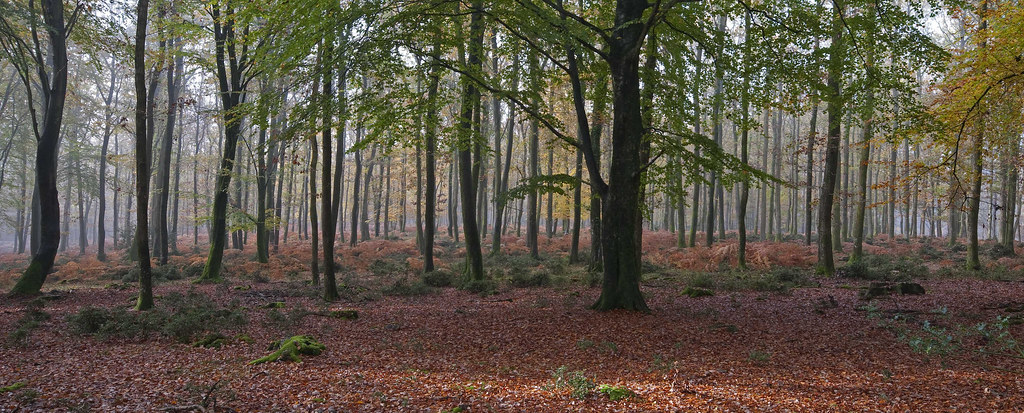
FSC’s National Forest Stewardship Standards encourage protecting and restoring ecosystems by attaching great importance to High Conservation Value in its principles. In addition, at least 10% of the area of any FSC-certified forest should have conservation as its main objective. In developing Standards, FSC is guided by scientific research. For example, projects such as SUPERB[4] are uncovering the optimal balance of forest management and biodiversity. One important insight to emerge from several such studies is that more diverse forests, in terms of tree species, age structure, genetic diversity within each species and associated biodiversity, are more resilient to shocks associated with climate change. That makes them more likely to survive and continue acting as carbon sinks to mitigate the effects of climate change.
Monocultures of fast-growing species, often genetically identical clones of highly productive individuals, can pose problems for biodiversity and long-term sustainability, even more so if they are of non-native species. Such monocultures may nevertheless be needed to supply society’s demand for timber, especially the wood pulp needed as a raw material for many paper products. However, these plantations may require fertilizers and pesticides that have negative impacts, alongside the difficulties that monocultures pose for biodiversity. Local communities that use diverse forests as a source of food, fuelwood and pharmaceuticals may also not benefit from monocultures.[5]
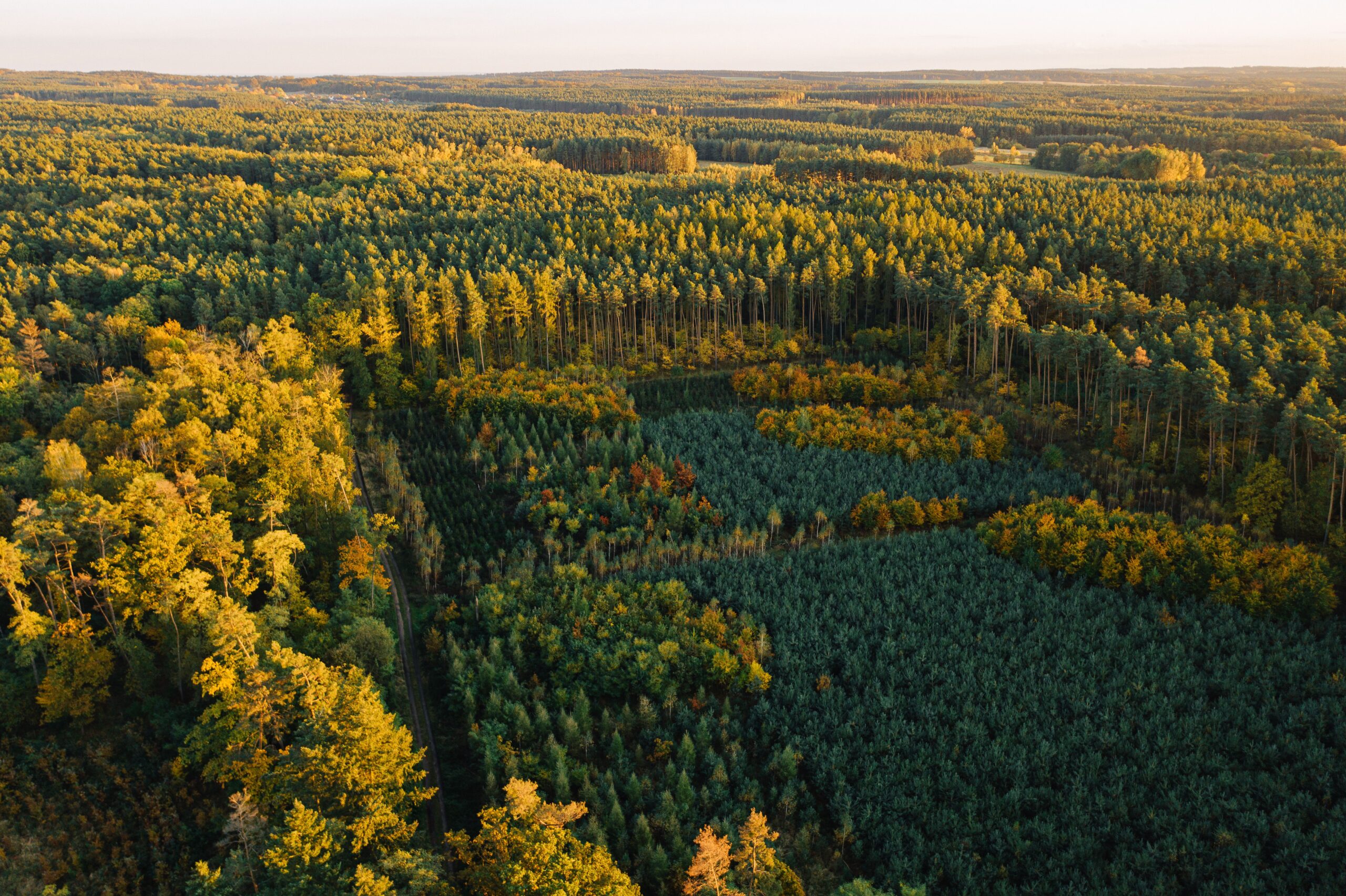
In response, FSC standards include a number of safeguards to minimize harmful practices, and many certified companies support set-asides in natural forests, which contribute to biodiversity and conservation. Still, more could be done. Smaller plot sizes and clear-cuts in plantations would be helpful, as would introducing more genetic diversity, even though plots would remain essentially monocultures.
Biodiversity, including tree species diversity and the genetic diversity within species, helps spread risk and gives forests more opportunities to adapt to threats posed by a changing climate. Embracing this approach to minimizing risk will require a shift in mindset away from short-term economic gain that largely ignores externalities.
Not for burning
Although monocultures of wood for burning are a bad idea for renewable energy, getting rid of existing healthy forests to install wind turbines or solar energy may be even worse.[6] Solar energy can undoubtedly reduce greenhouse gas emissions, but diverse forests do so much more when managed sensibly, as FSC encourages. A better option is to leave forests intact and use abandoned agricultural land for wind and solar, bearing in mind that agricultural land will usually be closer to where the energy is needed, further reducing the environmental degradation associated with road building and energy transmission.[7]
The sector in which sustainable timber production can contribute most is as a replacement building material.[8] New techniques are allowing wood-based materials from sustainable sources to substitute for concrete, steel and other conventional building materials. This offers two benefits. The substitute materials emit fewer GHGs during production than conventional alternatives and store carbon for long periods in their structure.[9]
If wood were used for only half of the anticipated new buildings needed by 2050, that would reduce emissions by 70% and at the same time lock away carbon equivalent to the emissions of conventional materials.[10] A bonus is that wooden buildings can support creativity and productivity, connect people with nature and enhance human health and well-being. FSC promotes the benefits of substitute materials by certifying compliant buildings.
Better policies
Management of forests in Nordic countries and elsewhere can certainly be amended to enhance their potential to mitigate climate change. At the same time, it will be impossible to restore and conserve natural ecosystems without a strong commitment to reducing the use of fossil fuels, a crucial goal to which well-functioning forests can make a valuable contribution.
Currently, however, government policy in Europe and elsewhere favours burning biomass for electricity and heat. A recent study, which calculated the reduced carbon sink and increased GHG emissions of wood burning, urges policymakers to recognize that forest biomass should not count towards renewable energy targets. A better approach, the study says, is to reduce subsidies for wood burning and focus on forest management that prioritises biodiversity and carbon sequestration.
[1] Resilience of Amazon forests emerges from plant trait diversity | Nature Climate Change; Effect of diversity on growth, mortality, and loss of resilience to extreme climate events in a tropical planted forest experiment | Scientific Reports
[2] Chapter 7: Agriculture, Forestry, and Other Land Uses | AFOLU
[3] Burning Up the Carbon Sink: How the EU’s Forest Biomass Policy Undermines Climate Mitigation – Booth – 2025 – GCB Bioenergy | Wiley Online Library
[4] SUPERB: Upscaling Forest Restoration | SUPERB
[5] The economic importance of non-timber forest products (NTFPs) for livelihood maintenance of rural West African communities: A case study from northern Benin | ScienceDirect and Non-wood forest products in Europe – A quantitative overview | ScienceDirect
[6]Converting Forests to Solar Facilities: Causes, Potential, and Implications
[7]Potential of Abandoned Agricultural Lands for New Photovoltaic Installations
[8] Wood works: How timber construction can help heal the climate | IIASA
[9]RESTORE | Home
[10]The Outlook for the UNECE Forest Sector in a Changing Climate
REFERENCES
- Booth, M. S., & Giuntoli, J. (2025). Burning Up the Carbon Sink: How the EU’s Forest Biomass Policy Undermines Climate Mitigation. Global Change Biology Bioenergy.
- Churkina, G., Organschi, A., Reyer, C., Ruff, A., Vinke, K., Liu, Z., . . . Schellnhuber, H. (2020). Buildings as a global carbon sink. Nature Sustainability, 3, 269–276.
- Heubach, K., Wittig, R., Nuppenau, E.-A., & Hahn, K. (2011). The economic importance of non-timber forest products (NTFPs) for livelihood maintenance of rural West African communities: A case study from northern Benin. Ecological Economics, 70(11), 1991-2001.
- Horizon 2020 Research and Innovation Programme under the EU Green Deal. (2024). SUPERB: Upscaling Forest Restoration.
- Hutchison, C., Gravel, D., Guichard, F., & Potvin, C. (2018). Effect of diversity on growth, mortality, and loss of resilience to extreme climate events in a tropical planted forest experiment. Scientific Reports, 8, 15443.
- IIASA – International Institute for Applied Systems Analysis. (2025). Wood works: How timber construction can help heal the climate.
- Lovrić, M., Da Re, R., Vidale, E., Prokofieva, I., Wong, J., . . . Pettenella, D., Mavsar, R. (2020). Non-wood forest products in Europe – A quantitative overview. Forest Policy and Economics, 116, 102175.
- RESTORE Project Consortium. (2022). Sustainable Remanufacturing Solution.
- Ronchetti, G., & Aiello, M. (2025). Potential of Abandoned Agricultural Lands for New Photovoltaic Installations. Sustainability, 17(2), 694.
- Sakschewski, B., von Bloh, W., Boit, A., Poorter, L., Peña-Claros, M., Heinke, J., . . . Thonicke, K. (2016). Resilience of Amazon forests emerges from plant trait diversity. Nature Climate Change, 6, 1032–1036.
- UNECE and FAO. (2022). The Outlook for the UNECE Forest Sector in a Changing Climate: A Contribution to the Forest Sector Outlook Study 2020–2040. United Nations.
- Wear, D. N., Wingenroth, J., & Bartuska, A. (2025). Converting Forests to Solar Facilities: Causes, Potential, and Implications. Resources for the Future.