

In 1982, Usman Saibul and his friend Jerry were working for the Indonesian government’s transmigration programme in Ketapang, West Kalimantan, when they saw a hunter shoot an orangutan mother — and the baby clinging onto her — out of a tree.
The animals fell to the forest floor, still holding tight to each other. As the mother lay dying, she reached for a leaf, pressed her milk onto it and placed it beside her baby.
“It was as if she was saying: even though I die, I leave you what you need to live,” Usman recalls. “And she died.”
The baby was taken away, and the mother’s body eaten by the hunters. The moment stayed with Usman. “I felt very sorry, very sad,” he says. “How could that person have the heart to kill the mother, to take her baby?”
Later, when he’d finished the logging contract and returned to his village in Kapuas Hulu, he received a letter from Jerry. “Apparently, when the hunter shot the orangutan, his wife was at home pregnant,” he describes. “When she gave birth, the baby looked quite similar to the orangutan’s baby! We said it was the curse from the orangutan.”
Usman has told that story many times since, for a very specific purpose: to persuade people in the Malay community in which he lives to protect orangutans. And the evidence suggests that this kind of storytelling is working in the animals’ favour.
What the nest counts couldn’t explain
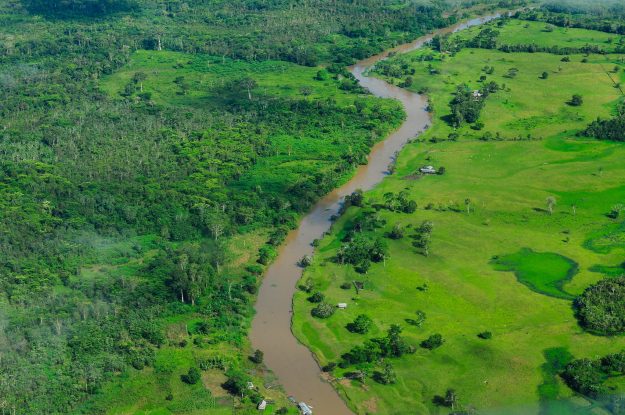
When researchers from the Center for International Forestry Research and World Agroforestry (CIFOR-ICRAF) and local NGO Riak Bumi began surveying Bornean orangutan [Pongo pygmaeus pygmaeus] populations in Kapuas Hulu, West Kalimantan, in the early 2010s, they came across something “rather strange”, says CIFOR-ICRAF scientist Linda Yuliani.
Two forest areas, both in good condition by standard measures, showed dramatically different results. One had high densities of orangutan nests (the proxy the scientists used to determine population sizes for the notoriously elusive animals). The other had none.
The biologists on the team were befuddled. But their anthropologist colleagues had a hypothesis. “They told us that in the forest with a lot of orangutan nests — in the Iban Dayak [local Indigenous group] area — there was a strong traditional knowledge system applied by the local communities,” says Yuliani.
“They have a number of very well-known stories that encourage people to protect the animals, and support strong norms and taboos about not disturbing orangutans.”
A Bornean orangutan among the foliage. Photo by Terry Sunderland / CIFOR-ICRAF
Tales with teeth
Usman’s eye-witness account of human cruelty — and animal kindness — is one such story. Others are much older.
Iban Dayak community member Dami recalled a story passed down from her grandfather about an old man in their family line called Baring, who was reincarnated as an orangutan after he died — and then left strict instructions for those who came after him.
“He said: My grandchildren, great-grandchildren and their descendants are forbidden to eat or kill orangutans,” she recounts. Today, the elders in the Iban Dayak community make sure to pass on that mandate to their own descendants, and urge them to do so into the future.
That theme — respected elders being reincarnated as orangutans — comes up regularly in Iban Dayak stories, said Heri Valentinus, founder and executive director of Riak Bumi. Another common theme is that orangutans protected their ancestors during inter-ethnic wars about 100 years ago.
There’s also a popular tale that a family found an infant orangutan in the forest, took it home and raised it together with their son. “Once, when their son was swimming in the river, he was taken by a crocodile,” said Yuliani. “The orangutan ran after the crocodile, hit it and rescued the son.”
These tales carry legal weight. The communities have formalized protection through customary sanctions and, in some cases, contracts. “We have signed an agreement that anyone who shoots an orangutan will be punished, or subject to customary law,” says Rado, an Iban community member.
Stasiana, another community member, is equally direct: “Our people cannot kill, catch or sell orangutans. If they violate this rule, the Iban people believe they will be cursed and punished.”
These protections also extend to some elements of the orangutans’ habitat. “There are rambutan trees on the lake here, and people call them ‘rambutan mayas’ [the orangutan’s rambutan],” says Stasiana. “We can harvest the fruit, but we are not allowed to cut the trees.”
Rado explains how such generosity works both ways: “Fruit seeds thrown by humans would only grow around here,” he says, gesturing toward the settlement. “But if orangutans eat them, the seeds spread much further, and they help to regenerate the forest.”
Strengthening stories, supporting livelihoods
Yuliani and her colleagues published their research on the topic back in 2018. But, somehow, the stories of these orangutans — and their human neighbours — stayed with them long after the paper was done.
The team knew that this kind of knowledge had already been lost in many parts of West Kalimantan, and that this area could well be next: Yuliani says research participants mentioned time and again that “more and more young people and children are not aware of these stories, because they move to town for school or for work. We also heard them say: for the young people, we need to provide evidence that protecting orangutans also brings benefits for us.”
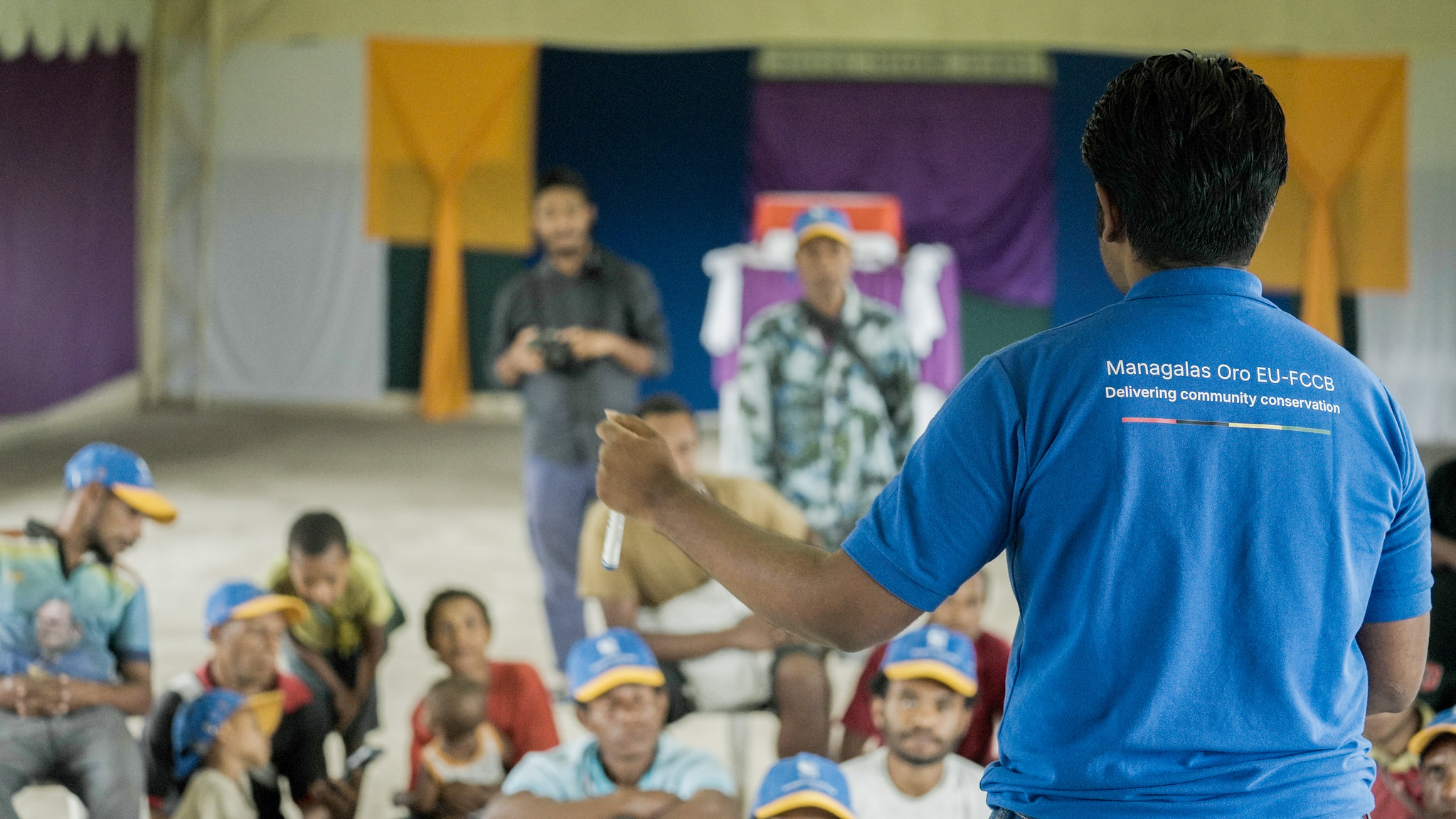
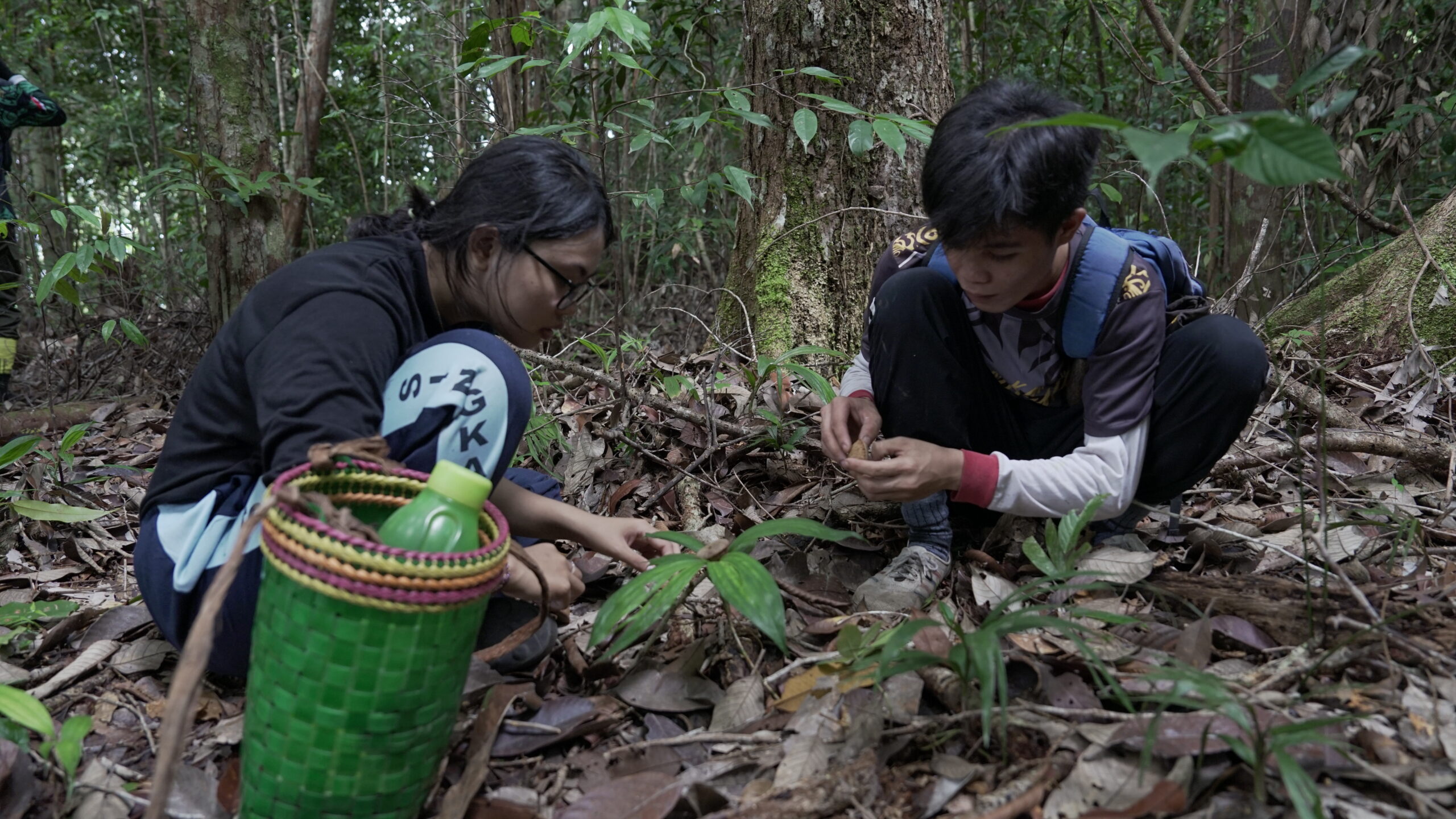
So, with funding from the Darwin Initiative, the team worked with community members from 2022 to 2025 to revive and strengthen the stories through awareness programmes, storytelling and videos.
Alongside that, they supported communities with tangible development benefits. They installed self-maintained micro-hydro power units and clean water systems, and trained women to produce and market forest products, such as jam from the local variety of mango, and natural dyes for clothing. They also helped to rehabilitate degraded land, creating corridors that support wildlife like orangutans to move between small patches of forest.
At this point, the intervention had proven successful and scalable. The team submitted a proposal to expand it to the remaining communities, but despite a positive reviewer recommendation, the application went unfunded when the donor’s budget ran out. In one intact forest area shared by four neighbouring hamlets, two have micro-hydro systems, and two don’t. “They say: we are also protecting orangutans — when do we get micro-hydro power like the others?”
Protection embedded in place
The Bornean orangutan is classified as Critically Endangered by the IUCN, with habitat loss and hunting being the primary threats. Conservation strategies have increasingly recognized the importance of community engagement — but that’s often understood in instrumental terms: local people as rangers, or as beneficiaries of payments for ecosystem services.
What this research suggests is something more durable. The protection here predates the project by generations. “It’s something that already exists among the communities,” says Yuliani. “We are helping to revive and strengthen it.”
Stasiana puts it more simply. “Just let [the orangutans] do what they want,” she says. “We share the same home.”
For more information on this project, please contact Linda Yuliani: [email protected]