


The world is losing its forests faster than it can save them, with severe consequences for the climate, biodiversity and over one billion people who depend on forests for their livelihoods, according to the United Nations’ latest Global Forest Goals Report 2026.
Although many countries have expanded forest restoration efforts, strengthened governance frameworks, and improved monitoring systems, progress remains critically insufficient to halt deforestation, lift forest-dependent communities out of poverty, and meet the UN Sustainable Development Goals (SDGs) by 2030.
“We know what to do. We need to act on the information and knowledge we have. But do we have the will to act?” said Éliane Ubalijoro, chief executive officer of Landscape Alliance, the new operating name of the Center for International Forestry Research and World Agroforestry (CIFOR & ICRAF).
That question runs through the report, which finds that existing tools, policies and institutions have yet to deliver change at the scale required.
“The report makes clear that the tools, the knowledge and the policy frameworks exist to save forests,” said Terry Sunderland, a co-author of the report, professor in the Faculty of Forestry at the University of British Columbia, and senior associate with Landscape Alliance.
“Yet we continue to underestimate the value of forests – for economies, for societies and for our long-term well-being,” said Sunderland. “More innovative financing, stronger institutions and cross-sectoral cooperation are essential to meet the goals.”
The world lost more than 40 million hectares of forest, an area slightly larger than Germany or Japan, between 2015 and 2025, according to the report. Sixteen million hectares were primary forests, which are particularly important for biodiversity and climate regulation.
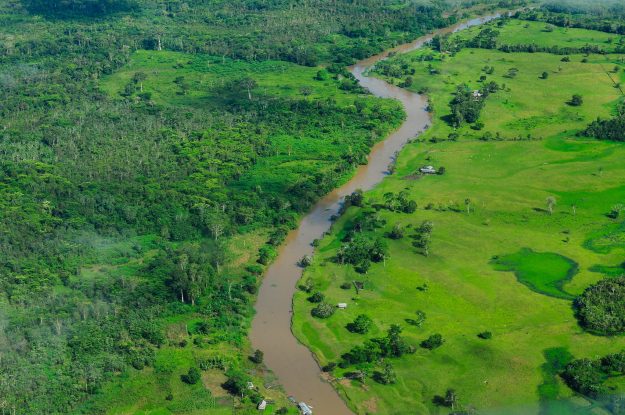
A transition forest area in Bokito, Cameroon. Photo by Mokhamad Edliadi / Landscape Alliance
Agricultural expansion remains the largest cause of deforestation globally, particularly industrial-scale agriculture and commodity production. Road construction, land-use change and forest degradation compound the pressure, as do climate-related threats such as wildfires, pests and illegal logging.
The financial response is inadequate. Global spending on sustainable forest management reached USD 84 billion in 2023 – dramatically short of the estimated USD 300 billion needed each year.
“That gap shows that forests are still undervalued compared with the benefits they provide. It’s really critical that we understand that carbon storage, biodiversity, water, food security, job resilience and cultural values need to be valued more than they are today,” said Éliane Ubalijoro.
The report shows the problem is not only the size of the funding gap, but where the money flows, added Ubalijoro. “Finance is not reaching the places and people who need it the most. We need more finance but also better finance – longer term, accessible, locally grounded; designed to reward the protection and restoration of forests.”
Governments must show greater commitment to forest protection and restoration by treating forests as a form of ‘natural infrastructure’ that matters to finance, health, agriculture and economic development portfolios as well as environment ministries, said Ubalijoro.
“Healthy forests reduce disaster risks, protect watersheds, support agriculture, sustain rural livelihoods, and contribute to meeting climate commitments,” said Ubalijoro. “This means forest finance should not only apply to environment (ministry) budgets – it should be part of climate finance, food-system investment, infrastructure spending, health and biodiversity.”
Strong governance structures combined with measurable, verifiable project data could also help unlock private sector financing for forest protection, she added.
The rewards for conserving forests must become greater than the payouts for degrading and destroying these landscapes – a shift in attitude and financing that has been urged time and again, said Claude Garcia, professor of International Forest Management at the Bern University of Applied Sciences.
Change is possible, he added: the Tropical Forest Forever Facility (TFFF), launched by Brazil at the 30th Conference of the Parties to the UNFCCC (COP30) in 2025, has secured USD 6.7 billion in sponsor capital and offers a model incentive mechanism for funding forest protection.
“It is actually possible to drive forest transition, for governments to apply regulations and turn the tide (against deforestation). We know it works. It’s a question, really, of decisions by governments. So why aren’t the governments doing this?” said Garcia.
Additionally, to truly succeed over the long term, active participation from local stakeholders and communities in developing policy, regulations, and protection activities suited to local conditions is essential, he said.
“Decisions must be designed for forest management across scales,” he said. “That’s what is missing.”
The urgency of action and the high cost of failure are clear in the increasing climate risks documented in the UN report, said Sunderland.
“We’re heading towards a massive tipping point, where forests like the Amazon and the Congo Basin will become carbon sources rather than carbon sinks,” he said. “It’s already being seen. We need to restore responsibility and protect the forests we have.”
That warning is particularly alarming, given forests’ central role in the global climate system and in achieving virtually every one of the 17 UN SDGs – from ending hunger and poverty to securing clean water, clean energy, and decent livelihoods for well over a billion people.
The report, based on submissions from 48 countries covering half the world’s forests, identified two targets within the Global Forest Goals as critically off track: reversing forest loss and eradicating extreme poverty for forest-dependent people.
Tropical forest canopy in the Yangambi Engagement Landscape, Democratic Republic of the Congo. Photo by Axel Fassio / Landscape Alliance
Many countries also acknowledged that weak market access and limited opportunities for value-added processing and commercialization, especially for non-wood timber products, prevent forest-dependent people from enjoying the economic and social benefits of forests.
Of the 26 Global Forest Goals established under the United Nations Strategic Plan for Forests 2017–2030, seven targets related to governance were ‘broadly met’ and 17 targets were partially achieved, the report noted.
The report urged for greater action on multiple fronts: halting deforestation and reversing forest loss; eradicating poverty for forest-dependent people by improving access to markets, financial resources and technical skills; closing the finance gap through innovative sources of finance; strengthening forest governance and law enforcement; combating illegal logging; expanding restoration and resilience-building; improving market access and land tenure security for forest-dependent communities.
The solutions are clear. What remains uncertain is whether governments, financial institutions, and the private sector will act with the speed and scale that the crisis demands, said Ubalijoro.
About Landscape Alliance
Landscape Alliance transforms science into action, unlocking the power of trees, forests and agroforestry landscapes to advance planetary health and human well-being.
Landscape Alliance is the operating name of the Center for International Forestry Research (CIFOR) and the International Centre for Research on Agroforestry (ICRAF). CIFOR and ICRAF are independent International Organizations and CGIAR Research Centers.