

For decades, global conservation efforts focused on establishing Protected Natural Areas (PNAs) under strict protection models. In many cases, these initiatives moved forward without the full participation of the people living in these territories, repeating long-standing patterns of marginalization and sparking conflicts. Today, however, this approach is beginning to shift.
The Conservation Dialogues, launched in four Andean-Amazonian countries, seek to help drive that change. A growing body of research shows that conservation efforts yield better results when they meaningfully include local communities and are grounded in collaborative governance. Within this shift, rights-based approaches are gaining momentum, recognizing that lasting sustainability must also be rooted in environmental justice.
This approach extends beyond broader debates on sustainable development governance. The Kunming-Montreal Global Biodiversity Framework (KM-GBF) also reflects the need for a paradigm shift. Target 22 explicitly acknowledges the rights of Indigenous Peoples, local communities and Afro-descendant Peoples in conservation processes, promoting their full, equitable, effective and informed participation in decision-making. It also calls for respect for traditional knowledge systems, gender equity and fair access to the benefits derived from conservation.
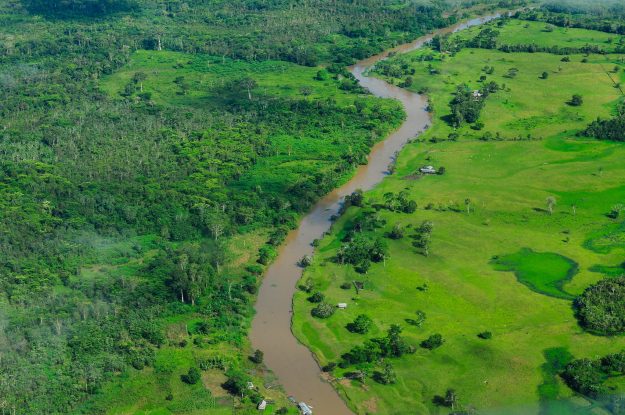
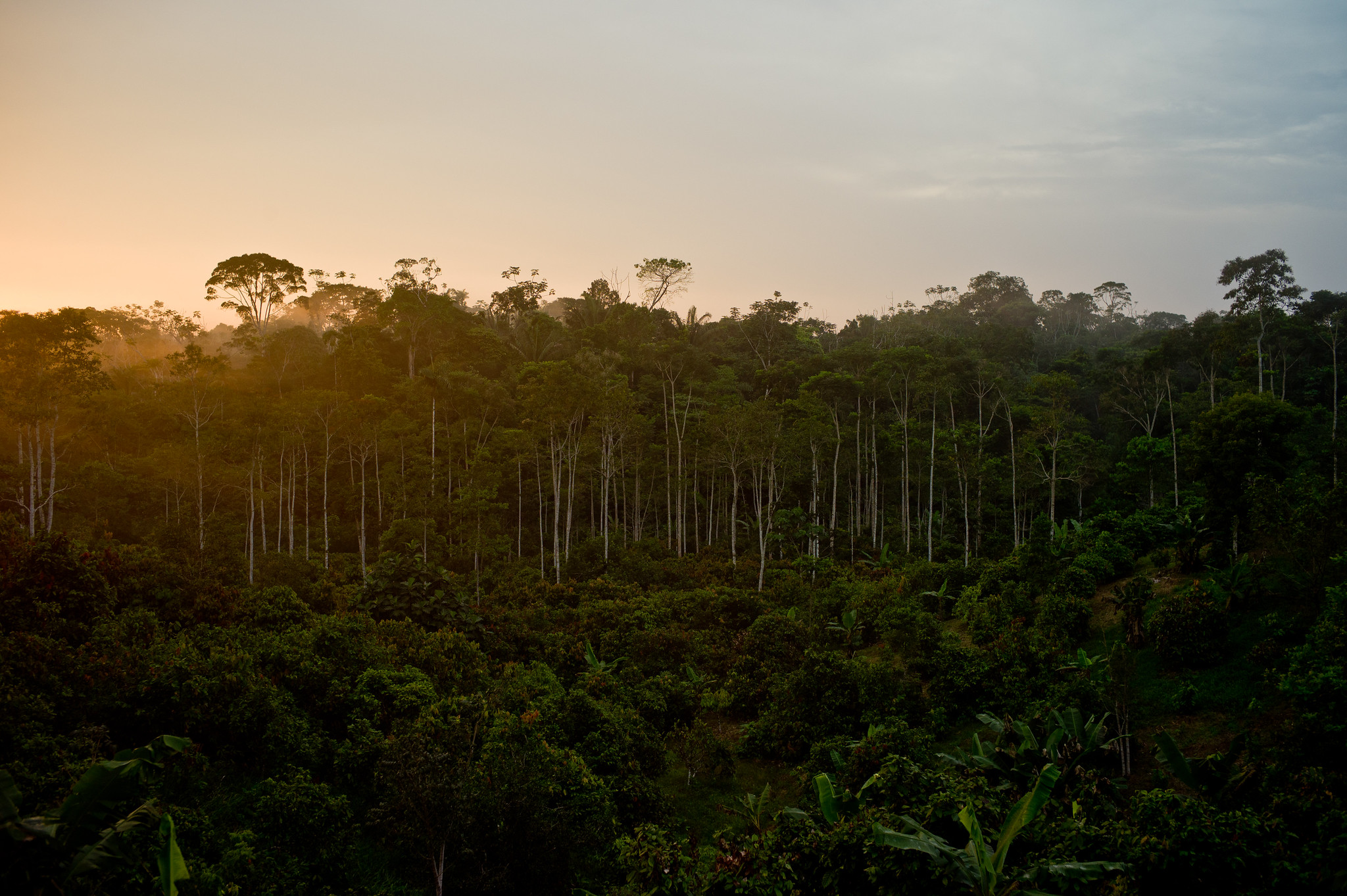
Aerial view of a local community near a protected natural area in the Peruvian Amazon. Photo by Marlon del Águila / CIFOR-ICRAF and GLF.
Signatory countries to the Convention on Biological Diversity (CBD) must therefore ensure that KM-GBF implementation is anchored in internationally recognized human rights, including the United Nations Declaration on the Rights of Indigenous Peoples. The call is not only to “do no harm”— conservation efforts must actively promote community rights, transform PNA governance, and foster more inclusive and relevant models.
“The adoption of the KM-GBF and the commitment to Target 22 offer a valuable framework to move toward more just governance models, where the rights of people and nature are at the center,” explains Rocío Vasquez, senior associate researcher at the Center for International Forestry Research and World Agroforestry (CIFOR-ICRAF).
The Conservation Dialogues, led by CIFOR-ICRAF in collaboration with the Climate and Land Use Alliance (CLUA) and the Gordon & Betty Moore Foundation, were launched in 2024 as an initiative to support Andean-Amazonian countries in implementing their national targets through rights-based governance. These dialogue spaces have promoted knowledge exchange and the participatory development of national roadmaps to guide more effective and equitable conservation actions.
“The Conservation Dialogues in Bolivia, Colombia, Ecuador, and Peru are part of a broader process to rethink the direction of conservation in Latin America,” says Juan Pablo Sarmiento Barletti, CIFOR-ICRAF scientist and team lead for this research initiative.
The adoption of the KM-GBF and the commitment to Target 22 offer a valuable framework to move toward […] where the rights of people and nature are placed at the centre”
Progress and challenges in the Andean-Amazon region
Since 2021, countries have begun updating their National Biodiversity Strategies and Action Plans (NBSAPs), the main instrument required by the CBD to implement the KM-GBF.
Preliminary analysis reveals differing levels of progress across the four countries involved in the Conservation Dialogues. In Peru, the National Biodiversity Strategy to 2050 has already been approved and its Action Plan to 2030 is currently under public consultation. This participatory document sets concrete objectives and actions to strengthen governance through a rights-based approach, explicitly linking KM-GBF Target 22 with national Target 28.
In Colombia, the 2030 Biodiversity Action Plan was approved in 2024 following an extensive participatory process that included regional dialogues and the design of a territorial governance system. A noteworthy national target, Target 5, focuses exclusively on governance by promoting participatory mechanisms with a differential approach and integrating conservation practices in Indigenous, Afro-Colombian and peasant territories.
Ecuador has yet to update its 2015–2030 National Biodiversity Strategy. However, in recent years, participatory assessments have sought to identify gaps and opportunities for improvement, including recognition of the rights of nature, multi-level governance and gender equity.
Bolivia continue to implement its 2019–2030 Plurinational Biodiversity Strategy and has begun a process to update it for 2025–2030. This process aims to consolidate previous lessons and incorporate elements of the KM-GBF, though the updated framework has not yet been formally approved.
The contribution of the Dialogues
In this diverse context, the Conservation Dialogues have created unique spaces for engagement in Bolivia, Colombia, Ecuador and Peru. Between 2024 and 2025, eight national dialogues
– two in each country – brought together 240 participants from a wide range of sectors, including government agencies, civil society, academia, the private sector and representative organizations of Indigenous Peoples, local communities and Afro-descendant Peoples.
These meetings have served as platforms to assess the current state of conservation governance, identify areas for improvement and collaboratively develop national roadmaps to guide concrete actions toward rights-based conservation. These roadmaps will be presented by the end of the year.
“Across the dialogues held in the four countries, several common elements emerged around a shared vision for rights-based governance — understood as the set of aspirations, expectations, and principles guiding the relationship between society, the state, and the territory,” explains Vania Martinez, senior associate researcher on Rights, Governance and Equity at CIFOR-ICRAF.
Shared priorities for advancing rights-based conservation governance
The second round of dialogues identified several key elements that could help strengthen rights-based conservation across the region.
- 1. Rights as a starting point
Participants emphasized that the rights of Indigenous Peoples, local communities, Afro-descendant Peoples and nature itself must form the foundation of any conservation action. Although countries have developed legal frameworks recognizing these rights, implementation remains uneven. Governments must therefore act more coherently and take an active role in guaranteeing these rights across all governance levels. - 2. Effective and representative participation
The legitimacy of biodiversity decision-making depends on inclusive participation. Dialogue participants highlighted the need to strengthen decision-making spaces so that they meaningfully include actors with historical rights to these territories. Ensuring access to clear, timely and transparent information is also essential to support informed participation. - 3. Recognition of traditional and local knowledge
Participants stressed the importance of recognizing the knowledge systems of Indigenous Peoples, local communities and Afro-descendant Peoples alongside scientific knowledge. Doing so requires respect for diverse worldviews and the creation of processes that align the interests, knowledge and needs of multiple actors, while avoiding overlaps and gaps in conservation management. - 4. Equitable distribution of benefits and risks
Fair conservation also demands fair distribution of its benefits and risks. Dialogue participants proposed strengthening transparency and accountability in resource management, and redirecting funding toward restoration activities and local group empowerment. They also called for redistributing benefits to local groups who are currently excluded from existing schemes. - 5. Transformative environmental education
Finally, participants identified environmental education as a key area for action. Such education should critically examine prevailing extractive models of resource management while fostering more ethical relationships with nature. It can also support the collective construction of new understandings of wellbeing rooted in environmental justice. In this process, both the private sector and state institutions must be held accountable for their environmental impacts.
“Preliminary findings reveal both the opportunities to transform how ecosystems are conserved and the structural challenges that remain,” says Vásquez. “Strengthening political will, improving institutional coordination, ensuring adequate funding and promoting intercultural dialogue will be key to moving forward.”
The multidisciplinary Conservation Dialogues team is currently preparing deeper analyses and national roadmaps, which are expected to inform conservation policies rooted in inclusive, rights-based approaches in the Andean-Amazon countries.
Editor’s note: This article is an English translation of the original Spanish article Hacia una conservación basada en derechos y construcción colectiva, published on Los Bosques al Día. At the time of publication of this translated version, the Conservation Dialogues project described in the article had already concluded.