


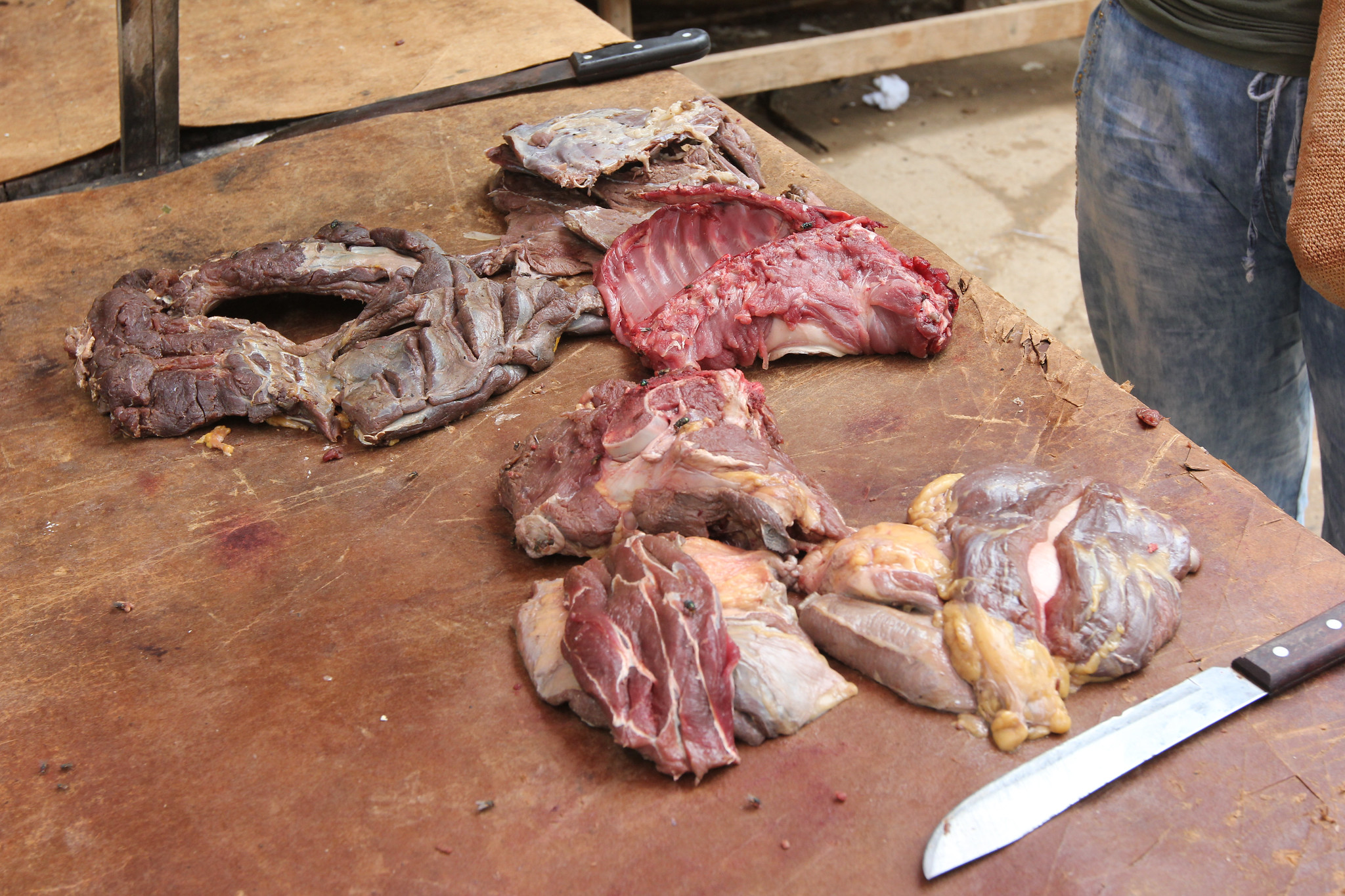
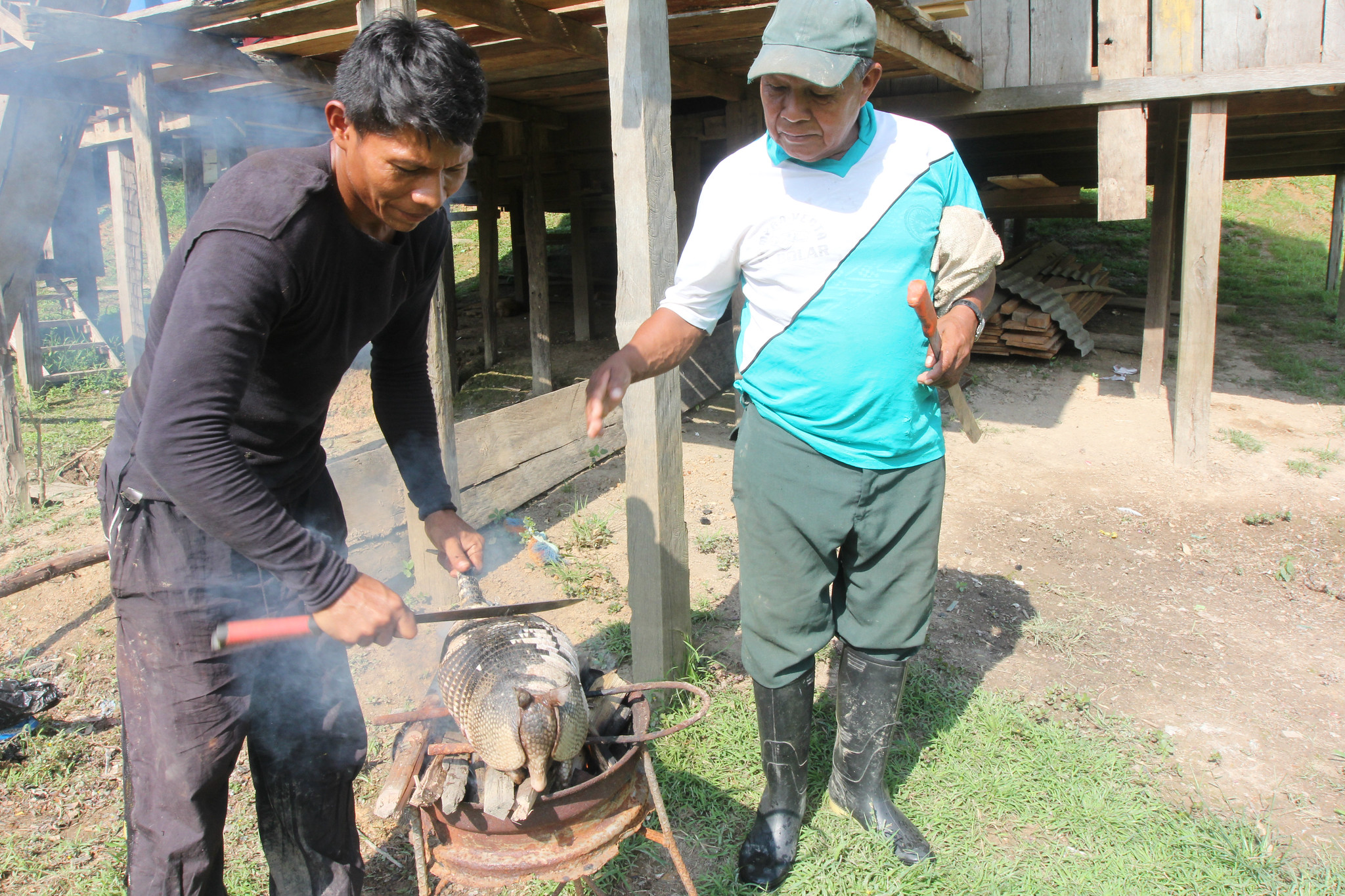
Across the vast Amazon rainforest, people have hunted a wide array of animals — mammals, reptiles, birds, fish and amphibians — for millennia. Yet until recently, there has been little comprehensive understanding of the scale of this offtake, or what it means for both local people and the ecosystems they inhabit.
A landmark new study published in Nature marks “the first large-scale effort to map wild meat hunting across the entire Amazon,” according to Hani Rocha El Bizri, study author and lead coordinator of the Sustainable Use of Wild Species Transformative Partnership Platform (SU-TPP).
The work provides fresh evidence of the critical relationship between healthy forests and healthy people. “This study confirms that wild meat is not only a vital source of protein and micronutrients — it is the backbone of food security for millions of Amazonian residents,” said lead author André Antunes. “Protecting forests means protecting nutrition, livelihoods and cultural heritage.”
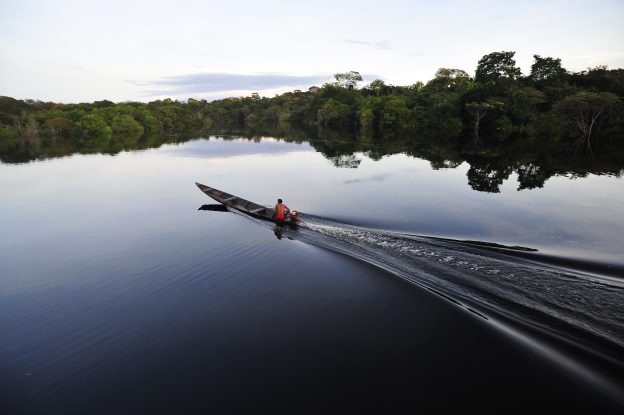
Photo by Dado Galdieri/CIFOR-ICRAF.
The study, which El Bizri says grew out of “a close, long-term partnership between researchers and Indigenous and local communities,” drew on more than six decades of hunting data from over 600 communities across Amazonia. The results reveal the importance of wild meat for food and nutrition security, cultural identity and territorial rights for the region’s 11 million people.
People in Amazonia hunt and eat over 500 species, which is not surprising given its high level of both cultural and biological diversity — it’s home to 511 distinct Indigenous Peoples and is the most species-rich tropical forest region on Earth.
Yet hunting pressure is far from evenly distributed. Just 20 species account for 72 percent of all animals hunted and 84 percent of total extracted biomass. The lowland paca (Cuniculus paca), a striped-and-spotted rodent, was the most commonly hunted animal, followed by the white-lipped peccary (Tayassu pecari), a pig-like creature called, and a large, trunked mammal called a tapir (Tapirus terrestris).
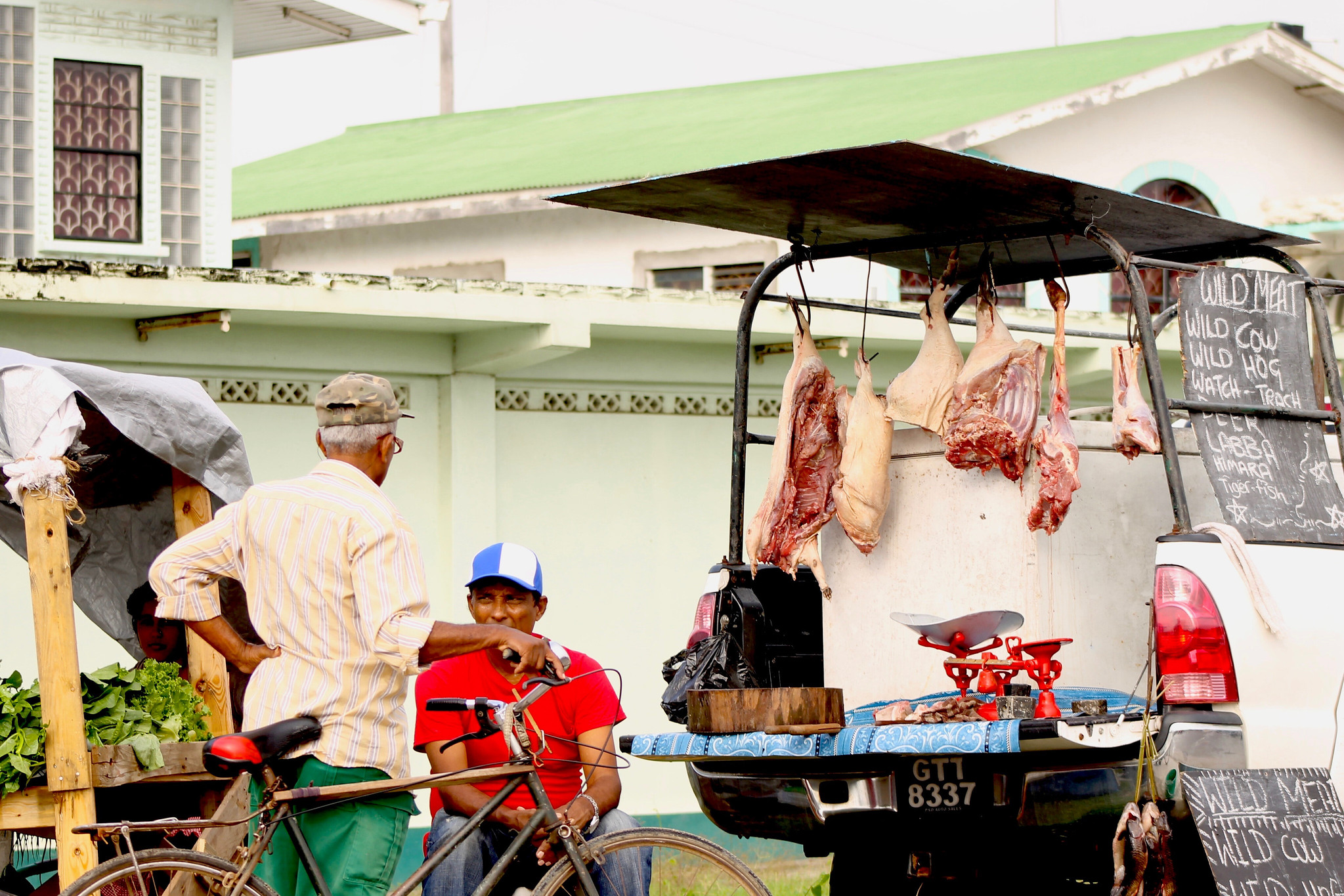
While overhunting can compromise population health in some contexts, the study showed that Amazonia’s wildlife is at its most abundant in places with relatively high annual harvest volume — conserved forest areas that usually sit within Indigenous and traditional territories.
This speaks to the effectiveness of traditional knowledge and management systems. “For Amazonian peoples, relationships with wildlife are framed not as resource extraction but as social reciprocity governed by norms and ethical obligations,” the authors write. “These culturally embedded practices are effective tools in regulating wildlife harvests and represent the most legitimate management and conservation strategies in Amazonia.”
As such, they caution against externally-imposed limits and encourage a focus on upholding local land and resource management rights. “Where Indigenous rights are respected and territories protected, the forest and its wildlife flourish,” they write. “Efforts to restrict or replace wild meat without understanding this reality risk repeating colonialist mistakes and undermining the autonomy and health of Amazonian peoples.”
The study also demonstrates why replacing wild meat consumption with farmed meat — as is sometimes recommended by well-meaning outsiders — could have significant negative environmental and health impacts. Wild meat currently provides almost half of the daily protein and iron requirements for Amazonia’s people; replacing that with farmed meat would require up to 64,000 square kilometres of forest to be converted to pasture, with significant impacts for both climate and biodiversity.
Moreover, switching to farmed meat could also compromise people’s health, as wild meat provides much higher levels of essential micronutrients like zinc and B-vitamins — especially critical in a context where micronutrient deficiencies are widespread and compounded by malaria, intestinal parasites and genetic disorders.
Farmed meat is also unaffordable for many people in remote communities, while wild meat — for which the researchers estimated an annual value of approximately USD 2.2 billion, based on 2024 beef market prices — provides an “invisible but invaluable safety net” to the vagaries of the cash economy.
However, the study also showed that deforestation — spurred by large-scale agriculture, land grabbing, logging, mining, infrastructure development and urbanization — threatens to destabilize the region’s critical wild meat food systems. In parts of the Amazon where over 70% of tree cover has been lost, the number of animals harvested per hunter has declined by 75%, and the hunted biomass by 67%.
As such, the co-authors emphasized the importance of making use of the study results to advocate for the protection of the Amazon and its inhabitants.
“The results of this research have the potential to strengthen our debate at national and Amazonian scales,” said a representative of the Coordination of Indigenous Organizations of the Brazilian Amazon (COIAB).
“This research comes at an important time,” said Julia Fa, study co-author and senior research associate at the Center for International Forestry Research and World Agroforestry (CIFOR-ICRAF), referencing current efforts by countries to develop National Biodiversity Strategies and Action Plans (NBSAPs) and indicators to align with the UN Convention on Biological Diversity’s Global Biodiversity Framework.
“By revealing the real impact of wild meat hunting for nutritional security, culture and conservation, decision makers are better equipped to govern the Amazon with sustainability in mind.”
For more information, please contact Hani El Bizri: [email protected]