This article builds on Butterfly effect: Can one insect help save the rainforest?…
….which explored how the fate of Papua New Guinea’s iconic Queen Alexandra’s birdwing butterfly is intertwined with the country’s remaining rainforests and the communities working to protect them. It examined the threats posed by habitat loss and illegal wildlife trade, alongside efforts to balance biodiversity conservation with sustainable local livelihoods.
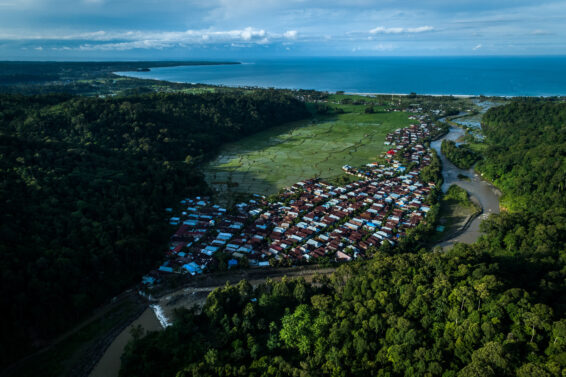
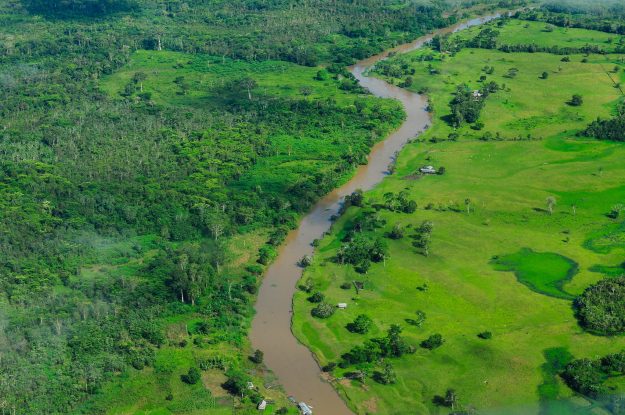
Every morning, Daisy Fufus’ garden — a colourful combination of flowers and food surrounding her pandanus-thatched home on Papua New Guinea’s Managalas Plateau — receives a couple of world-famous visitors.
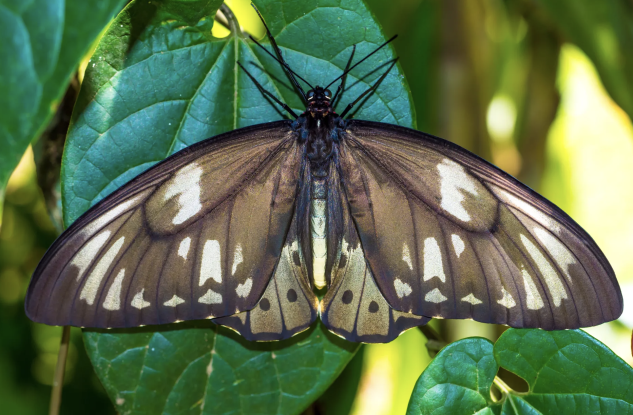
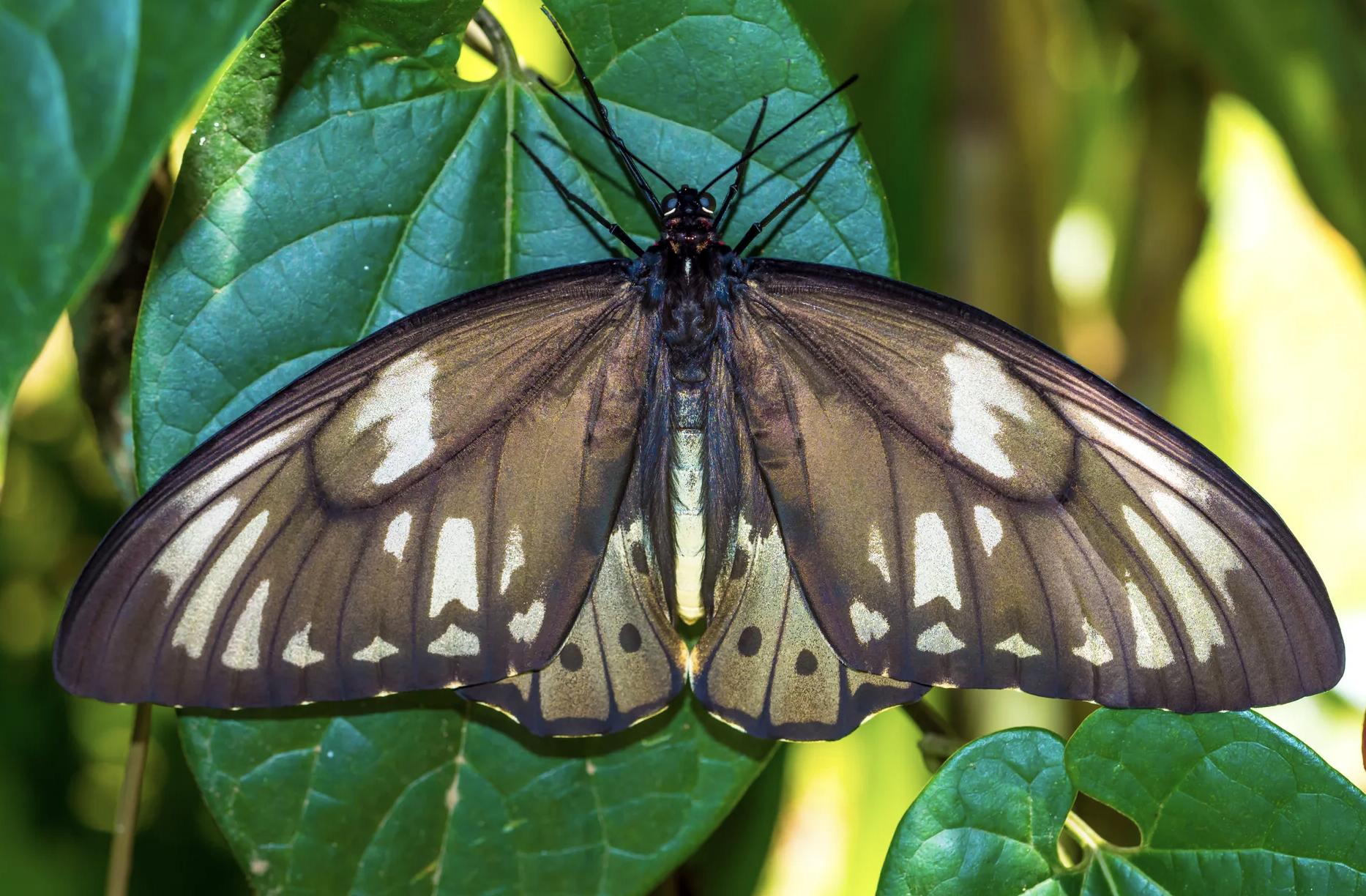
The Queen Alexandra’s Birdwing Butterfly (QABB, Ornithoptera alexandrae), one of only two populations worldwide — the other on the nearby Popondetta plains — is partial to the Aristolochia vines that clamber over her coffee bushes and betelnut palms.
These vines are the only places the butterfly will lay its eggs, and the only food its caterpillars can eat. That’s reason enough for Fufus to leave them be: “I let the vines climb on my garden so that the butterfly will keep coming back.”
Fufus loves these glimmery-winged visitors and their links with garden fertility. She also knows that the QABB may be pivotal to the Plateau’s future. Since organizations like Port Moresby-based Partners with Melanesians started connecting with people on the Plateau in the 1980s and 90s, locals have heard time and again that Managalas has species and spaces worth preserving.
And the QABB — featured on the Oro Province flag and decorating the rooftop of the Provincial Administration Building — is one of the most iconic.
But evidence suggests the population may be declining. Meanwhile, high international prices for the sizable specimens — it’s not hard to see why they’re trophies for collections — are fuelling small-scale but potentially devastating illegal trade.
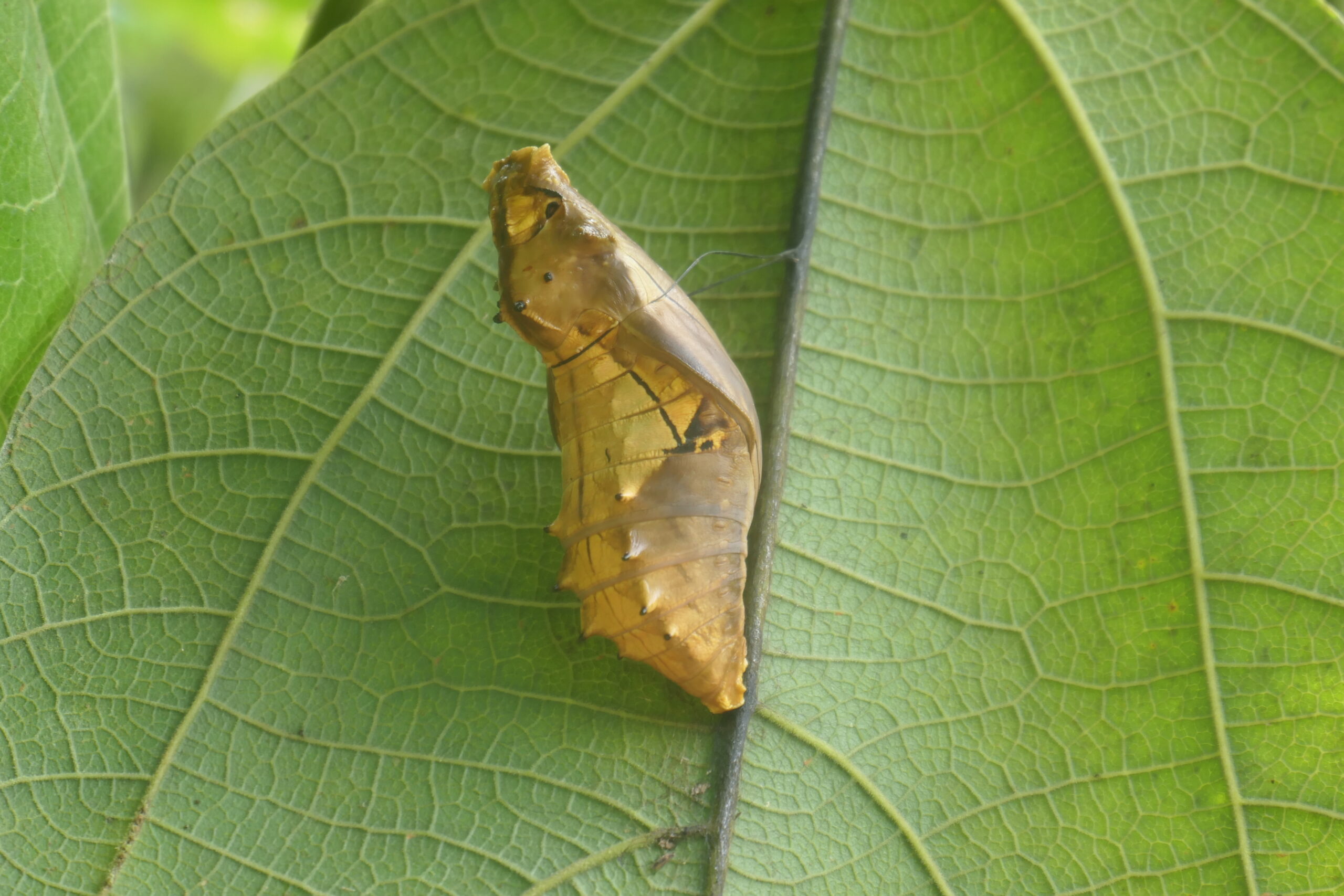
A Queen Alexandra’s birdwing (Ornithoptera alexandrae) caterpillar on the Mangalas Plateau. Photo by Russell Wai / Landscape Alliance
Counting what’s left
Forestry scientist Christine Pokana is currently completing a master’s research on the Plateau’s QABB populations at Papua New Guinea University of Technology, supported by Landscape Alliance through European Union funding for the Managalas Conservation Area (MCA). Her work builds on a similar survey conducted by ecologist Christopher Mercer in 1991.
Over four months in 2025, Pokana worked with clan groups across seven of the Plateau’s eleven zones to track and document the presence of QABB butterflies and Aristolochia dielsiana vines along 43 designated 500-metre-long, 10-metre-wide transect lines.
It was slow going — each line took a day to complete — and Pokana wasn’t able to collect data from all the locations that Mercer had surveyed due to time constraints. Land disputes and community mistrust also posed challenges. “Some of the clans have doubts about research work in their communities and don’t want us to go in their area,” she says. Conversely, some people from clans that she wasn’t able to work with felt left out of the process, highlighting the difficulty of engaging with communities fairly within tight timeframes and limited resources.
The research process, however, opened space for important exchanges. Pokana made sure to hire both men and women as field assistants — a departure from local norms of prioritizing men for paid work — and trained them in technical skills like using GPS, taking measurements and recording data. In return, participants shared critical local knowledge about the vines’ whereabouts and the rhythms of the butterfly’s appearances.
“Respecting resource owners’ cultural beliefs and values, and acknowledging their local knowledge, is paramount in doing this kind of scientific research,” says Pokana.
She sometimes struggled, though, to explain the point of the exercise to community members. “They really wanted to see how this research would benefit them in the long run,” she says.

An insect in demand
A legal, limited and sustainable trade of QABBs could be a viable option for locals — but only if they can manage and enforce it effectively. At the moment, some community members catch and sell the butterflies to smugglers who periodically visit the Plateau.
“Everyone [in Managalas] knows that the demand out there is very high,” says community leader Reckson Kajiaki. “People come to PNG and engage secretly with the locals, and they buy [butterflies] and then take them out.”
The trade has persisted for decades, confirms conservation activist Lester Seri, a former employee of the national Department of Environment and Conservation (DEC, now the Conservation and Environment Protection Authority, or CEPA), who studied the species populations in the 1990s and early 2000s.
Back then, the body successfully caught some smugglers, with Canadian researcher Gilles Delisle notably fined CAD 50,000 in 2001 (equivalent to USD 84,574.74) for illegally importing six QABB specimens, hidden inside a hardback copy of the Bible.
These days, though, Seri says there is little official monitoring or enforcement of the illegal wildlife trade. “There is no existing monitoring of such activities by CEPA,” he said. “There is no effective enforcement of the law in the country.”
The prices that buyers offer — 150 kina (USD 35) per specimen — might seem high to people on the Plateau, but they’re a tiny fraction of what collectors pay: upwards of USD 10,000 (43,000 kina) apiece.
To regulate the trade and ensure that locals get the bulk of the benefits, the QABB would need to be downlisted from the Convention on International Trade in Endangered Species of Wild Fauna and Flora (CITES) Appendix 1, which prohibits international commercial trade.
But such a move will require both improved official oversight and evidence that the population is stable — and unfortunately, Pokana’s research suggests the opposite: her team found QABBs in far fewer locations than Mercer’s did 33 years before.
“In a few years, I believe that these butterflies will not exist if illegal trading continues,” she says. “After sitting down and telling stories with the locals, it was clear that they really treasure this butterfly, but the thing that has twisted their mind is the money. So when buyers come in and tell them to collect [butterflies to sell], they’re doing it.”
A longer view
At last year’s Plateau-wide Combined Forum, sustainable livelihoods expert and Nuraterra nonprofit CEO Nancy Irwin urged community representatives to take the longer view and consider the broader benefits of ensuring the butterfly’s survival — whether or not sustainable trade is feasible at any point in the future.
A biologist by training, she told them she was captivated by the QABB long before she’d heard of Managalas. “You’ve got the biggest butterfly in the world, and it is already working for you,” she says. “If you kill it, people will lose interest in you and you won’t have the chance to get environmental payments in the future. If you lose the butterfly, you lose its name.”
Whether that future is still within reach may depend on what happens next on the Plateau — and Pokana’s findings don’t leave much room for delay. Looking forward, the researcher says that more extensive surveys are needed to get a better idea of the butterflies’ distribution and population, alongside awareness-raising work and livelihood support to make it less likely that locals will be swayed by quick money from poachers.
Protecting confirmed breeding sites and ending forest clearance in places with high butterfly populations will also be critical to the species’ survival, she says — especially as the number of people on the Plateau continues to rise.
“I think we need to work closely with people who are interested in breeding butterflies, and support them to take ownership of their own resources and do the monitoring work themselves,” Pokana says.
For more information on this project, please contact Landscape Alliance’s PNG Programme Lead Will Unsworth: [email protected]