
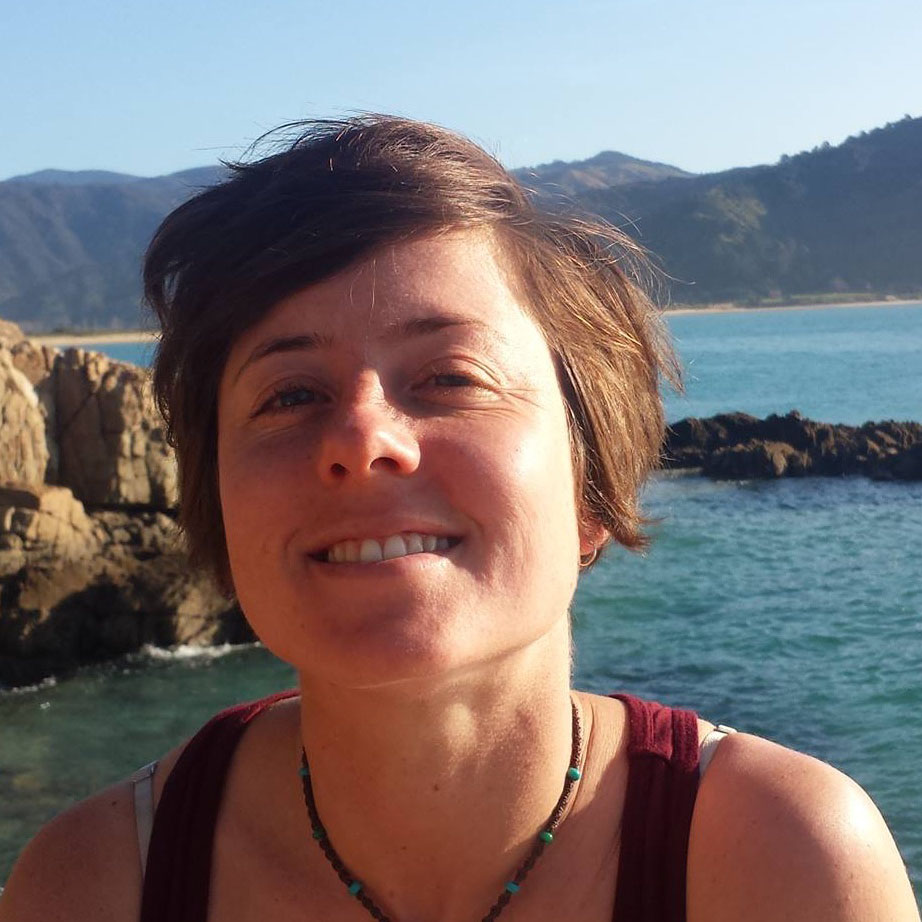

When Sandra Owusu-Gwamfi was in high school, she never imagined she would one day be known as the ‘Frog Woman of Ghana’.
As in many parts of the world, Ghanaian students with good grades tend to be funnelled towards the medical professions. But a cousin came to her with a wilder idea—a new program at the Kwame Nkrumah University of Science and Technology that he said would be Ghana’s “next big thing”: environmental science.
“My dad was hoping I was going to change my mind eventually, but I didn’t,” she laughs. Today, with a PhD under her belt and numerous accolades as the country’s first female herpetologist — a scientist who studies reptiles and amphibians — even he has come around.
Her decision was cemented when she learned from her lecturers about leading women conservationists Jane Goodall and Wangari Maathai.
“I immediately fell in love with the whole concept of conservation,” Owusu-Gwamfi says. “The kind of passion they had…I was just amazed. I was empowered. I wanted to know more.”
After graduating, she travelled to the United Kingdom to pursue a master’s degree in environmental conservation at the University of Greenwich. Upon returning to Ghana, she accepted a position with the national NGO Save Ghana Frogs — a role that would define her career.
“I didn’t plan all along to work with amphibians,” she says. “I think that often you don’t create your path: it’s more like you find it, and then you start to work with what you have and make it work for you.”
She did precisely that.
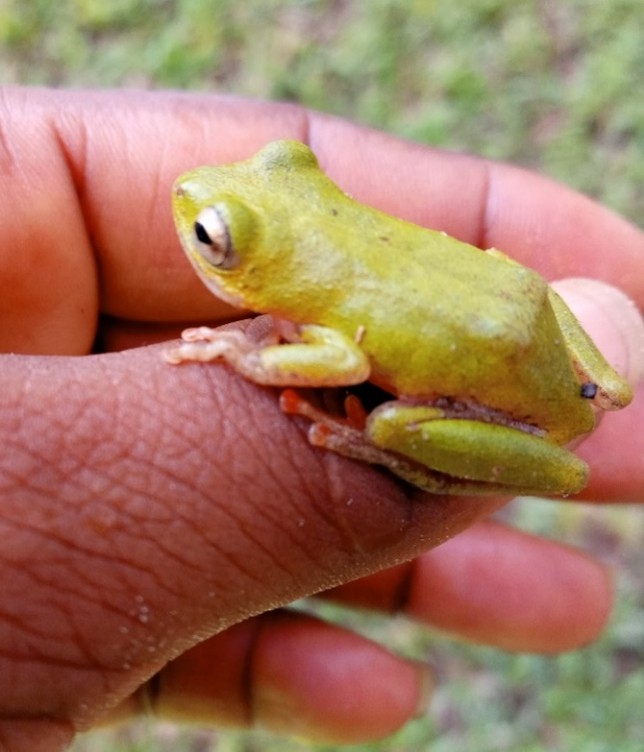
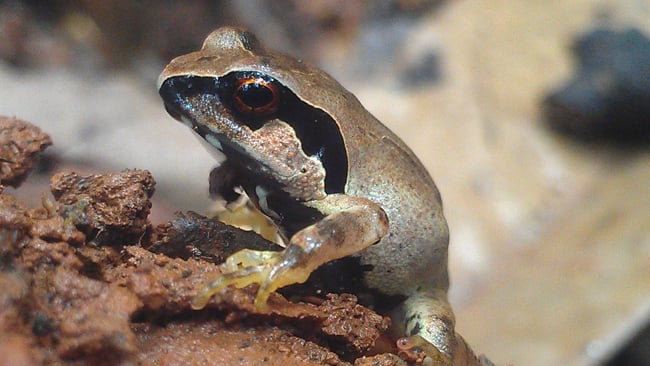
With Save Ghana Frogs, Owusu-Gwamfi helped secure habitat for the then critically endangered Togo Slippery Frog (Conraua derooi), which faced threats from bauxite mining. She led a team that discovered the largest known population of the Giant Squeaker Frog (Arthroleptis krokosua) and then coordinated the establishment of community tree nurseries to restore the species’ habitat. She also initiated awareness-raising campaigns about amphibian roadkills in West Africa, prompting efforts to address potholes that attract frogs during rains. Along the way, she has supported and inspired numerous other Ghanaian women to follow in her ‘frog-prints’.
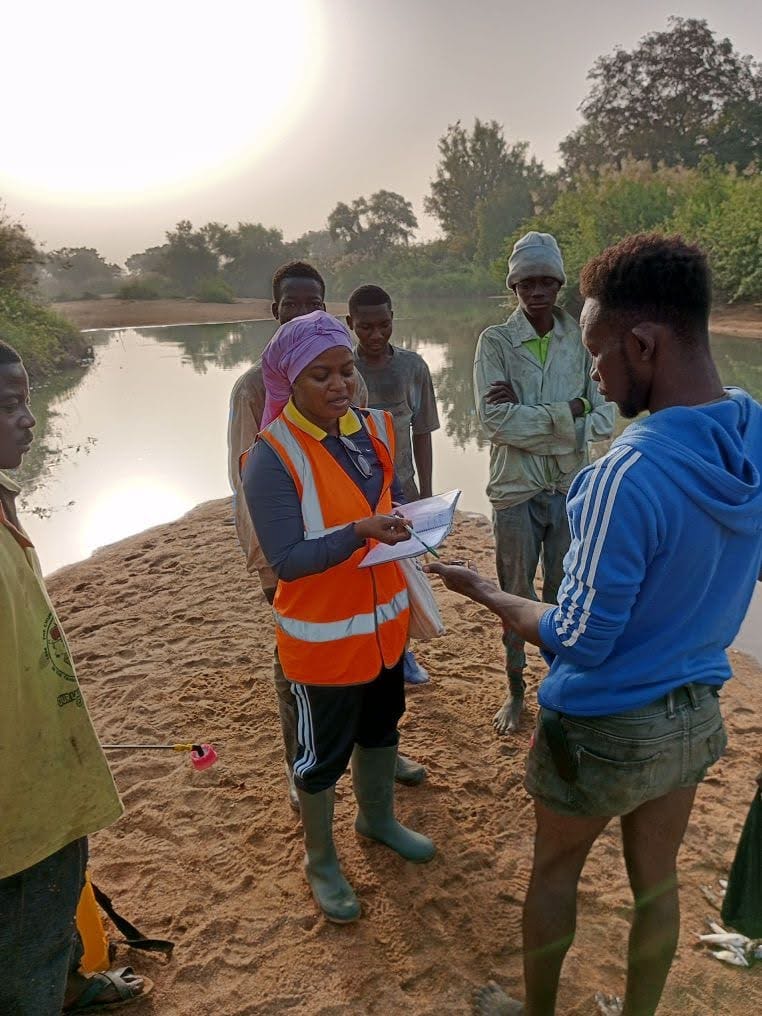
Over time, her field experiencegradually reshaped her scientific research questions.
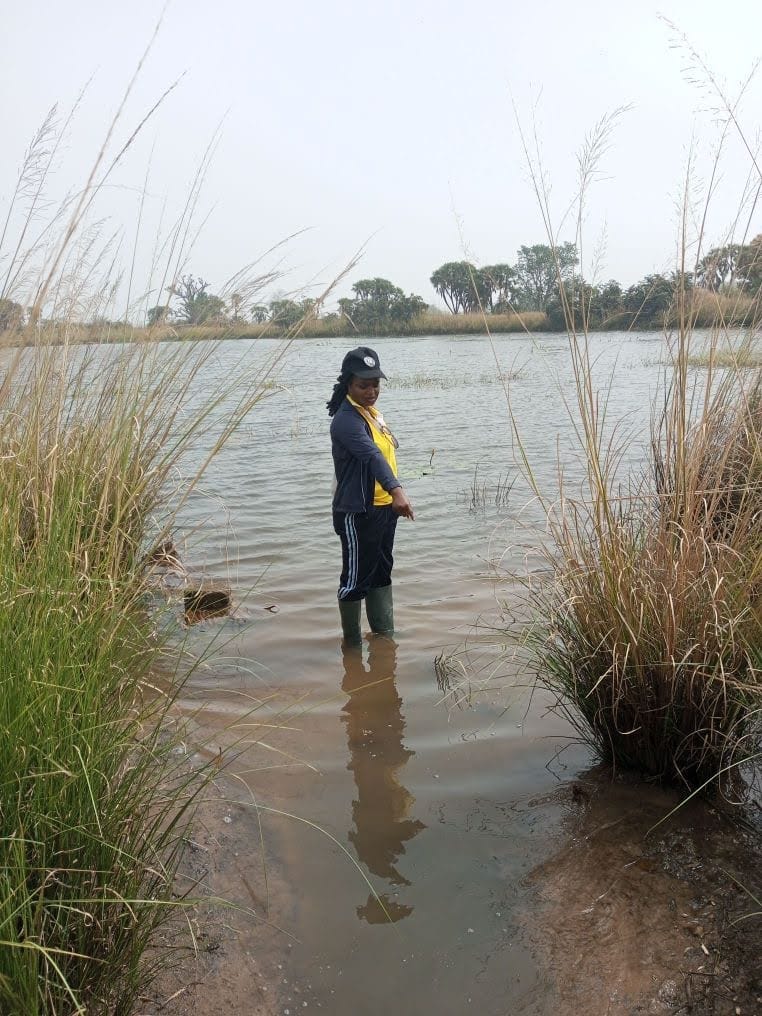
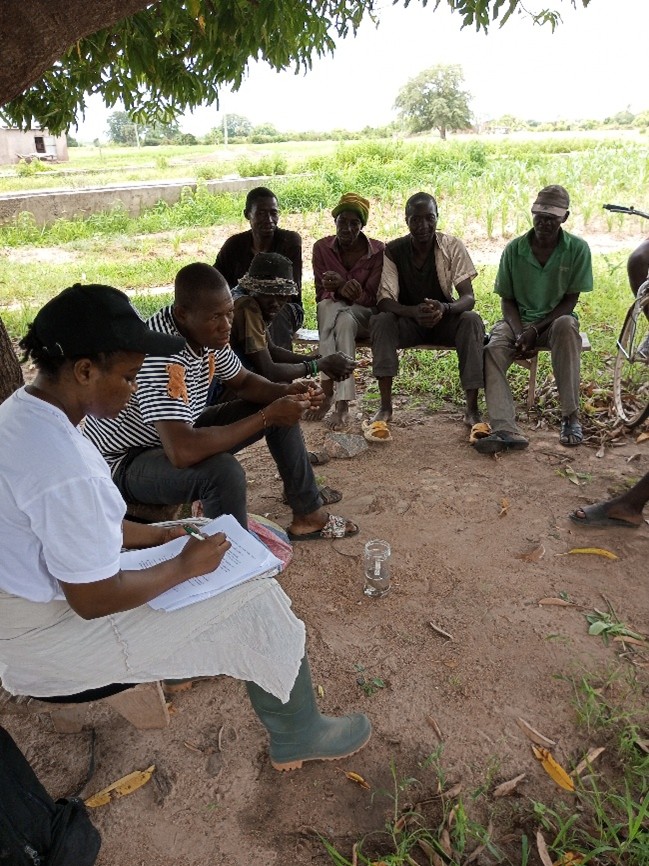
In recent years, Owusu-Gwamfi has focused on completing her PhD at the University of Ghana, exploring the nature and impacts of anuran — frog and toad — harvesting in northern Ghana’s savannah ecosystems. The practice is rarely documented, yet culturally significant.
Her research found that harvesting remains relatively localized, restricted to certain groups, but is socio-economically important to those involved. The findings challenge blanket conservation approaches.
“This suggests that we should not take strong conservation actions like banning harvest altogether, because it’s intertwined with culture and could bring a number of negative impacts,” Owusu-Gwamfi says.
Instead, she sees space for awareness and safeguards — both for frogs and the people who consume them.
“Considering that the species are collected from rice fields where there’s heavy use of agrochemicals, one of the recommendations I gave was that you need to test the quality of the frogs that are being sold for people to consume.”
Owusu-Gwamfi successfully defended her thesis last month, and her publication, ‘A review of the scale and sustainability of the consumption and trade of anuran species in Africa’, will soon be published in Ecology and Evolution.
From the outside, her ascent may appear seamless. In reality, systemic racism and economic inequality have imposed tangible barriers.
In 2024, she was invited to speak at the European Conference of Tropical Ecology in Lisbon, Portugal. Her visa was denied — alongside those of five other speakers from low- and middle-income countries — on the grounds that officials were not convinced she would leave the European Union before her visa expired.
“It was very disappointing and humiliating,” Owusu-Gwamfi says. “I speak English, I schooled in the UK, my passport indicates that I travel there a lot, and I have family there. But somehow they think that I’m a risk to a place like Portugal, which I have no connection to? It was really embarrassing.”
Beyond the personal impacts, such barriers also constrain scientific progress.
“It becomes a bottleneck when it comes to research and the sharing of science, experience and expertise,” Owusu-Gwamfi says.
“I understand the borders need to be protected. But when it comes to science, and there is a credible sponsor — unless there’s evidence to support that these conferences have become an avenue for people to vanish into the system — they have no right to disrespect scientists in this manner.”
Ever the leader and advocate, Owusu-Gwamfi channelled the disappointment into an article in Nature explaining the challenges facing researchers from low- and middle-income countries.
Now, she is preparing the next phase of her work: further studies on anuran species in Ghana’s savannah ecosystems, long-term assessments of harvested species across West Africa, and the design of a monitoring framework for wild frog harvesting in the subregion.
With an eye to enabling positive change at multiple levels, Owusu-Gwamfi also plans to co-design sustainable frog harvesting protocols with local communities — and facilitate the creation of a network of West African amphibian conservation scientists working on the topic, too.
Acknowledgements