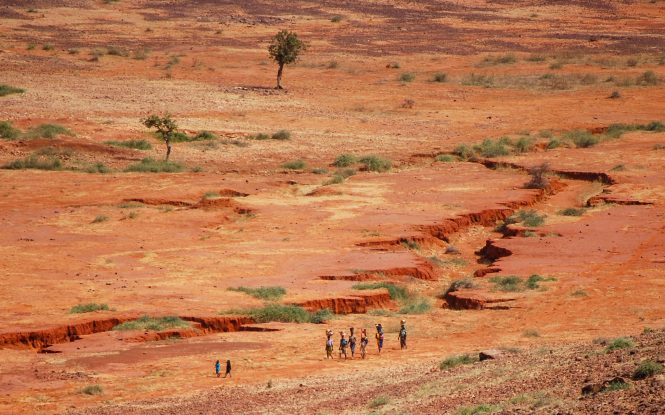





“The main reason why agroecology has become so important is that collectively we have realized that we cannot work in isolation,” said Matthias Geck, agroecological systems scientist at the Center for International Forestry Research and World Agroforestry (CIFOR-ICRAF).
“We really need to take a whole of the food systems approach. We cannot just work on the production side, or market side, the policy side, or the research side; it all needs to happen together. And that is what we call the food systems approach. We have multiple so-called’food system challenges’ facing us – climate change, biodiversity loss, hunger, the triple burden of malnutrition and inequity – so we need one approach that transforms food systems and tackles all of these challenges simultaneously. To my knowledge, agroecology is the only approach that explicitly calls for transforming food systems through a systems approach.”
It was with this understanding that Ethiopia’s Ministry of Agriculture officially launched the development of the Ethiopian National Agroecology Strategy (ENAS) in November 2024.
From launch to draft
A 14 -member taskforce was formed at the launch meeting. In the month that followed, the first draft of the strategy was prepared with the active involvement of CIFOR-ICRAF and the Alliance of Biodiversity International and CIAT (ABC).
After a series of task force meetings, a five-day write-shop was organized in Adama from 11 to 15 August 2025. More than 40 experts drawn from 26 government institutions, civil society organizations, research institutions, development partners and practitioners worked intensively to strengthen the draft strategy prepared by the technical team.
Six thematic working groupsreviewed and enriched the list of activities under six strategic objectives. They process strenghtened the document and built a shared understanding of what it would take to implement agroecology at scale.
Having collected inputs from the thematic working groups, the draft ENAS was further refined after the write-shop.
A national consultation
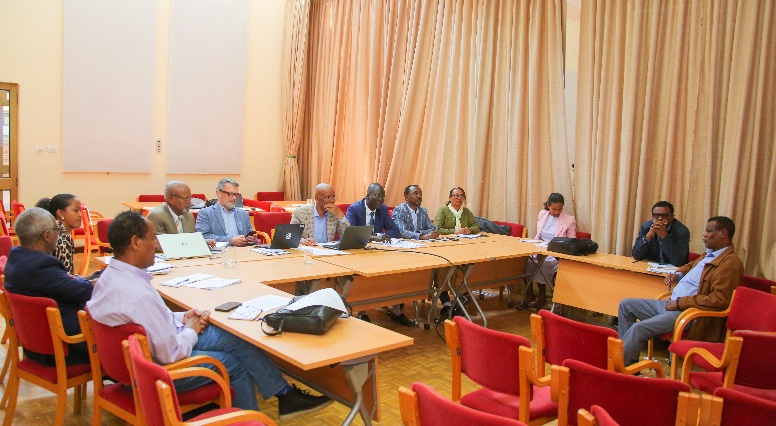
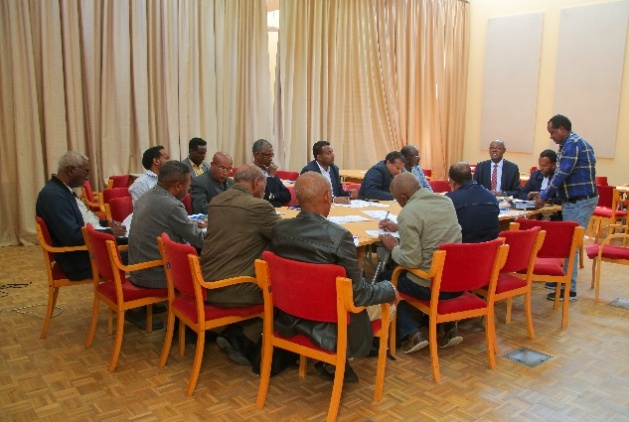
On 23 and 24 October 2025, the consolidated draft strategy was presented at the National Consultative Workshop on the Draft National Agroecology Strategy for Food System Transformation of Ethiopia in Addis Ababa. More than 120 stakeholders representing 86 institutions attended, including experts who participated in the Adama write-shop.
Participants were asked to cross-examine the draft strategy, debate the practicality of the implementation approach and assess its alignment with existing policies. They were then divided into six groups corresponding to the six strategic objectives previously prepared for the write shop held in Adama.
Dr Mitiku Ayele, advisor to the State Minister for the Natural Resource Development Sector at the Ministry of Agriculture, described the discussions as constructive and necessary.
“I would like to thank the highly experienced experts who attended the consultation workshop. Some issues were debated, and that was a good thing — it helped create clarity. I led the policy alignment group, where we worked to ensure the agroecology strategy aligns with existing policies so that it can be sustained over time. The discussions across the thematic groups were constructive. Overall, I was pleased with the workshop.”
Endalkachew Wolde-Meskel, senior scientist and research for development advisor at CIFOR-ICRAF, said the level of engagement exceeded expectations.
“The feedback from the workshop was extremely valuable. The turnout and the level of participation from national stakeholders exceeded our expectations,” he said. “We will now revise the draft strategy based on that input. Many institutions that were not represented in the Adama write-shop participated this time, including about 30 representatives from different regions of the country. Their contributions were significant. Interestingly, experts who had taken part in the Adama write-shop also added further insights to the draft they had helped shape two months earlier.”

Geck, described the Addis Ababa consultation as inclusive and productive.
“I was incredibly impressed. The organizers succeeded in bringing together such a wide range of stakeholders and coordinating a relatively short workshop in a way that ensured everyone had a voice. It was inclusive and productive. Consultations like this are essential if we want a strategy that truly reflects collective ownership — one in which all of us can say, ‘We were part of shaping it.’”
Looking ahead
The ENAS is being developed for the period 2026–2040, with further refinement before a validation workshop scheduled for December 2025.
The strategy development is led by the Ethiopian Ministry of Agriculture and supported by CIFOR-ICRAF, the Alliance of Biodiversity International and CIAT, Deutsche Gesellschaft für Internationale Zusammenarbeit (GIZ) and World Vegetable Center.
Mitiku acknowledged the partners for their professional and financial contribution to strategy’s development, stressing the importance of international collaboration. “It is crucial that international organizations are partners in the process of developing the strategy, as environmental issues, in particular, are not country-specific.”
Acknowledgments