


From August 31st to September 5th, Dakar became the meeting point for a shared ambition, pulsed to the rhythm of a single rallying call: to transform Africa’s food systems. Nearly 6,000 participants from 106 countries, alongside 149 exhibitors and 40 ministers, gathered for the 2025 Africa Food Systems (AFS) Forum, one of the continent’s most influential platforms for agricultural policy, finance and practice.
Soil health and fertilizer at the centre of the transformation agenda
Soil health emerged as the defining theme of AFS Forum 2025. In the opening discussions, His Excellency Moses Vilakati, Commissioner for Agriculture, Rural Development, Blue Economy and Sustainable Environment at the African Union Commission, framed soil health as a strategic priority rather than a technical concern.
Restoring and mapping Africa’s soils, Vilakati said, is essential to food sovereignty, climate adaptation and rural employment.“We have laid the foundation for a transformative agenda that places soil health and mapping, seed bank development, climate resilience and job creation at its core,” he affirmed, stressing the need for coordinated action across governance levels.
That framing shaped subsequent sessions. A high-level discussion on the Africa Fertilizer and Soil Health Action Plan brought together African Union institutions, ministers, research organizations, financial actors and private-sector partners to explore how continental commitments can be translated into concrete country-level actions. Participants acknowledged the scale of land degradation while emphasizing the urgency of practical and inclusive solutions.
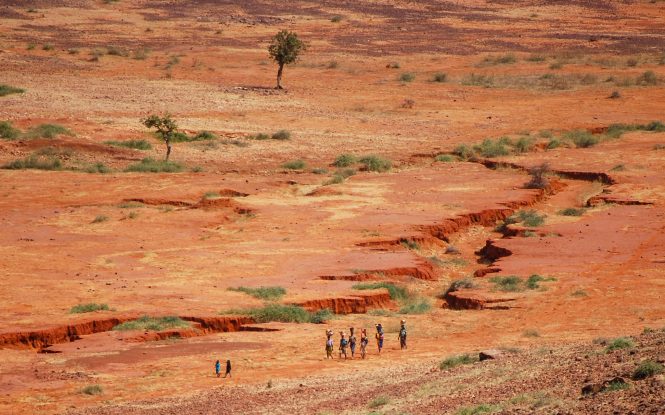
Dr Leigh Ann Winowiecki, global research lead for Soil and Land Health at the Center for International Forestry Research and World Agroforestry (CIFOR–ICRAF) and co-lead of the Coalition of Action 4 Soil Health, highlighted what is at stake. “Sixty-five percent of Africa’s land is degraded. Political will exists, but business as usual is not an option,” said Winowiecky. “Each of us must act for healthier soils — it is our shared responsibility. This is not just about agriculture; it’s about our future.”
Winowiecky’s intervention reflected a recurring theme throughout the Forum: restoring soil health requires robust data, sustained investments and multi-stakeholder collaboration across science, policy, finance and farmer practice.
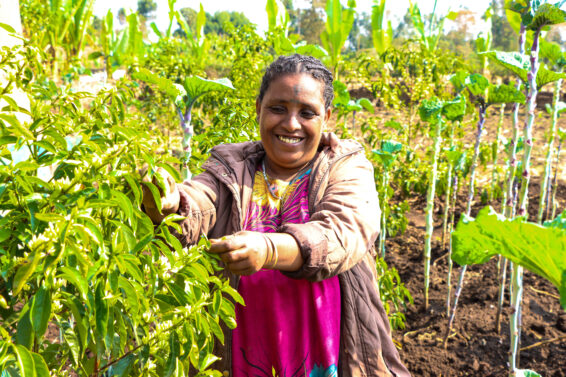
A farmer harvests rice in Yangambi, Democratic Republic of Congo, illustrating how research and policy discussions translate into practices that support food production and rural livelihoods. Photo by Axel Fassio / CIFOR-ICRAF.
From research to field impact
That convergence between science and action was illustrated during the session, Islamic Development Bank (IsDB)–CGIAR Supporting Food System Transformations: Accelerating Impact through Innovation and Partnership, which offered concrete examples of how science, finance and governance can converge to scale proven solutions. Case studies such as the IsDB Food Security Response Program and Uganda’s Local Economic Growth support programme demonstrated how targeted public investment can strengthen rural economies and value chains.
Concrete innovation was also on display. For example, AfricaRice presented climate-resilient rice varieties achieving yields of up to nine tonnes per hectare in the Senegal River basin. CIFOR–ICRAF highlighted its Land Degradation Surveillance Framework (LDSF), now deployed in 45 countries to produce actionable soil health data for decision-makers and farmers alike.
Across discussions, speakers emphasized the importance of multilateral partnerships and co-investment frameworks to accelerate innovation in strategic value chains, including millet, sorghum, potato and livestock. In this context, the IsDB–CGIAR partnership emerged as a reference point for aligning science, policy and finance in support of resilient food systems.


Youth as co-creators, not beneficiaries
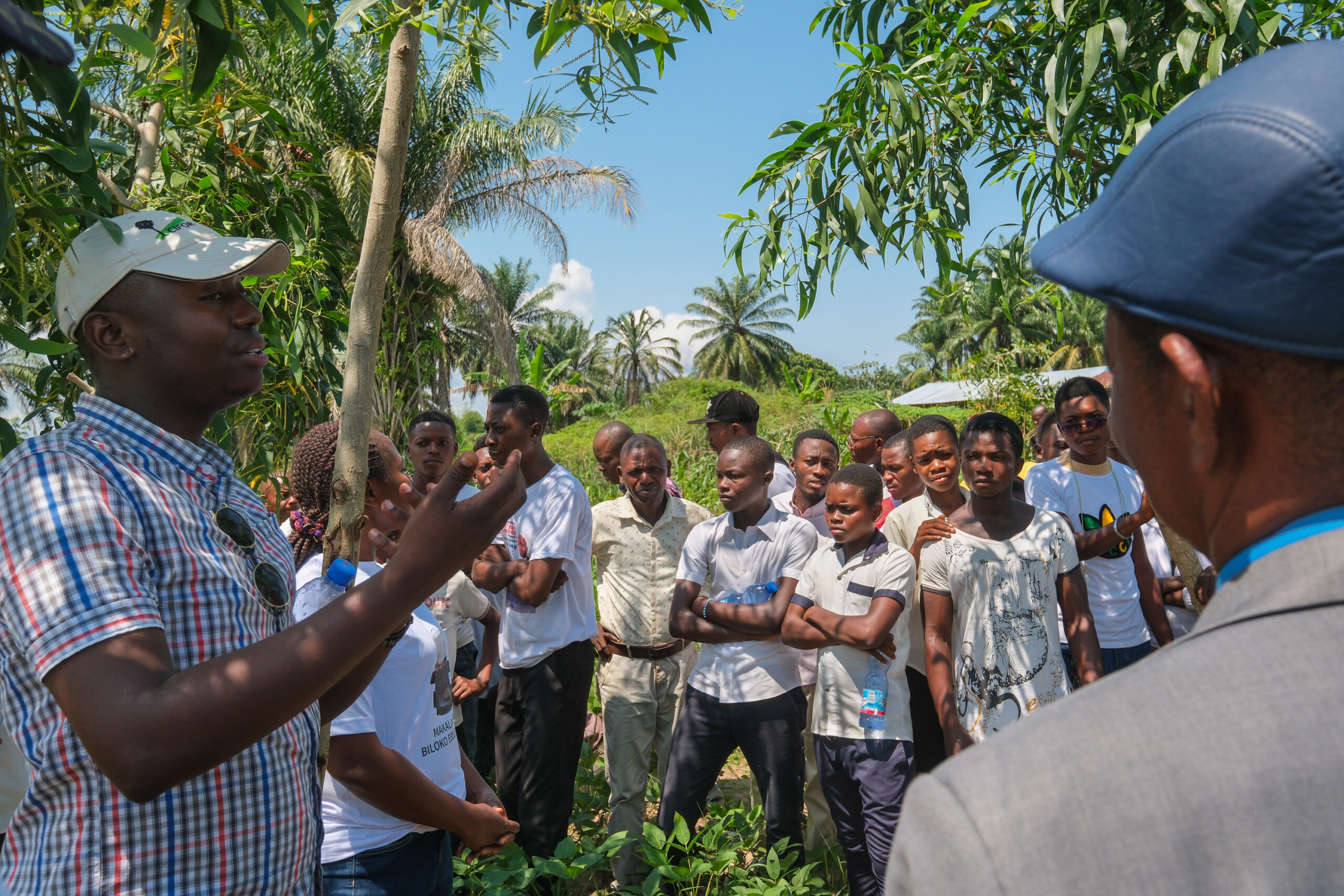
Youth leadership featured prominently throughout the Forum, reinforcing the message that young people are already shaping Africa’s Food systems transformation. At the side event Public Incentives and Information Systems for Africa’s Soil Health, held within the framework of the Comprehensive African Agriculture Development Programme (CAADP) Kampala Strategy and Action Plan, speakers explored how soil information systems and repurposed public incentives can drive sustainable agricultural transformation.
“Soil information is power,” said Manyewu Mutamba, head of food systems at the African Union Development Agency-NEPAD (AUDA-NEPAD). “It moves agriculture from guesswork to smart farming.”
Experiences from Kenya, Malawi and Zambia illustrated how linking fertilizer subsidies to soil diagnostics, digital voucher distribution and farmer training. The reforms demonstrated how smarter subsidy models can improve productivity while safeguarding soil health.
Youth voices reinforced this message. Jenice Achieng of the Young Professionals for Agricultural Development (YPARD) Kenya illustrated how soil data, paired with digital tools such as GIS mapping, mobile applications, drones and artificial intelligence, enables young farmers to reduce costs and maximize profits.
“Young people must be included as co-creators of sustainable agricultural policies and offered innovative financing,” Achieng said.
Photo by Nathalie van Vliet / CIFOR-ICRAF
Science, policy and climate resilience
The links between soil health, climate adaptation and ecosystem restoration were further explored during the side event Scaling Soil Health and Sustainable Production in Fragile Settings: Realizing the 3 Rio Conventions. Speakers emphasised that soil health connects climate adaptation, biodiversity conservation and land restoration, particularly in fragile contexts.
The session concluded with a clear message: data must inform action. Soil health data must be shared, used and translated into farm-level practice, policy decisions and investment priorities.
Beyond announcements and commitments, AFS Forum 2025 in Dakar will be remembered above all as a turning point: one where Africa resolved to turn words into action and build food systems where youth, innovation, gender equality and climate resilience are not optional, but fundamental pillars.
Acknowledgements