
With the intensification of the global environmental crisis, deforestation, biodiversity loss, climate change and land degradation are no longer abstract concepts. They are lived realities shaping economies, ecosystems and daily life across the world. Yet the scientific data and policy frameworks designed to address these challenges often remain inaccessible or poorly understood by those expected to act on them, from decision-makers and communities to journalists, civil society and the private sector.
The 2021 State of the Forests of the Congo Basin report estimates that the Democratic Republic of the Congo still holds about 105.8 million hectares of undisturbed moist forest, making it the largest forest expanse in Africa and the second largest tropical forest globally, after Brazil and ahead of Indonesia. These forests are home to more than 60 million people who depend on them for their livelihoods, a reality that heightens the urgency of conservation and sustainable forest management efforts.
“Forests are not just resources,” said Marie Louise Avana, the Center for International Forestry Research and World Agroforestry (CIFOR-ICRAF) deputy country coordinator in Yaoundé. “They carry history. They are spiritual sanctuaries and climate stabilizers. They are deeply tied to cultural identities, local economies and global ecological systems.” For Avana, making information about forests widely available is not optional. It is the foundation of informed decision-making and effective governance.
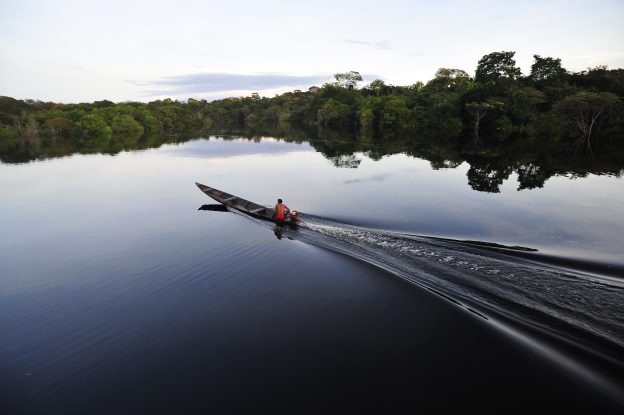
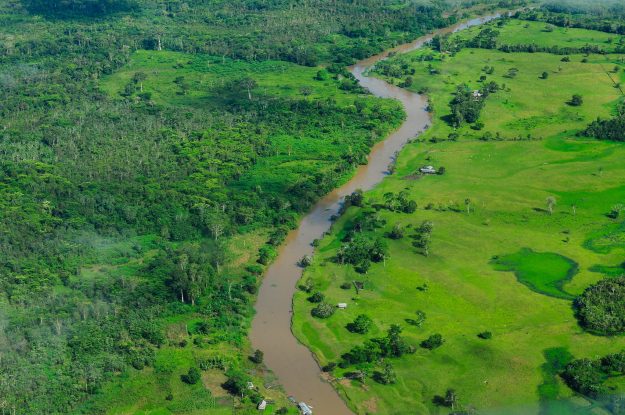
Fishermen on the Congo River between Kinshasa and Lukolela, reflecting the livelihoods and communities at the heart of environmental decision-making in the Congo Basin.
Photo by Olivier Girard/CIFOR-ICRAF
A forum for shared responsibility
Against this backdrop, communicators, journalists, representatives of international and regional institutions, public administrations, the private sector and civil society gathered in Brazzaville in April 2025 for the first Multi-Actor Forum for the Development of Environmental Information, Education and Communication in the Congo Basin, known by its French acronym FOMADECIE-BC.
The forum was built on a shared recognition that access to reliable, up-to-date information is essential for mobilizing actors at every level. It also echoed international commitments such as Article 13 of the Convention on Biological Diversity, which calls on countries to promote public awareness and education, particularly through the media. FOMADECIE-BC aims to provide a collaborative platform where environmental stakeholders can develop innovative approaches to communication and use them as instruments for conservation across the Congo Basin.
For communicators working in forestry and environmental fields, the discussions reaffirmed that their role extends well beyond reporting successes or disseminating technical documents. Communication, many argued, is a strategic lever for change. It involves translating complex scientific findings into narratives that people can relate to, shaping public opinion, influencing policy debates and amplifying voices that are often overlooked, particularly those of Indigenous Peoples and local communities who steward many of the landscapes under discussion.
Journalists at the forum emphasized the need for stronger institutional support for their work as intermediaries between science and society. By bringing the experiences of forest-dependent communities and frontline advocates into policy spaces, they help build the momentum required for meaningful action.
“This forum is part of a regional and international movement towards inclusive and participatory environmental governance,” said Raoul Siemeni, president of FOMADECIE-BC. “It marks a strategic turning point in positioning environmental communication as a central driver of ecological transformation, environmental diplomacy and citizen engagement in Central Africa.”
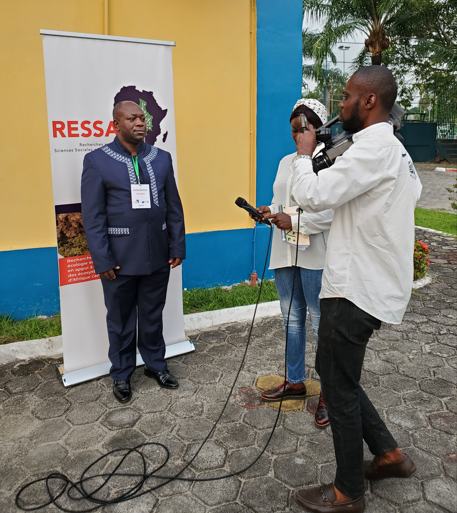
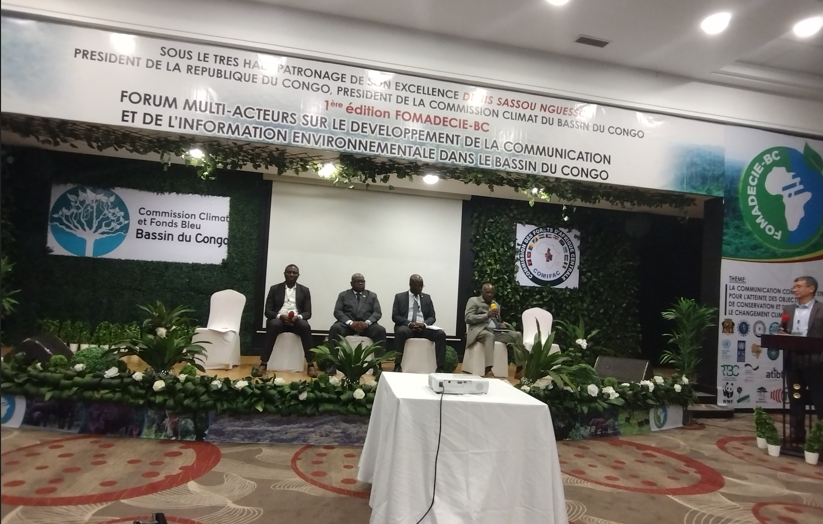
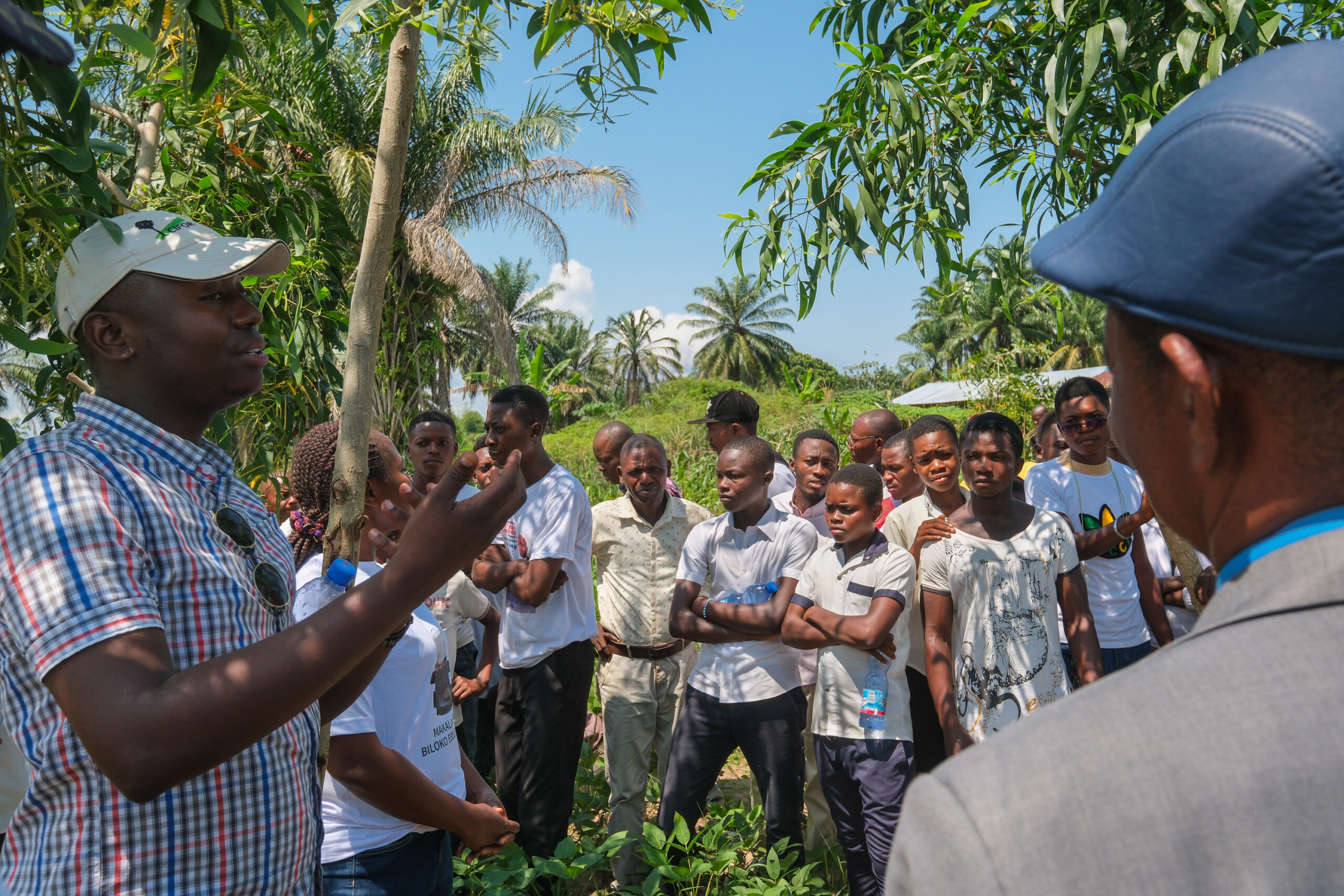
Photo by Merilyne Ojong/CIFOR-ICRAF
Communication as climate infrastructure
In her opening address to the forum’s technical sessions, Arlette Soudan Nonault, the Congolese Minister for the Environment and Sustainable Development, highlighted the political and strategic importance of communication in the Congo Basin. In the face of the climate emergency, she argued, communication should be considered as essential as finance, technology and diplomacy.
She also announced the forthcoming launch of Radio Télévision du Bassin du Congo, a regional broadcaster dedicated entirely to environmental information. The initiative is intended to improve the dissemination of climate and conservation initiatives, strengthen transparency and broaden public access to reliable information.
The new channel forms part of a broader set of actions by the Republic of Congo to elevate the global profile of the Congo Basin forests. In 2023, the country hosted the first International Conference on Afforestation and Reforestation in Brazzaville, held during the African and global decade of reforestation. Organized by the African Union Commission, the United Nations Forum on Forests, the African Forest Forum and the Congolese government, the conference sought to expand global forest cover, with a particular focus on the Congo Basin, through large-scale afforestation and reforestation efforts.
For Avana, these initiatives point to a larger shift in how environmental programmes are conceived and delivered. “Communication in Central Africa should be a collaborative effort between forestry administrations, civil society and the media,” she said. “This ensures that communities and other forest users adopt evidence-based practices, while development partners better understand the long-term value of forest conservation.”
She added that communication must be embedded at the heart of programmes such as RESSAC, not treated as an auxiliary function. “If we truly want to protect our forests and build a sustainable future, we need to turn science into stories that resonate,” Avana said. “A forest that speaks has a chance to live.”