


In the humidity-controlled sterility of a Boston laboratory, a bubbling vat of engineered yeast is performing a biological alchemy. It is churning out withanolides, the potent stress-relieving compounds that have made ashwagandha a staple of Ayurvedic medicine for over 3,000 years.
To the scientists watching the monitors, this is a triumph of “precision fermentation.” It promises a supply chain free from droughts, pests, and geopolitical friction. But to the roughly 2.5 million smallholder farmers who cultivate the plant across India, the same innovation smells less like progress and more like obsolescence.
This scientific breakthrough, detailed in a recent study in Nature Plants, did not begin with a bioprospecting expedition to the Himalayas. It began with a shopping cart icon. The researchers acquired the genetic source material — seeds of Withania somnifera — not through a benefit-sharing agreement with India’s National Biodiversity Authority, but by purchasing a packet from a vendor on Amazon.com.
As the international community pivots toward the 17th Conference of the Parties (COP17) to the Convention on Biological Diversity (CBD) in Armenia later this year, this seemingly mundane transaction, this loophole, has become emblematic of a deeper fault line in the global bioeconomy. It exposes a critical fracture in global environmental justice: while diplomats in Cali and Geneva debate voluntary funds, the digital extraction of genetic heritage could already be happening, one online checkout at a time.
The “Pink Gold” rush vs. the microbial factory
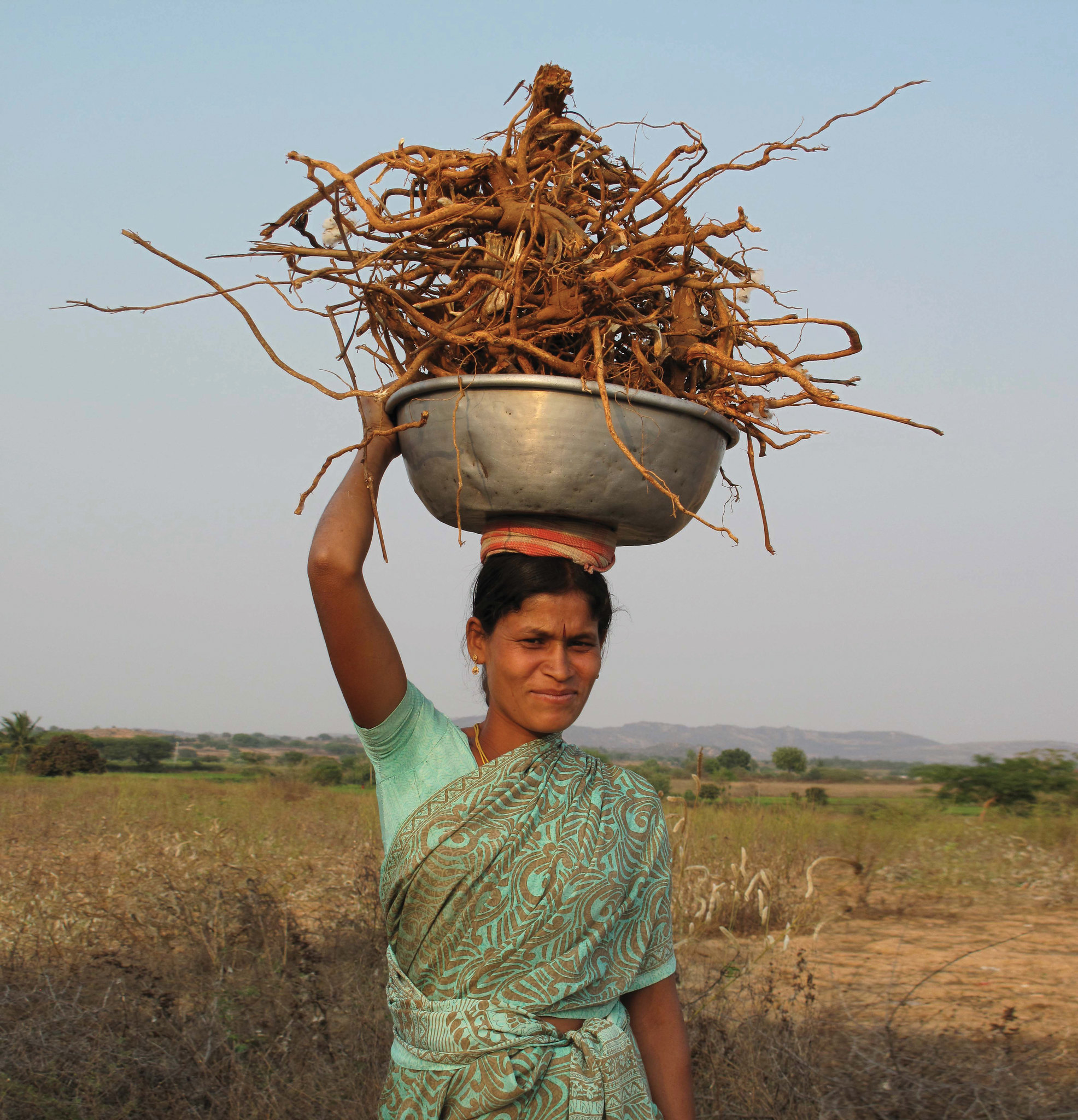
Ashwagandha is not merely a wild shrub. Often described in India as ‘pink gold’, it is a cultivated cash crop that supports rural livelihoods in some of the country’s most ecologically fragile regions. In 2024, sales of ashwagandha in the United States mainstream market alone reached USD144.5 million, ranking it as the third-highest-selling herbal supplement.
For farmers in districts like Neemuch and Mandsaur, the crop offers returns well above those of traditional cereals, providing a crucial economic hedge against climate variability. However, the bioengineering of yeast to produce withanolides threatens to sever this link.
By identifying the plant’s specific gene clusters and “uploading” them into yeast (Saccharomyces cerevisiae), researchers have effectively created a “maximally efficient withanolide factory.” This effectively decouples the production of the drug from the plant itself. If scaled, this technology could relegate Indian farmers to the low-value bulk commodity market, while the high-value “clinical” grade production shifts to fermentation tanks in the Global North.
We have seen this play out before. When synthetic biology companies engineered yeast to produce vanillin, it was marketed as “natural,” destabilizing vanilla farmers in Madagascar. Similarly, the semi-synthetic production of artemisinin (for malaria) disrupted market signals for farmers in East Africa and Asia, leading to price crashes and supply instability.
Ashwagandha (Withania somnifera) plant in flower. The species is widely cultivated across India and central to current debates on digital sequence information and benefit sharing. Photo by Dinesh Valke.
The “Nagoya gap”: When atoms become bits
At the heart of the controversy lies a transformation that international law has struggled to keep pace with: the shift of biological resources from physical material to digital information.
Historically, under the Nagoya Protocol, adopted in 2010, users of genetic resources are required to obtain prior informed consent and to share benefits with the provider country. In the Boston laboratory, no such consent was sought. The researchers simply sequenced DNA from commercially purchased seeds.
Once a genome has been sequenced and uploaded as digital sequence information (DSI) to a database, the physical plant becomes theoretically obsolete for drug discovery. Laboratories in Boston, Berlin, or Beijing can download the code and synthesize compounds without ever contacting the country from which the genetic material originated.
The regulatory imbalance is sharpened by geopolitics. Because the United States is not a party to the Convention on Biological Diversity (CBD), US researchers operate in a regulatory “safe haven.” Buying seeds from a domestic US reseller bypasses the regulatory triggers that would apply if they had collected the plant in India, effectively “washing” the genetic resource of its sovereign obligations.
The “Cali fund”: A paper tiger?
In late 2024, at COP16 in Cali, Colombia, the world attempted to close this gap. Nations adopted Decision 16/2, establishing the “Cali Fund”, a global multilateral mechanism to share benefits from the use of DSI.
The mechanism was hailed as historic. Large companies relying on DSI are invited to contribute a portion of their earnings to a global fund for biodiversity conservation. The decision set “indicative rates” of 1% of profits or 0.1% of revenue.
Crucially, for many nations, the contribution remains voluntary. The final text states that companies “should” contribute, rather than “shall.”
For a biotech startup in Massachusetts, there is currently no international legal requirement to pay into the Cali Fund. Compliance is an act of corporate social responsibility, not a legal obligation.
India’s regulatory fortress
Contrast this with India’s domestic response. Anticipating the weakness of international agreements, India notified its new Biological Diversity (Access and Benefit Sharing) Regulations in 2025. These regulations explicitly expand the definition of “access” to include DSI and mandate strict benefit-sharing tiers for commercial use:
- 0.2% of annual gross ex-factory sales for companies with a turnover of ₹5–50 Crore.
- 0.4% for turnover of ₹50–250 Crore.
- 0.6% for turnover above ₹250 Crore.
- 5% of the sale price upfront for high-value biological resources or IPR transfers.
This creates a jurisdictional paradox: India has a mandatory law asserting sovereignty over its digital genetic data, but it cannot easily enforce this against a US entity that bought seeds from a third-party vendor.
Closing the gap
As delegates prepare for COP17 in Yerevan, Armenia, later in 2026, the Aashwagandha case serves as a stark warning. The “Nagoya Gap” proves that voluntary mechanisms are insufficient in an era of digital biology.
To create a truly just bioeconomy, three shifts are necessary:
- Universal Traceability: Patent offices must require applicants to disclose the geographical origin of the biological material used, even if it was purchased commercially. “Bought on Amazon” should trigger a requirement to identify the original source country.
- Hardening the Cali Fund: The transition from “indicative” to “mandatory” contributions will be the primary battleground of COP17. Without binding obligations, the Cali Fund risks becoming a charity tin rather than a mechanism for justice.
- Investing in “phytomanufacturing”: Rather than replacing farmers, the bioeconomy should empower them. Investments should focus on improving the agronomy and processing of medicinal plants in the countries of origin, keeping the value chain rooted in the soil.
Until these gaps are closed, the bubbling vats in Boston will continue to represent a miracle of science, but a failure of justice.