When men in an Indonesian village discovered the staggering imbalance in daily workloads between them and the women, their surprise helped to stir a change in attitudes, sparking hope for broader societal change.
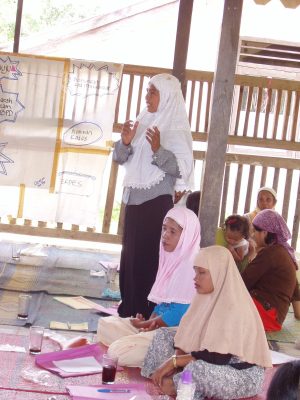
The daily-task exercise revealed that men spent about five hours a day working in the field, while women worked more than twice that amount of time preparing meals, collecting wood and water, looking after children, washing, and tending to crops. “This realisation helped the men understand why women need equal opportunities”, said Linda Yuliani, a scientist with the Center for International Forestry Research and World Agroforestry (CIFOR-ICRAF).
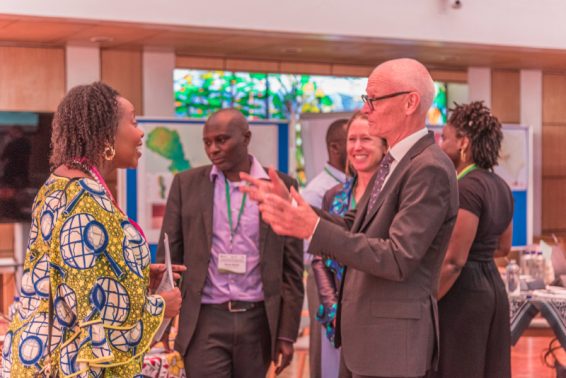
Yuliani presented these findings during the workshop “Gender, Equity and Social Inclusion (GESI) in Forestry/Agroforestry Projects: Workshopping tools for change,” an official side event of the Forests & Livelihoods Assessment, Research, and Engagement (FLARE) annual meeting in Rome in October 2024.
During the workshop, researchers and practitioners exchanged insights on applying gender-responsive and gender-transformative approaches in forest and agroforest systems. The hosts shared their experiences and methodologies applied, in working across relevant CIFOR-ICRAF projects, including field research from the Adaptive Collaborative Management (ACM) project on the Indonesian island of Sumatra. Yuliani emphasized that such hands-on exercises are invaluable in raising awareness and altering perceptions of gender roles.
The role of context in gender transformation
“Empowering women must involve granting them the freedom to choose, and to act in ways that are not overburdening them,” said Yuliani, a member of the Collaborating to Operationalise Landscape Approaches for Nature, Development, and Sustainability(COLANDS) initiative.
Emily Gallagher, a CIFOR-ICRAF scientist specializing in sustainable value chains and investment, reinforced this perspective. “Awareness of the existing roles and responsibilities for men and women in a particular context is the first step in transforming gender roles,” said Gallagher.
“Understanding how gender and inclusion intersect with other factors, from generation to religion, ethnicity and class, is essential to scaling up positive actions,” said Gallagher. “That, in turn, is necessary to move from individual change to systemic change and from informal norms to formal measures, including the composition of decision-making bodies and establishing laws that respect women’s land and resource tenure rights.”
“Equal access for women and men to formal decision-making arenas regarding individual and community land and resource rights is essential, as is secure land tenure that ensures women’s inheritance rights,” said Gallagher during the workshop attended by more than 30 participants.
Gallagher also presented the project Prioritizing Options for Women’s Empowerment and Resilience (POWER) in fruit tree value chains in Malawi, sparking a discussion on tools for empowering both women and men. “Families participated in the research only after agreeing to be involved,” Gallagher explained in response to a query on community involvement.
Community involvement also played a pivotal role in the Uganda National Oil Palm Project (NOPP). “Communities around Lake Victoria nominated households to participate in efforts to improve rural development and reduce poverty through oil palm production,” said Gallagher. “Over time, NOPP has gradually adapted its approach to include the Gender Action and Learning System (GALS) curriculum to support households and communities in setting economic goals, stabilizing at-risk families and in particular, engaging men as allies for women’s economic empowerment,” Gallagher said.
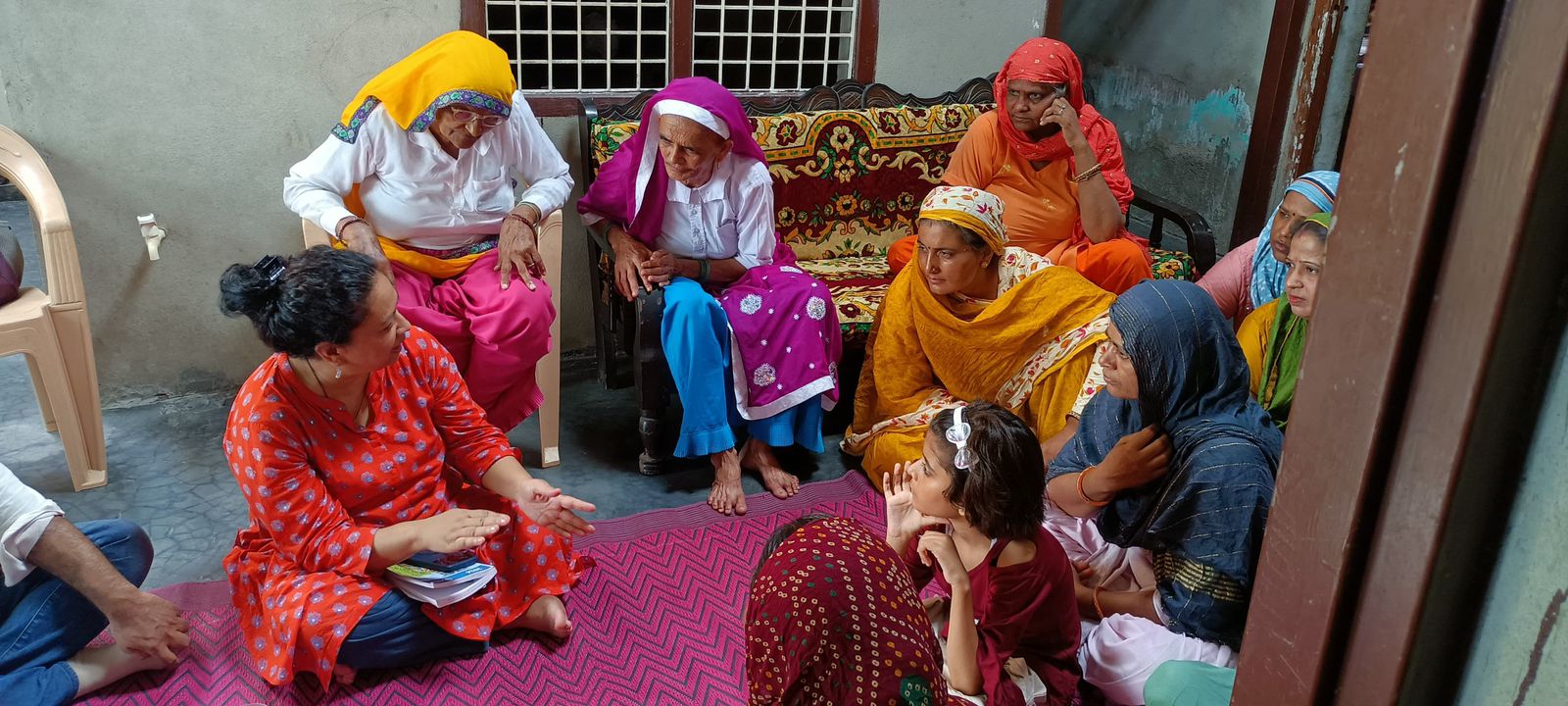
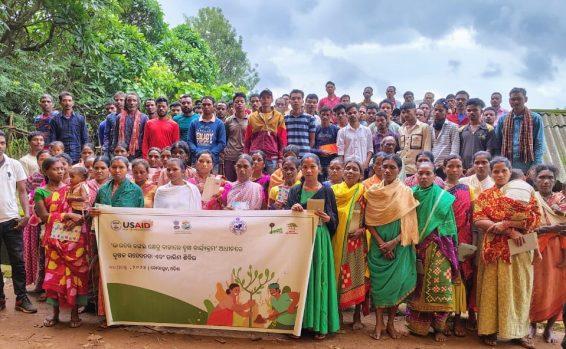
In India, “the Gender Barrier and Opportunity Mapping Tool is playing a vital role in helping communities and other stakeholders in landscapes to identify and address opportunities and constraints related to gender and social equity, so these can be addressed,” said Babita Bohra, GESI coordinator for CIFOR-ICRAF India, described how this tool is being employed as part of the five-year Trees Outside Forests in India (TOFI) initiative.
A joint project by the United States Agency for International Development (USAID) and India’s Ministry of Environment, Forest and Climate Change (MoEFCC), TOFI aims to expand tree cover on approximately 2.8 million hectares of non-forest land. The initiative is expected to sequester an estimated 420 million tonnes of carbon dioxide equivalent while enhancing the livelihoods of 13.1 million people. This ambitious goal will be achieved through on-the-ground initiatives, multi-stakeholder partnerships, capacity building and active policy engagement.
“The specific context of each landscape shapes whether exercises are conducted with single-sex or mixed groups,” Bohra explained in response to a workshop question. She emphasised that the GESI approach ensures meaningful inclusion of women, under-represented social groups, and differently-abled individuals in TOFI activities.
Workshop facilitator James Reed, COLANDS team leader and CIFOR-ICRAF senior scientist led a thought-provoking exercise on how language can reinforce stereotypes. He highlighted research involving children playing with Lego toys, where boys’ creations were described as “cool”, “innovative”, or “clever”, while girls’ efforts were labelled “cute” or “pretty.”
Participants reflected on how social power dynamics, such as who is allowed to laugh freely or express themselves in a group, often marginalise women and girls. They agreed on the need to expand tools and methods for Gender Equality and Social Inclusion research to address such inequities effectively.
Workshop organizers hope this event will inspire regular engagement on gender-responsive and transformative research in social-ecological systems.
For those interested in collaborating or learning more, contact details are available below.
Acknowledgements
COLANDS is part of the International Climate Initiative (IKI) and is funded by the German Federal Ministry for the Environment, Nature Conservation and Nuclear Safety (BMU). PhD research that is part of COLANDS is hosted at the Institute for Social Science Research of the University of Amsterdam and the University of British Columbia.For more information about COLANDS work, contact James Reed at [email protected].
TOFI is a joint initiative by the United States Agency for International Development (USAID) and the Ministry of Environment, Forest and Climate Change (MoEFCC) of the Government of India; and led by CIFOR-ICRAF. Contact: Babita Bohra at [email protected]
POWER is a CIFOR-ICRAF project as part of the Gender Equality in a Low Carbon World (GLOW) programmeand is by the International Development Research Centre (IDRC), Ottawa, Canada. Contact: Emily Gallagher at [email protected] and Jessica Kampanje Phiri at [email protected]
The NOPP Uganda study was part of the initiative for Securing Women’s Resource Rights Through Gender Transformative Approaches funded by the International Fund for Agricultural Development (IFAD). Contact: Emily Gallagher at [email protected] and Anne Larson at [email protected]