

East Kalimantan has long stood at the forefront of Indonesia’s forest and climate initiatives. Home to some of the country’s most carbon-rich landscapes and a long history of land-use change linked to mining, logging and expanding agricultural frontiers, the province has become a testing ground for ambitious approaches to reduce deforestation while supporting local livelihoods. It is here that Indonesia piloted its first jurisdictional REDD+ programme under the World Bank’s Forest Carbon Partnership Facility, positioning East Kalimantan as a national reference point for how carbon markets might work in practice – and for whom. Against this backdrop, questions of fairness, rights and community participation have become increasingly central as the country moves toward high-integrity carbon trading and seeks to strengthen social justice in Indonesia’s carbon market.
The Carbon Fund (FCPF-CF) programme, valued at USD 110 million, has been implemented since November 2021 and will continue through December 2025.
Investments made during this period have placed East Kalimantan ahead of much of Indonesia as market-based carbon trading takes shape. Under Indonesia’s evolving framework, carbon credits quantify the amount of carbon emissions avoided or absorbed through forest “avoided deforestation”, forest protection and restoration — and can be traded in the domestic and international carbon market. In practice, companies and governments that struggle to cut emissions within their own boundaries may purchase verified reductions from elsewhere, including East Kalimantan.
Indonesia is also the first country in the Asia Pacific region to receive provincial-level result-based carbon payments. One key lesson emerging from East Kalimantan relates to the lived experience of Indigenous Peoples and local communities – the groups whose lands, forests and everyday decisions are essential to the success of REDD+.
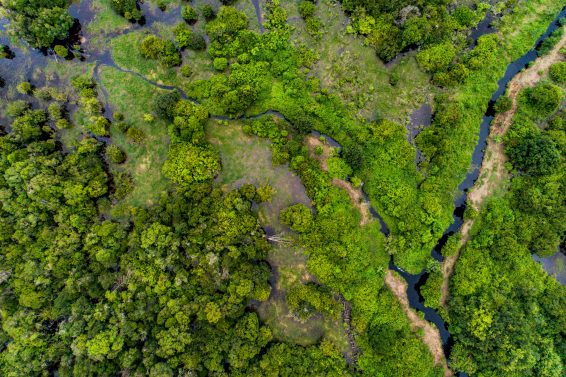
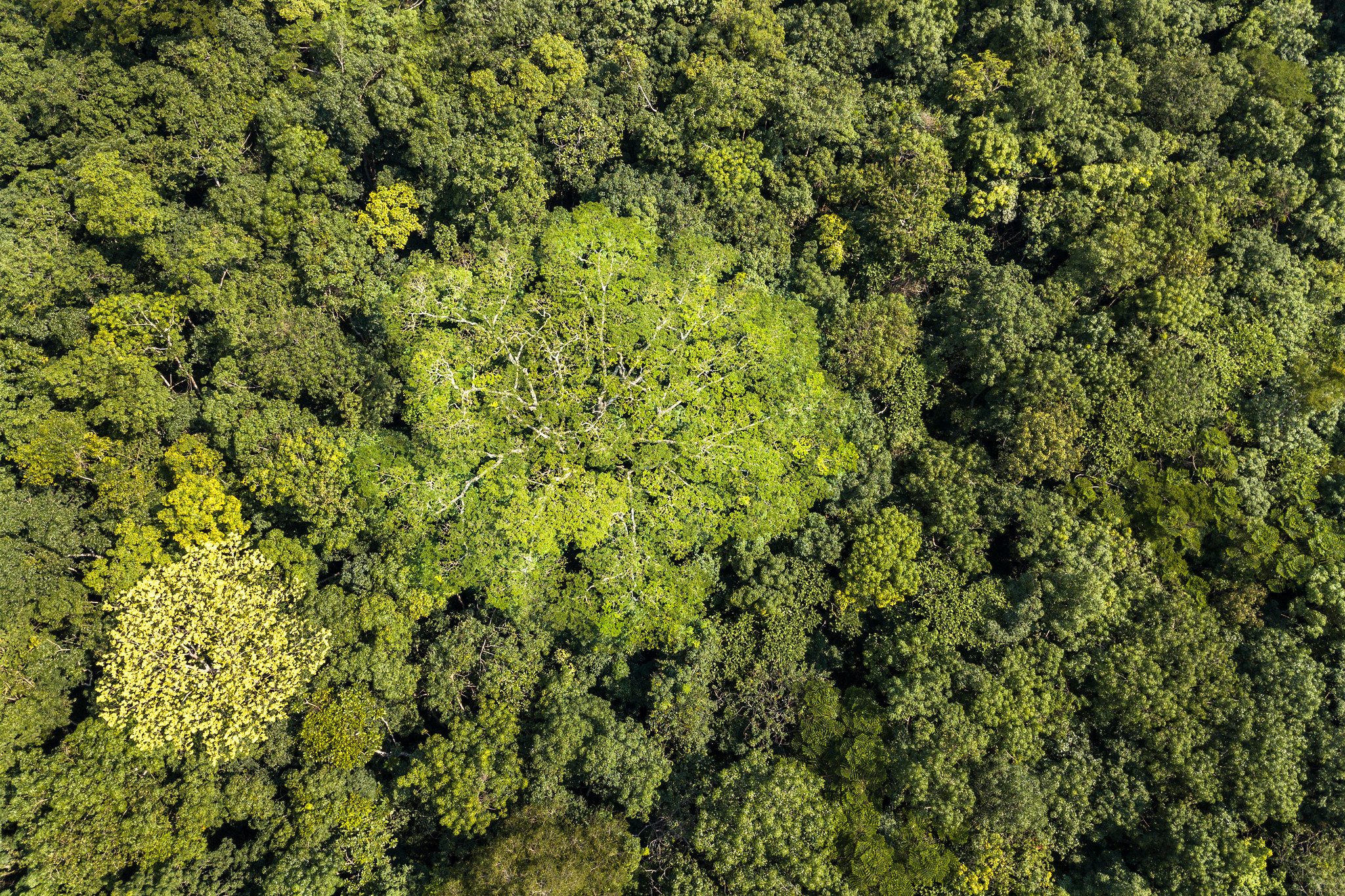
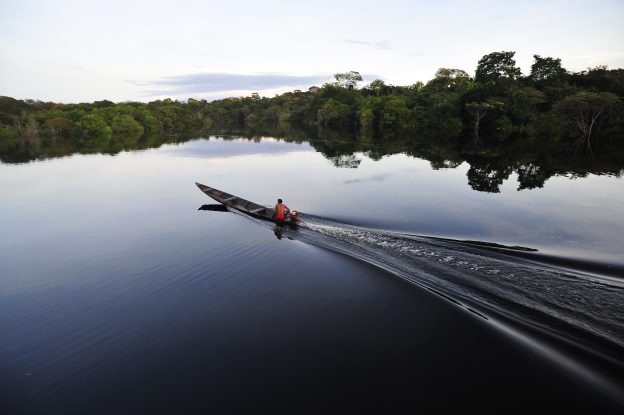
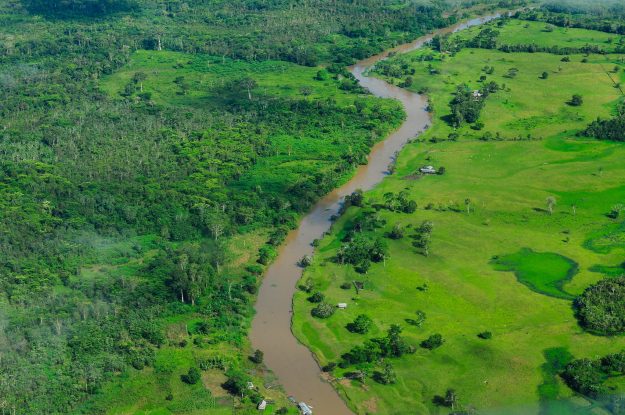
Aerial view of forest and river landscapes in Kutai Kartanegara, East Kalimantan, where Indonesia’s first jurisdictional REDD+ programme is helping shape high-integrity carbon approaches. Photo by Nanang Sujana / CIFOR-ICRAF
“East Kalimantan is implementing its forest carbon partnership program with the World Bank until the end of 2025, and we have learned a lot,” said Professor Daddy Ruhiyat, head of the Provincial Council on Climate Change (DDPI). “It turns out that many local communities and Indigenous Peoples feel the benefit distribution system still needs improvement. It is valuable feedback for the program, and we must be open to accepting it. Why? Because this program is a first for East Kalimantan, and indeed for Indonesia. East Kalimantan is starting from scratch to implement it all.”
Concerns raised in East Kalimantan echo those voiced worldwide. Some emissions-reduction projects have overstated their climate impact, while others have not consistently safeguarded the rights of forest-dependent communities. These debates have sharpened calls for high-integrity carbon — credits backed by rigorous environmental and social standards that contribute meaningfully to global climate goals.
Building understanding of high-integrity carbon
Last June, the Center for International Forestry Research and World Agroforestry (CIFOR-ICRAF) and the DDPI East Kalimantan held two workshops on greenhouse gas emission reduction, titled “High Integrity Carbon“, one in Samarinda, the capital of East Kalimantan Province and another in Tenggarong, the capital of Kutai Kartanegara, a regency in East Kalimantan. The sessions aimed to identify capacity gaps related to REDD+ and clarify what people need to understand and implement high-integrity carbon projects. Participants included provincial and district government actors, community representatives, and civil society organizations.
CIFOR-ICRAF researchers asked participants to reflect on their understanding of REDD+ and the carbon market. Many had attended earlier discussions on calculating emissions and designing fair benefit-sharing systems. Still, the results revealed uneven knowledge.
“I had thought that understanding of emission reduction would be high and that justice aspects would be less understood,” said Moira Moeliono, a CIFOR-ICRAF senior associate. “Yet participants rated their understanding of emission-reduction aspects largely as medium or low.”
Atmadja, a CIFOR-ICRAF scientist, said the workshops revealed two broad groups. “One group understood REDD+ and carbon emission reduction, and the other group didn’t. Those who understood were mostly in Samarinda, where they had been involved in developing the REDD+ programme.” Even so, knowledge varied widely within provincial institutions, particularly those working more on economic or social issues than on forestry or environment.
Although understanding tended to be stronger in Samarinda, it was far from uniform. Many provincial participants working in institutions focused on economic or social issues – rather than environment or forestry – were encountering carbon discussions for the first time. Muhammad Risman, a social worker with the East Kalimantan Provincial Social Service, was among them. “This is my first time participating, and I’m very, very interested,” he said.
The contrast with district-level participants was even more pronounced. “If the workshop was held at the provincial level, the response reflected a good understanding, given their long involvement,” Ruhiyat said. “But at the district level, understanding is still limited.” The workshop held in Kutai Kartanegara, he added, showed clearly the need for broader outreach to strengthen public understanding of the carbon programme.
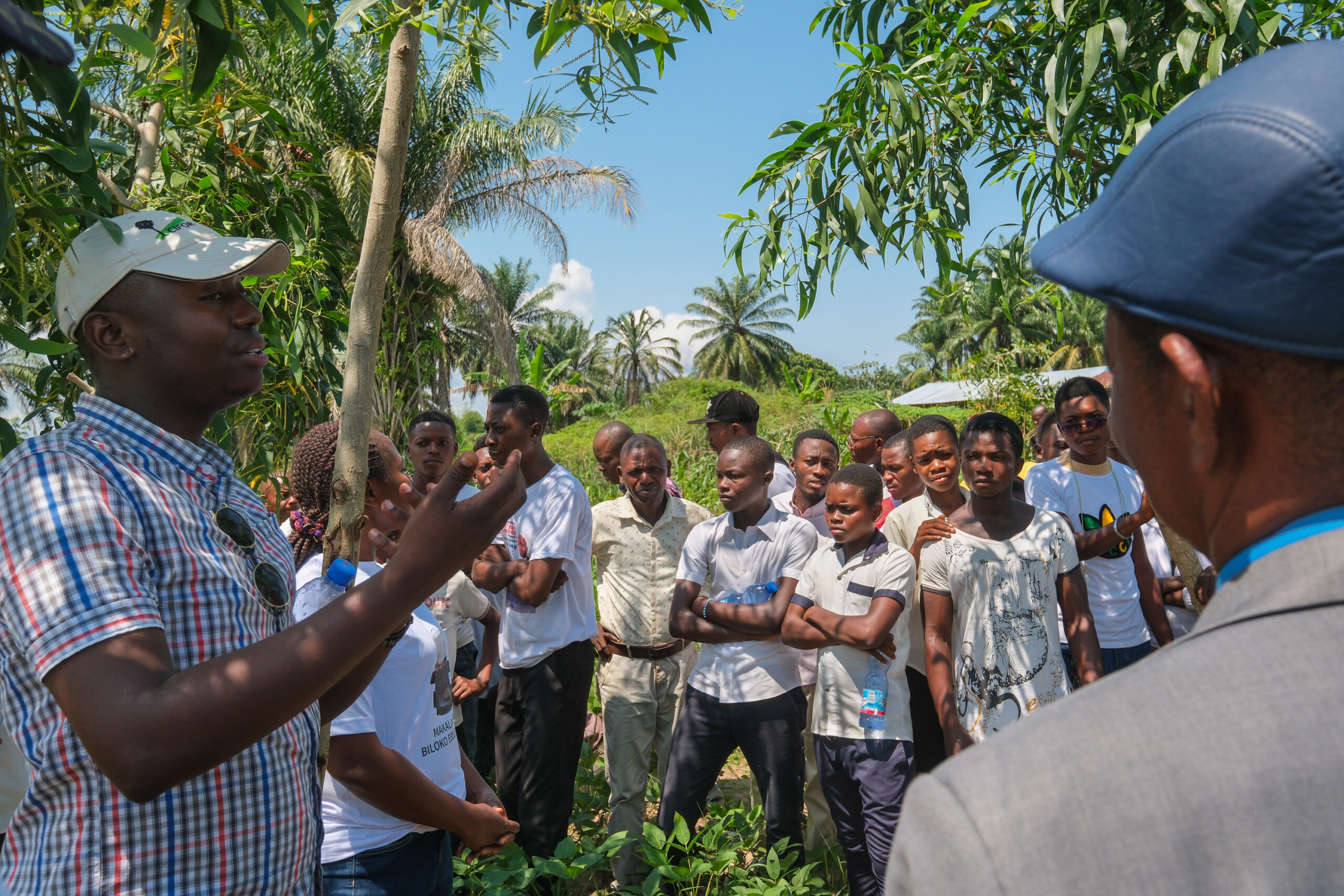
A local government officer speaks with villagers in East Kalimantan. Community outreach remains essential as understanding of carbon initiatives varies across districts. Photo by Dede Rohadi / CIFOR-ICRAF
The gender gap in carbon literacy
Marni and Lisnawati, two housewives from Sepatin Village in Kutai Kartanegara, offered a clear example of how information gaps disproportionately affect women. Both appeared flustered when asked about the carbon project. “I don’t really understand what carbon is,” Marni said. “Some said it was related to wood.” Lisnawati echoed her confusion, noting that the workshop questions felt overwhelming. “The questions were so high-level. So we didn’t really understand,” she said.
For Moeliono, this highlights a deeper challenge. “The basic knowledge of why they have to protect the forests, and why we pay them if their forests aren’t cut down, is not yet understood in relation to climate change,” she explained. “The understanding needs to be solidified before we can talk about things like REDD+ and carbon markets.”
Atmadja said gendered social norms often keep women from participating in carbon-related outreach. “The assumption is that inviting women or men is the same, but in villages, their social networks affect the flow of information. Information provided to men may not necessarily reach women, and vice versa.”
Workshop invitations frequently go to village heads and officials – roles overwhelmingly held by men. Household heads, also mostly men, are typically the ones invited to village meetings. “Women’s representation still needs to be strengthened,” she said.
Mobility constraints deepen the gap. Household responsibilities fall heavily on women: childcare, laundry, cooking and cleaning. “It’s continuous work,” Atmadja explained. “It’s not easy to leave for long periods and it can’t be done via Zoom.” When workshops take place in district towns, women often hesitate to attend if their husbands cannot take on household duties.
Why high-integrity carbon matters for East Kalimantan
These knowledge gaps underline why high-integrity carbon is essential, said Ruhiyat. Strengthening understanding is “very important and relevant to the needs in East Kalimantan, especially in supporting the Indonesian government to become a supplier of high-integrity carbon credits that ultimately contribute to global climate goals.”
Deden Djaenudin, a researcher at the National Research and Innovation Agency’s behavioural and circular economics centre, added that East Kalimantan’s future in the carbon market depends on such efforts. “Many people have come to East Kalimantan to find suitable locations for developing carbon trades,” he said.
Both Moeliono and Atmadja stressed that social justice cannot be an afterthought. “Although the forest is controlled by the state, many people live there,” Moeliono said. “Communities play a crucial role in protecting the forest. They are the most vulnerable and most dependent on forest resources. Justice must be a primary concern so forest management does not compromise their livelihoods.”
Ruhiyat agreed that social integrity is as important as technical accuracy. Emission-reduction calculations must be rigorous and verifiable, but communities must also be fully informed and meaningfully involved. “Essentially, we must uphold the rights of Indigenous Peoples and local communities,” he said.
Acknowledgements
This article was produced with support from the Climate and Land Use Alliance (CLUA). The views expressed are those of the authors and do not necessarily reflect the positions of CLUA or its partners.