

Across Kenya and Rwanda, efforts to strengthen tree seed systems often focus on practical challenges: identifying seed sources, improving seed quality and ensuring tree growers have access to the species they need.
But another question is equally important: who has access to the knowledge, resources, training and opportunities that shape those systems?
Through the Quality Tree Seed for Africa (QTS) project, researchers and practitioners have been exploring how gender equity and social inclusion (GESI) influence participation in tree seed systems — from seed collection and cooperative leadership to training opportunities and decision-making.
While the barriers experienced by different groups vary across Kenya and Rwanda, a common challenge is ensuring that access to information, training and leadership opportunities extends beyond a few individuals and networks.
The findings suggest that inclusion means more than ensuring women or young people are present. It also depends on whether they can influence decisions, express their needs and aspirations, share their knowledge, access opportunities and share in the benefits that tree seed systems create.
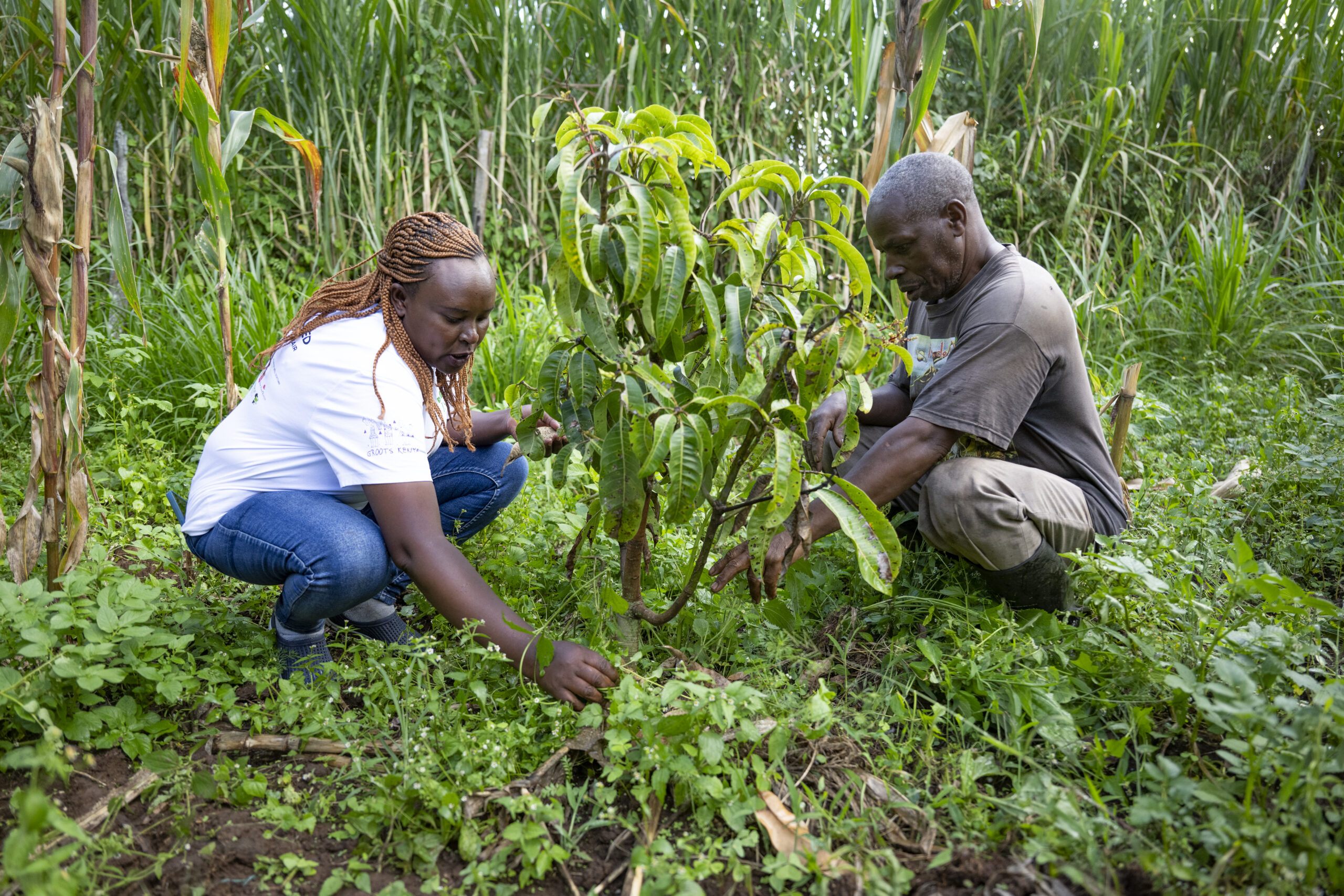
For many rural households, those benefits extend beyond restoration. Access to tree seed, knowledge and training can influence food security, income opportunities and the products that trees provide to households and communities. As farmer Susan Njau from Laikipia County reflected after participating in a project-supported training, integrating trees into farming systems can support both environmental restoration and household nutrition and income.
Looking beyond attendance
In many restoration and development projects, participation is often measured by numbers. How many men and women attended a training? How many young people or people with disabilities participated?
While these indicators matter, they do not always reveal who is actively involved in decision-making or who gains access to new opportunities.
The project therefore worked with cooperatives and partner organizations to think differently about participation — moving from unequal levels of participation, where some voices dominate while others are silenced, towards more egalitarian, interactive participation. This involved broadening access to training and encouraging influence and voice beyond a small group of representatives.
The goal was not simply to increase attendance, but to ensure that more people could benefit from learning opportunities and contribute their perspectives.
Understanding different experiences and perspectives
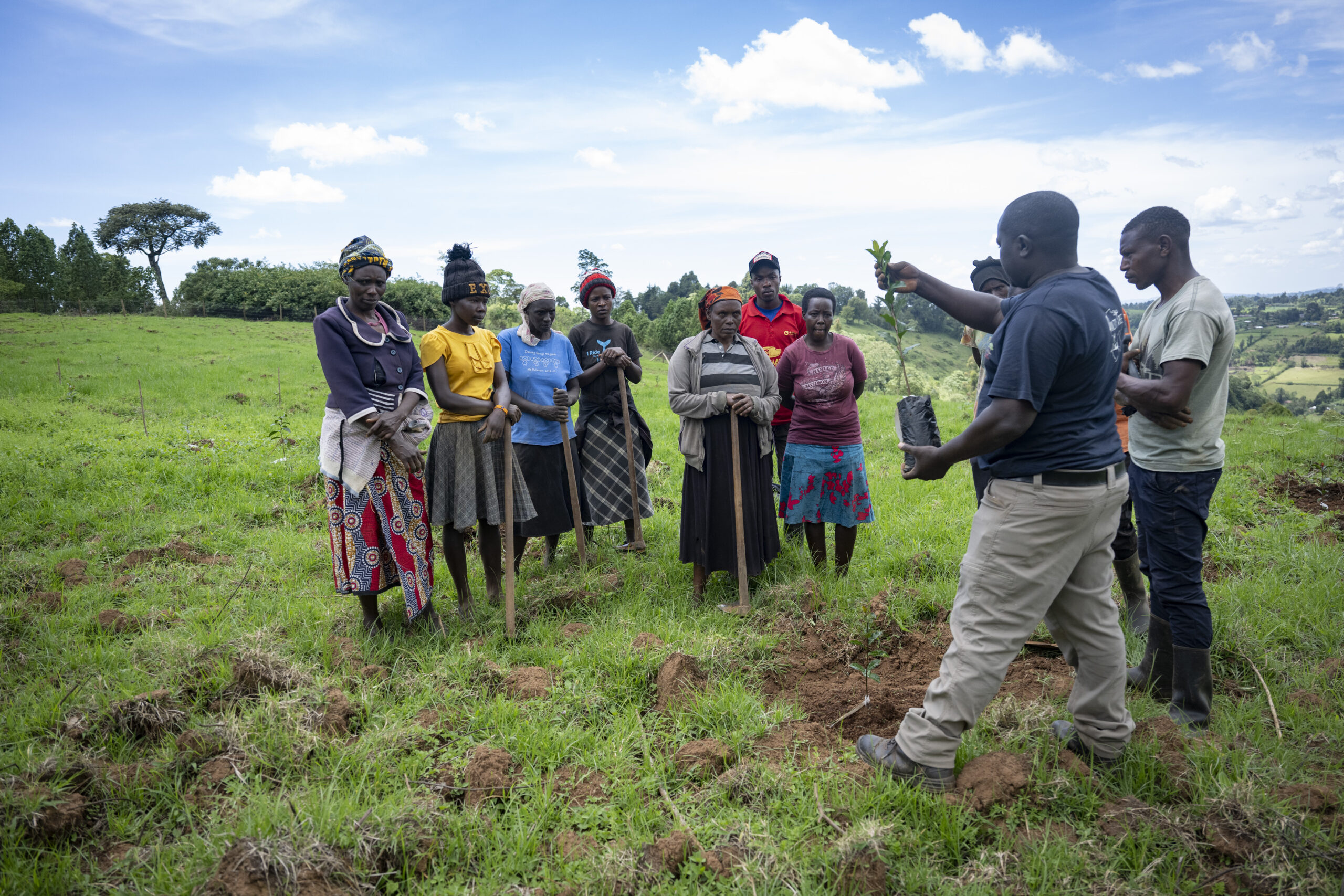
A gender analysis conducted through the project explored how social norms, roles and responsibilities influence participation in tree seed systems. Across the sector, in both countries, actors called for stakeholders to come together to discuss gender equity and social inclusion and build related capacity. As a result, the project held a number of contextual dialogues and locally rooted workshops to increase the focus on GESI within the tree seed sector.
Training sessions encouraged participants to reflect on the difference between biological sex and socially constructed gender roles, and how these can shape access to information, mobility, income opportunities, leadership opportunities and decision-making.
Participants also reflected on how experiences can differ across households, communities, and regions. While many described positive changes from rigidly divided gender roles to more equal roles and opportunities compared to previous generations, they also discussed the challenges that can still limit participation.
A central theme of dialogue during the workshops was Men Engage: Journeys of transformation, which examined how gender norms also affect men and how men, in all their diversity, can be part of dismantling gender inequalities and create more egalitarian communities and societies.

Photo by Kelvin Trautman / Landscape Alliance
Discussions during project activities highlighted the importance of understanding different priorities within communities. During a World Environment Day training in Kenya, participants reflected that women and men may value different tree products and benefits because of gender roles and different levels of access to trees and land, reinforcing the importance of including diverse perspectives in restoration planning.
Importantly, conversations during workshops unearthed how gender is not the only aspect of social identity associated with disparities in access to resources and opportunities. Ethnicity, educational level, sexuality, dis/ability, marital status, nationality and age can also shape a person’s or group’s experience of privilege and discrimination.
Augustin Kimonyo, an East African expert on Men Engage programmes, and Katrine Gro Friborg, Kenya country lead for the Quality Tree Seed for Africa project at Landscape Alliance, led the GESI workshops. Both said that open debate about gender norms and cultural roles is necessary to create space for change. Positive gender-equitable transformation does not happen overnight, but requires continuous dialogues, contextual attention and actions.
Working through cooperatives and local organizations
Cooperatives and local NGOs have been important entry points for the project.
Rather than treating gender and social inclusion as a compliance requirement, the project sought to build the capacity of partner organizations to reflect on their own approaches to community engagement.
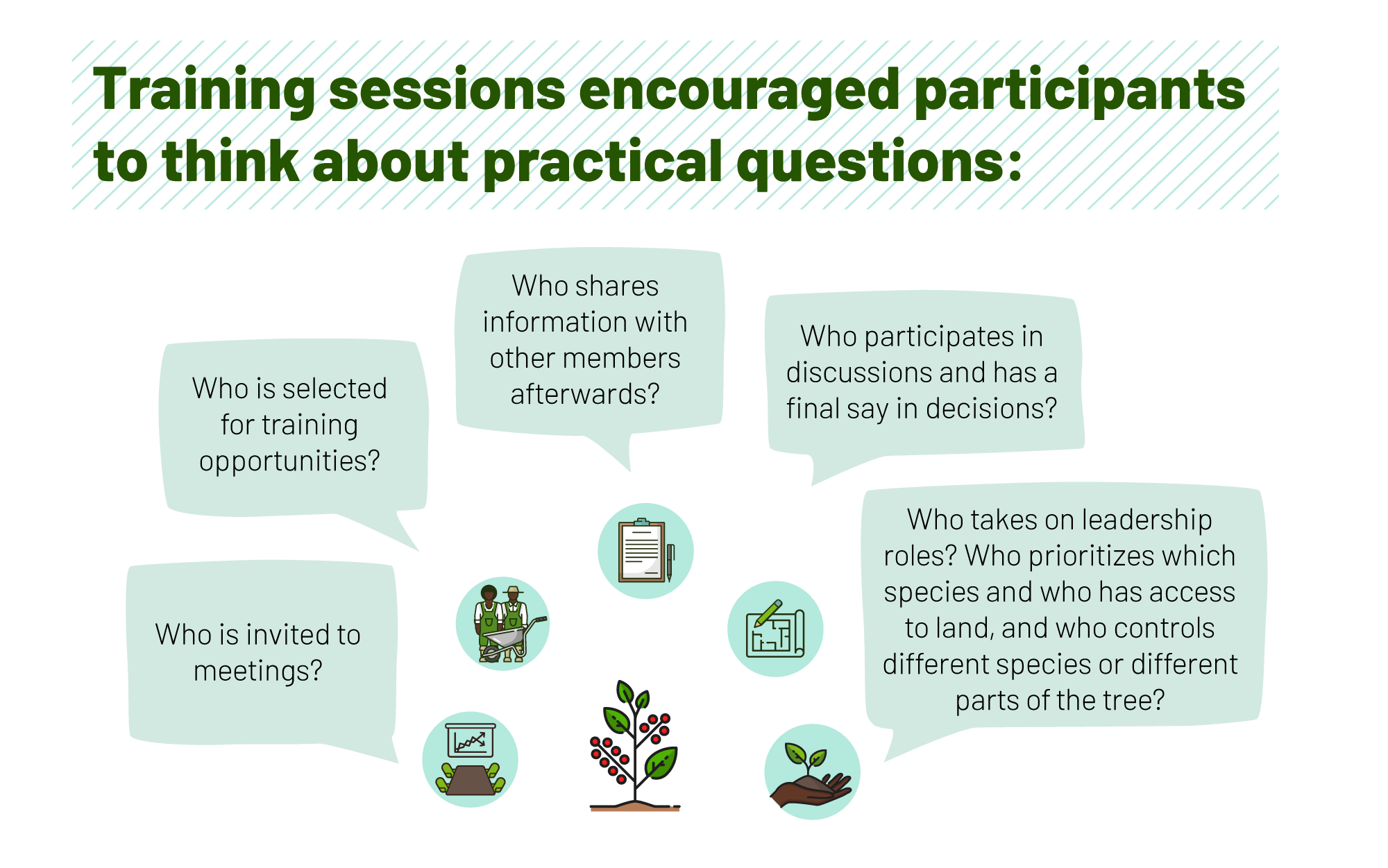
During the workshops, the NGOs analysed their own community engagement strategies. Many noted that their current outreach often targets male heads of households and male community leaders, thereby missing the needs, perspectives and knowledge(s) of most community members. The NGOs further acknowledged that project schedules often conflict with women’s domestic responsibilities. They agreed that “business as usual” in restoration often inadvertently increases women’s labour without increasing their control over the benefits.
The goal was not simply to increase participation, but to support organizations to reflect on whether opportunities and information were reaching a broad range of people within their communities.
“We encourage reflections and dialogues on how to move away from participation — for example ‘women’ or ‘youth’— being a box-ticking exercise,” said Friborg. “The focus was on understanding who is being reached, who is not, and how organizations can adapt their approaches, rooted in local agency, so that more people have a meaningful voice and can progress from passive to interactive participation in restoration and tree seed systems.”
Through workshops and discussions, partner organizations explored ways to strengthen participation by women, Indigenous Peoples, and other community members with limited voice, while reflecting on how their own engagement approaches could become more inclusive.
“We encourage reflections and dialogues on how to move away from participation — for example ‘women’ or ‘youth’— being a box-ticking exercise. The focus was on understanding who is being reached, who is not, and how organizations can adapt their approaches, rooted in local agency, so that more people have a meaningful voice and can progress from passive to interactive participation in restoration and tree seed systems.”
— Katrine Gro Friborg, Landscape Alliance
Galvanizing action plans
One component of the training process focused on learning from each other and from other grassroots-led initiatives about how to move from reflection to action.
Using a Vision Journey approach, participants analysed and explored how gender norms can influence tree seed activities and cooperative governance before identifying practical actions they could implement within their organizations.
For some, this meant encouraging and supporting more women to take on leadership roles, while working to change male-dominated decision-making norms and create more egalitarian and inclusive structures. Others discussed improving how training opportunities are shared, creating more opportunities for youth participation, or strengthening the way knowledge is communicated within cooperatives.
A recurring theme was that building more inclusive tree seed systems requires both women and men to be involved. Participants also said that recognizing and working with traditional and Indigenous ecological knowledge of trees and seed was essential to improving inclusion in the tree seed sector. Knowledge of native tree species, in particular, may be lost if it is not passed from older to younger generations, while exotic species and monoculture landscapes are continuously prioritized for income and export markets. Participants said that the involvement and rights of Indigenous Peoples and elders with ecological knowledge are key to a sustainable tree seed sector.
Participants developed action plans that could be implemented within their own organizations and communities, helping to translate discussions into practical steps.
“The training challenged us to think differently about how we engage communities. “Inclusion is not only about inviting people to meetings. It is about creating space for people to contribute and influence decisions.”
Sharing knowledge beyond the training
One of the strongest messages emerging from the workshops was the demand for practical resources that participants could take back to their communities.
Both women and men expressed interest in simple materials explaining key concepts, terminology and approaches discussed during the training sessions. Participants said they wanted resources they could use during cooperative meetings, church gatherings and community discussions to continue conversations about inclusion and participation.
That feedback directly informed the development of a GESI booklet through the project, helping to translate workshop discussions into practical resources that participants could share with others in their church groups and community gathering settings.
“The training challenged us to think differently about how we engage communities,” reflected one participating practitioner. “Inclusion is not only about inviting people to meetings. It is about creating space for people to contribute and influence decisions.”
The importance of sharing information beyond workshop participants was echoed during project activities in Kenya. Catherine Wachira, a member of GROOTS Kenya, said that “often, inaction stems not from lack of resources but from lack of information and awareness.” Ensuring that knowledge reaches beyond a small group of representatives remains central to building more inclusive tree seed systems.
Several participants also emphasized that the knowledge gained should not remain with those who attended the workshops. Instead, they saw a responsibility to bring those discussions back to cooperatives, churches and community groups so that more people could take part.
Building more inclusive tree seed systems
Tree seed systems depend on people: seed collectors, forest and seed custodians, nursery operators, cooperative members, extension agents, and farmers.
The experience of the Quality Tree Seed for Africa project shows that strengthening inclusion goes beyond who attends a training. It depends on how knowledge is shared, whose perspectives are heard and whether opportunities to learn and contribute reach a broad range of people.
For cooperatives, NGOs and restoration practitioners, these reflections are a reminder that stronger tree seed systems require technical knowledge and broad access to opportunities to participate, contribute and learn.
For more information, visit the Quality Tree Seed for Africa Project website: https://www.cifor-icraf.org/quality-tree-seed-for-africa/