

Healthy soils are the quiet lifeblood of a healthy landscape. They hold water through dry spells, recycle and retain nutrients, and keep farms productive – helping to protect surrounding forests from encroachment.
In the Yangambi Engagement Landscape in the Democratic Republic of the Congo (DRC), soils underpin a growing network of activities: agroforestry, community farming, sustainable woodfuel and biomass electricity systems, livestock production, vegetables, coffee and environmental education.
Now, attention is turning below ground with a practical question: can biochar help rebuild Yangambi’s soils while strengthening the wider landscape approach?
Biochar – a carbon-rich material made by heating biomass with little oxygen – is attracting attention worldwide for its potential to improve soil health and store carbon for years. For Mary Njenga, a senior research scientist in bioenergy and biochar systems at the Center for International Forestry Research and World Agroforestry (CIFOR-ICRAF), its promise is as practical as it is scientific.
“Biochar connects energy, soils, food production, forest conservation and society,” Njenga said. “Farmers are turning local tree and crop residues into a valuable soil input, improving yields and livelihoods while reducing pressure on forests.”
Participatory testing biochar on real farms
Between 2024 and early 2025, comparison trials ran over three seasons at pilot farms in Yangambi and Yanonge, as well as through nearby Farmer Field Schools. Researchers assessed different biochar sources – including material from the local biomass power plant and residues from sustainable charcoal-producer production – applied alone and mixed with manure to increase nutrient availability.
The trials generated evidence on baseline soil conditions, immediate effects of application, residual effects after a single treatment and the benefits of repeated applications.
Baseline soil tests revealed highly acidic soils with very low natural fertility. Intense nutrient leaching and low water-holding capacity — typical of highly weathered tropical soils — constrain productivity even when farmers invest significant labour and time.
Biochar addresses several of these limitations simultaneously. It improves soil physical properties and soil structure, raises pH in acidic soil, increases stable soil organic carbon and enhances nutrient retention by reducing leaching. It also improves water-holding capacity and stimulates microbial activity, contributing to improved soil fertility and agricultural productivity, especially for sandy soils of Yanonge.
Field results have been encouraging. Biochar plots consistently outperformed control plots, particularly where biochar was mixed with manure before application. Yield increases following a 10-tonne-per-hectare application ranged from five percent to as high as 3,700 percent, depending on soil characteristics, crop type, agroforestry versus non-agroforestry systems and whether the biochar was nutrient-charged. The variability provides important insights for scaling.
Nutrition, dignity and kitchen gardens
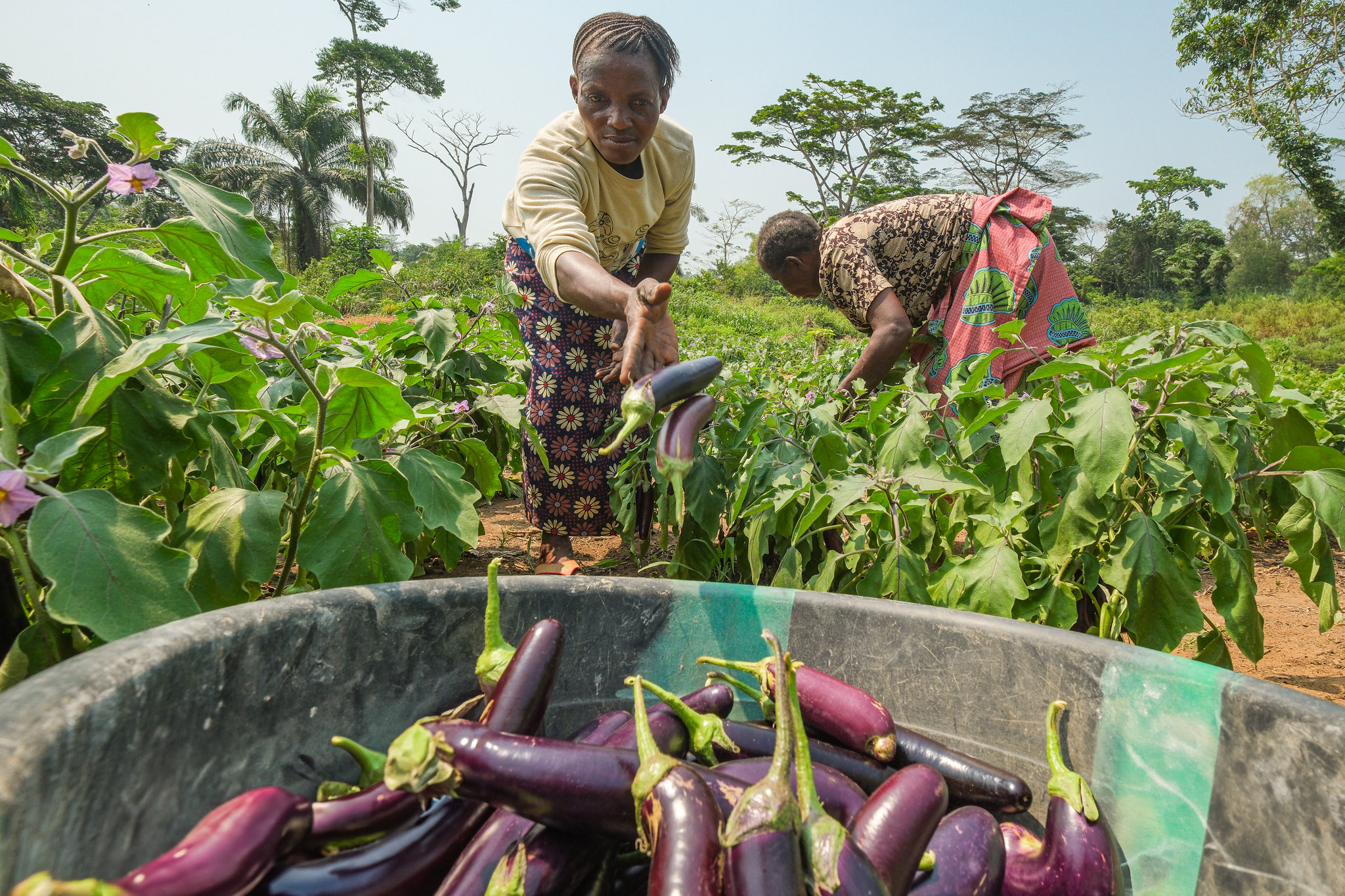
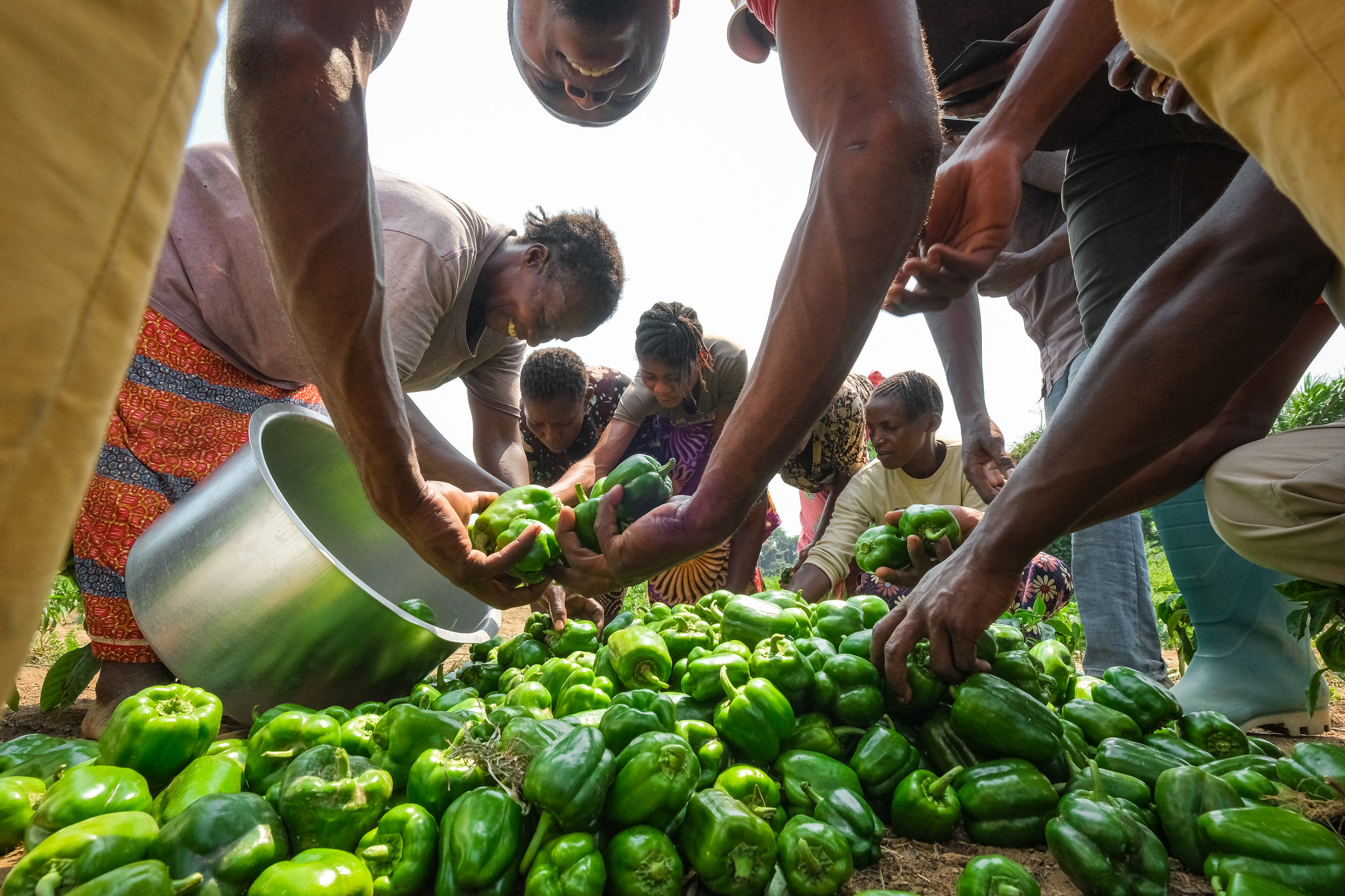
As with all Yangambi work, the approach was participatory. Communities helped select trial crops, prioritizing both food security and income from the perspectives of women and men. Maize was intercropped with legumes to support soil fertility, alongside fast-growing vegetables such as amaranth.
“What touched the team and I when we first visited the landscape was the physical malnutrition in children. Nobody needs to tell the story,” said Njenga.
That observation reshaped and drove her research team to adapt their initial work plan. Biochar use was integrated into vegetable production through kitchen gardens — small plots of about 100 square metres near households. Farmers were trained to produce biochar in situ using well-dried bamboo, cassava stems and maize cobs in Kon-Tiki pit kilns, where a flame curtain reduces emissions. The biochar is then mixed with compost or manure to “charge” it with nutrients before application.
Since July 2024, 86 percent of trained households have adopted kitchen gardens. In two growing seasons, households have earned approximately USD 100 per year. Around 40 percent of produce is consumed at home, improving dietary diversity with assorted vegetables, while the remainder is sold at local markets as a source of income.
One woman explained: “Tunatafuta chenga ya Makala ndiyo watoto wapone” — we are looking for biochar from charcoal producers so that our children can be well through consumption of diverse foods.
In Tombwa ya Mboka, a kitchen garden proved decisive when a member’s child fell seriously ill. With no savings for treatment, proceeds from selling amaranth grown with manure-charged biochar paid for the medicine her child needed.
Building a circular bioeconomy system
Biochar innovation in Yangambi is grounded in integration and circularity. Residues from energy and farm systems are returned to the soil, closing nutrient loops while strengthening food production.
Following promising trial results, Njenga’s team convened colleagues working in bioenergy, agroecology, livestock, vegetables, coffee, nutrition and environmental education to align biochar efforts with broader Yangambi Engagement Landscape goals.
Two technical trainings on ecosystem interconnectedness were delivered to local technical teams in Yangambi and Yanonge. A transdisciplinary team then trained farmers through three Farmer Field Schools active since 2023: Apamy in Yangambi and Tombwa ya Mboka and Akili ni Mali in Yanonge.
In total, 116 farmers — 49 men and 67 women — participated. Training covered on-farm biochar production using Kon-Tiki pit kilns, composting of organic residues and the use of compost- or manure-charged biochar.
The approach links sustainable biomass use, staple crop production, crop diversification and soil restoration in support of more sedentary agriculture. It is not a stand-alone soil amendment but part of a broader socio-ecological strategy.
Co-designing a scaling strategy
Farmer involvement in co-evidence and co-learning has generated strong local ownership. Assisted self-scaling is already underway: 86 percent of trained households are practising the innovation on their main farms.
Lessons from this phase will inform scaling in 2026, aiming to reach more households and expand the area treated with bio-inputs — biochar combined with manure or compost.
From early 2026, further findings will be shared by the Yangambi biochar team: Mary Njenga (lead), David Lelei (soil scientist), Nevillie Mapenzi (agroforester) and assistants Landry Musole, Gilbert Elau in Yanonge and Maxwell Kamulete and Fabrice Dhile in Yangambi.