

Central Africa’s forests and their rich biodiversity are increasingly recognized as vital carbon sinks, regulating the global climate while sustaining the livelihoods of an estimated 60 million people. These forests are home to exceptional biodiversity, including numerous endemic flora and fauna species. However, despite their proven ecological importance, international fundingfor their conservation and sustainable management has long lagged behind that directed to other tropical regions.
In 2019, the Central Africa Forest Observatory (OFAC) published a landmark assessment of public and private funding flows from France and Germany to the Central African Forest Commission (COMIFAC) between 2010 and 2019. That analysis revealed a stark imbalance: just 11 percent of global tropical forest aid was directed to Central Africa, despite the region’s outsized role in climate regulation.
Five years on, a new study revisits these trends to assess whether rising global attention to climate change, biodiversity loss and forest protection has translated into increased support for Central Africa. The updated report, Mapping of international funding flows to support the forest and environment sectors in Central Africa – an update, finds that the region received USD 3.1 billion in forestry and environmental official development assistance (FEODA) between 2008 and 2022. This represents a 50 percent increase compared to the previous study period.
“Although there has been an increase in funding towards Central Africa, this still represents only 16 percent of the total USD 20 billion in FEODA allocated across tropical regions,” said Ibrahim Favada, lead researcher of the study. “By comparison, the Amazon Basin received 47 percent and Southeast Asia 38 percent.”
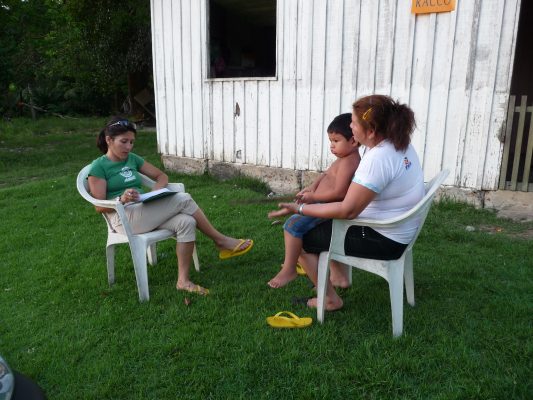
A woman collects fuelwood from a small forest plantation in Mpigi District, Uganda, reflecting how forest resources support daily livelihoods across the Congo Basin and neighbouring regions.
Photo by John Baptist Wandera / CIFOR-ICRAF
Who gives what and who benefits?
Between 2008 and 2022, bilateral donors accounted for 50.3 percent of total FEODA to Central Africa, while multilateral contributions made up the remaining 49.7 percent. Environmental official development assistance (EODA) reached USD 2.2 billion, a 69.2 percent increase over the previous period, and represented nearly 70 percent of total FEODA.
Germany emerged as the largest donor, contributing 23 percent of total FEODA, followed by the European Union at 19 percent, the Global Environment Facility at 12 percent, and both the World Bank and the United States at 9 percent each. While the top donors remained broadly consistent with earlier findings, the ranking shifted, with the World Bank overtaking the United States during the 2008–2022 period.
Among bilateral donors, Germany accounted for 45 percent of contributions, followed by the United States at 17 percent, France at 9 percent, and Japan and Luxembourg at 5 percent each. On the multilateral side, the European Union led with 38 percent, followed by the Global Environment Facility at 24 percent, the World Bank at 19 percent, the African Development Bank at 8 percent and the Climate Investment Fund at 5 percent.
Funding was also unevenly distributed across countries. The Democratic Republic of the Congo received more than half of total FEODA at 52 percent, reflecting its vast forest cover and strategic importance. Cameroon followed with 11 percent, while Rwanda and Chad each received 9 percent, and the Republic of the Congo 6 percent. Equatorial Guinea remained the least funded, receiving around 1 percent in both study periods.
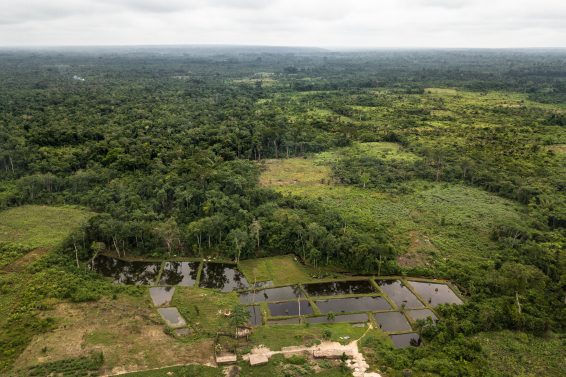
Forest cover in Mpigi District, Uganda, illustrates the mosaic of planted forests, farmland and infrastructure that characterises many forest landscapes in Central Africa and neighbouring regions.
Photo by John Baptist Wandera/CIFOR-ICRAF
Persistent gaps and structural imbalances
Despite year-to-year fluctuations, the overall trend in FEODA to Central Africa has been moderately upward over the past 15 years, though far from linear. According to Richard Sufo, programme coordinator for the RESSAC initiative at the Center for International Forestry Research and World Agroforestry (CIFOR-ICRAF), this pattern reflects growing global recognition of the role of forests in climate mitigation and sustainable development, but also highlights persistent structural imbalances.
“Despite these fluctuations in funding, the overall trend of total FEODA provided to central Africa has been slightly upward, although not consistently linear over the past 15 years”.
Richard Sufo, RESSAC programme coordinator at CIFOR-ICRAF
“The increase in total funding is encouraging,” Sufo noted, “but it masks significant disparities between countries and sectors.”
One notable shift in the current period is the changing focus of funding. Environmental research, which ranked among the top funding areas between 2008 and 2017, has been overtaken by forestry development, resulting in two forestry-related categories among the leading recipients of FEODA.
The study also found modest growth in donor presence across the region. Rwanda and the Democratic Republic of the Congo each engaged with 17 bilateral donors, followed by Cameroon, Burundi and the Republic of the Congo. Other countries, including the Central African Republic, Chad, Equatorial Guinea, Gabon and São Tomé and Príncipe, continued to attract fewer donors, reinforcing long-standing inequalities in access to international support.
Opportunities to scale and rebalance funding
While the updated mapping points to incremental gains, it also underscores how Central Africa’s forests remain undervalued in global environmental financing. The authors argue that better alignment between national policies and international priorities, coupled with stronger negotiation capacity and targeted capacity building, could help shift this dynamic.
“The findings present a strategic opportunity to diversify and expand the donor base beyond Germany and the European Union,” said Richard Eba’a Atyi, strategic adviser at CIFOR-ICRAF. “Capacity building and streamlined access to funding are essential to ensure a more equitable distribution across the region.”
Eba’a Atyi added that countries receiving little or no support risk being left behind, particularly in underfunded areas such as forestry education, fuelwood sustainability and environmental research. Addressing these gaps, he argued, will be critical if Central Africa is to fully realise its potential as a global hub for forest-based climate and biodiversity action.