

Forests News
-

Are community rights being upheld in REDD+ safeguards processes and landscapes in East Kalimantan?
This blog presents preliminary findings of our research on REDD+ safeguards in Indonesia’s East Kalimantan province. The results were validated…
7 min read -

Nourishing leadership: Why gender matters in development science
As a food and nutrition scientist in CIFOR-ICRAF, Mulia Nurhasan leads the execution of the food and nutrition component of…
5 min read -

In DRC, Indigenous Peoples and local communities’ inclusion in REDD+ remains a work in progress
Over a decade from the adoption of seven safeguard principles for REDD+ by the United Nations 2010 Climate Change Conference…
4 min read -

How to balance the needs of both humans and wildlife?
Wild mammals, reptiles, birds and insects are eaten by people worldwide. But overhunting – driven mainly by the demand for…
8 min read -

Finding common ground for community forest management in Peru
Peru has recognized the role of Indigenous Amazonian Peoples for ensuring the sustainable use of one the world’s most biodiverse…
5 min read -

Energy transfer: How one woman scientist aims to spark enthusiasm in the next generation
While women have made immense advances in scientific fields in recent years, the numbers still don’t tell an equitable story.…
7 min read -

Framing up the community-centred future of peatland management
Indonesia has the third-largest area of biodiversity-rich tropical forests in the world. The archipelago is considered one of the world’s…
5 min read -

For many Indigenous communities, land titles aren’t the same as tenure security
With international climate negotiations putting Indigenous Peoples and other local communities in the spotlight for climate funding, more attention is…
7 min read -

Growth of forest plantations in Central Africa lags over financing constraints
The demand for wood, particularly in Africa where circa 80% of households depend on it for fuel, will inevitably snowball…
5 min read -

Tropical wetland countries refine forest reference emission levels (FREL)
In-depth / 30 Jan 2023 Tropical wetland countries refine forest reference emission levels (FREL) Scroll
1 min read -

Private-sector engagement through integrated landscape approaches urged
Greater engagement with the private sector to enhance rural development in southern Zambia could be encouraged by empowering small- and…
5 min read -

Realities of doing science in remote rainforests: The Karaawaimin Taawa Biodiversity Assessment
When ecological research makes its way onto a peer-reviewed page – in the form, perhaps, of a species list or…
6 min read -

A new deal for nature?
Well, they got there. After years-long delays due to the COVID-19 pandemic, a relocation from Kunming, China to Montreal, Canada,…
5 min read -
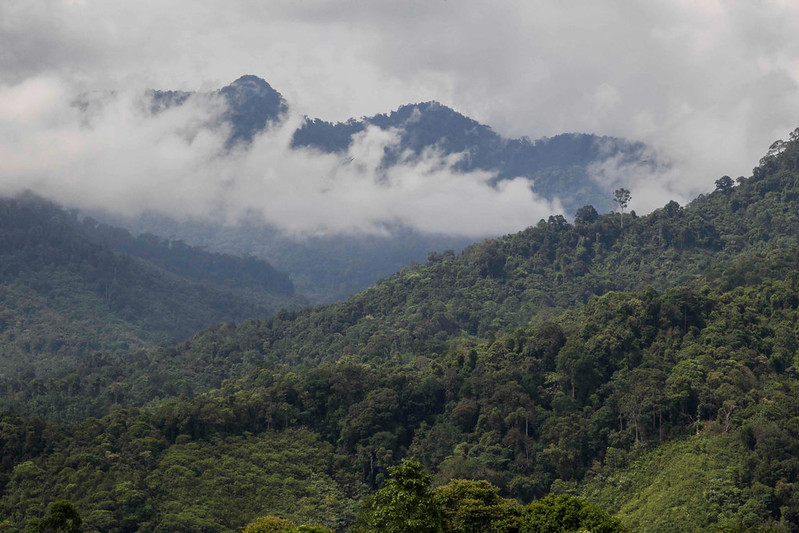
‘Coalition of the willing’ takes agroecology forward at the Asia Pacific Symposium on Agrifood System Transformation
Science is increasingly finding evidence of the effectiveness of agroecological practices — such as mulching, intercropping, agroforestry, biological pest control…
4 min read -

Asian demand for timber to intensify pressure on Central Africa’s forests
As the global demand for wood soars and considering Central Africa’s large reserves, there is a likelihood that timber export,…
5 min read